Goodman 2 Ton Package Unit Heat Pump & AC | 13.4 SEER2 Multi-Positional | R32
View on AC Direct see your lowest price →Check current price on AC Direct →
Key features
- 13.4 SEER2 efficiency meets current federal minimum standards for most U.S. regions
- R-32 refrigerant with lower global warming potential than outgoing R-410A
- Self-contained packaged unit eliminates the need for a separate indoor air handler
- Horizontal configuration suited for rooftop, crawlspace, or ground-level slab installs
- 2-ton capacity for smaller homes and light commercial spaces up to roughly 1,000 sq ft
- Single-stage compressor operation with straightforward controls for easy serviceability
About this system
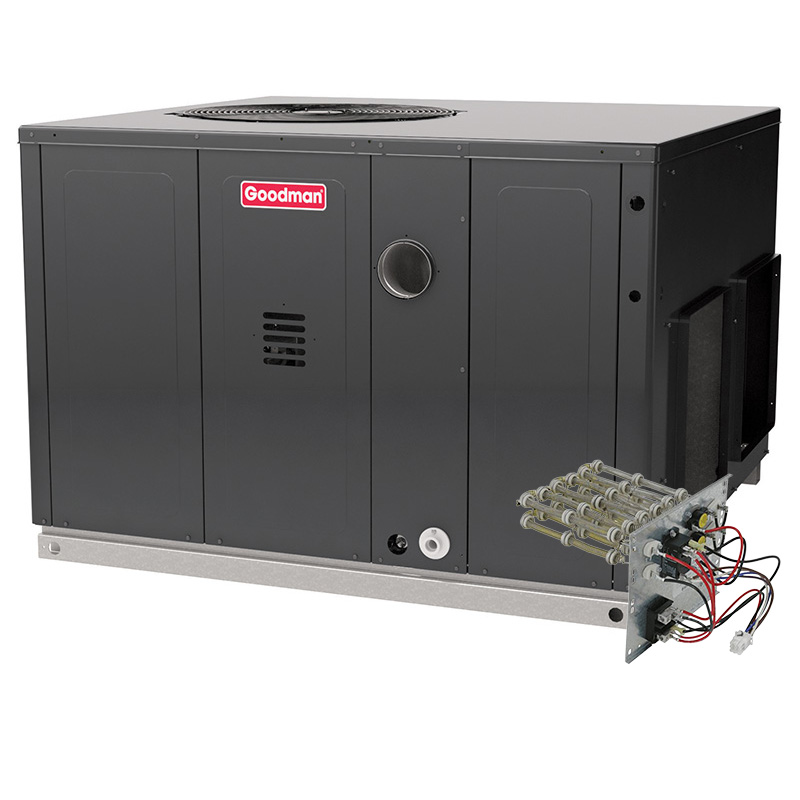
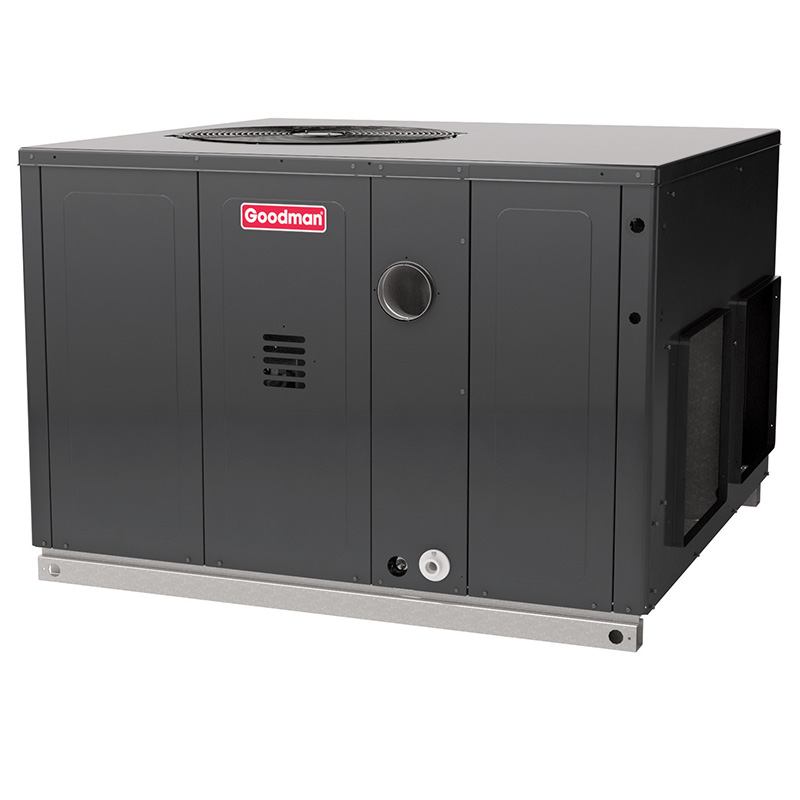
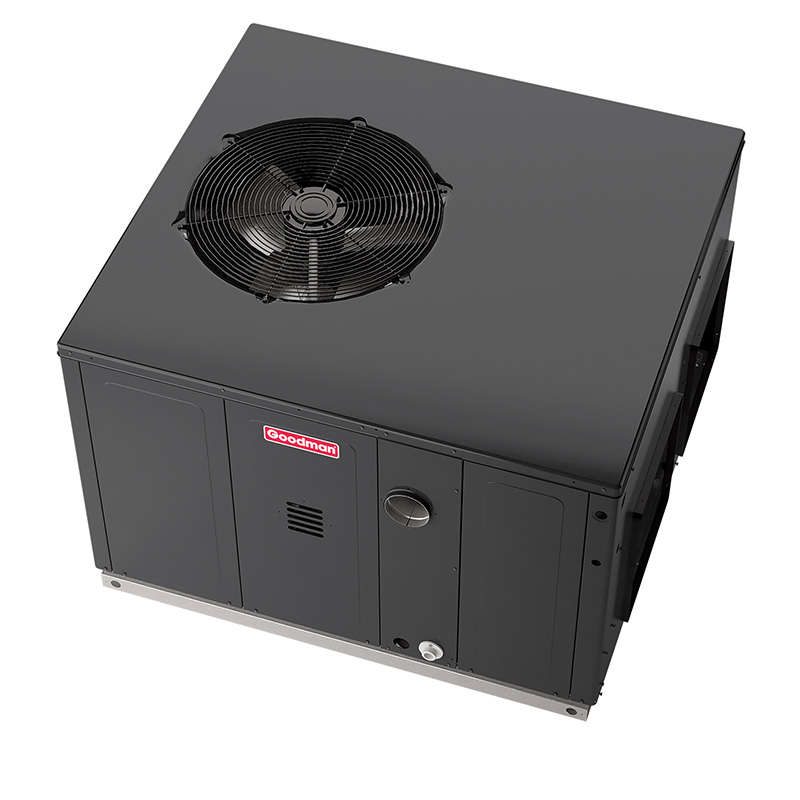
The Goodman 2-ton packaged heat pump is a self-contained unit that houses the compressor, coil, and air handler in a single cabinet installed outside the home. That single-cabinet design makes it a practical choice for homes without an indoor mechanical space, manufactured housing, and light commercial applications where a split system simply is not feasible. At 2 tons it is sized for smaller conditioned spaces, typically 700 to 1,000 square feet depending on local climate and insulation levels, so confirming a proper Manual J load calculation before purchasing is important.
The 13.4 SEER2 efficiency rating sits right at the federal minimum threshold for most of the country, meaning you are not paying a premium for high efficiency but also not benefiting from the energy savings a 16-plus SEER2 system would deliver over time. The switch to R-32 refrigerant is a genuine forward-looking move: R-32 has a lower global warming potential than R-410A and is increasingly the industry direction, which should make future servicing easier as supply chains shift. The horizontal configuration is the standard orientation for rooftop and crawlspace installations and is not interchangeable with vertical downflow setups, so confirming your mounting requirements before ordering is essential.
This Goodman packaged heat pump offers a low entry cost for homeowners who need a self-contained solution and are not chasing top-tier efficiency. It does the job at the baseline efficiency tier, but buyers should budget for potential capacitor replacements after year five to seven and understand that compressor longevity trails premium brands. It is a sensible buy when installed correctly by an experienced technician and approached as a 10-to-12-year system rather than a 20-year one.
Overall score is the average of the five ratings above.
What we like
- Lower upfront cost than comparable Carrier, Trane, or Lennox packaged units, typically 15 to 25 percent less
- R-32 refrigerant is a modern choice that positions the unit well for future service availability
- Self-contained design simplifies installation where no indoor mechanical space exists
- Horizontal packaged configuration consolidates refrigerant lines and wiring in one cabinet, reducing leak points versus a split system
- Wide dealer and parts network means replacement components are rarely hard to source
Trade-offs
- 13.4 SEER2 is the minimum efficiency tier, so monthly energy bills will be higher than units in the 16-plus SEER2 range
- Dual-run capacitors are a documented early failure point, and evaporator coil leaks appear in a meaningful share of owner reports
- Compressor life averages 10 to 14 years versus 15 to 20 years on premium-brand compressors, affecting long-term cost of ownership
- A minority of owners have reported refrigerant leaks within the first year, which is typically tied to install quality and initial charge accuracy
What homeowners and pros say about Goodman
Homeowners who track their HVAC costs online tend to land in one of two camps with Goodman. Those who had a skilled installer and kept up with annual maintenance often report years of uneventful operation and appreciate spending less upfront. Those who ran into trouble usually point to one of three things: a capacitor that went out around year six or seven, a slow refrigerant leak that showed up in the first year suggesting an install or initial charge problem, or an evaporator coil that started weeping before the decade mark. Goodman’s ConsumerAffairs rating sits at roughly 2.5 out of 5, though that channel skews heavily toward people who are frustrated enough to write a review, which inflates the negative signal. Google dealer reviews average closer to 3.8 out of 5, where the most common praise is straightforward: the price made it possible to replace an aging system without financing.
HVAC technicians tend to view Goodman equipment as reliable enough when it is set up correctly, but they are quick to flag that the brand’s performance ceiling is closely tied to the quality of the installation. A poorly charged system or a rushed startup is where early refrigerant leaks originate, and that is a technician problem as much as a product one. Pros also note that dual-run capacitors on these units are a known wear item and a relatively inexpensive fix when caught early, usually in the 300 to 600 dollar range. The bigger caution they raise is compressor longevity: Goodman compressors historically average 10 to 14 years versus the 15 to 20 years more commonly seen on Trane, Carrier, and Lennox equipment, which matters when you are weighing a lower purchase price against the realistic total cost of ownership over a decade and a half.
Sources: ConsumerAffairs Goodman owner reviews, AHRI Directory of Certified Product Performance, U.S. DOE appliance and equipment efficiency standards, Goodman product specification sheets.
What it costs to run
At 13.4 SEER2, cooling this 2-ton system for a typical 1200-hour cooling season at the U.S. average electricity rate of $0.17/kWh works out to roughly $365 per year in cooling, about $0 less per year than a minimum-efficiency 13.4 SEER2 unit of the same size. Your real cost depends on your climate and local rate.
Method: (24,000 BTU/hr ÷ 13.4 SEER2) × 1200 hours ÷ 1000 × $0.17/kWh. Rate source: U.S. EIA average; cooling hours: moderate-climate estimate.
How it compares
| Brand | Comparable model | SEER2 | Stage | Price position |
|---|---|---|---|---|
| Goodman | 2-Ton 13.4 SEER2 R-32 Packaged Heat Pump | 13.4 | Single-stage | Value pick |
| Carrier | WeatherMaster 50XC Series Packaged Heat Pump | 14.0-15.0 | Single-stage | Moderately higher than Goodman, typically 15 to 25 percent more |
| Trane | Precedent TWE/TWH Packaged Heat Pump | 14.0-15.0 | Single-stage | Moderately higher than Goodman, in line with Carrier |
| Lennox | LRP14HP Packaged Heat Pump | 14.0 | Single-stage | Comparable to Carrier and Trane, notably above Goodman |
Competitor rows are comparable single-stage units at similar efficiency; price is relative position, not a quote.
Questions about this system
Can this unit be installed vertically or in a downflow configuration?
No. This unit is rated for horizontal installation only, which is typical for rooftop curb mounts and crawlspace or slab applications where the unit lies on its side. Attempting to install it in an upflow or downflow vertical orientation will void the warranty and likely cause drainage and performance issues.
Is R-32 refrigerant hard to find, and can any HVAC tech work with it?
R-32 availability is growing as more manufacturers adopt it, but it is mildly flammable and classified as A2L, which means technicians must be certified to handle it and some older service equipment is not compatible. Confirm your installer has A2L certification and proper recovery equipment before scheduling the job.
What maintenance should I plan for to avoid the common failure points Goodman units are known for?
Dual-run capacitors are the most frequently reported failure on Goodman equipment and typically run 300 to 600 dollars to replace. Having a technician check capacitor readings during each annual tune-up can catch a weakening capacitor before it fails and potentially damages the compressor. Keeping the coil clean and ensuring refrigerant charge is correct at installation also reduces the risk of early coil and leak issues.
Is 2 tons the right size for my home, or should I size up?
Sizing should be based on a Manual J load calculation that accounts for your square footage, insulation, window area, local climate, and infiltration rate. A rough rule of thumb is 400 to 500 square feet per ton in a well-insulated home, but oversizing is a common and costly mistake that causes short cycling, poor humidity control, and accelerated wear. Have a licensed contractor run the calculation before purchasing.
How does Goodman's warranty on this packaged unit compare to competitors?
Goodman typically offers a 10-year parts warranty when the unit is registered within a set window after installation, which is competitive with mid-tier brands but generally requires a registered contractor installation to be valid. Premium brands like Trane and Carrier offer similar or sometimes longer compressor warranties on higher-end lines, so if long-term coverage is a priority it is worth comparing warranty terms side by side before deciding.
Specifications
| Cooling capacity | 2 Ton |
| Efficiency | 13.4 SEER2 |
| Configuration | Horizontal |
| Refrigerant | R-32 |