Goodman 2 Ton Package Unit Gas / Electric AC – 81% Efficiency 60000 BTU | 13.4 SEER2 Multi-Positional | R32
View on AC Direct see your lowest price →Check current price on AC Direct →
Key features
- 2-ton cooling capacity with 13.4 SEER2 efficiency rating
- 60,000 BTU gas furnace section at 81% AFUE heating efficiency
- Multi-positional design supports horizontal or downflow installation
- R-32 refrigerant with lower global warming potential than R-410A
- All-in-one package cabinet eliminates need for indoor air handler or furnace
- Single-stage operation on both heating and cooling sides
About this system
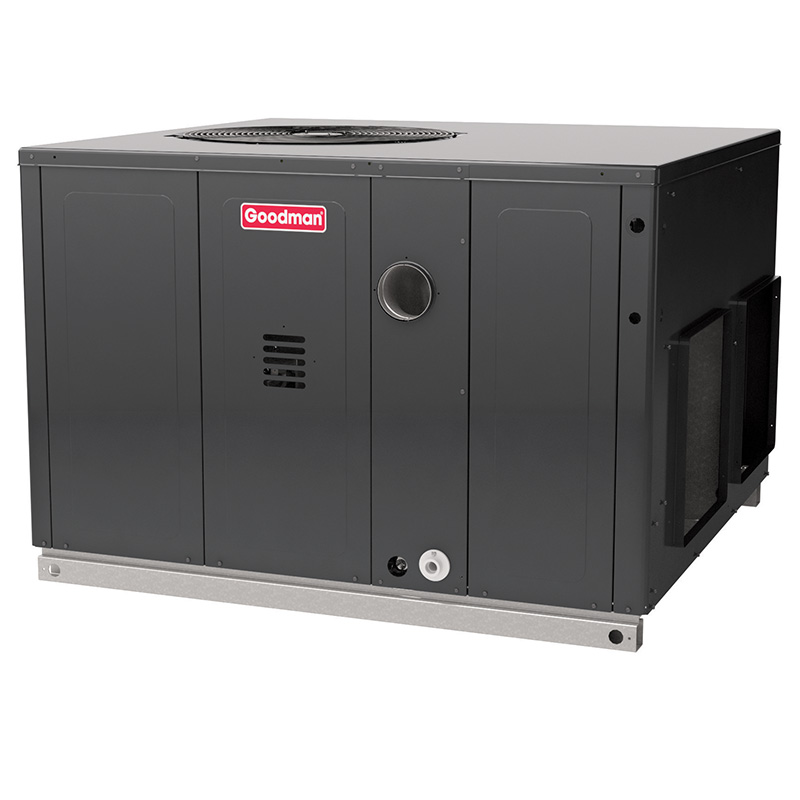
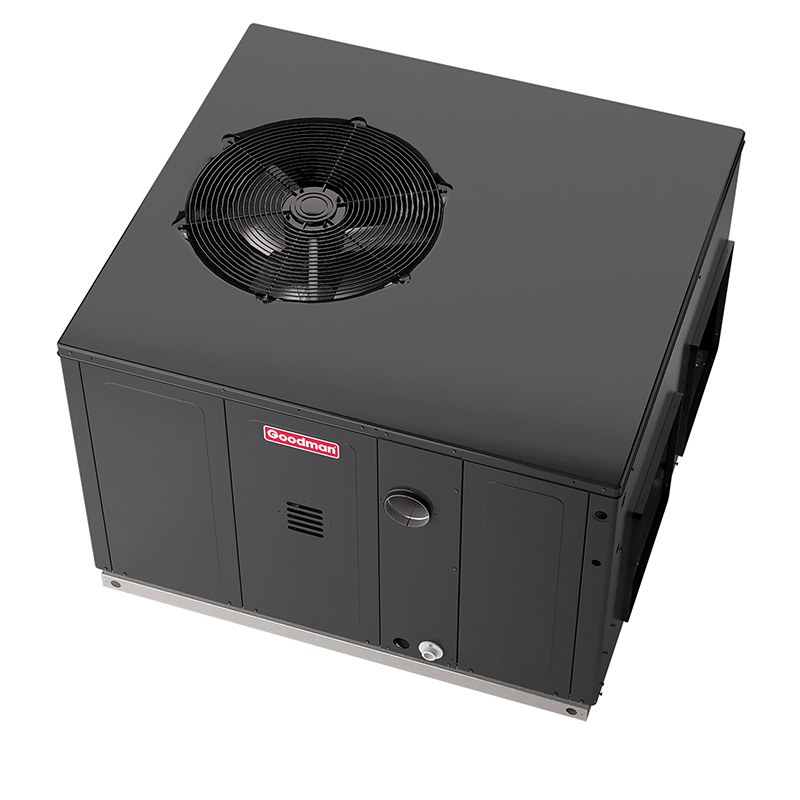
The Goodman GPGM32406031 is a 2-ton, multi-positional gas/electric package unit combining a 60,000 BTU gas furnace section (running at 81% AFUE) with a 13.4 SEER2 cooling side that uses R-32 refrigerant. As a self-contained package unit, everything lives in one outdoor cabinet, making it well suited to homes with crawl spaces, flat rooftops, or mobile installations where a traditional split system simply will not fit. Multi-positional mounting means it can be installed horizontal or in downflow configuration depending on your property’s layout.
The 13.4 SEER2 rating clears the federal minimum for most U.S. regions, so this system qualifies for basic energy compliance but sits at the low end of the efficiency range. Running 81% AFUE on the heating side means roughly 19 cents of every heating dollar goes up the flue, which is noticeably less efficient than 92% or 96% condensing units. That trade-off makes sense if your heating season is short, your gas rates are low, or you are replacing an even older unit and want to limit upfront cost. Buyers in mild climates who lean on the AC side more than the furnace side will feel the efficiency gap least. R-32 refrigerant has a lower global warming potential than older R-410A, which is becoming the industry standard direction and keeps this unit compliant with evolving environmental regulations.
This is fundamentally a budget-to-midrange package aimed at homeowners who need reliable cooling and supplemental heat without paying Carrier, Trane, or Lennox prices. It is not the right fit for someone prioritizing long-term fuel savings or looking for variable-speed comfort. It suits rental properties, smaller homes, budget replacement projects, or second structures where years of peak efficiency matter less than keeping installation costs down.
The GPGM32406031 delivers workable, code-compliant performance at a price point 15 to 25 percent below comparable Carrier, Trane, and Lennox package units, making it a reasonable choice for budget-conscious replacements. The 81% AFUE heating efficiency and 13.4 SEER2 cooling rating both sit at the lower end of what is available today, so long-term operating costs will be higher than with a more efficient system. Durability outcomes vary meaningfully with installation quality, and some owners face repair costs in the $300 to $600 range around the capacitor within the first several years.
Overall score is the average of the five ratings above.
What we like
- Priced 15 to 25 percent below comparable Trane, Lennox, and Carrier package units
- R-32 refrigerant is a forward-looking choice with lower environmental impact than R-410A
- Multi-positional configuration offers genuine installation flexibility for rooftop, slab, or crawl-space setups
- Single-cabinet package design simplifies installation compared to split systems in compatible applications
- Parts are widely stocked and the brand has broad technician familiarity across most U.S. markets
Trade-offs
- 81% AFUE is at the low end of gas heating efficiency, meaning higher monthly gas bills versus 92%+ alternatives
- 13.4 SEER2 just meets federal minimums and will cost more to operate annually than 15+ SEER2 units
- Single-stage operation provides less humidity control and comfort consistency than two-stage or variable equipment
- Compressor lifespan averages 10 to 14 years based on owner experience, shorter than the 15 to 20 years typical of premium brands
What homeowners and pros say about Goodman
Homeowners who choose Goodman equipment most often do so on price, and that pattern holds for package units like this one. On Google dealer reviews, Goodman locations average around 3.8 out of 5, with affordability and parts availability coming up repeatedly as reasons buyers are satisfied. The picture on ConsumerAffairs is rougher, averaging about 2.5 out of 5, though that platform captures a disproportionate share of frustrated owners rather than a representative cross-section. The recurring complaint there is repair costs that start accumulating after roughly year 7, which tracks with the documented failure modes: dual-run capacitors failing first (a manageable $300 to $600 fix), followed by evaporator coil leaks that are more costly and time-consuming to address.
HVAC technicians tend to view Goodman as a mixed proposition. The parts are stocked everywhere, the designs are familiar, and capacitor swaps are routine calls. The concern professionals raise most often is compressor longevity: Goodman compressors average 10 to 14 years in practice, compared to 15 to 20 years that premium brands more typically achieve. For a package unit in a rental property or a starter home where the owner expects to sell within a decade, that gap may not matter much. For a long-term owner, it translates to a likely compressor replacement or full unit changeout that narrows the original cost advantage. Technicians also emphasize that installation quality drives outcomes on Goodman equipment more than on most other brands, so investing in a thorough, experienced installer is not optional if you want to see this unit reach the better end of its lifespan range.
Sources: ConsumerAffairs Goodman owner reviews, AHRI Directory of Certified Product Performance, U.S. DOE appliance and equipment efficiency standards, Goodman product specification sheets.
What it costs to run
At 13.4 SEER2, cooling this 2-ton system for a typical 1200-hour cooling season at the U.S. average electricity rate of $0.17/kWh works out to roughly $365 per year in cooling, about $0 less per year than a minimum-efficiency 13.4 SEER2 unit of the same size. Your real cost depends on your climate and local rate.
Method: (24,000 BTU/hr ÷ 13.4 SEER2) × 1200 hours ÷ 1000 × $0.17/kWh. Rate source: U.S. EIA average; cooling hours: moderate-climate estimate.
How it compares
| Brand | Comparable model | SEER2 | Stage | Price position |
|---|---|---|---|---|
| Goodman | GPGM32406031 | 13.4 | Single-stage | Value pick |
| Carrier | WeatherMaster 50XC Series | 14.0 | Single-stage | Roughly 20 to 25 percent higher than this Goodman |
| Trane | YCC2 Packaged Gas/Electric Series | 14.0 | Single-stage | Roughly 20 to 25 percent higher than this Goodman |
| Lennox | LRP16GE Packaged Gas/Electric Series | 16.0 | Single-stage | Substantially higher than this Goodman, closer to premium tier |
Competitor rows are comparable single-stage units at similar efficiency; price is relative position, not a quote.
Questions about this system
Is 81% AFUE good enough, or should I pay more for a higher-efficiency gas section?
81% AFUE means about 81 cents of every gas dollar goes into heat, which is sufficient for mild climates or homes where the gas furnace runs infrequently. If your winters are cold and your heating bills are already high, stepping up to a 92% or higher AFUE unit will typically recover the cost difference in fuel savings within a few years. For a second home, rental, or warm-climate property, 81% is a reasonable trade-off for the lower purchase price.
What are the most common repairs on Goodman package units like this one?
Dual-run capacitors are the most frequently reported failure on Goodman equipment and are generally a straightforward, low-cost fix in the $300 to $600 range when a technician is involved. Evaporator coil leaks show up in a meaningful share of owner reviews and are more involved to repair. A minority of owners report refrigerant leaks within the first year, which is usually traced to installation or initial charge issues rather than a factory defect.
Does the multi-positional design mean I can install this on a rooftop or only on a ground slab?
Multi-positional means the unit can be configured for horizontal discharge (typical on rooftop or wall applications) or downflow (slab or curb-mounted ground installation), giving contractors flexibility on placement. Your installer will need to confirm that the discharge orientation and curb or pad dimensions match your specific application before ordering.
Why does this unit use R-32 refrigerant instead of R-410A, and does that affect service costs?
R-32 has a significantly lower global warming potential than R-410A and is the direction the HVAC industry is moving under updated EPA regulations. In practice, R-32 requires certified technicians with the right equipment to handle it safely, which most established HVAC companies already have. Parts availability is growing rapidly, but in very rural markets you may want to confirm your local service providers are equipped to work with R-32 before purchasing.
How long should I expect this Goodman package unit to last?
Based on documented owner experience, Goodman compressors tend to average 10 to 14 years, which is shorter than the 15 to 20 years more commonly reported for premium-brand equipment. Installation quality is consistently cited by HVAC technicians as the single biggest factor in longevity, so budgeting for a skilled, licensed installer rather than the lowest-bid option is important. Keeping up with annual maintenance, especially capacitor checks and coil cleaning, helps push toward the longer end of that range.
Specifications
| Cooling capacity | 2 Ton |
| Efficiency | 13.4 SEER2 |
| Furnace output | 60000 BTU |
| Configuration | Multi-Position |
| Refrigerant | R-32 |
| Model | GPGM32406031 |