Goodman 5 Ton Package Unit Gas / Electric AC – 81% Efficiency 100000 BTU | 13.4 SEER2 Multi-Positional | R32
View on AC Direct see your lowest price →Check current price on AC Direct →
Key features
- 5-ton cooling capacity with 13.4 SEER2 efficiency rating
- 100,000 BTU gas heat section at 81% AFUE
- Multi-positional cabinet supports bottom or side discharge configurations
- R-32 refrigerant with lower global-warming potential than R-410A
- Single outdoor cabinet eliminates need for a separate indoor air handler
- 10-year parts warranty when registered within 60 days of installation
About this system
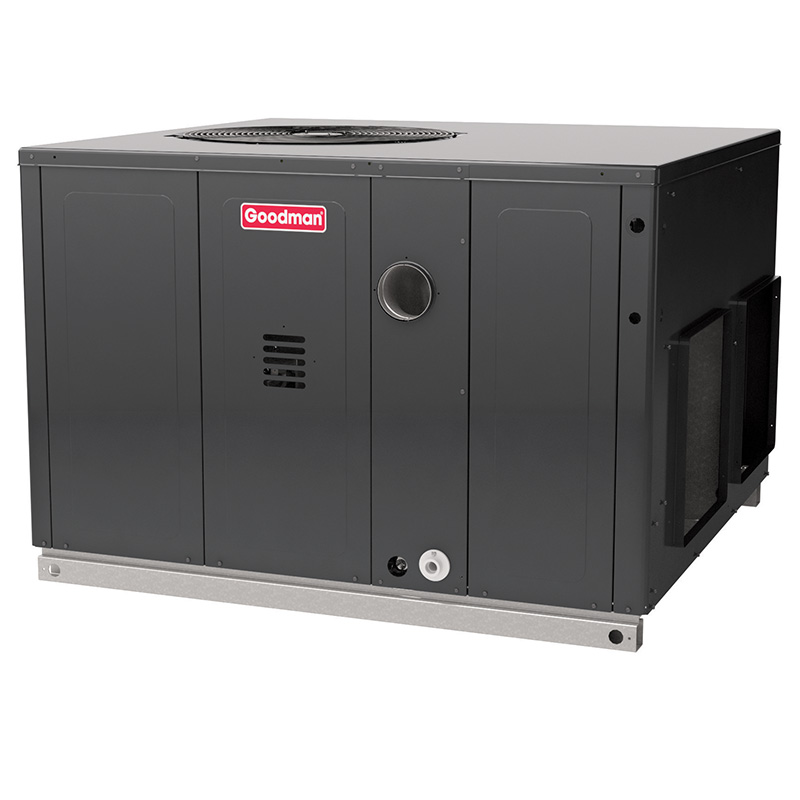
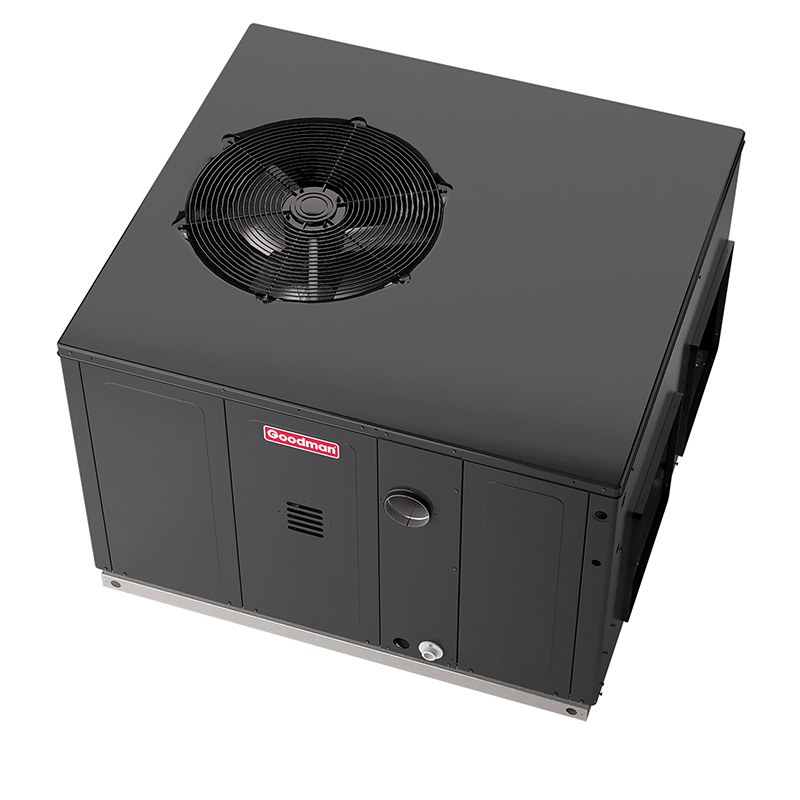
The Goodman GPGM36010031 is a 5-ton multi-positional packaged gas/electric unit combining a 100,000 BTU furnace section with a 13.4 SEER2 cooling system in a single outdoor cabinet. That all-in-one design makes it a strong candidate for homes without a dedicated indoor air handler space, slab-built commercial properties, manufactured housing, and light commercial applications where routing separate refrigerant lines is impractical. The 81% AFUE gas heat section meets minimum federal efficiency standards but sits at the lower end of the efficiency range, meaning it will cost more to heat per dollar of gas consumed compared to higher-AFUE alternatives. For climates where heating is secondary and cooling is the primary load, that trade-off is often acceptable.
On the cooling side, 13.4 SEER2 clears the current federal minimum for most U.S. regions and uses R-32 refrigerant, a lower global-warming-potential option that is becoming the industry standard as R-410A is phased out. R-32 systems require technicians with updated EPA certification and specific recovery equipment, so verify your installer is equipped before scheduling. The multi-position configuration means the unit can discharge air from the bottom or side depending on the installation layout, giving installers flexibility without requiring a purpose-specific model. At 5 tons, this unit is sized for larger homes typically in the 2,200 to 3,000 square foot range, though a proper Manual J load calculation is the only reliable way to confirm correct sizing for your structure.
The GPGM36010031 is a competitively priced entry point into 5-ton packaged units that delivers straightforward cooling performance and installation flexibility. It is not an efficiency leader, and its long-term reliability will depend significantly on the quality of the installation and how quickly minor issues like failing capacitors are addressed. Buyers who want budget-friendly upfront cost and can plan for periodic maintenance costs will find it serviceable; those prioritizing long-term efficiency savings or minimal repair risk should compare higher-tier options.
Overall score is the average of the five ratings above.
What we like
- Priced 15 to 25 percent below comparable Trane, Lennox, and Carrier packaged units
- R-32 refrigerant aligns with the industry's regulatory direction, reducing future retrofit risk
- Multi-position discharge adds installation flexibility for varying property layouts
- All-in-one design reduces installation complexity versus split systems in retrofit scenarios
- 10-year parts warranty (registered) provides reasonable coverage for the price tier
Trade-offs
- 81% AFUE is the minimum efficiency tier; heating costs will be higher than mid- or high-efficiency alternatives
- 13.4 SEER2 is baseline cooling efficiency with no two-stage or variable-speed option in this model
- Brand reliability ratings are modest, with documented failure modes including dual-run capacitor failures, evaporator coil leaks, and compressor lifespans averaging shorter than premium brands
- A minority of owners report refrigerant leaks within the first year, typically tied to installation quality rather than the unit itself
What homeowners and pros say about Goodman
Goodman sits at a consistent 3.8 out of 5 across Google dealer reviews, where the most frequent praise centers on affordability and the accessibility of parts when repairs are needed. That contrasts with the brand’s ConsumerAffairs rating of roughly 2.5 out of 5, a channel where dissatisfied owners are more likely to post. The recurring theme in that lower-rated feedback is repair costs that begin climbing after year seven, particularly for compressor and coil issues that fall outside what a basic service plan covers. For a 5-ton packaged unit like the GPGM36010031, that pattern is worth factoring into total cost of ownership projections.
Technicians who work on Goodman equipment frequently point to dual-run capacitor failures as the most routine service call, usually a straightforward and relatively low-cost fix in the 300 to 600 dollar range. More consequential are evaporator coil leaks, which show up in a meaningful share of owner reviews and can be significantly more expensive to address. Compressor longevity is where the brand most visibly lags premium competitors: documented averages run 10 to 14 years versus 15 to 20 years for Trane, Carrier, or Lennox equipment. A small but documented minority of owners have reported refrigerant leaks within the first year, which installers and Goodman both attribute to charge or connection issues at installation rather than factory defects. That pattern reinforces what service professionals consistently say about Goodman: the unit is only as good as the contractor who installs and maintains it.
Sources: ConsumerAffairs Goodman owner reviews, AHRI Directory of Certified Product Performance, U.S. DOE appliance and equipment efficiency standards, Goodman product specification sheets.
What it costs to run
At 13.4 SEER2, cooling this 5-ton system for a typical 1200-hour cooling season at the U.S. average electricity rate of $0.17/kWh works out to roughly $913 per year in cooling, about $0 less per year than a minimum-efficiency 13.4 SEER2 unit of the same size. Your real cost depends on your climate and local rate.
Method: (60,000 BTU/hr ÷ 13.4 SEER2) × 1200 hours ÷ 1000 × $0.17/kWh. Rate source: U.S. EIA average; cooling hours: moderate-climate estimate.
How it compares
| Brand | Comparable model | SEER2 | Stage | Price position |
|---|---|---|---|---|
| Goodman | GPGM36010031 | 13.4 | Single-stage | Value pick |
| Carrier | WeatherMaster 50XC | 14.0 | Single-stage | Roughly 20 to 25 percent more than this Goodman |
| Trane | YCC060 Precedent | 14.0 | Single-stage | Roughly 20 to 25 percent more than this Goodman |
| Lennox | LRP16GE60 | 16.0 | Single-stage | Roughly 30 to 40 percent more than this Goodman, reflecting higher efficiency tier |
Competitor rows are comparable single-stage units at similar efficiency; price is relative position, not a quote.
Questions about this system
What does multi-positional mean on this packaged unit, and does it affect installation cost?
Multi-positional means the unit can discharge conditioned air from the bottom (down-flow, common for rooftop curb mounting) or from the side, depending on how the ductwork is connected. It avoids the need to order a model specific to one configuration. Installation cost differences are usually minor and depend more on the duct connection work your contractor has to do than on the unit itself.
R-32 refrigerant is new to me. Can any HVAC technician service this unit?
R-32 requires technicians who hold a valid EPA 608 certification and have recovery equipment rated for A2L refrigerants, which R-32 is classified as due to its mild flammability. Most established HVAC companies are already equipped, but it is worth confirming before you hire, particularly in rural markets where smaller shops may not have updated their equipment yet.
Is 81% AFUE a problem if I live in a colder climate?
At 81% AFUE, 19 cents of every dollar spent on gas escapes as waste heat. In a cold climate where the furnace runs frequently from October through March, that gap versus an 80-plus-percent mid-efficiency or 96% high-efficiency unit adds up over the heating season. If heating is a large share of your annual utility bill, the higher upfront cost of a better AFUE unit often pays back within several years.
How long can I realistically expect this unit to last?
Goodman compressors in this tier average roughly 10 to 14 years based on documented owner experience, compared to 15 to 20 years reported for premium brands. The most common early repair is a dual-run capacitor failure, typically a 300 to 600 dollar service call. Evaporator coil leaks have also been reported with some frequency. Consistent annual maintenance and prompt attention to minor issues are the biggest factors in reaching the upper end of that range.
Does 5 tons mean this unit is right for my 2,500 square foot home?
Square footage is only one input. Ceiling height, insulation levels, window area, local climate, and duct design all affect the correct size. Oversizing a packaged unit leads to short cycling, poor humidity control, and accelerated wear. A licensed HVAC contractor should perform a Manual J load calculation before you commit to any specific tonnage, including this one.
Specifications
| Cooling capacity | 5 Ton |
| Efficiency | 13.4 SEER2 |
| Furnace output | 100000 BTU |
| Configuration | Multi-Position |
| Refrigerant | R-32 |
| Model | GPGM36010031 |