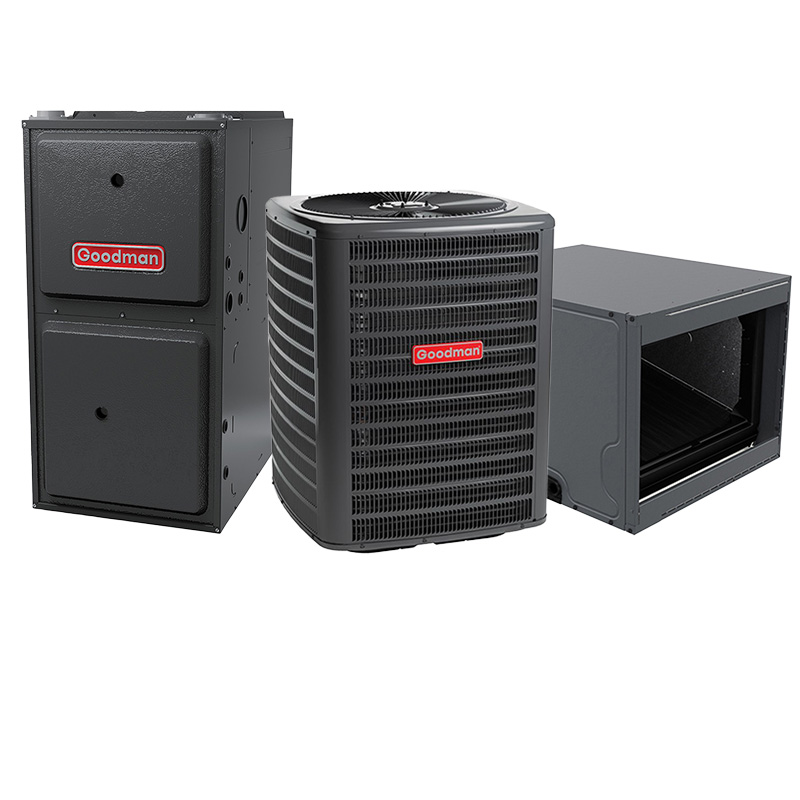
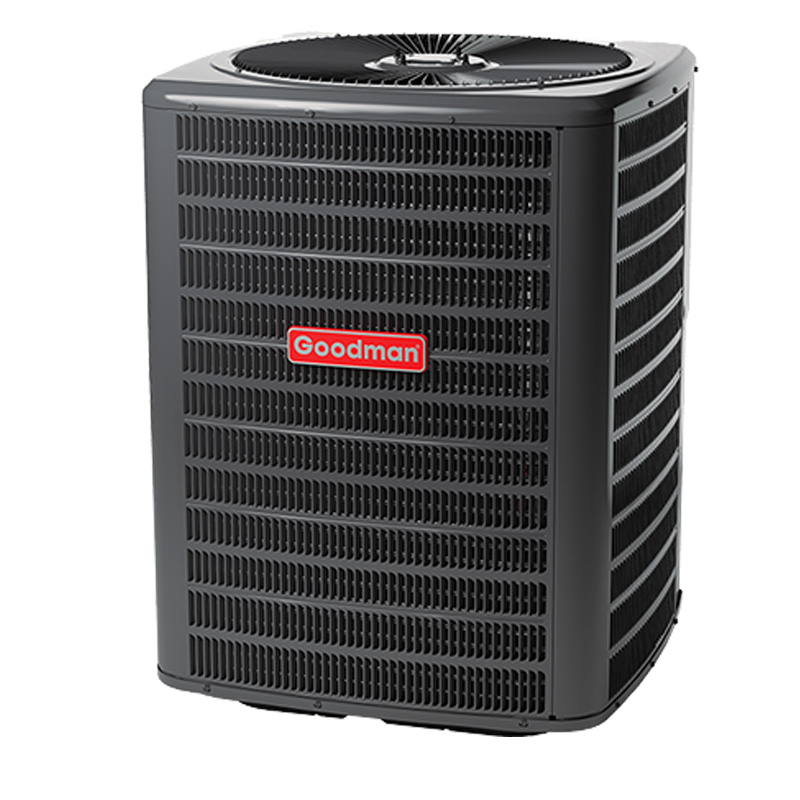
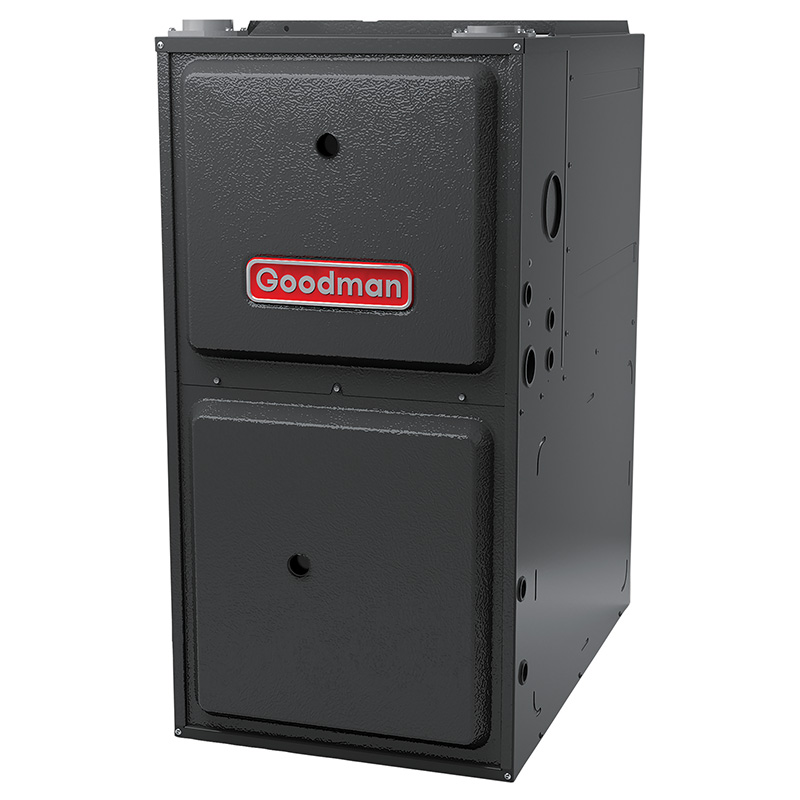
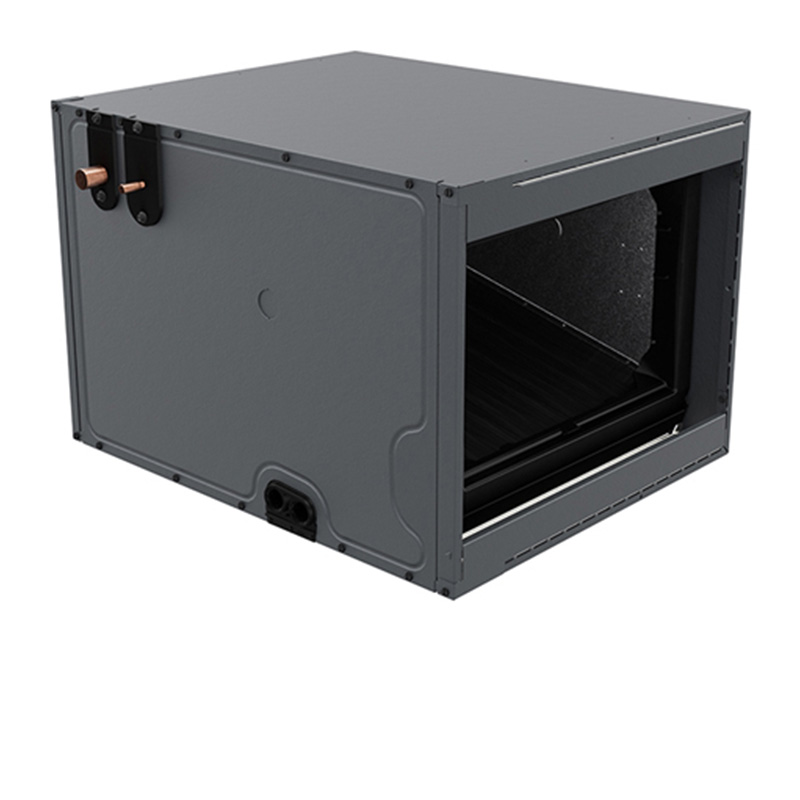
Goodman 3.5 Ton 14.5 SEER2 R32 AC System with 80,000 BTU 96% AFUE Gas Furnace – California & Colorado Ultra Low NOx, Horizontal, Multi-Speed ECM
View on AC Direct see your lowest price →Check current price on AC Direct →
Key features
- 14.5 SEER2 cooling efficiency meets current federal minimum standards for most U.S. regions
- 96% AFUE condensing gas furnace with PVC venting for high fuel efficiency
- R-32 refrigerant with lower global warming potential than R-410A
- Multi-speed ECM blower motor for improved comfort and reduced blower electricity draw
- Horizontal cabinet orientation designed for attic, crawlspace, or side-discharge installations
- Ultra Low NOx certified for California and Colorado air quality district compliance
About this system
The Goodman 3.5-ton 14.5 SEER2 R-32 air conditioner paired with an 80,000 BTU 96% AFUE gas furnace is a full split system built around a horizontal configuration, making it a practical choice for homes where the air handler must run in a crawlspace, attic, or tight utility closet that rules out upright installation. At 3.5 tons it addresses cooling loads typically found in homes ranging from roughly 1,600 to 2,200 square feet depending on climate, insulation quality, and window exposure. The 14.5 SEER2 rating sits at the lower boundary of what regulators currently require in most markets, which means you are not paying a premium for advanced efficiency technology but you are meeting the baseline for legal installation.
The 96% AFUE furnace is a genuine high-efficiency unit, recovering 96 cents of heat from every dollar of gas and venting as a condensing appliance through PVC rather than a traditional flue. The multi-speed ECM blower motor improves comfort and reduces electricity consumption compared to a fixed-speed PSC motor, running longer at lower speeds to maintain steadier temperatures and better humidity control. The R-32 refrigerant charge is notable: R-32 has a lower global warming potential than the R-410A it largely replaces, and it requires a smaller refrigerant charge by weight, which is a genuine environmental and regulatory advantage. The Ultra Low NOx certification satisfies the stricter combustion emissions rules enforced in California and Colorado air quality districts, so this system is cleared for installation where standard units are not permitted.
This system delivers solid, code-compliant performance at a price point well below comparable Carrier, Trane, and Lennox equipment, and the 96% AFUE furnace with ECM blower is genuinely capable hardware. The trade-off is that Goodman's long-term reliability track record is weaker than premium brands, and the horizontal configuration adds installation complexity that makes quality of installation even more critical than usual.
Overall score is the average of the five ratings above.
What we like
- Street price runs 15 to 25 percent below equivalent Carrier, Trane, and Lennox systems
- 96% AFUE furnace delivers real fuel savings over standard 80% units in high-usage climates
- R-32 refrigerant satisfies evolving environmental regulations and requires a smaller charge by weight
- Ultra Low NOx certification opens installation in California and Colorado restricted air districts
- Multi-speed ECM blower improves humidity control and comfort versus single-speed alternatives
Trade-offs
- Compressor lifespan averages 10 to 14 years versus 15 to 20 years reported for premium-brand compressors
- Dual-run capacitor failures are the most commonly documented issue and, while inexpensive to fix, add recurring service calls after year 7
- Evaporator coil leaks appear in a meaningful share of owner reviews and can be costly to address depending on refrigerant pricing
- Horizontal configuration requires precise installation for proper condensate drainage and airflow; errors are harder to detect and correct than in upright systems
What homeowners and pros say about Goodman
Homeowners who review Goodman equipment tend to split along a clear timeline. In the first several years, the most common feedback centers on the upfront cost savings and the fact that the equipment simply does what it is supposed to do. That tracks with Goodman’s Google dealer review average of around 3.8 out of 5, where affordability is the praise that appears most consistently. The picture shifts after roughly year seven, which is when the ConsumerAffairs profile, sitting at about 2.5 out of 5, picks up more volume. That channel skews toward complaints by its nature, but the recurring theme there is repair costs climbing as systems age, which aligns with the documented compressor lifespan of 10 to 14 years versus 15 to 20 years seen in premium brands.
HVAC technicians who work on Goodman equipment regularly point to two failure modes they see most often in the field. Dual-run capacitor failures are the most common callout, usually a straightforward fix in the 300 to 600 dollar range but one that tends to recur. Evaporator coil leaks are a more serious and costlier issue that shows up in a meaningful share of owner reports. For this specific system, installers also note that the horizontal configuration raises the stakes on getting the initial install right, since condensate drainage errors and airflow imbalances are less forgiving in a side-mounted unit. Technicians consistently flag install quality as the single biggest variable in how long any Goodman system holds up, which makes contractor selection arguably as important as the equipment choice itself.
Sources: ConsumerAffairs Goodman owner reviews, AHRI Directory of Certified Product Performance, U.S. DOE appliance and equipment efficiency standards, Goodman product specification sheets.
What it costs to run
At 14.5 SEER2, cooling this 3.5-ton system for a typical 1200-hour cooling season at the U.S. average electricity rate of $0.17/kWh works out to roughly $591 per year in cooling, about $48 less per year than a minimum-efficiency 13.4 SEER2 unit of the same size. Your real cost depends on your climate and local rate.
Method: (42,000 BTU/hr ÷ 14.5 SEER2) × 1200 hours ÷ 1000 × $0.17/kWh. Rate source: U.S. EIA average; cooling hours: moderate-climate estimate.
How it compares
| Brand | Comparable model | SEER2 | Stage | Price position |
|---|---|---|---|---|
| Goodman | GMVC96 / GSXH5 R-32 3.5T 14.5 SEER2 Horizontal | 14.5 | Multi-speed | Value pick |
| Carrier | Performance 96 / 24ACC636 3.5T | 15.0 | Single-stage | Priced roughly 20 percent above this Goodman system |
| Trane | S9V2 / XR15 3.5T | 15.0 | Single-stage | Priced roughly 20 to 25 percent above this Goodman system |
| Lennox | ML196 / 14ACX 3.5T | 14.3 | Single-stage | Priced roughly 15 to 20 percent above this Goodman system |
Competitor rows are comparable single-stage units at similar efficiency; price is relative position, not a quote.
Questions about this system
Does this system actually qualify for installation in California SCAQMD or Colorado air quality districts, or do I need to verify separately?
The Ultra Low NOx certification on the furnace is specifically designed to meet California South Coast AQMD and similar Colorado district rules that prohibit standard NOx-emission furnaces. You should still confirm the exact rule in your specific air district with your installer before purchase, as enforcement zones and thresholds can vary by county.
What does the horizontal configuration mean for my installation, and does it affect anything beyond cabinet orientation?
Horizontal means the furnace cabinet is designed to lie on its side rather than stand upright, which is necessary in attics, crawlspaces, and some closets with limited headroom. It requires careful attention to condensate drainage slope during install, and any error in leveling or drain routing is more likely to cause water issues than a vertical installation would be.
R-32 refrigerant is new to me. Is it harder to service than R-410A, and will local technicians know how to work with it?
R-32 is an A2L refrigerant, meaning it is mildly flammable at high concentrations and requires technicians with specific training and equipment rated for A2L handling. Most HVAC contractors are gaining familiarity with it as R-410A systems phase out, but it is worth confirming your service provider is equipped for R-32 before scheduling future maintenance.
The documented failure modes mention evaporator coil leaks. How serious is that risk with R-32, and what does a repair typically involve?
Coil leaks require the technician to locate the leak, repair or replace the coil, and recharge the system with refrigerant. With R-32 specifically, smaller charge sizes mean refill costs are somewhat lower than with R-410A by volume, but coil replacement labor and parts costs remain significant. Keeping up with annual maintenance and ensuring the system is properly charged at install reduces but does not eliminate this risk.
How does the 96% AFUE furnace affect my gas bills compared to a standard 80% AFUE unit, and is the payback realistic?
A 96% AFUE unit converts 96% of fuel to heat versus 80% for a standard unit, a 16-percentage-point difference. In a cold climate with high annual gas usage, the savings can meaningfully offset the higher upfront cost over several years, though payback period depends heavily on local gas rates and heating degree days. In mild climates with short heating seasons, the payback window stretches considerably.
Specifications
| Cooling capacity | 3.5 Ton |
| Efficiency | 14.5 SEER2 |
| Furnace output | 80,000 BTU |
| Furnace efficiency | 96% AFUE |
| Configuration | Horizontal |
| Refrigerant | R-32 |