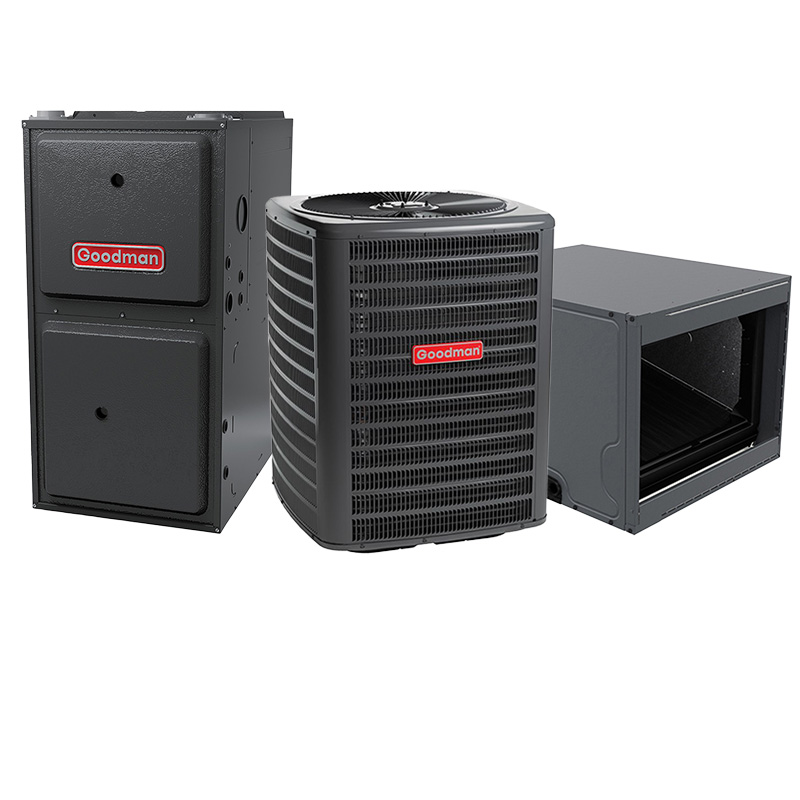
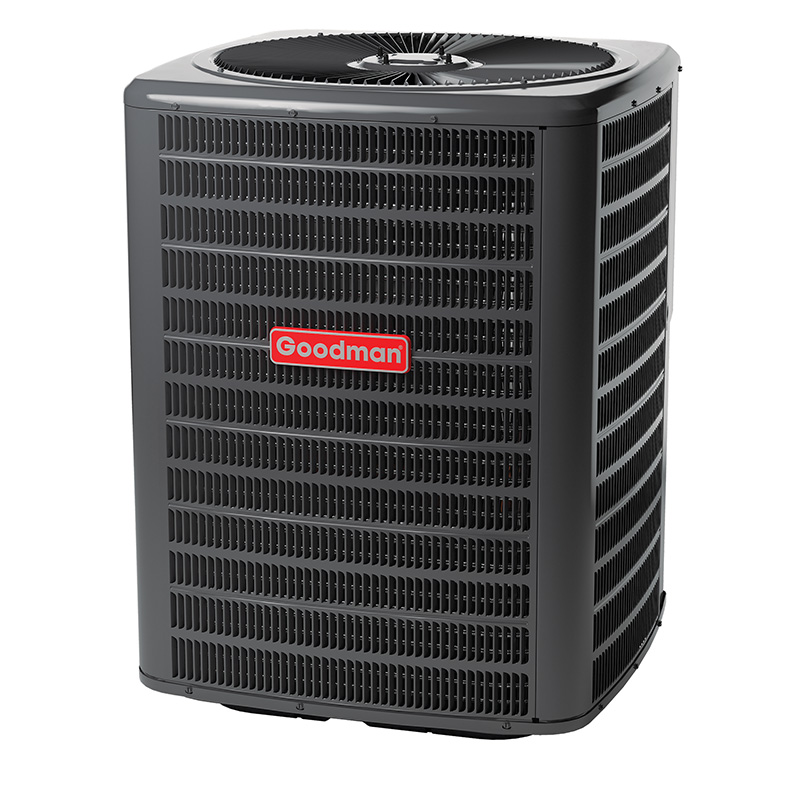
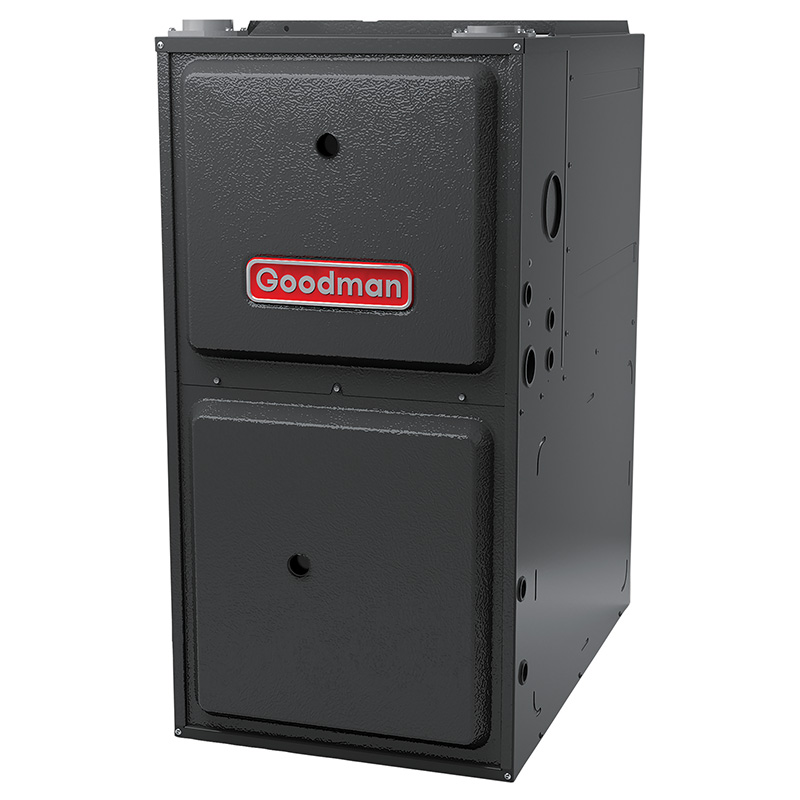
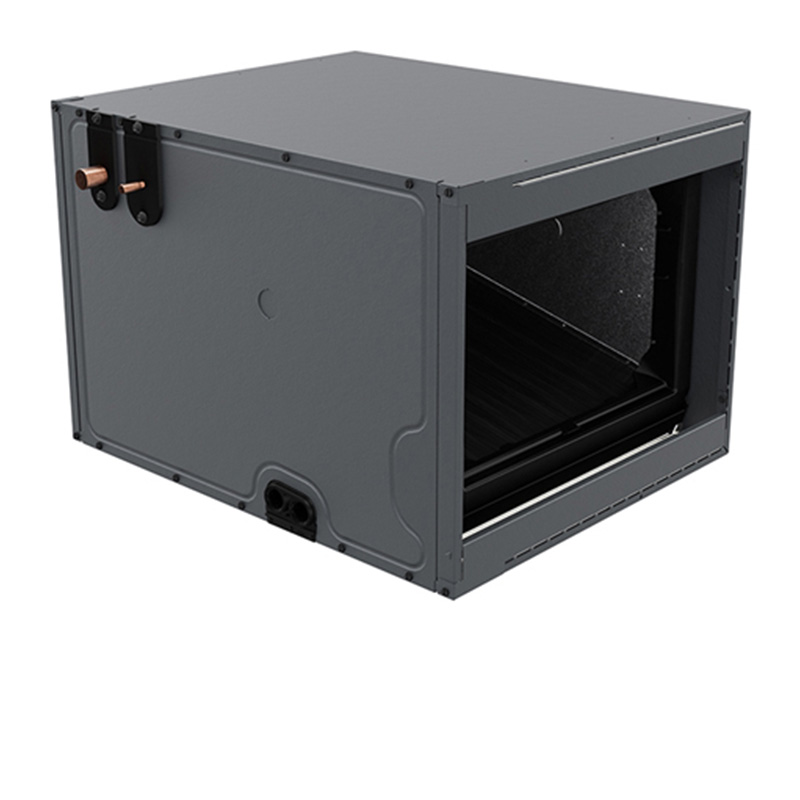
Goodman 1.5 Ton 15.2 SEER2 R32 AC System with 40,000 BTU 96% AFUE Gas Furnace – California & Colorado Ultra Low NOx, Horizontal, Multi-Speed ECM
View on AC Direct see your lowest price →Check current price on AC Direct →
Key features
- 15.2 SEER2 cooling efficiency with R-32 low-GWP refrigerant
- 96% AFUE gas furnace rated at 40,000 BTU/hr heating output
- Multi-speed ECM blower motor for improved airflow and humidity control
- Horizontal configuration designed for attic, crawl space, or tight utility installations
- California and Colorado Ultra Low NOx certified for regulated markets
- Matched 1.5-ton system sized for smaller homes or zone additions
About this system
The Goodman 1.5-ton, 15.2 SEER2 R-32 air conditioner paired with a 40,000 BTU 96% AFUE multi-speed ECM gas furnace is a compact, efficiency-focused system built for smaller conditioned spaces, typically homes or additions in the 600 to 900 square foot range depending on climate and insulation. The horizontal configuration makes it a practical fit for attic installations, crawl spaces, or utility closets where a vertical unit simply will not fit. Both the Ultra Low NOx certification for California and Colorado and the R-32 refrigerant choice reflect real regulatory alignment, since California Title 24 and Colorado Air Quality Control Commission rules increasingly restrict older refrigerants and higher NOx-emitting equipment.
A 96% AFUE furnace sits at the top of the non-condensing efficiency tier and means roughly 96 cents of every dollar spent on gas goes toward heat. The 15.2 SEER2 rating is a solid entry into the mid-efficiency cooling tier under the newer, more demanding SEER2 test standard, roughly equivalent to a legacy 16 SEER rating. The multi-speed ECM blower motor is the standout component here: it modulates airflow more precisely than a PSC motor, which contributes to quieter operation, better humidity control, and lower blower energy costs over time. This is not a premium variable-speed system, but it is meaningfully better than a basic single-speed setup.
This Goodman system delivers genuinely competitive efficiency and a regulatory-compliant refrigerant at a price point 15 to 25 percent below premium brands, making it a reasonable choice for budget-conscious buyers who can secure a skilled installer. The trade-off is a documented history of component failures after year 7 and a compressor lifespan that trails Trane, Lennox, and Carrier by several years on average. If long-term reliability matters more than upfront cost, the math may favor spending more at the start.
Overall score is the average of the five ratings above.
What we like
- 15.2 SEER2 and 96% AFUE put both units at the upper edge of mid-efficiency tiers without premium-brand pricing
- R-32 refrigerant positions the system well ahead of pending refrigerant regulations in California and Colorado
- Multi-speed ECM blower provides meaningfully better comfort and humidity performance than single-speed alternatives
- Ultra Low NOx certification removes any permitting friction in California and Colorado regulated markets
- Horizontal configuration addresses a real installation gap that limits competing models in attic or crawl space setups
Trade-offs
- Dual-run capacitors are the most commonly reported failure, typically arising before or around the 7-year mark and adding $300 to $600 per service call
- Evaporator coil leaks appear in a meaningful share of owner reviews, a failure mode that can be costly and disruptive to repair
- Compressor lifespan averages 10 to 14 years, noticeably shorter than the 15 to 20 years typically seen on premium-brand compressors
- A minority of first-year owners report refrigerant leaks, most often traced to install or charging issues rather than the equipment itself, which underscores how much performance depends on installer quality
What homeowners and pros say about Goodman
Homeowners who have lived with Goodman equipment tend to land in one of two camps, and the dividing line is almost always installer quality rather than the equipment itself. On Google dealer review pages, Goodman systems consistently draw around 3.8 out of 5 stars, with affordability and the value of getting a mid-efficiency system without a premium-brand markup cited most often as the reason buyers are satisfied. The picture on ConsumerAffairs is harder, sitting near 2.5 out of 5, though that platform skews heavily toward people motivated to write by a frustrating experience. The recurring theme in those negative reviews is repair costs that begin climbing after roughly year 7, which tracks with the brand’s documented failure patterns: dual-run capacitor failures are the most commonly reported fix, usually costing $300 to $600, but evaporator coil leaks also appear with enough frequency to be a real planning consideration for longer-term owners.
HVAC technicians who work on Goodman equipment regularly tend to describe it as serviceable and parts-accessible, but they are consistent about one point: the brand’s performance ceiling is set almost entirely by who installs it. First-year refrigerant leaks, which a minority of owners report, are typically traced back to installation or charging errors rather than factory defects. The compressor picture is also worth understanding going in: Goodman compressors average 10 to 14 years in real-world use, which is a genuine gap compared to the 15 to 20 years more commonly seen on Trane, Carrier, and Lennox units. For this specific system, the multi-speed ECM blower and 96% AFUE furnace are legitimate upgrades that carry their weight, but the brand’s reliability profile means the total cost of ownership calculation over 15 or more years is closer than the sticker price difference suggests.
Sources: ConsumerAffairs Goodman owner reviews, AHRI Directory of Certified Product Performance, U.S. DOE appliance and equipment efficiency standards, Goodman product specification sheets.
What it costs to run
At 15.2 SEER2, cooling this 1.5-ton system for a typical 1200-hour cooling season at the U.S. average electricity rate of $0.17/kWh works out to roughly $242 per year in cooling, about $32 less per year than a minimum-efficiency 13.4 SEER2 unit of the same size. Your real cost depends on your climate and local rate.
Method: (18,000 BTU/hr ÷ 15.2 SEER2) × 1200 hours ÷ 1000 × $0.17/kWh. Rate source: U.S. EIA average; cooling hours: moderate-climate estimate.
How it compares
| Brand | Comparable model | SEER2 | Stage | Price position |
|---|---|---|---|---|
| Goodman | 1.5 Ton 15.2 SEER2 R-32 with 40K BTU 96% AFUE Horizontal Multi-Speed ECM | 15.2 | Multi-speed | Value pick |
| Carrier | Comfort 24ACC636 with 58CVA040 Furnace | 15.2 | Single-stage | Typically 15 to 20 percent above this Goodman system |
| Trane | XR15 with S8X2 Furnace | 15.0 | Single-stage | Typically 18 to 25 percent above this Goodman system |
| Lennox | Merit ML14XC1 with ML196E Furnace | 15.0 | Single-stage | Typically 20 to 28 percent above this Goodman system |
Competitor rows are comparable single-stage units at similar efficiency; price is relative position, not a quote.
Questions about this system
Why does this system use R-32 refrigerant instead of R-410A, and does that affect service costs?
R-32 has a lower global warming potential than R-410A and is increasingly required or preferred under California and Colorado air quality regulations, which is why this model carries that certification. It is widely available and handled by most certified HVAC technicians, so service costs should not be significantly different from R-410A systems. Just confirm your service contractor is rated to handle A2L refrigerants, since R-32 has a mild flammability classification that requires specific handling procedures.
What does the horizontal configuration actually mean, and can this system be installed vertically?
A horizontal air handler is designed so the airflow moves side to side rather than up or down, which is necessary in attics, tight crawl spaces, or utility closets where there is not enough vertical clearance for a standard upflow or downflow unit. This specific model is rated and listed as horizontal only, so using it in a vertical orientation would not conform to its installation guidelines and could affect its efficiency rating and warranty.
What are the most common repairs I should budget for over the life of this Goodman system?
Dual-run capacitor failures are the most frequently reported issue on Goodman AC units and typically cost $300 to $600 to replace including labor. Evaporator coil leaks have also appeared in a meaningful share of owner reviews and are more expensive to address. Setting aside a small annual maintenance reserve after year 5 is a practical approach given the brand's documented pattern of increased repair frequency after year 7.
Is a 1.5-ton system actually large enough for my home, or should I size up?
A 1.5-ton, 18,000 BTU cooling system is typically appropriate for conditioned spaces in the 600 to 900 square foot range, though the right size depends heavily on your climate zone, insulation quality, ceiling height, and window area. Oversizing a system is as problematic as undersizing it, since an oversized unit short-cycles, reduces humidity control, and wears components faster. Ask your installer to perform a Manual J load calculation specific to your space before confirming the tonnage.
What does Goodman's warranty actually cover on this system, and are there any conditions I need to meet?
Goodman typically offers a 10-year parts warranty on registered systems, which requires online registration within a set window after installation. If you do not register, coverage generally drops to a shorter base period. The warranty covers parts but not labor, which is a common limitation across most HVAC brands at this price tier. Review the warranty documentation carefully, since coverage terms for compressors, coils, and heat exchangers can differ, and confirm whether your installer offers any separate labor warranty.
Specifications
| Cooling capacity | 1.5 Ton |
| Efficiency | 15.2 SEER2 |
| Furnace output | 40,000 BTU |
| Furnace efficiency | 96% AFUE |
| Configuration | Horizontal |
| Refrigerant | R-32 |