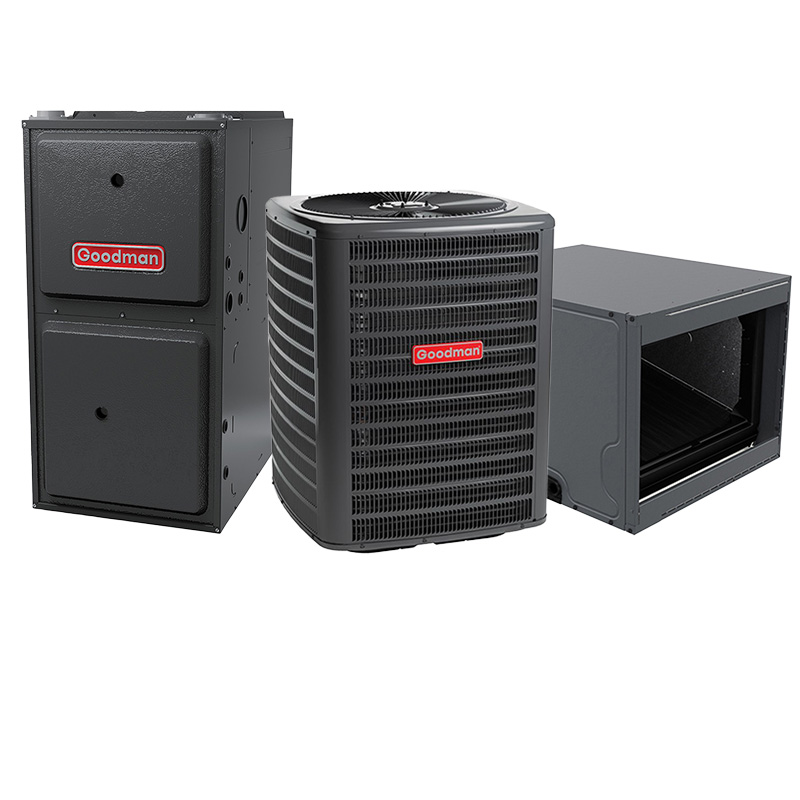
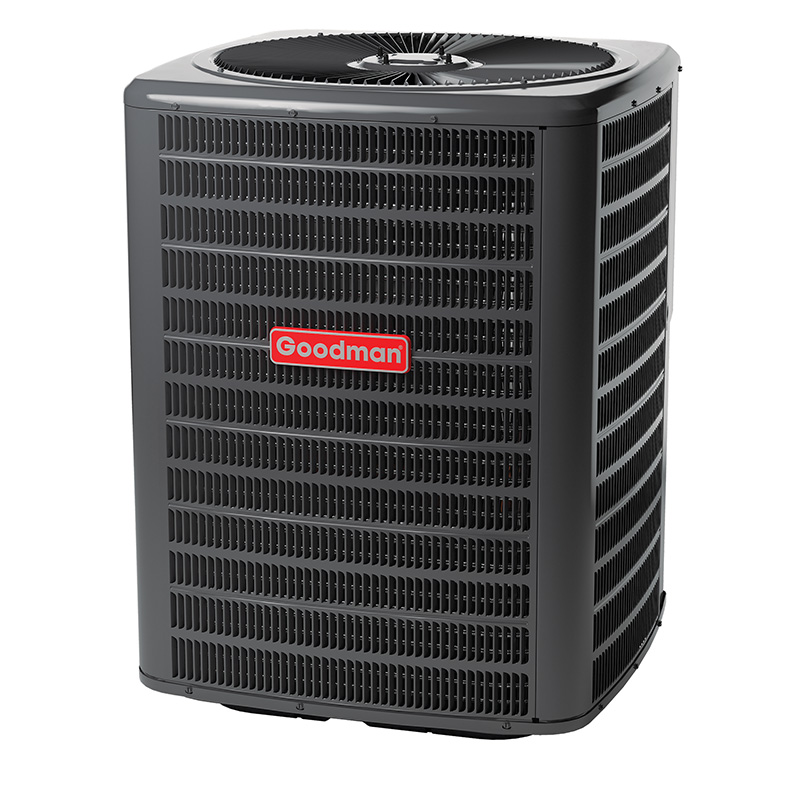
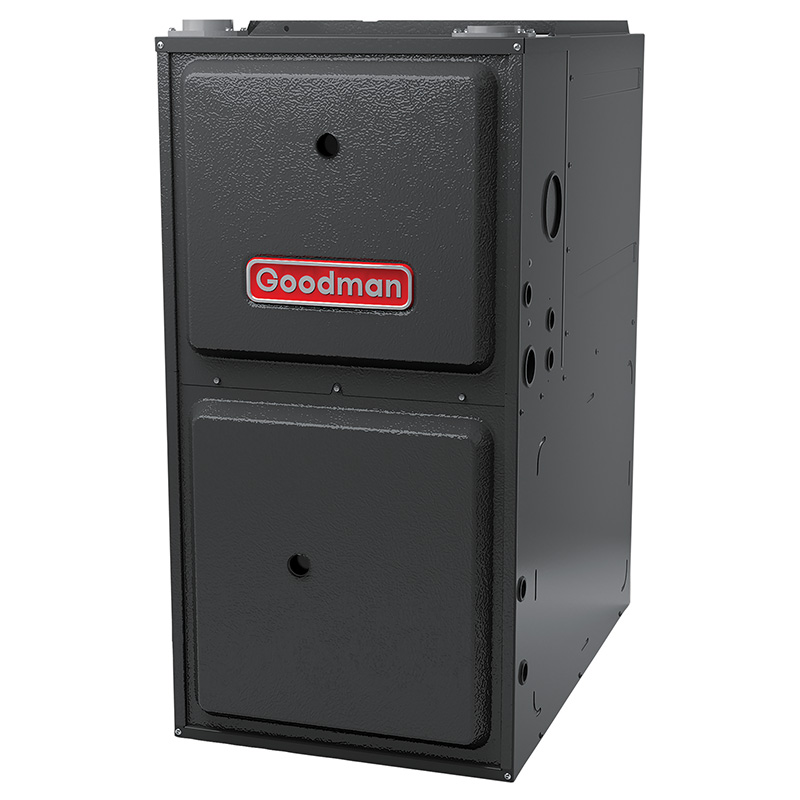
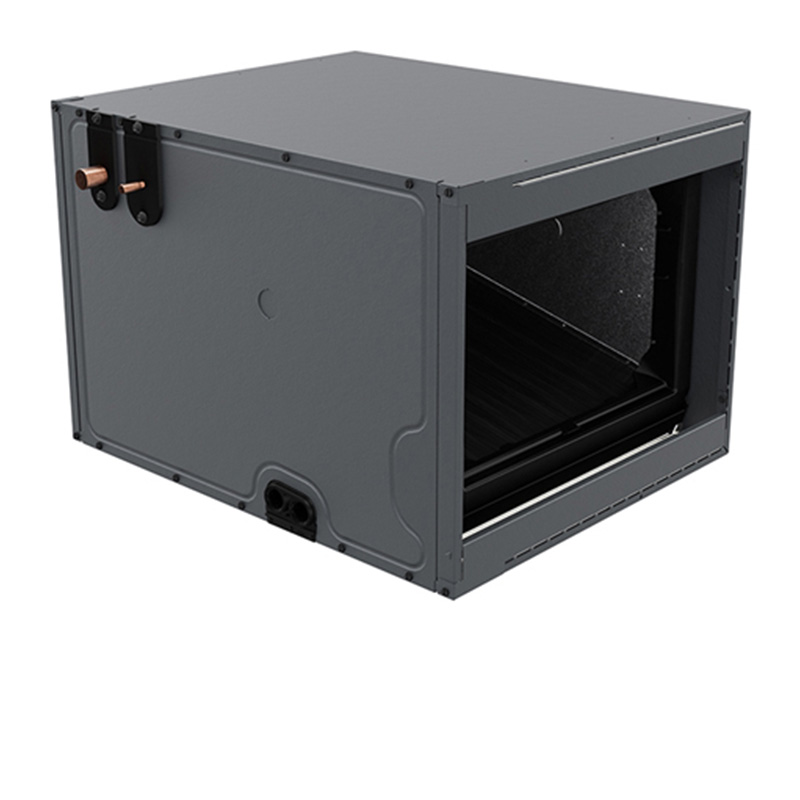
Goodman 2 Ton 15.2 SEER2 R32 AC System with 40,000 BTU 96% AFUE Gas Furnace – California & Colorado Ultra Low NOx, Horizontal, Multi-Speed ECM
View on AC Direct see your lowest price →Check current price on AC Direct →
Key features
- 15.2 SEER2 cooling efficiency meets Southwest federal minimums with margin
- 96% AFUE multi-speed ECM gas furnace reduces fuel waste to roughly 4 cents per dollar
- R-32 refrigerant with lower global-warming potential than R-410A
- Ultra Low NOx certified for California SCAQMD and Colorado compliance
- Horizontal configuration designed for attic, crawlspace, or side-discharge installs
- ECM blower motor delivers variable airflow for quieter, more consistent comfort
About this system
The Goodman 2-ton 15.2 SEER2 R-32 air conditioner paired with a 40,000 BTU 96% AFUE gas furnace is a horizontally configured system built for attic or crawlspace installations where vertical clearance is limited. The R-32 refrigerant is a lower global-warming-potential alternative to R-410A, and its presence here signals readiness for tightening environmental regulations in California and Colorado specifically. The Ultra Low NOx certification on the furnace meets the strict sub-14 ng/J emissions standards required in California’s South Coast Air Quality Management District and similar Colorado jurisdictions, so this is not a general-market unit swapped in — it is purpose-built for those regulatory environments.
At 15.2 SEER2 and 96% AFUE, this system sits at the lower end of the high-efficiency tier. The SEER2 rating clears federal minimums for the Southwest with modest room to spare, and the 96% AFUE furnace will recover nearly all of the fuel it burns, which matters in climates where heating loads are real. The multi-speed ECM blower motor adjusts airflow more precisely than a single-speed PSC motor, which translates to steadier indoor temperatures, quieter operation at partial loads, and better humidity management. For a 2-ton application — typically a well-insulated home in the 800-to-1,200 square foot range, or a smaller zone in a larger house — this system is appropriately sized for the efficiency class.
This is a system for budget-conscious homeowners in California or Colorado who need code-compliant equipment and have a horizontal installation space. It is not the choice for someone prioritizing long-term reliability over upfront cost, or for anyone expecting the low repair frequency associated with premium brands. The value proposition is real, but it comes with trade-offs that are documented and worth understanding before purchase.
This system earns its place as a code-compliant, budget-accessible option for California and Colorado homeowners who need horizontal Ultra Low NOx equipment and want to avoid the 20-to-25-percent premium of Carrier or Trane. The efficiency specs are solid without being exceptional, and the ECM blower adds real comfort value. The honest caveat is that Goodman's documented reliability record — shorter compressor lifespan, evaporator coil leak reports, and recurring capacitor failures after year seven — means you should budget for maintenance and consider whether the upfront savings offset potential mid-life repair costs.
Overall score is the average of the five ratings above.
What we like
- Purpose-built Ultra Low NOx certification removes compliance headaches in California and Colorado
- R-32 refrigerant positions the system ahead of likely future regulatory shifts away from R-410A
- 96% AFUE is a genuine high-efficiency rating that meaningfully lowers heating bills versus 80% AFUE units
- ECM multi-speed blower improves dehumidification and reduces noise at low demand compared to single-speed alternatives
- Priced 15 to 25 percent below comparable Trane, Lennox, and Carrier systems, which is a real dollar difference at this equipment tier
Trade-offs
- Compressor lifespan averaging 10 to 14 years runs noticeably shorter than the 15 to 20 years typical of premium brands
- Evaporator coil leaks appear in a meaningful share of owner reviews and can be a costly mid-life repair
- Dual-run capacitor failures are the most commonly reported issue, and while the fix is usually low cost, they tend to cluster after year seven
- A minority of owners have reported refrigerant leaks within the first year, typically tied to install or initial charge quality rather than the unit itself
What homeowners and pros say about Goodman
Homeowners who bought Goodman equipment comment most consistently on the upfront price relief — Google dealer reviews average around 3.8 out of 5, and affordability is the phrase that comes up most often in the positive responses. The picture on ConsumerAffairs is harder, with a score of roughly 2.5 out of 5 and a recurring pattern of owners describing repair bills that started accumulating around year seven or eight. The failure modes that show up most in those accounts align with what technicians observe in the field: dual-run capacitors are the most frequently replaced component, usually running 300 to 600 dollars per service call, and evaporator coil leaks surface often enough to be a known risk rather than a freak occurrence. Compressor longevity comes up too, with Goodman compressors averaging 10 to 14 years in real-world reports compared to the 15 to 20 years owners of Trane and Lennox equipment tend to report.
HVAC technicians have a nuanced view of Goodman that differs from the online review averages. Many pros will install Goodman without hesitation for customers where budget is the primary constraint, while emphasizing that the install itself — refrigerant charge accuracy, static pressure balancing, proper horizontal drain slope on a unit like this one — has an outsized effect on how long the equipment lasts. A minority of first-year refrigerant leak reports are generally attributed to installation or charge issues rather than factory defects, which reinforces that point. For this particular horizontal Ultra Low NOx R-32 system, where the configuration and refrigerant type both add complexity, the quality of the installing contractor is not a footnote — it is a central part of the value calculation.
Sources: ConsumerAffairs Goodman owner reviews, AHRI Directory of Certified Product Performance, U.S. DOE appliance and equipment efficiency standards, Goodman product specification sheets.
What it costs to run
At 15.2 SEER2, cooling this 2-ton system for a typical 1200-hour cooling season at the U.S. average electricity rate of $0.17/kWh works out to roughly $322 per year in cooling, about $43 less per year than a minimum-efficiency 13.4 SEER2 unit of the same size. Your real cost depends on your climate and local rate.
Method: (24,000 BTU/hr ÷ 15.2 SEER2) × 1200 hours ÷ 1000 × $0.17/kWh. Rate source: U.S. EIA average; cooling hours: moderate-climate estimate.
How it compares
| Brand | Comparable model | SEER2 | Stage | Price position |
|---|---|---|---|---|
| Goodman | 2-Ton 15.2 SEER2 R-32 with 96% AFUE Ultra Low NOx Horizontal | 15.2 | Single-stage | Value pick |
| Carrier | Comfort 15 (24ACC6) | 15.2 | Single-stage | 15 to 25 percent more than this Goodman system |
| Trane | XR15 | 15.0–15.5 | Single-stage | 20 to 25 percent more than this Goodman system |
| Lennox | Merit ML15XC1 | 15.0–15.5 | Single-stage | 15 to 20 percent more than this Goodman system |
Competitor rows are comparable single-stage units at similar efficiency; price is relative position, not a quote.
Questions about this system
Does this system actually meet California SCAQMD Ultra Low NOx requirements, or do I need to verify separately?
Yes, this unit is specifically certified to the Ultra Low NOx standard (sub-14 ng/J NOx emissions) required by the South Coast Air Quality Management District and similar Colorado jurisdictions. That said, your local building department or utility rebate program may require documentation at permit time, so keep the product certification sheet on hand for the installer.
Why does this system use R-32 instead of R-410A, and does that affect servicing costs?
R-32 has a global-warming potential roughly 68 percent lower than R-410A, and regulators in California are phasing R-410A out of new equipment. R-32 is also more efficient per pound, which helps the system hit its SEER2 rating. Servicing cost differences are minimal today, but technician familiarity with R-32 varies by region, so confirm your servicing contractor has the correct equipment and certification for it.
What is the warranty on this Goodman system, and what does it actually cover?
Goodman typically offers a 10-year parts limited warranty when the unit is registered within 60 days of installation. This covers the compressor and functional parts but does not cover labor, refrigerant, or diagnostic costs, which are the largest portion of most repair bills. Confirm registration requirements with your installer, as an unregistered unit may default to a shorter coverage period.
My attic install is tight. Is the horizontal configuration a true design feature or just a marketing label?
The furnace in this system is engineered for horizontal airflow discharge, meaning the heat exchanger, burner assembly, and drain connections are oriented for side-exit airflow rather than upflow. This is a real design difference, not just a label — using an upflow furnace on its side can cause condensate drainage problems and heat exchanger stress. If you have any uncertainty about the fit, have your installer confirm clearances against the installation manual before the unit ships.
Goodman has mixed reviews online. Should I be worried about buying this brand?
Goodman scores around 2.5 out of 5 on ConsumerAffairs, which is a complaint-heavy channel, and around 3.8 out of 5 on Google dealer reviews where affordability is the most cited positive. The documented failure patterns — dual-run capacitor failures (typically a 300 to 600 dollar fix), evaporator coil leaks, and compressor lifespans of 10 to 14 years versus 15 to 20 for premium brands — are real trade-offs, not just review noise. A well-executed install by an experienced technician significantly reduces early failure risk, so choosing your contractor carefully matters at least as much as choosing the brand.
Specifications
| Cooling capacity | 2 Ton |
| Efficiency | 15.2 SEER2 |
| Furnace output | 40,000 BTU |
| Furnace efficiency | 96% AFUE |
| Configuration | Horizontal |
| Refrigerant | R-32 |