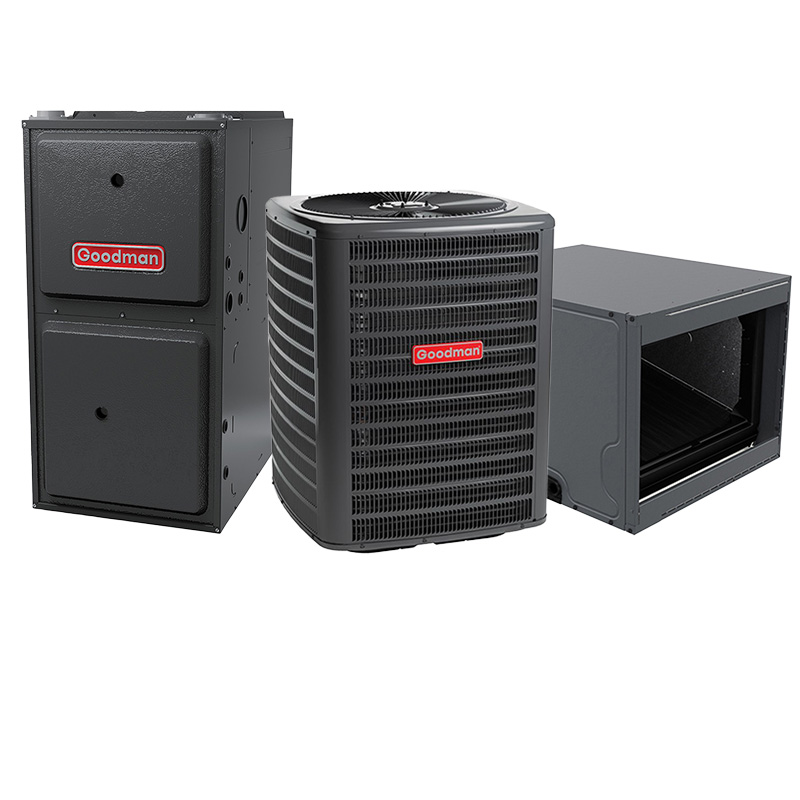
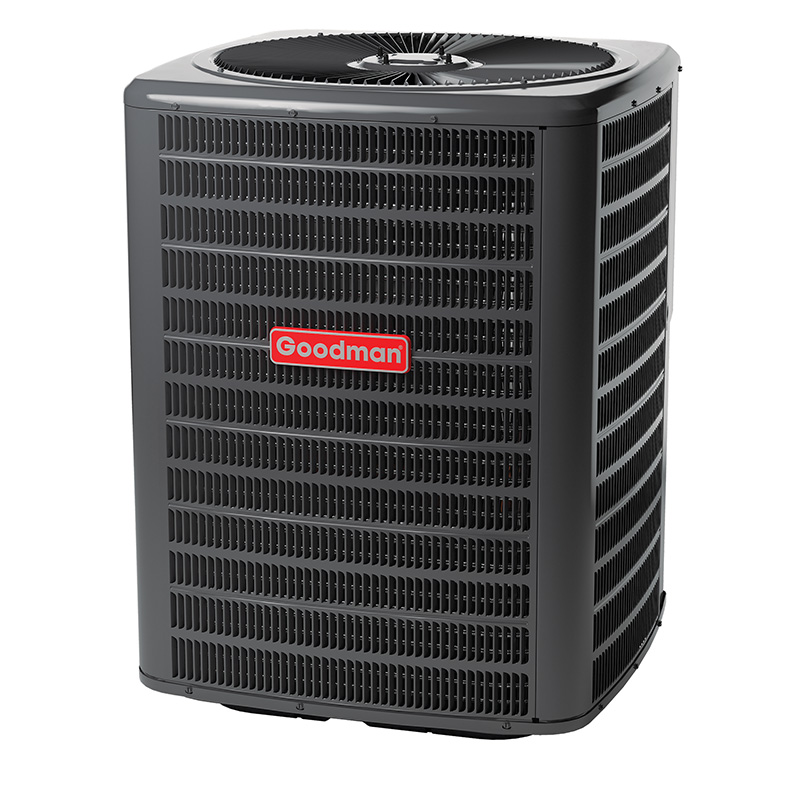
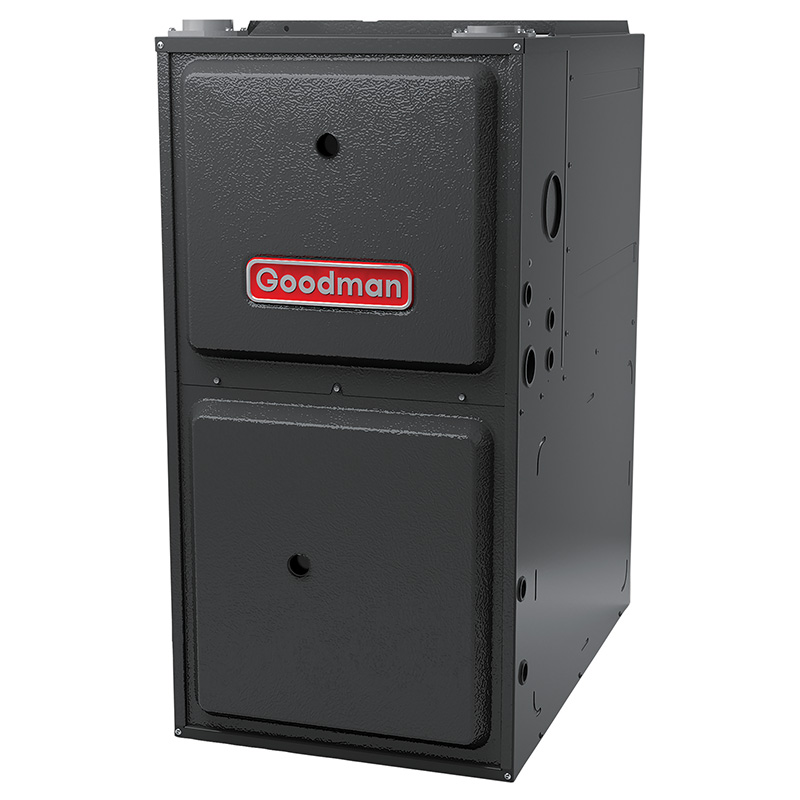
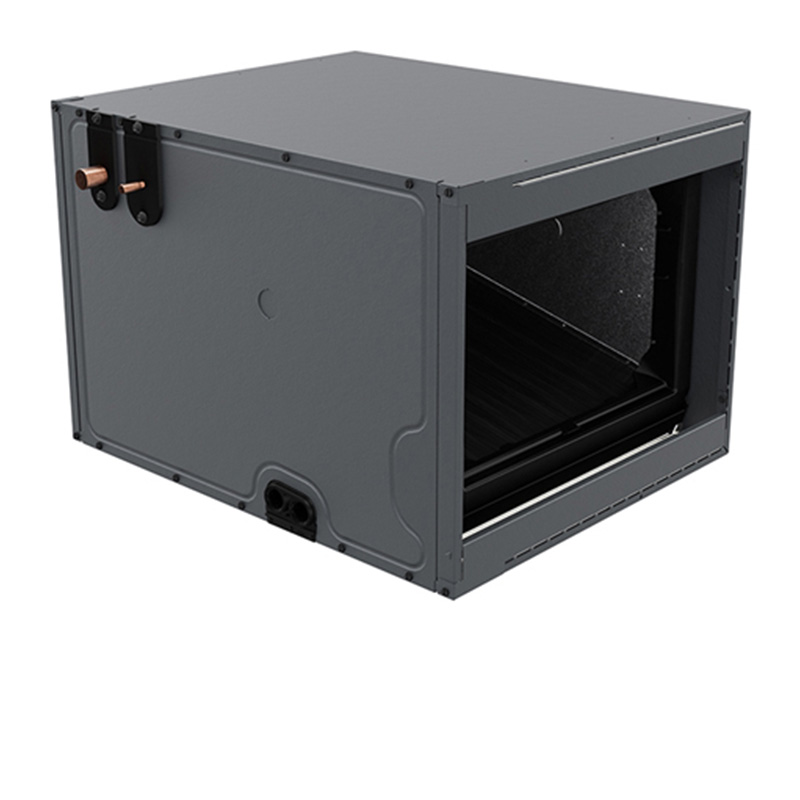
Goodman 3 Ton 15.2 SEER2 R32 AC System with 80,000 BTU 96% AFUE Gas Furnace – California & Colorado Ultra Low NOx, Horizontal, Multi-Speed ECM
View on AC Direct see your lowest price →Check current price on AC Direct →
Key features
- 15.2 SEER2 cooling efficiency meets current federal minimums and reduces operating costs vs. older systems
- 96% AFUE gas furnace converts nearly all fuel to heat, qualifying as high-efficiency
- R-32 refrigerant with Ultra Low NOx certification required for California and Colorado installations
- Horizontal configuration designed for attic or crawlspace air handler placement
- Multi-speed ECM blower motor improves airflow control and reduces energy use vs. single-speed motors
- 3-ton / 80,000 BTU capacity suited to approximately 1,400 to 1,800 sq ft (load calc required)
About this system
The Goodman 3-ton 15.2 SEER2 system paired with an 80,000 BTU 96% AFUE gas furnace is a straightforward, no-frills solution for homeowners replacing aging equipment in mild to moderately cold climates. The 3-ton cooling capacity suits homes roughly in the 1,400 to 1,800 square foot range, though actual sizing should always be confirmed with a Manual J load calculation. The 15.2 SEER2 rating clears the federal minimum efficiency threshold for most regions without reaching premium-tier pricing, meaning you get solid running costs without paying for the last few percentage points of efficiency gains.
The horizontal configuration makes this bundle a specific fit: it is designed for attic or crawlspace installs where the air handler lies on its side rather than standing upright. The furnace runs at 96% AFUE, meaning it converts 96 cents of every fuel dollar into heat, which is a high-efficiency rating that can meaningfully cut gas bills compared to older 80% units. The multi-speed ECM blower motor adjusts airflow more precisely than a single-speed PSC motor, improving comfort and reducing short-cycling. R-32 refrigerant has a lower global warming potential than the R-410A it replaces, and this unit meets the California and Colorado Ultra Low NOx emissions standards required in those states, so buyers outside those states should confirm compatibility with local codes.
This system fits buyers who need a compliant, reasonably efficient replacement on a budget, especially in attic-mount applications common in the Southwest and mountain West. It is not aimed at buyers seeking the longest possible equipment life or premium brand support infrastructure, but it fills a real gap for cost-conscious homeowners who want current-spec refrigerant and emissions compliance without stretching to Trane or Lennox pricing.
This Goodman bundle delivers on compliance and efficiency specs at a price point that undercuts Carrier, Trane, and Lennox by a meaningful margin, but the brand's documented history of capacitor failures, evaporator coil leaks, and shorter average compressor life means ongoing maintenance costs can erode the upfront savings over time. It is a reasonable choice when paired with a skilled installer and a solid maintenance plan, but it asks more of the owner than premium alternatives do.
Overall score is the average of the five ratings above.
What we like
- Priced roughly 15 to 25 percent below comparable Carrier, Trane, and Lennox systems
- 96% AFUE furnace is genuinely high-efficiency and can cut monthly gas costs vs. mid-efficiency units
- R-32 refrigerant and Ultra Low NOx rating satisfy strict California and Colorado requirements out of the box
- ECM multi-speed blower improves comfort and humidity control compared to single-speed alternatives
- Horizontal layout addresses a specific install need that many competing bundles do not accommodate as readily
Trade-offs
- Dual-run capacitors are the most commonly reported failure point, typically needing replacement within 7 to 10 years
- Evaporator coil leaks appear in a meaningful share of owner reviews, a more costly repair than capacitor replacement
- Compressor lifespan averages 10 to 14 years versus 15 to 20 years reported for premium brand equipment
- A minority of owners report refrigerant leaks in the first year, often tied to install or charge quality rather than the unit itself
What homeowners and pros say about Goodman
On ConsumerAffairs, Goodman as a brand scores around 2.5 out of 5, a channel that skews toward unhappy owners but where the pattern is consistent enough to take seriously: repair costs climb after roughly year 7, with dual-run capacitors being the most frequently cited culprit. Capacitor replacement is a low-cost fix in the 300 to 600 dollar range and is not unique to Goodman, but it does come up more often in owner accounts here than with premium brands. Evaporator coil leaks are the more costly concern, showing up in a meaningful share of reviews and pointing to either a manufacturing quality issue or install-related stress on the coil. A smaller group of owners report refrigerant leaks within the first year, which experienced HVAC technicians generally attribute to install or charge quality rather than a defect in the unit itself.
Google dealer reviews paint a more moderate picture, with Goodman equipment consistently averaging around 3.8 out of 5 across dealer locations where affordability is the most common reason for praise. HVAC pros who work on Goodman equipment regularly tend to describe it as serviceable equipment that performs close to spec when installed carefully, while acknowledging that compressor lifespan averaging 10 to 14 years falls short of the 15 to 20 years seen more often with Trane, Carrier, and Lennox equipment. For this specific horizontal R-32 bundle, the installer’s experience with the configuration and with proper R-32 charging procedures is especially important, since attic installs add complexity and early refrigerant issues are almost always traced back to the commissioning process rather than the equipment itself.
Sources: ConsumerAffairs Goodman owner reviews, AHRI Directory of Certified Product Performance, U.S. DOE appliance and equipment efficiency standards, Goodman product specification sheets.
What it costs to run
At 15.2 SEER2, cooling this 3-ton system for a typical 1200-hour cooling season at the U.S. average electricity rate of $0.17/kWh works out to roughly $483 per year in cooling, about $65 less per year than a minimum-efficiency 13.4 SEER2 unit of the same size. Your real cost depends on your climate and local rate.
Method: (36,000 BTU/hr ÷ 15.2 SEER2) × 1200 hours ÷ 1000 × $0.17/kWh. Rate source: U.S. EIA average; cooling hours: moderate-climate estimate.
How it compares
| Brand | Comparable model | SEER2 | Stage | Price position |
|---|---|---|---|---|
| Goodman | 3-ton 15.2 SEER2 R-32 / 80k BTU 96% AFUE Horizontal Bundle | 15.2 | Multi-speed | Value pick |
| Carrier | Comfort Series (24ACC636 / 58TP) | 15.2 | Single-stage | Typically 15 to 25 percent more than this Goodman bundle |
| Trane | XR15 / S9X2 (3 ton / 80k BTU) | 15.0–15.5 | Single-stage / multi-speed | Typically 20 to 30 percent more than this Goodman bundle |
| Lennox | Merit Series ML15XC1 / ML196E (3 ton / 80k BTU) | 15.2 | Single-stage | Typically 20 to 35 percent more than this Goodman bundle |
Competitor rows are comparable single-stage units at similar efficiency; price is relative position, not a quote.
Questions about this system
Why does this system specify horizontal configuration, and can I install it vertically?
Horizontal configuration means the air handler cabinet is designed to lie on its side, which is how most attic and crawlspace installs are set up in California and the Southwest. Using a horizontal-rated unit in an upright vertical position is not correct and can affect drainage and airflow. If your install is upright, you need a vertical or multi-position air handler instead.
Is R-32 refrigerant safe and can my existing line set handle it?
R-32 is mildly flammable (A2L classification) but is widely used in new equipment and is handled safely by certified HVAC technicians under current standards. It requires a slightly different handling protocol than R-410A. Existing copper line sets are generally compatible with R-32, but your installer should verify line set sizing and condition before reuse, as an undersized or degraded line set can contribute to the refrigerant leak issues some owners report in the first year.
What does the Goodman warranty actually cover on this system, and are there registration requirements?
Goodman typically offers a 10-year parts limited warranty on registered systems, which must be registered within a set window after installation (usually 60 days) to receive the full term. Compressors often carry a longer registered warranty. Labor is not covered by the manufacturer, so factor in service call costs when budgeting. Always confirm current warranty terms at registration since they can change.
How often should I expect to replace the capacitor, and what does that repair cost?
Dual-run capacitors are the most commonly reported failure on Goodman AC units, and many owners encounter at least one replacement over the system's life, often after year 7. The repair is generally straightforward and inexpensive, typically in the 300 to 600 dollar range including labor. Keeping a service agreement with a local contractor makes this kind of routine repair faster to address.
Does the 96% AFUE furnace qualify for any federal or state tax credits?
As of 2025, the federal Energy Efficient Home Improvement Credit (25C) provides a credit of up to 30 percent of qualifying furnace costs, capped annually, for systems meeting efficiency thresholds. A 96% AFUE gas furnace typically meets those thresholds in most climate zones. California and Colorado may have additional utility rebate programs. Consult a tax professional and check current program details, as credit terms and caps change year to year.
Specifications
| Cooling capacity | 3 Ton |
| Efficiency | 15.2 SEER2 |
| Furnace output | 80,000 BTU |
| Furnace efficiency | 96% AFUE |
| Configuration | Horizontal |
| Refrigerant | R-32 |