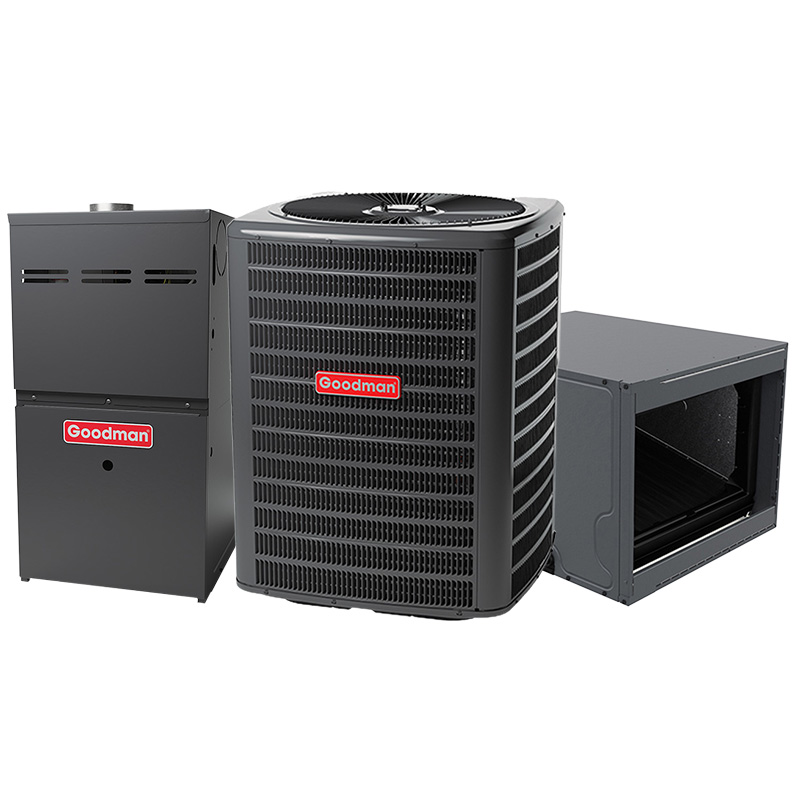
Goodman 2 Ton AC And 60000 BTU 80% AFUE Gas Furnace System | 15.2 SEER2 AC | Multi-Speed ECM Low NOx Furnace | Horizontal | R32
View on AC Direct see your lowest price →Check current price on AC Direct →
Key features
- 2-ton cooling capacity with 15.2 SEER2 efficiency rating
- 60,000 BTU gas furnace at 80% AFUE with multi-speed ECM blower motor
- Horizontal configuration for attic or crawlspace installations
- R-32 refrigerant, which has a lower global warming potential than R-410A
- Low NOx burner design for reduced nitrogen oxide emissions
- Factory-matched system components designed for simplified commissioning
About this system
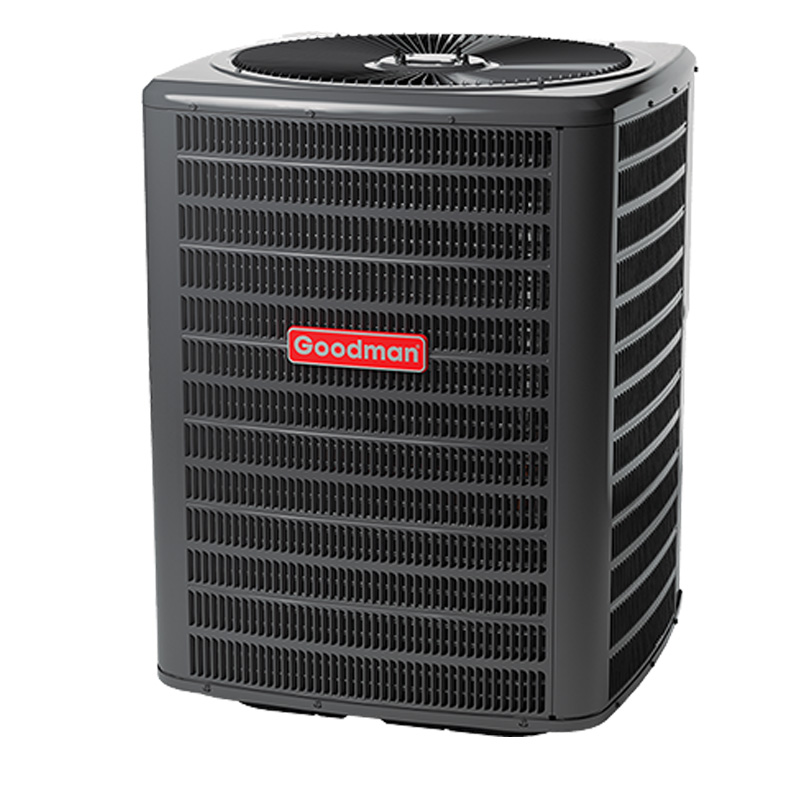
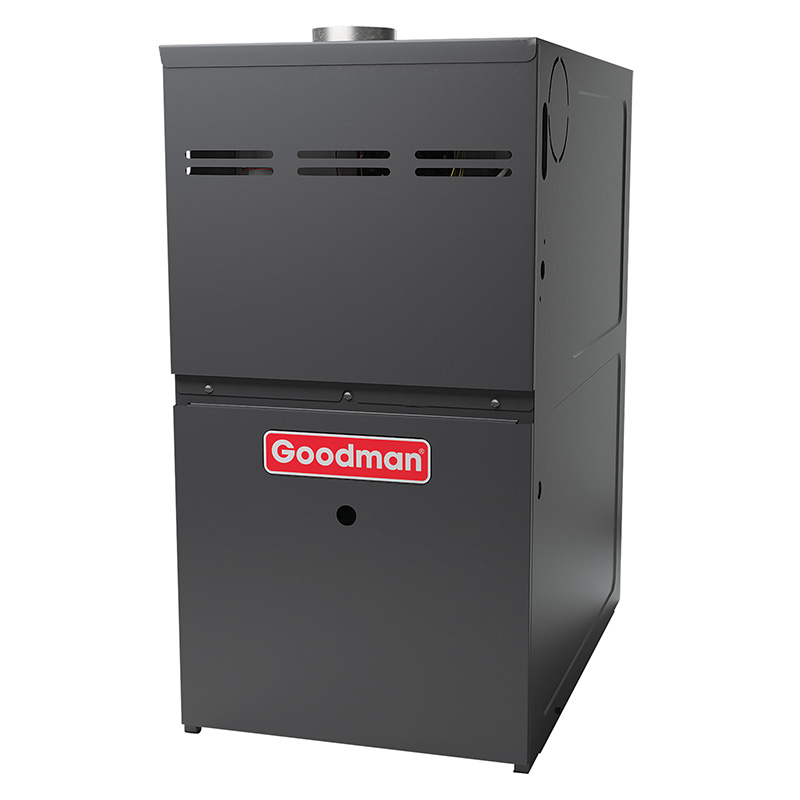
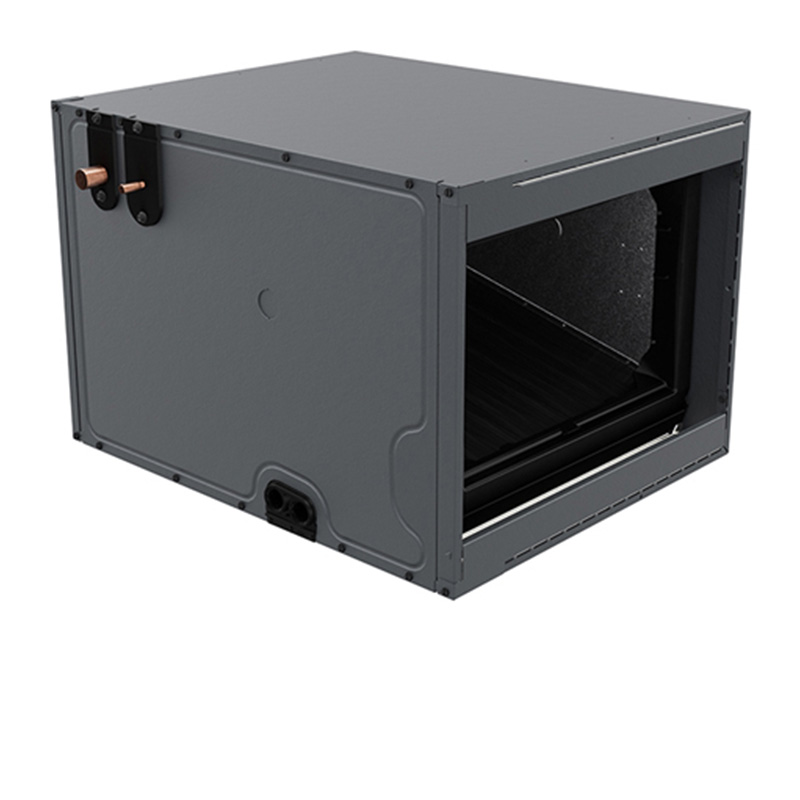
This Goodman bundle pairs a 2-ton, 15.2 SEER2 split-system air conditioner with a 60,000 BTU, 80% AFUE multi-speed ECM gas furnace configured for horizontal installation. The horizontal orientation makes it a direct fit for attic or crawlspace applications where vertical units simply will not work, and the R-32 refrigerant charge puts it ahead of the older R-410A equipment still sitting on many distributor shelves. At 2 tons, it is sized for roughly 900 to 1,300 square feet of conditioned space depending on local climate, insulation quality, and ceiling height.
The 15.2 SEER2 rating clears the federal minimum efficiency threshold with a modest margin, making it a code-compliant choice rather than a high-efficiency showcase. The 80% AFUE furnace means one-fifth of the gas burned exits as exhaust, which is a real running-cost consideration in colder climates where a 96% AFUE unit would pay back its premium in fuel savings within several heating seasons. The multi-speed ECM blower motor does improve comfort and reduce electricity draw compared to a single-speed PSC motor, and it is one of the more useful real-world upgrades in this price tier. Buyers in mild-to-moderate heating climates or those prioritizing upfront cost over long-term fuel savings are the most natural fit.
This Goodman bundle is a cost-effective entry point for homeowners who need a horizontal-configuration system and want to avoid paying premium-brand prices. The 15.2 SEER2 efficiency and multi-speed ECM blower are genuine assets, but the 80% AFUE furnace and Goodman's documented repair history after year 7 are honest trade-offs worth factoring into the total ownership calculation. It rewards careful installation and routine maintenance far more than competing brands at higher price points.
Overall score is the average of the five ratings above.
What we like
- Purchase price typically runs 15 to 25 percent below comparable Trane, Carrier, and Lennox systems
- Multi-speed ECM blower improves humidity control and comfort compared to single-speed alternatives
- R-32 refrigerant offers lower global warming potential and is increasingly well-supported by technicians
- Horizontal configuration fills a specific installation need that limits the competitive field
- Low NOx burner meets stricter air-quality regulations in places like California without special ordering
Trade-offs
- 80% AFUE means higher annual gas bills versus 96% AFUE alternatives, especially in cold climates
- Dual-run capacitors are the most commonly reported failure point, typically requiring service calls in the 300 to 600 dollar range
- Compressor lifespan averages 10 to 14 years versus 15 to 20 years for premium-brand compressors
- Evaporator coil leaks and first-year refrigerant issues appear in a meaningful share of owner reports, often tied to install quality
What homeowners and pros say about Goodman
Homeowners who have lived with a Goodman system for several years tend to echo what the numbers suggest. On Google dealer review pages, which aggregate to roughly 3.8 out of 5 stars across hundreds of reviews per location, the most common praise centers on affordability and the straightforward nature of early-years ownership. The complaints that surface consistently involve repair costs that climb after roughly year 7, which aligns closely with the ConsumerAffairs rating of about 2.5 out of 5, a channel that skews toward owners who are frustrated enough to write a review. Capacitor failures and evaporator coil leaks are the failure modes that come up most often by name in those accounts, and compressor longevity that averages 10 to 14 years trails what premium brands typically deliver.
HVAC technicians who work on Goodman equipment regularly tend to hold a more pragmatic view. They note that the brand’s parts are widely available and reasonably priced, which keeps service calls manageable when something does go wrong. The consistent professional caution, though, is that Goodman’s performance ceiling is heavily dependent on installation quality. A well-commissioned Goodman system installed by an experienced technician who checks the refrigerant charge, verifies airflow, and properly levels a horizontal unit will outperform a carelessly installed premium-brand system. The inverse is also true, and with this horizontal configuration adding one more variable to the install process, the choice of installer deserves at least as much attention as the choice of equipment.
Sources: ConsumerAffairs Goodman owner reviews, AHRI Directory of Certified Product Performance, U.S. DOE appliance and equipment efficiency standards, Goodman product specification sheets.
What it costs to run
At 15.2 SEER2, cooling this 2-ton system for a typical 1200-hour cooling season at the U.S. average electricity rate of $0.17/kWh works out to roughly $322 per year in cooling, about $43 less per year than a minimum-efficiency 13.4 SEER2 unit of the same size. Your real cost depends on your climate and local rate.
Method: (24,000 BTU/hr ÷ 15.2 SEER2) × 1200 hours ÷ 1000 × $0.17/kWh. Rate source: U.S. EIA average; cooling hours: moderate-climate estimate.
How it compares
| Brand | Comparable model | SEER2 | Stage | Price position |
|---|---|---|---|---|
| Goodman | GLXS / GCVC 2-ton 15.2 SEER2 + 80% AFUE Horizontal Bundle | 15.2 | Single-stage | Value pick |
| Carrier | Comfort 24ACC636 + 58TP 80% AFUE | 15.2 | Single-stage | Priced approximately 20 percent above this Goodman bundle |
| Trane | XR15 + S8X1 80% AFUE | 15.2 | Single-stage | Priced approximately 20 to 25 percent above this Goodman bundle |
| Lennox | Merit ML14XC1 + ML180 80% AFUE | 15.2 | Single-stage | Priced approximately 25 percent above this Goodman bundle |
Competitor rows are comparable single-stage units at similar efficiency; price is relative position, not a quote.
Questions about this system
Why does the horizontal configuration matter, and does it affect performance?
Horizontal units are built to lie on their side, which is required in attic platforms and tight crawlspaces where vertical furnaces will not fit. Performance is equivalent to a vertical unit of the same specs as long as the unit is properly leveled and the condensate drain is correctly sloped. An improper slope is one of the more common install errors on horizontal furnaces.
Is 80% AFUE good enough, or should I pay more for a 96% AFUE furnace?
For mild-to-moderate heating climates or homes where gas prices are low, 80% AFUE is adequate and the upfront savings can outweigh the efficiency gap. In cold climates with long heating seasons, the fuel cost difference between 80% and 96% AFUE can be meaningful enough over 10-plus years that the higher-efficiency unit pays for itself. Calculate your annual heating hours before deciding.
What is the most common repair this system is likely to need?
Based on documented Goodman owner reports, the dual-run capacitor on the outdoor AC unit is the most frequently cited failure, usually occurring after several years of use. It is a relatively straightforward repair in the 300 to 600 dollar range if caught early. Keeping up with annual maintenance visits is the most practical way to catch a weakening capacitor before it causes a compressor lockout.
What does R-32 refrigerant mean for me as an owner?
R-32 has a lower global warming potential than R-410A and is increasingly stocked by HVAC distributors and service technicians, so future service calls should not be complicated by refrigerant availability. If a first-year refrigerant leak occurs, it is almost always a sign of an installation or charging error rather than a manufacturing defect, so choosing an experienced installer matters.
What warranty does Goodman typically provide on this type of system?
Goodman generally offers a 10-year parts limited warranty when the equipment is registered within a specified window after installation, and a lifetime heat exchanger limited warranty on the furnace. The compressor is typically covered under the same 10-year parts warranty. Labor costs are not covered, which is a real out-of-pocket exposure if a covered part fails outside a service plan.
Specifications
| Cooling capacity | 2 Ton |
| Efficiency | 15.2 SEER2 |
| Furnace output | 60000 BTU |
| Furnace efficiency | 80% AFUE |
| Configuration | Horizontal |
| Refrigerant | R-32 |