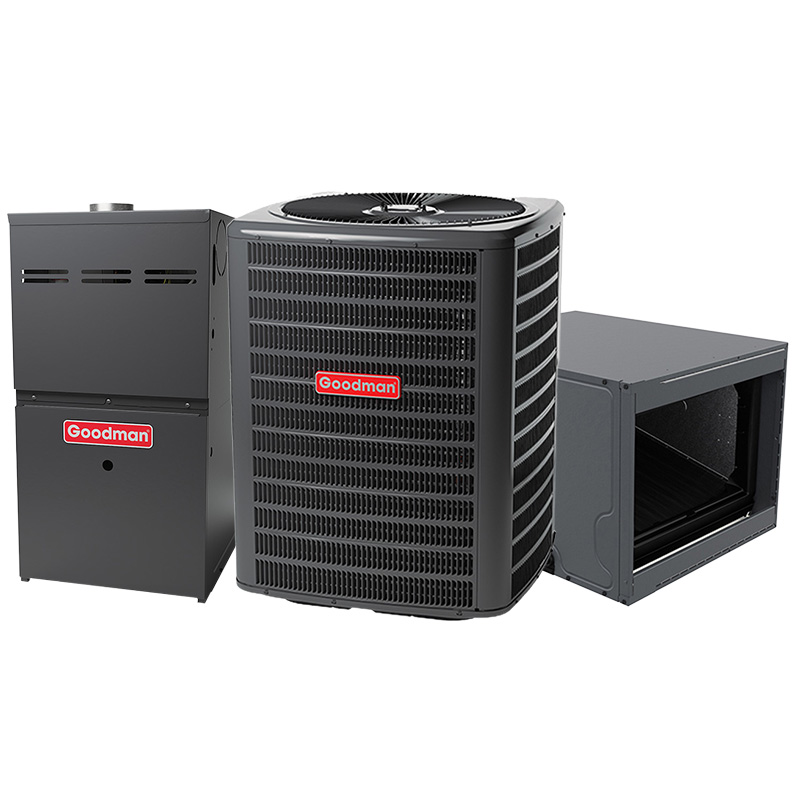
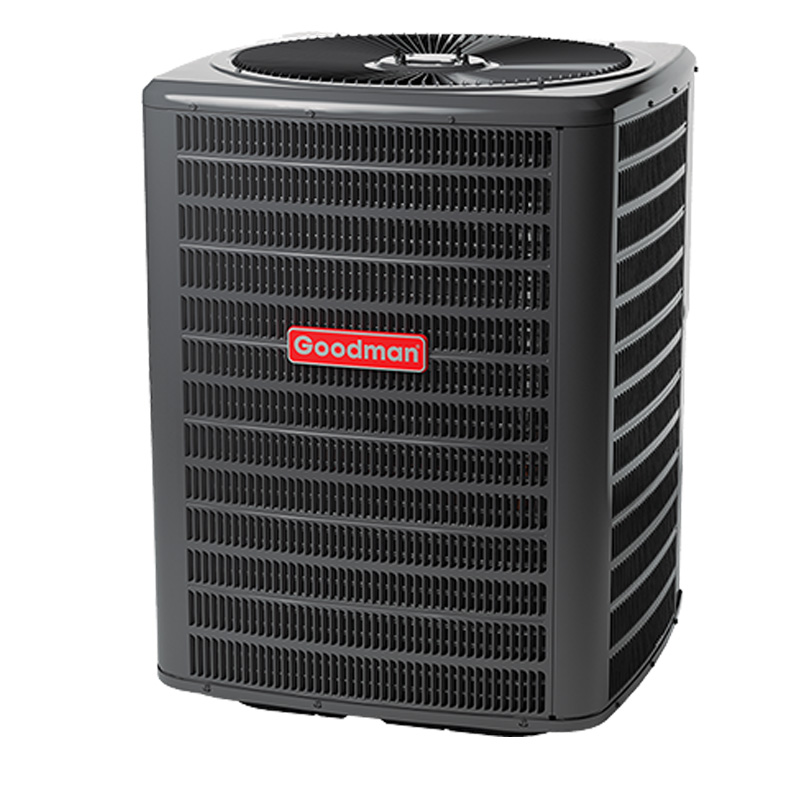
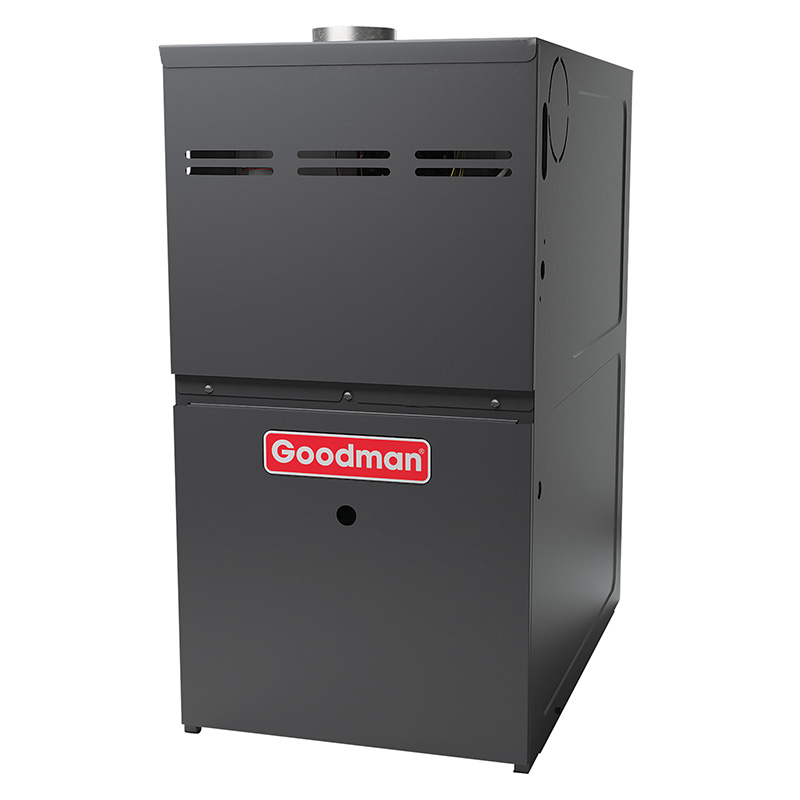
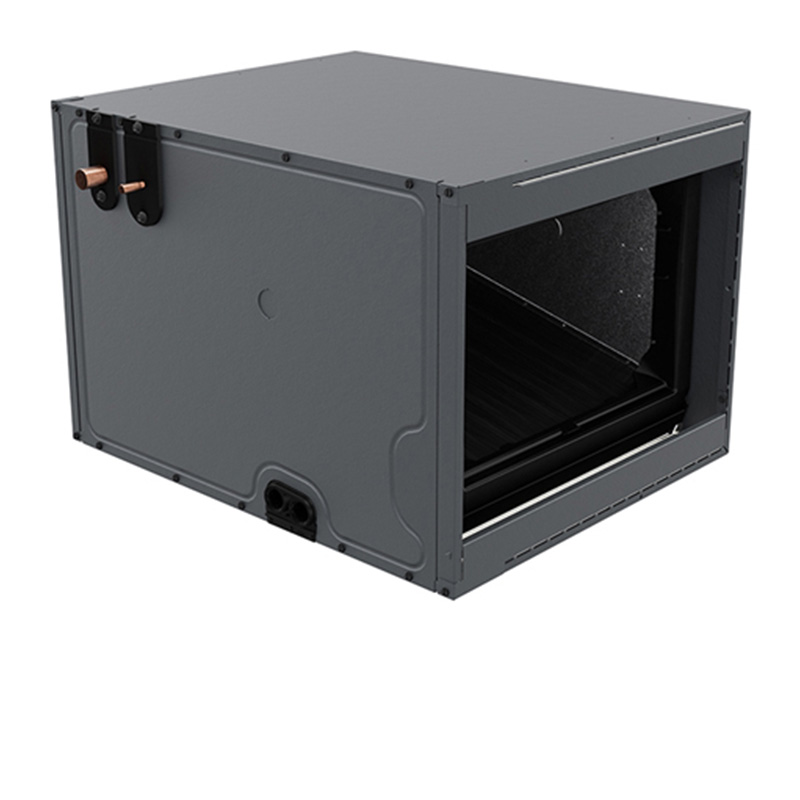
Goodman 3 Ton AC And 60000 BTU 80% AFUE Gas Furnace System | 15.2 SEER2 AC | Multi-Speed ECM Low NOx Furnace | Horizontal | R32
View on AC Direct see your lowest price →Check current price on AC Direct →
Key features
- 3-ton cooling capacity with 15.2 SEER2 efficiency rating
- 60,000 BTU gas furnace at 80% AFUE heating efficiency
- Multi-speed ECM blower motor for quieter, more even airflow
- Horizontal configuration for attic, crawl space, or closet installs
- R-32 refrigerant with lower global-warming potential than R-410A
- Factory-matched system designed for straightforward AHU compatibility
About this system
This Goodman bundle pairs a 3-ton, 15.2 SEER2 air conditioner with a 60,000 BTU, 80% AFUE multi-speed ECM gas furnace in a horizontal configuration, making it a practical choice for homes where the air handler sits in a crawl space, attic, or on its side in a utility closet. The R-32 refrigerant charge is a forward-looking choice: R-32 has a lower global-warming potential than the R-410A it replaces and is increasingly the industry standard, so parts and refrigerant should remain accessible for years ahead. At 3 tons and 60,000 BTU of heating capacity, this system generally suits homes in the 1,400 to 1,800 square foot range, though a proper Manual J load calculation by your installer is the only reliable way to confirm sizing.
The 15.2 SEER2 rating lands just above the federal minimum efficiency threshold now required in most U.S. climate zones, which means you get baseline energy savings without paying the premium of a two-stage or variable-speed compressor. The multi-speed ECM blower motor in the furnace does improve airflow comfort and operating costs compared to a single-speed PSC motor, and it handles static pressure better across a wider range of duct configurations. The 80% AFUE furnace is the more affordable heating tier; homeowners in colder climates who run their heat heavily from October through April may find that a 96% or higher AFUE unit pays back the price difference over time, but for moderate-use or mixed climates, 80% is a reasonable call.
This Goodman horizontal system is a competitively priced entry point for homeowners who want a code-compliant, R-32-ready replacement without the cost of a premium brand or variable-speed technology. Performance is adequate for the price tier, but long-term reliability sits below what premium brands deliver, and outcomes depend heavily on installer quality. It suits buyers who are budget-conscious and plan to maintain the system proactively.
Overall score is the average of the five ratings above.
What we like
- Priced 15 to 25 percent below comparable Trane, Lennox, and Carrier systems
- R-32 refrigerant is future-ready and increasingly the industry standard
- Multi-speed ECM motor improves comfort and reduces energy use compared to single-speed units
- Horizontal configuration suits attic and crawl space installs where vertical units cannot fit
- Factory-matched components simplify system compatibility decisions
Trade-offs
- Dual-run capacitors are a documented early failure point, typically requiring a 300 to 600 dollar repair
- Compressor lifespan averages 10 to 14 years versus 15 to 20 years for premium brands
- Evaporator coil leaks are reported in a meaningful share of owner reviews, particularly after year 7
- 80% AFUE is the lower heating efficiency tier and may not recoup fuel costs in colder climates versus a high-efficiency furnace
What homeowners and pros say about Goodman
Homeowners who choose Goodman most often cite the upfront cost as the deciding factor, and that sentiment shows up consistently in Google dealer reviews, which average around 3.8 out of 5 across locations. The praise is straightforward: buyers feel they got working, code-compliant equipment without paying premium-brand prices. The harder feedback comes from ConsumerAffairs, where Goodman sits at roughly 2.5 out of 5, and the pattern in those complaints is consistent: systems that run without issue for the first several years start accumulating repair costs around year 7 and beyond. The specific failure modes that appear most often in owner accounts are dual-run capacitor failures, which are relatively inexpensive to fix in the 300 to 600 dollar range but still an inconvenience, and evaporator coil leaks, which are more costly and disruptive. A smaller share of owners report refrigerant leaks within the first year, something technicians generally attribute to install or initial charge issues rather than a factory defect.
HVAC professionals tend to have a pragmatic view of Goodman for a system like this horizontal bundle. Many will install it without hesitation for cost-sensitive customers, but they consistently note that installation quality is the single biggest variable in how the system performs and how long it lasts. A well-installed Goodman with proper refrigerant charge and duct design will outperform a poorly installed premium brand every time. The compressor lifespan concern is real: Goodman compressors tend to average 10 to 14 years in real-world use versus 15 to 20 years for Trane, Carrier, or Lennox, which matters if you are planning to stay in your home long term. For buyers who treat this as a medium-term solution, maintain it annually, and budget for a possible capacitor swap along the way, this system delivers reasonable value for the price.
Sources: ConsumerAffairs Goodman owner reviews, AHRI Directory of Certified Product Performance, U.S. DOE appliance and equipment efficiency standards, Goodman product specification sheets.
What it costs to run
At 15.2 SEER2, cooling this 3-ton system for a typical 1200-hour cooling season at the U.S. average electricity rate of $0.17/kWh works out to roughly $483 per year in cooling, about $65 less per year than a minimum-efficiency 13.4 SEER2 unit of the same size. Your real cost depends on your climate and local rate.
Method: (36,000 BTU/hr ÷ 15.2 SEER2) × 1200 hours ÷ 1000 × $0.17/kWh. Rate source: U.S. EIA average; cooling hours: moderate-climate estimate.
How it compares
| Brand | Comparable model | SEER2 | Stage | Price position |
|---|---|---|---|---|
| Goodman | GMSS960603BN + GSXH503610 | 15.2 | Single-stage | Value pick |
| Carrier | Performance 13 / 15 Series (24ACC636) | 15.2 | Single-stage | Moderately higher than Goodman |
| Trane | XR15 / S8X1 Series | 15.2 | Single-stage | Noticeably higher than Goodman |
| Lennox | Merit ML15 / SL280 Series | 15.2 | Single-stage | Noticeably higher than Goodman |
Competitor rows are comparable single-stage units at similar efficiency; price is relative position, not a quote.
Questions about this system
Is the horizontal configuration limiting? Can this system be installed in a standard upflow or downflow position?
This specific bundle is configured for horizontal installation, meaning the air handler is oriented to discharge air sideways rather than vertically. If your space requires upflow or downflow, you would need a different configuration of the same or similar equipment. Always confirm orientation requirements with your installer before purchasing.
What does R-32 refrigerant mean for me practically, and is it harder to service?
R-32 is a single-component refrigerant with a lower global-warming potential than R-410A, and it is increasingly stocked by HVAC distributors and technicians. Most certified HVAC technicians can handle it, though some older equipment and gauges require R-32-compatible tools. It is not a significant service burden for any licensed technician working on modern systems.
Goodman has mixed reviews online. How worried should I be about long-term reliability?
Goodman scores roughly 2.5 out of 5 on ConsumerAffairs, a channel that skews toward complaints, with repair costs rising after roughly year 7 being the recurring theme. Google dealer reviews average around 3.8 out of 5, where affordability is the most common praise. The documented weak points are dual-run capacitors, evaporator coil leaks, and compressor lifespans that average shorter than premium brands, so budgeting for a capacitor replacement and staying current on maintenance is wise.
Will 60,000 BTU of heating be enough for my home?
BTU requirements depend on your home's square footage, insulation quality, window area, climate zone, and duct design, not square footage alone. A proper Manual J load calculation is the only reliable method to confirm that 60,000 BTU is the right size. Oversizing or undersizing a furnace causes efficiency losses, comfort issues, and premature wear.
Does the 80% AFUE furnace make sense, or should I pay more for a higher-efficiency model?
At 80% AFUE, 20 cents of every dollar spent on gas escapes as exhaust. A 96% or higher AFUE furnace recovers most of that heat, but costs more upfront. The payback period depends on your local gas prices, how many heating hours your climate demands, and how long you plan to stay in the home. In mild to moderate climates with shorter heating seasons, the 80% tier is often the more practical financial choice.
Specifications
| Cooling capacity | 3 Ton |
| Efficiency | 15.2 SEER2 |
| Furnace output | 60000 BTU |
| Furnace efficiency | 80% AFUE |
| Configuration | Horizontal |
| Refrigerant | R-32 |