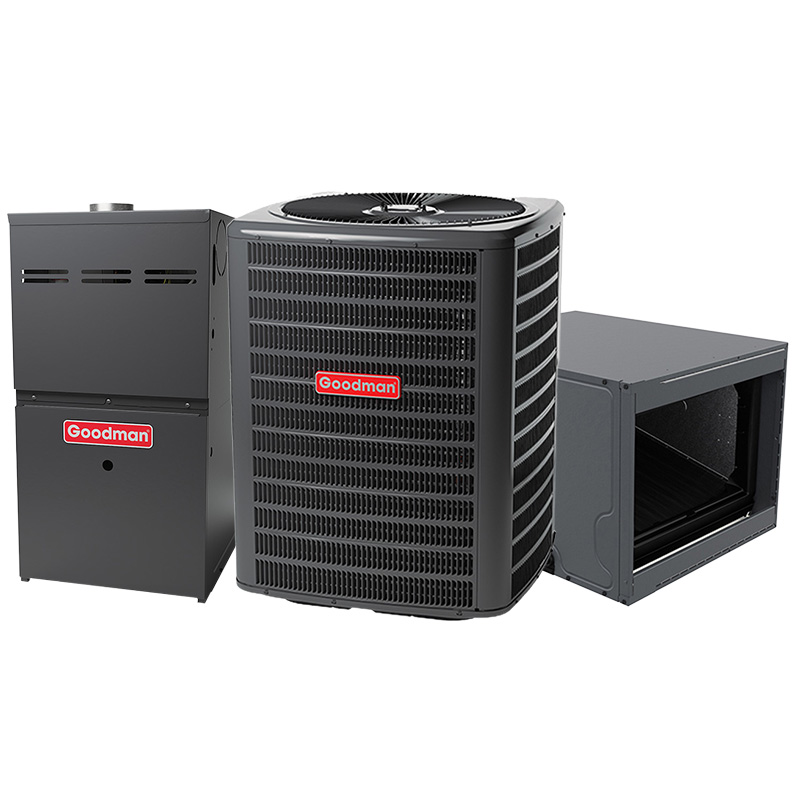
Goodman 3.5 Ton AC And 80000 BTU 80% AFUE Gas Furnace System | 15.2 SEER2 AC | Multi-Speed ECM Low NOx Furnace | Horizontal | R32
View on AC Direct see your lowest price →Check current price on AC Direct →
Key features
- 3.5-ton cooling capacity with 15.2 SEER2 efficiency rating
- 80,000 BTU output at 80% AFUE for moderate-climate heating
- Horizontal configuration for attic, crawlspace, or side-closet installs
- Multi-speed ECM blower motor for quieter, humidity-friendly airflow
- R-32 refrigerant with lower global warming potential than R-410A
- Low NOx burner design for reduced nitrogen oxide emissions
About this system
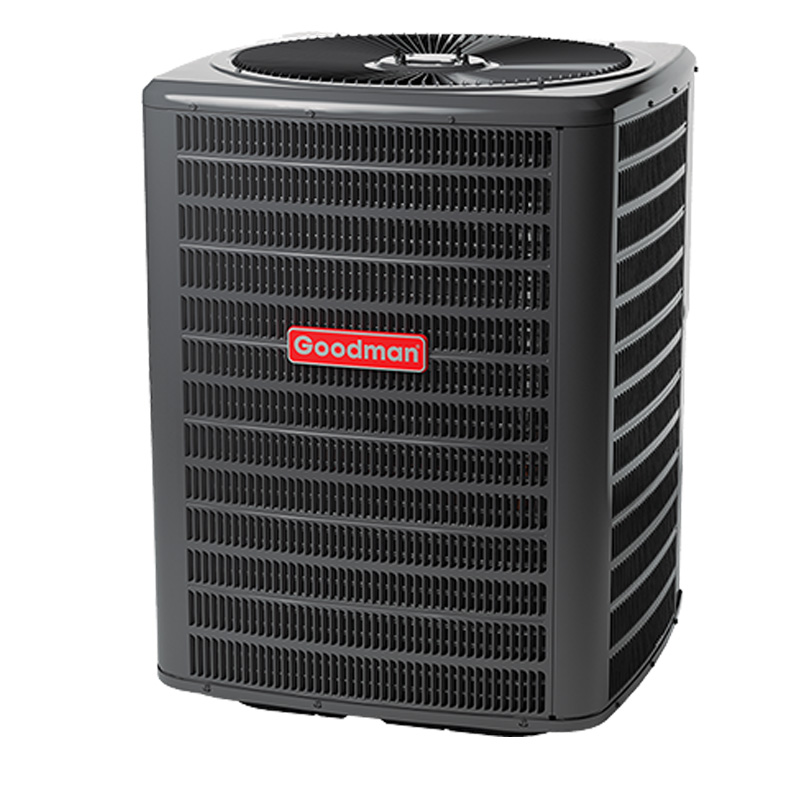
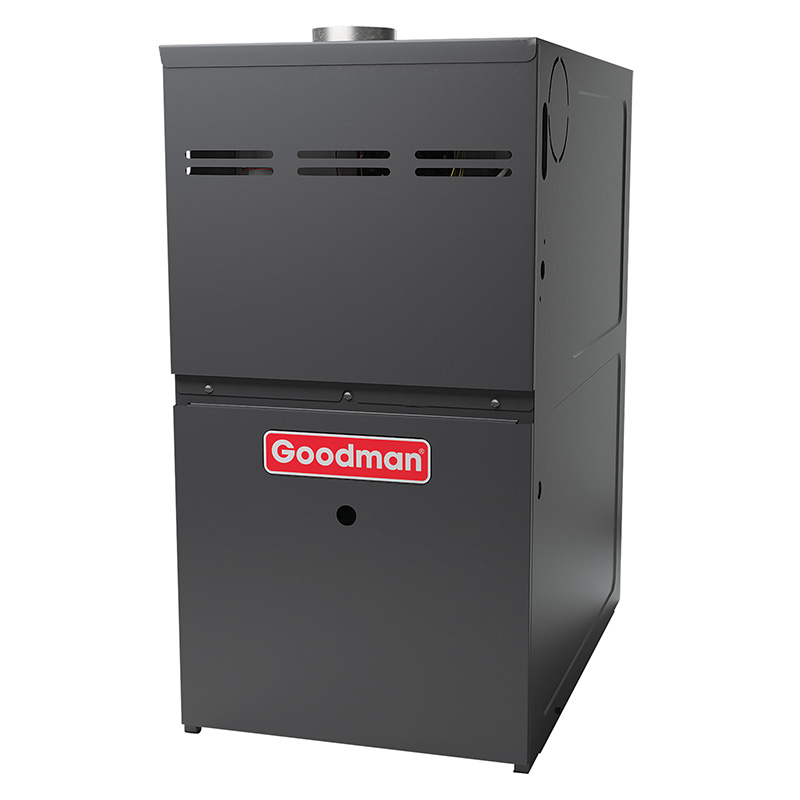
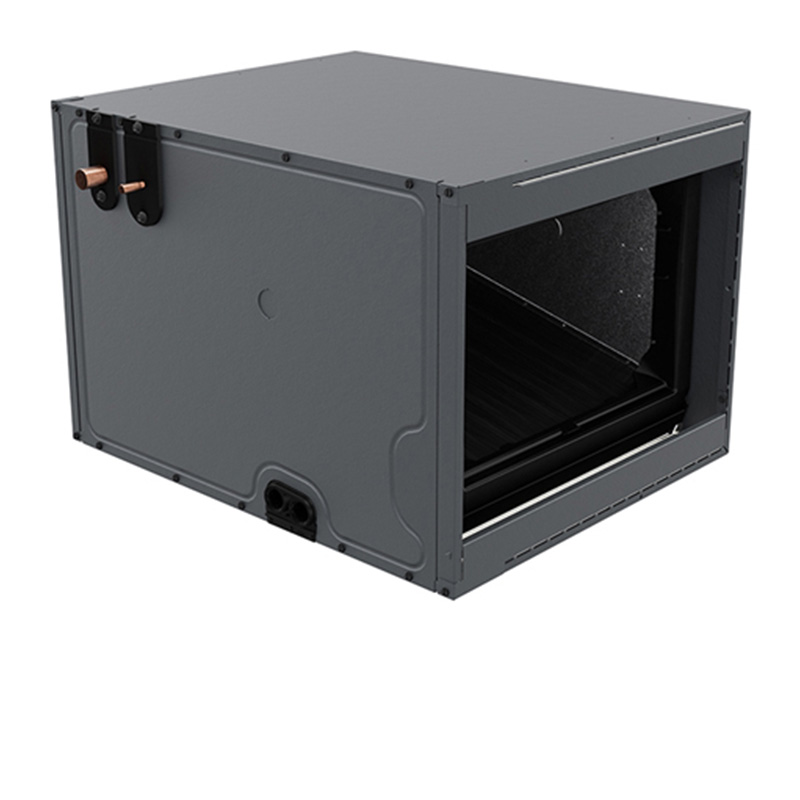
This Goodman bundle pairs a 3.5-ton, 15.2 SEER2 split-system air conditioner with an 80,000 BTU, 80% AFUE multi-speed ECM gas furnace configured for horizontal installation. The horizontal layout is designed for attic, crawlspace, or side-closet installations where vertical clearance is limited, making this a practical fit for ranch-style homes, manufactured housing, and additions where the air handler must lie on its side. The R-32 refrigerant charge is a step forward from legacy R-410A, offering a lower global warming potential and improved thermodynamic efficiency at the same pressure range.
A 15.2 SEER2 rating lands just above the federal minimum for most U.S. climate zones, which means operating costs will be reasonable but not industry-leading. The 80% AFUE furnace converts eight of every ten units of gas into usable heat, an acceptable baseline in mild-winter climates but noticeably less efficient than 95-plus AFUE condensing furnaces in regions with long heating seasons. The multi-speed ECM blower adjusts airflow to match demand, which improves humidity control and quieter part-load operation compared to a single-speed PSC motor. This system is a sensible choice for budget-conscious buyers replacing aging equipment or equipping a new build where upfront cost matters more than long-term energy optimization.
This Goodman horizontal system delivers a workable efficiency and a competitive upfront price for buyers replacing equipment in space-constrained installations, but the 80% AFUE furnace and entry-level SEER2 rating mean higher long-term energy costs compared to premium alternatives. Goodman's reliability record is mixed, and the system's longevity depends heavily on installation quality and a proactive maintenance routine.
Overall score is the average of the five ratings above.
What we like
- Priced roughly 15 to 25 percent below comparable Carrier, Trane, and Lennox bundles
- Horizontal configuration is genuinely useful for attic and crawlspace-constrained homes
- Multi-speed ECM blower improves part-load humidity control over single-speed motors
- R-32 refrigerant is a more environmentally responsible choice than R-410A
- Low NOx burner meets stricter regional air-quality standards in California and similar markets
Trade-offs
- 80% AFUE is the lowest efficiency tier; gas bills will be noticeably higher than with a 95-plus AFUE furnace in cold climates
- 15.2 SEER2 is near the federal minimum, leaving meaningful energy savings on the table versus 17-plus SEER2 systems
- Documented owner reports of dual-run capacitor failures, evaporator coil leaks, and compressor lifespans averaging 10 to 14 years versus 15 to 20 for premium brands
- Overall satisfaction scores are modest (approximately 2.5 on ConsumerAffairs, 3.8 on Google dealer reviews), with repair cost complaints emerging around year 7
What homeowners and pros say about Goodman
Homeowners who post about Goodman equipment tend to split into two camps. Those who got a careful installation from an experienced technician often report years of uneventful service and point to the lower purchase price as the main reason they chose the brand. The Google dealer review average of around 3.8 out of 5, across hundreds of reviews per location, reflects this moderate satisfaction when things go right. The second camp, more visible on complaint channels like ConsumerAffairs where Goodman scores roughly 2.5 out of 5, tends to surface after year 7, when repair bills for items like dual-run capacitor replacements or evaporator coil leaks start to accumulate. That pattern is consistent enough in owner accounts that it is worth budgeting for a service contract or a dedicated repair fund after the first several years.
HVAC technicians generally describe Goodman as a straightforward brand to work on, with widely available parts, but they are consistent in noting that installation quality is the single biggest variable in how long a Goodman system holds up. Specific failure modes they flag include dual-run capacitors, which are a common and relatively inexpensive fix, and evaporator coil refrigerant leaks, which are more involved. Compressor longevity is also a legitimate consideration: Goodman compressors tend to average 10 to 14 years in field experience, compared to 15 to 20 years often cited for Trane, Carrier, and Lennox compressors. For a horizontal-configuration system like this one, where access for service can already be awkward, choosing a seasoned installer and keeping up with annual tune-ups matters more than it might with a simpler installation.
Sources: ConsumerAffairs Goodman owner reviews, AHRI Directory of Certified Product Performance, U.S. DOE appliance and equipment efficiency standards, Goodman product specification sheets.
What it costs to run
At 15.2 SEER2, cooling this 3.5-ton system for a typical 1200-hour cooling season at the U.S. average electricity rate of $0.17/kWh works out to roughly $564 per year in cooling, about $75 less per year than a minimum-efficiency 13.4 SEER2 unit of the same size. Your real cost depends on your climate and local rate.
Method: (42,000 BTU/hr ÷ 15.2 SEER2) × 1200 hours ÷ 1000 × $0.17/kWh. Rate source: U.S. EIA average; cooling hours: moderate-climate estimate.
How it compares
| Brand | Comparable model | SEER2 | Stage | Price position |
|---|---|---|---|---|
| Goodman | GSXH5 / GMVC8 Horizontal Bundle | 15.2 | Single-stage AC / Multi-speed furnace | Value pick |
| Carrier | Comfort 24ACC636 / 58SB0 Series | 15.2 | Single-stage AC / Single-stage furnace | Moderately higher than Goodman |
| Trane | XR15 / S8B1 Series | 15.0 | Single-stage AC / Single-stage furnace | Moderately to noticeably higher than Goodman |
| Lennox | Merit ML14XC1 / ML180 Series | 15.2 | Single-stage AC / Multi-speed furnace | Noticeably higher than Goodman |
Competitor rows are comparable single-stage units at similar efficiency; price is relative position, not a quote.
Questions about this system
Is 80% AFUE worth it, or should I pay more for a 96% AFUE furnace?
In mild climates where the furnace runs only a few months per year, the payback period on a 96% AFUE upgrade can stretch to 10 or more years, making 80% AFUE a defensible choice. In cold regions where heating load is high from October through April, the efficiency gap translates to a meaningful annual gas cost difference, and the higher-efficiency unit typically pays back within 5 to 8 years.
What does the horizontal configuration actually mean for my installation?
It means the air handler section of the furnace is designed to be mounted on its side, with supply and return air moving horizontally through the unit rather than vertically. This suits attic trusses, low crawlspaces, and utility closets where there is not enough vertical room for an upflow or downflow cabinet. Your installer will verify the specific clearance and drain-pan requirements before mounting.
Why does this system use R-32 refrigerant instead of R-410A?
R-32 has a global warming potential roughly 68 percent lower than R-410A and slightly better thermodynamic properties at similar pressures, which can support efficiency gains. R-32 is an A2L refrigerant, meaning it is mildly flammable, so installers need specific certification and equipment to handle it safely. Most licensed HVAC technicians in 2024 and beyond are trained for A2L refrigerants as the industry transitions away from R-410A.
What are the most common repairs owners report on Goodman systems like this one?
The most frequently documented failure point is the dual-run capacitor, which typically costs between 300 and 600 dollars to diagnose and replace and is considered a routine repair. Evaporator coil refrigerant leaks appear in a meaningful share of owner reviews and can be more expensive to address. Compressor lifespan averages 10 to 14 years on Goodman units, shorter than the 15 to 20 years reported for premium-brand compressors. A small percentage of owners also report refrigerant leaks within the first year, which is generally tied to installation or charge errors rather than equipment defects.
Does Goodman's warranty cover parts and labor?
Goodman typically offers a 10-year parts warranty when the system is registered within 60 days of installation, covering components including the compressor and heat exchanger. Labor is not covered by the manufacturer warranty; that cost falls to you or your service contractor. Some dealers offer extended labor warranties as an add-on, which is worth asking about given Goodman's documented repair history after year 7.
Specifications
| Cooling capacity | 3.5 Ton |
| Efficiency | 15.2 SEER2 |
| Furnace output | 80000 BTU |
| Furnace efficiency | 80% AFUE |
| Configuration | Horizontal |
| Refrigerant | R-32 |