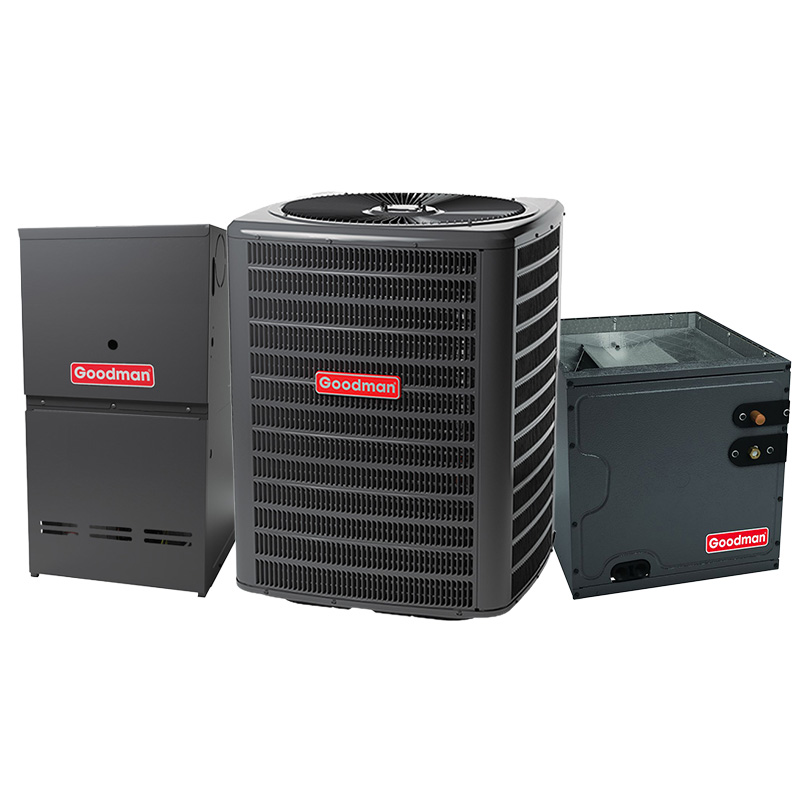
Goodman 3.5 Ton AC And 100000 BTU 80% AFUE Gas Furnace System | 14.5 SEER2 AC | Multi-Speed ECM Low NOx Furnace | Downflow | R32
View on AC Direct see your lowest price →Check current price on AC Direct →
Key features
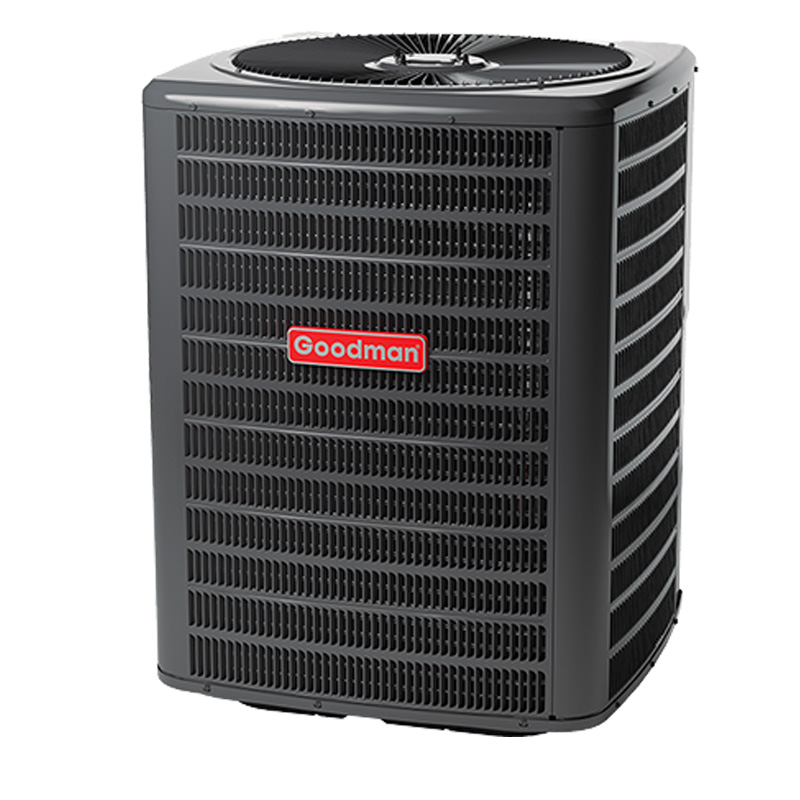
- 3.5-ton AC rated at 14.5 SEER2 for baseline energy efficiency
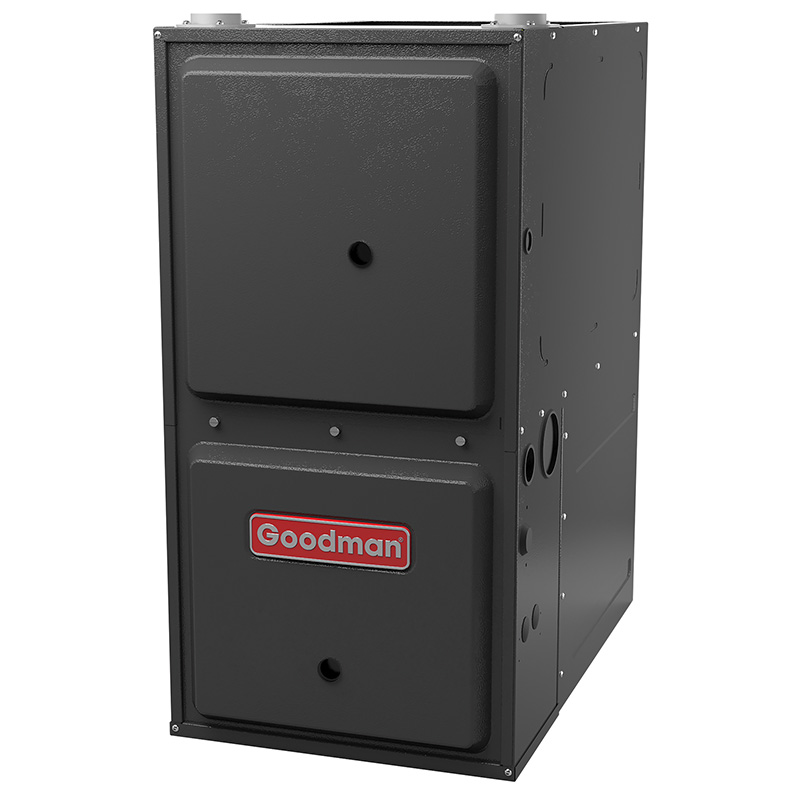
- 100,000 BTU gas furnace with 80% AFUE heating efficiency
- Multi-speed ECM blower motor reduces electricity use and lowers operating noise
- Low NOx burner design meets California and other strict emissions standards
- Downflow configuration for floor-plenum or crawl-space duct systems
- R-32 refrigerant with lower global-warming potential than R-410A
About this system
This Goodman bundle pairs a 3.5-ton, 14.5 SEER2 central air conditioner with a 100,000 BTU, 80% AFUE downflow gas furnace. The combination is sized for homes roughly in the 1,800 to 2,400 square foot range, depending on local climate, insulation, and ceiling height. The furnace uses a multi-speed ECM blower motor, which draws less electricity than a standard PSC motor and moves air more quietly at lower speeds. Low NOx certification means it meets stricter emissions requirements in California and other states with air-quality mandates, so it qualifies in markets where a standard furnace would not.
The system runs on R-32 refrigerant, a lower global-warming-potential option that is becoming more common as the industry moves away from R-410A. Downflow configuration means the furnace discharges heated air downward into a floor plenum, which suits homes with crawl-space ductwork or slab construction where the unit lives in a closet or utility space above the floor level. At 14.5 SEER2, this AC clears the federal minimum for most northern regions and sits just at the minimum threshold for the Southwest and Southeast, so buyers in those warmer markets should confirm it meets local code before purchasing. Overall, this package suits cost-conscious homeowners who want a functional, code-compliant system and are comfortable investing in a quality installation to protect the equipment long-term.
This Goodman system delivers a workable, code-compliant heating and cooling package at a price point that undercuts comparable Carrier, Trane, and Lennox offerings by a meaningful margin. The trade-off is a shorter expected compressor lifespan and a documented history of capacitor failures and evaporator coil leaks that owners should budget for after year seven. It is a reasonable choice for buyers who prioritize upfront cost and plan to invest in a skilled installer and a service agreement.
Overall score is the average of the five ratings above.
What we like
- Purchase price runs 15 to 25 percent below comparable Carrier, Trane, and Lennox systems
- ECM blower motor cuts fan electricity consumption compared to standard PSC motors
- Low NOx furnace qualifies in California and other emissions-restricted markets
- R-32 refrigerant has a lower environmental impact than R-410A
- Downflow furnace design suits crawl-space and slab homes where top-discharge units cannot be used
Trade-offs
- 80% AFUE is the lowest efficiency tier available; up to 20% of heat energy exits through the flue
- Compressor lifespan averages 10 to 14 years versus 15 to 20 years for premium brands
- Dual-run capacitors are a documented early failure point, with repair costs typically in the $300 to $600 range
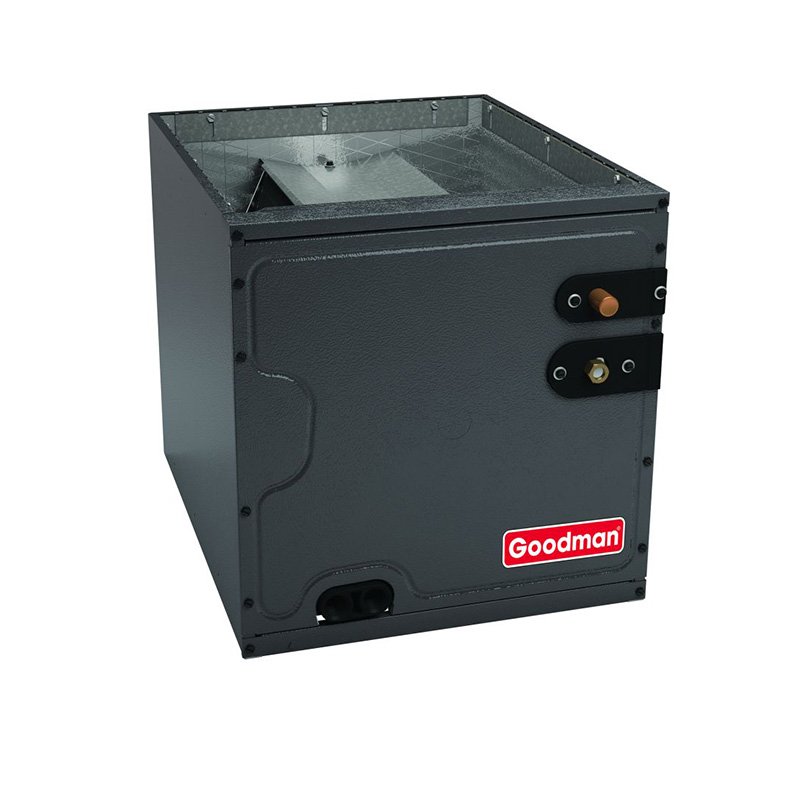
- Evaporator coil leaks and first-year refrigerant loss are recurring complaints, often tied to installation quality
What homeowners and pros say about Goodman
Among homeowners, Goodman draws sharply divided reactions that tend to split along install quality rather than the equipment itself. On ConsumerAffairs, the brand scores around 2.5 out of 5, a channel that skews toward dissatisfied owners, where the most consistent complaint is repair costs that climb noticeably after year seven. Google dealer reviews land closer to 3.8 out of 5, and in that more balanced pool, affordability is by far the most frequently cited reason buyers chose Goodman in the first place. The pattern that emerges across both channels is that owners who had a careful, experienced installer tend to report far fewer problems than those whose systems were commissioned in a hurry or on the lowest-bid job. For this specific bundle, the downflow furnace adds one more layer where a misconfigured plenum seal or an improperly set gas pressure can create headaches that get attributed to the brand when the root cause is workmanship.
HVAC technicians are fairly candid about what they see in the field. Dual-run capacitors on Goodman condensing units are the most commonly reported service call, and while the fix is generally straightforward at $300 to $600, it becomes frustrating if it repeats. Evaporator coil leaks show up in a real share of service records, and technicians note that first-year refrigerant loss, when it occurs, is almost always an installation or charge issue rather than a factory defect. The compressor picture is more structural: Goodman compressors tend to reach end of life in the 10 to 14 year range, compared to 15 to 20 years for premium-tier brands. For a buyer who accepts that trade-off knowingly, hires a skilled installer, and keeps up with annual maintenance, this system can deliver reliable comfort for a decade or more at a price that leaves money in the budget for exactly those service calls when they come.
Sources: ConsumerAffairs Goodman owner reviews, AHRI Directory of Certified Product Performance, U.S. DOE appliance and equipment efficiency standards, Goodman product specification sheets.
What it costs to run
At 14.5 SEER2, cooling this 3.5-ton system for a typical 1200-hour cooling season at the U.S. average electricity rate of $0.17/kWh works out to roughly $591 per year in cooling, about $48 less per year than a minimum-efficiency 13.4 SEER2 unit of the same size. Your real cost depends on your climate and local rate.
Method: (42,000 BTU/hr ÷ 14.5 SEER2) × 1200 hours ÷ 1000 × $0.17/kWh. Rate source: U.S. EIA average; cooling hours: moderate-climate estimate.
How it compares
| Brand | Comparable model | SEER2 | Stage | Price position |
|---|---|---|---|---|
| Goodman | GSXN4 / GCVC8 Downflow Bundle | 14.5 | Single-stage | Value pick |
| Carrier | Comfort 14 (24ACC4) with 58MCA furnace | 14.5 | Single-stage | Typically 15 to 25 percent higher than this Goodman bundle |
| Trane | XR14c with S8X1 80% furnace | 14.5 | Single-stage | Typically 20 to 30 percent higher than this Goodman bundle |
| Lennox | Merit ML14XC1 with ML180 furnace | 14.5 | Single-stage | Typically 20 to 30 percent higher than this Goodman bundle |
Competitor rows are comparable single-stage units at similar efficiency; price is relative position, not a quote.
Questions about this system
Is 14.5 SEER2 enough to meet code in the South and Southwest?
14.5 SEER2 is right at the federal minimum for the Southeast and Southwest climate regions. Before ordering, confirm your local jurisdiction has not adopted a higher standard, and verify with your installer that this specific model is listed as compliant for your region.
The furnace is downflow only. Can I convert it to horizontal or upflow?
No. Downflow furnaces are engineered specifically for that airflow direction and cannot be field-converted to upflow or horizontal without replacing the unit. Make sure your duct system uses a floor plenum or that the unit will be mounted above the ductwork before purchasing.
What are the most likely repairs I should budget for over the first ten years?
Dual-run capacitors are the most commonly reported failure on Goodman AC units and typically cost $300 to $600 to replace. Evaporator coil leaks show up in a meaningful share of owner reports, and a minority of owners have experienced refrigerant loss in the first year, which is usually traced back to installation quality. Setting aside a service contract or a repair fund is worth considering.
Does this system require a technician certified to handle R-32 refrigerant?
Yes. R-32 is mildly flammable and requires a technician with EPA Section 608 certification and familiarity with A2L refrigerant handling procedures. Not every HVAC contractor in all markets has updated their equipment and training yet, so confirm your installer is qualified before scheduling.
What warranty does Goodman typically provide on this type of system?
Goodman generally offers a 10-year parts limited warranty when the equipment is registered within a set window after installation, and a limited lifetime heat exchanger warranty on the furnace. Labor is not covered, so any repair cost after the install warranty from your contractor expires comes out of pocket. Read the warranty certificate carefully, as coverage terms can change and registration deadlines are strict.
Specifications
| Cooling capacity | 3.5 Ton |
| Efficiency | 14.5 SEER2 |
| Furnace output | 100000 BTU |
| Furnace efficiency | 80% AFUE |
| Configuration | Downflow |
| Refrigerant | R-32 |