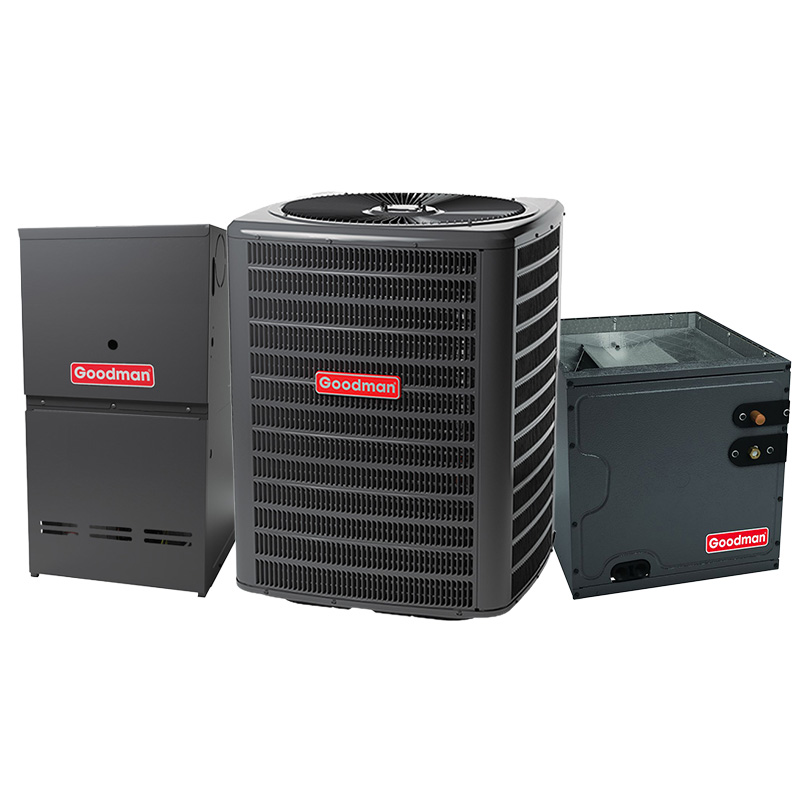
Goodman 5 Ton AC And 80000 BTU 80% AFUE Gas Furnace System | 14 SEER2 AC | Multi-Speed ECM Low NOx Furnace | Downflow | R32
View on AC Direct see your lowest price →Check current price on AC Direct →
Key features
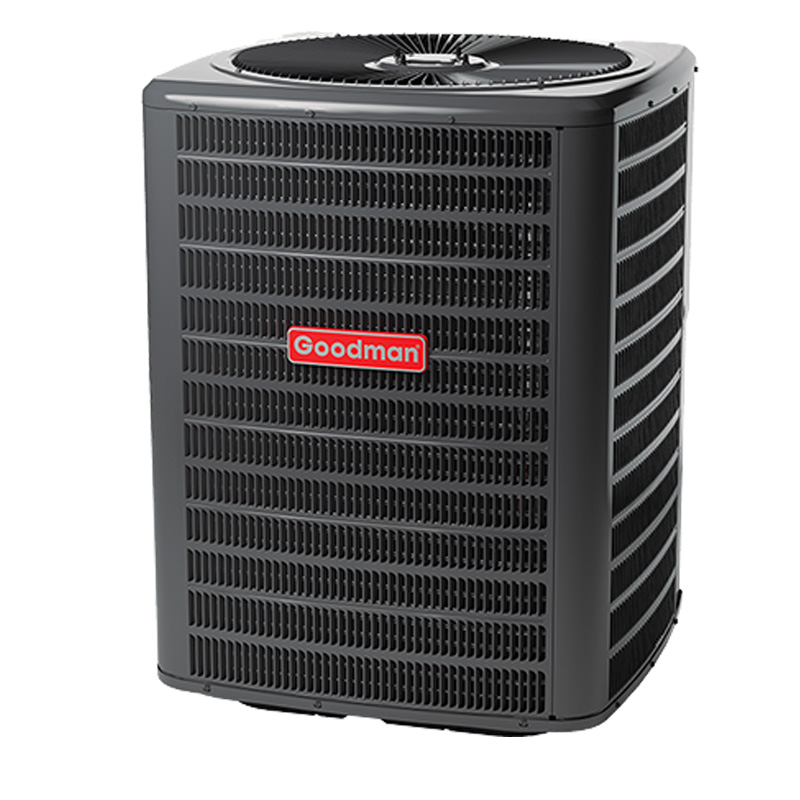
- 5-ton cooling capacity for larger homes, 14 SEER2 rated at federal minimum efficiency
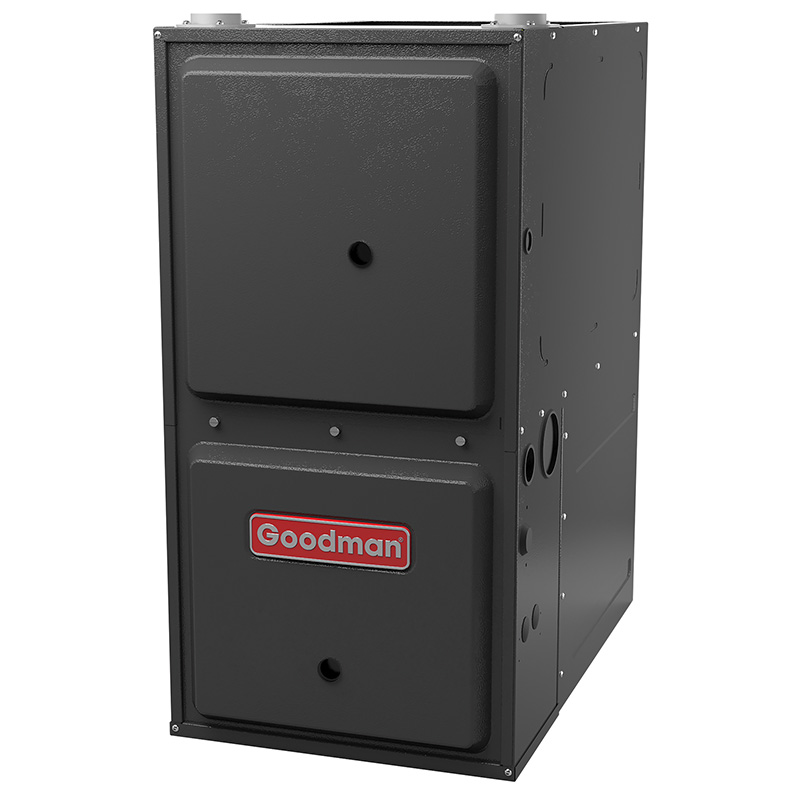
- 80,000 BTU output, 80% AFUE single-stage gas furnace
- Multi-speed ECM blower motor for quieter, more efficient air distribution
- Downflow configuration for attic or overhead-closet installations
- R-32 refrigerant with lower global warming potential than R-410A
- Factory-installed filter drier and factory-tested refrigerant charge
About this system
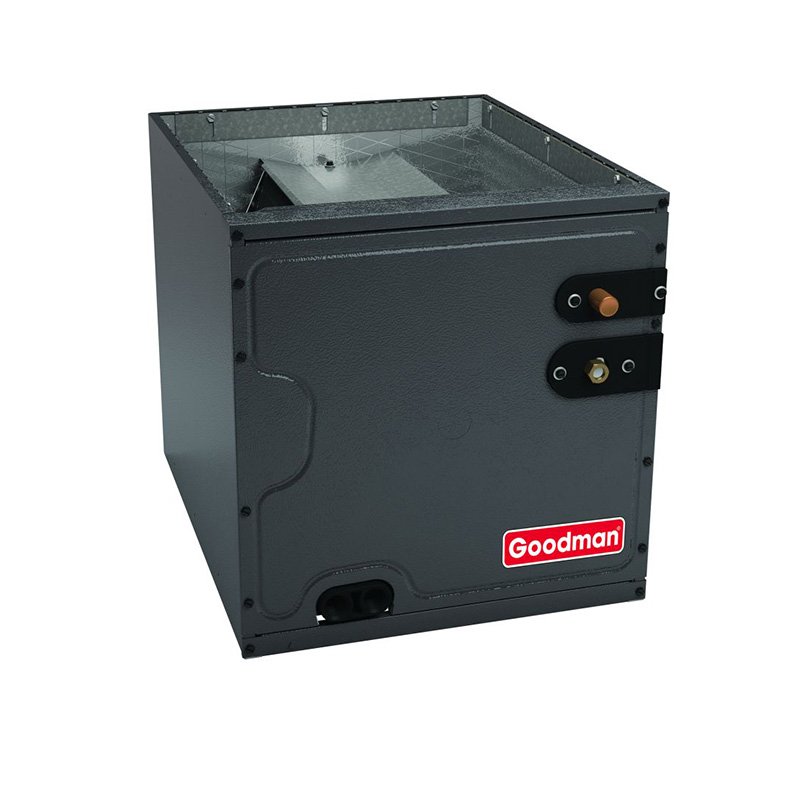
The Goodman 5-ton, 14 SEER2 split system pairs a straightforward single-stage air conditioner with an 80,000 BTU, 80% AFUE downflow gas furnace equipped with a multi-speed ECM blower motor. This combination is designed for larger homes typically in the 2,400 to 3,000 square foot range, depending on climate zone, insulation, and local heat load. The downflow configuration means warm air is discharged downward from the furnace, which suits installations where the air handler sits in an attic above finished living space or in a closet with supply ducts running beneath the unit. R-32 refrigerant, now the standard on newer Goodman equipment, has a lower global warming potential than the R-410A it replaces and is slightly more energy-dense, which can support modest efficiency gains.
At 14 SEER2, this system sits at the federal minimum efficiency floor for most U.S. climate zones, which means it meets code but offers no efficiency cushion beyond that. The 80% AFUE furnace is similarly entry-level: one-fifth of every dollar of gas burned exits as exhaust. Homeowners in cold climates or those with high annual heating loads will want to weigh the long-term fuel cost difference before ruling out a 96% AFUE unit. Where this system makes the most sense is in moderate climates, rental properties, new-construction builds where budget is constrained, or replacements where the priority is getting a reliable, code-compliant system installed quickly and affordably. The multi-speed ECM motor is a genuine plus, improving air distribution comfort and reducing blower energy use compared to a standard PSC motor.
This Goodman bundle delivers a code-compliant, functional HVAC system at a price point noticeably below Trane, Carrier, and Lennox equivalents, and the ECM motor adds real comfort value at this tier. However, 14 SEER2 and 80% AFUE are both the lowest efficiency options available, so fuel savings are minimal and long-term operating costs will be higher than mid- or high-efficiency alternatives. Buyers should budget for potential capacitor replacement and coil inspection within the first decade and ensure installation is done by an experienced contractor, since Goodman's longevity is unusually sensitive to install quality.
Overall score is the average of the five ratings above.
What we like
- Priced 15 to 25 percent below comparable Trane, Lennox, and Carrier systems, freeing budget for a quality installer
- Multi-speed ECM blower improves comfort and reduces blower electricity use versus a standard PSC motor
- R-32 refrigerant is more environmentally favorable and future-proofed compared to R-410A
- Downflow design suits attic and overhead closet applications where upflow units cannot be used
- Broad dealer network means parts and service are generally available in most metro and suburban markets
Trade-offs
- 14 SEER2 is the federal minimum, offering no efficiency advantage and higher long-term operating costs than mid-efficiency alternatives
- 80% AFUE means significant heat loss up the flue; a poor fit for cold climates or high annual heating-degree-day locations
- Documented failure modes include dual-run capacitor failures, evaporator coil leaks, and compressor lifespans averaging 10 to 14 years versus 15 to 20 for premium brands
- ConsumerAffairs score of roughly 2.5 out of 5 reflects a pattern of rising repair costs after year 7, which can narrow the initial price advantage over time
What homeowners and pros say about Goodman
Homeowners who buy Goodman equipment most often point to the upfront price as the deciding factor, and at the dealer level the brand earns Google review averages of around 3.8 out of 5, where affordability and parts availability are the most consistent praise. The picture is notably less favorable on complaint-driven channels like ConsumerAffairs, where Goodman sits at roughly 2.5 out of 5 and the recurring theme is repair bills climbing after roughly year seven, eroding some of the original savings. For a 5-ton system running hard through long cooling seasons, that timeline is worth taking seriously when comparing total cost of ownership rather than just the purchase price.
HVAC technicians tend to have a pragmatic view of Goodman: the equipment is adequate, but install quality carries more weight here than with premium brands. The dual-run capacitor is the most commonly flagged failure point across service calls, typically a quick and relatively affordable fix in the 300 to 600 dollar range, but evaporator coil leaks also appear in a notable share of owner accounts and are a more involved repair. Compressor longevity is the bigger long-term concern, with Goodman compressors averaging 10 to 14 years of service life against 15 to 20 years more typical of Trane or Carrier units. A small number of owners also report refrigerant leaks within the first year, a pattern technicians generally attribute to installation or initial charge issues rather than a manufacturing defect, which underscores why contractor selection matters as much as equipment selection with this brand.
Sources: ConsumerAffairs Goodman owner reviews, AHRI Directory of Certified Product Performance, U.S. DOE appliance and equipment efficiency standards, Goodman product specification sheets.
What it costs to run
At 14 SEER2, cooling this 5-ton system for a typical 1200-hour cooling season at the U.S. average electricity rate of $0.17/kWh works out to roughly $874 per year in cooling, about $39 less per year than a minimum-efficiency 13.4 SEER2 unit of the same size. Your real cost depends on your climate and local rate.
Method: (60,000 BTU/hr ÷ 14 SEER2) × 1200 hours ÷ 1000 × $0.17/kWh. Rate source: U.S. EIA average; cooling hours: moderate-climate estimate.
How it compares
| Brand | Comparable model | SEER2 | Stage | Price position |
|---|---|---|---|---|
| Goodman | GSXN5 / GMVC8 Downflow Bundle | 14 | Single-stage | Value pick |
| Carrier | Comfort 24ACC6 / 58SB0 Series | 14-15 | Single-stage | 15 to 25 percent higher than this Goodman system |
| Trane | XR14c / S8X1 Series | 14-15 | Single-stage | 15 to 25 percent higher than this Goodman system |
| Lennox | Merit ML14XC1 / ML180 Series | 14-15 | Single-stage | 20 to 30 percent higher than this Goodman system |
Competitor rows are comparable single-stage units at similar efficiency; price is relative position, not a quote.
Questions about this system
Is 14 SEER2 going to cost me significantly more to run than a 16 or 18 SEER2 system?
Yes, meaningfully so on a 5-ton unit. Roughly speaking, moving from 14 to 16 SEER2 can reduce cooling energy use by around 12 to 14 percent, and the gap widens further at 18 SEER2. In a hot climate where a 5-ton unit runs heavily, that difference adds up over a decade and can partially offset the higher upfront cost of a more efficient system.
Why does the furnace use a downflow configuration and can I install it in an upflow application instead?
Downflow furnaces discharge conditioned air out the bottom and are specifically designed for attic installations or overhead closets where supply ducts run beneath the unit. This unit is not interchangeable with an upflow model and should only be installed in a downflow application. Installing it incorrectly voids the warranty and creates safety and efficiency problems.
What should I know about R-32 refrigerant before buying this system?
R-32 is mildly flammable (A2L classification), which means it requires certified technicians and R-32 compatible tools and recovery equipment for service. Most licensed HVAC contractors are now equipped for it, but it is worth confirming with your installer before purchase. R-32 is not interchangeable with R-410A.
What are the most common repairs I should budget for over the first 10 years?
Based on documented owner experience with Goodman equipment, dual-run capacitor replacement is the most frequently reported issue and typically costs between 300 and 600 dollars including labor. Evaporator coil leaks show up in a meaningful share of owner accounts and are more expensive to address. A small percentage of owners also report refrigerant leaks in the first year, which is usually tied to the initial installation charge rather than the equipment itself.
Does the 80% AFUE furnace qualify for any federal or utility efficiency incentives?
As of current federal guidelines, 80% AFUE furnaces generally do not qualify for the federal energy efficiency tax credit, which requires 96% AFUE or higher for gas furnaces. State and utility rebates vary, but most programs also set a higher efficiency threshold. You should check your local utility's rebate portal and consult a tax professional before assuming any credit applies.
Specifications
| Cooling capacity | 5 Ton |
| Efficiency | 14 SEER2 |
| Furnace output | 80000 BTU |
| Furnace efficiency | 80% AFUE |
| Configuration | Downflow |
| Refrigerant | R-32 |