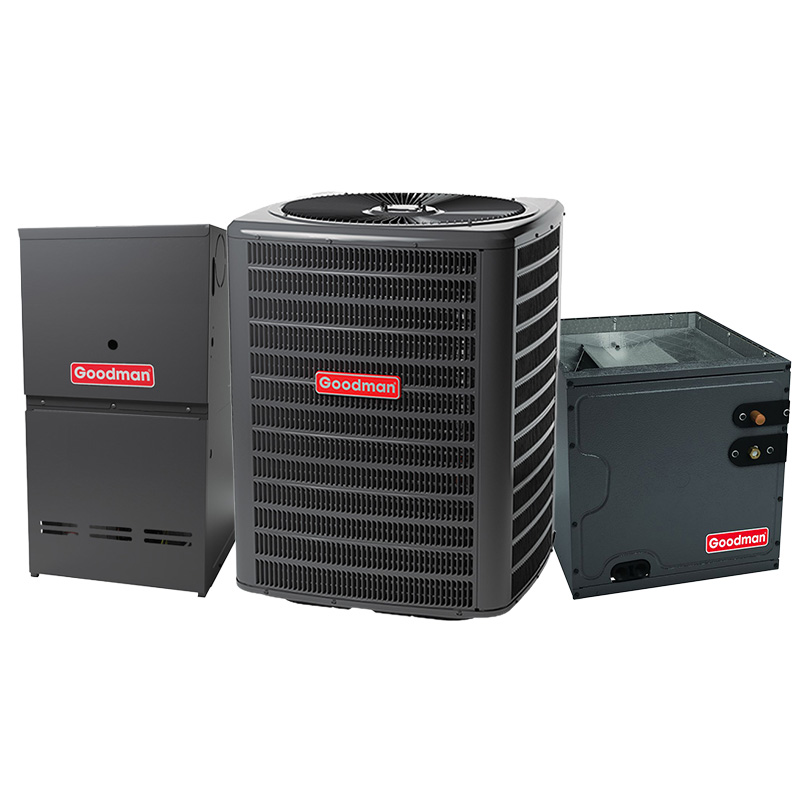
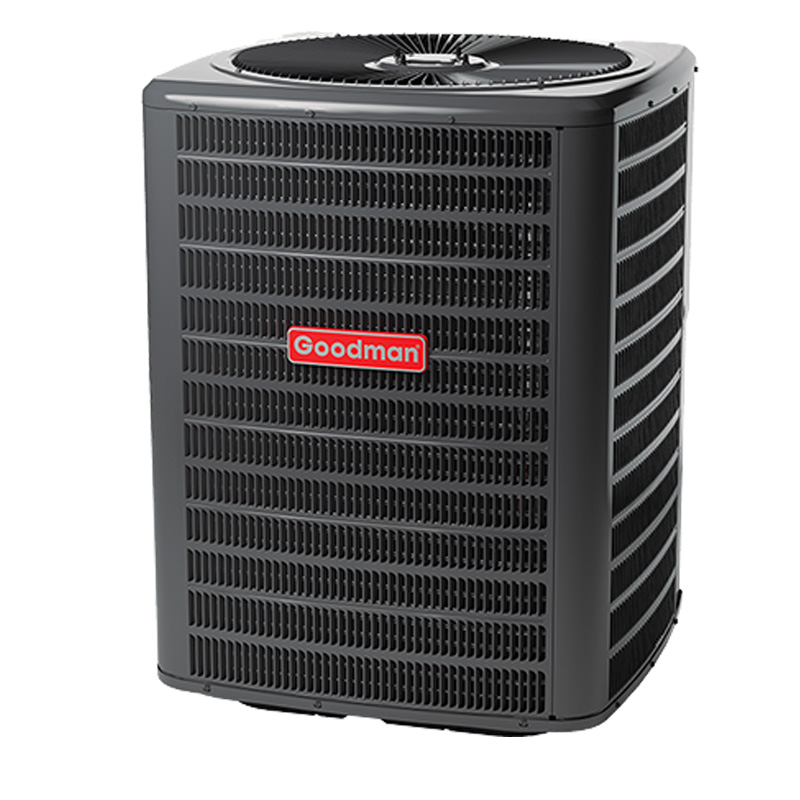
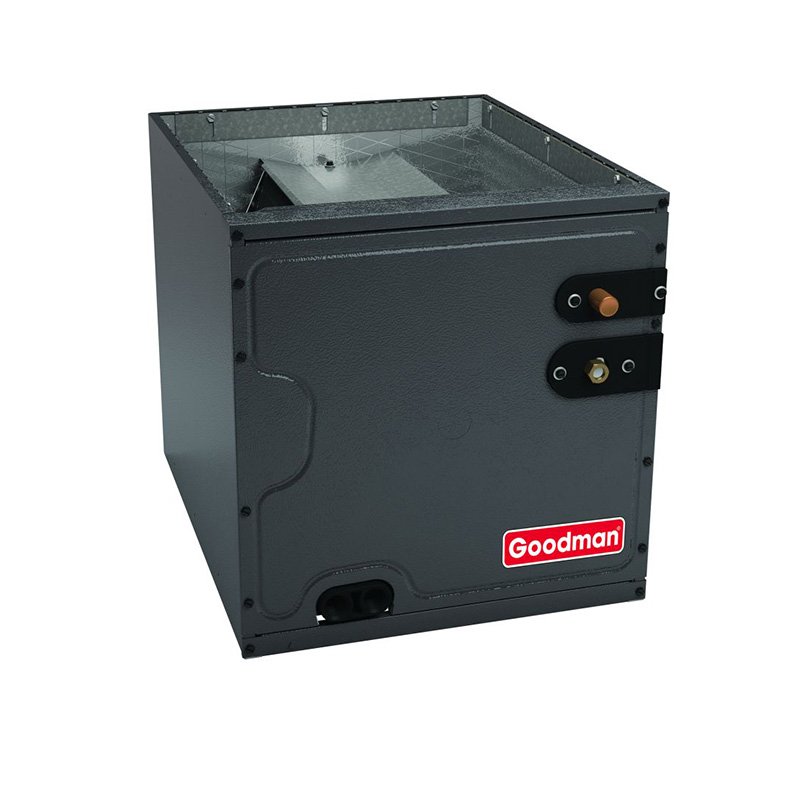
Goodman 3.5 Ton AC And 100000 BTU 80% AFUE Gas Furnace System | 15.2 SEER2 AC | Multi-Speed ECM Low NOx Furnace | Downflow | R32
View on AC Direct see your lowest price →Check current price on AC Direct →
Key features
- 3.5-ton cooling capacity with 15.2 SEER2 efficiency rating
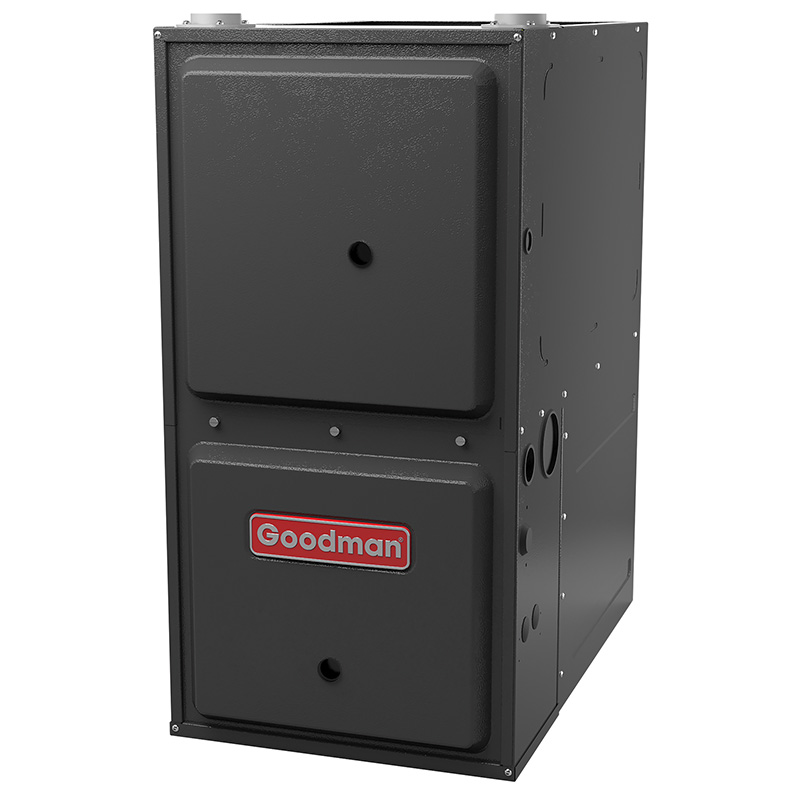
- 100,000 BTU 80% AFUE downflow gas furnace
- Multi-speed ECM blower motor for quieter, more efficient airflow
- Low NOx combustion meets California and other strict emissions standards
- R-32 refrigerant with lower global warming potential than R-410A
- Bundled AC and furnace sold together for simplified equipment sourcing
About this system
This Goodman bundle pairs a 3.5-ton, 15.2 SEER2 central air conditioner with a 100,000 BTU, 80% AFUE downflow gas furnace into a single purchase. The 3.5-ton capacity targets homes roughly in the 1,800 to 2,400 square foot range, though the right size always depends on your local climate, insulation, and Manual J load calculation. At 15.2 SEER2, the cooling efficiency clears the federal minimums that took effect in 2023 but sits at the lower end of the efficiency spectrum, which means running costs will be noticeably higher over time compared to 17+ SEER2 systems. The 80% AFUE furnace converts 80 cents of every heating dollar into usable heat, which is the baseline efficiency tier and can be a reasonable fit in mild-to-moderate heating climates where a high-efficiency 96% unit would take many years to pay back the price difference.
The furnace uses a multi-speed ECM blower motor, which is a meaningful upgrade over single-speed PSC motors: it ramps airflow more gradually, improves humidity control during cooling season, and draws less electricity running continuously on fan mode. The Low NOx designation makes it compliant with stricter air-quality regulations in California and other states with similar rules. The downflow configuration means supply air exits the bottom of the furnace, which is the right match for installations where the furnace sits in an upper-level closet or attic platform and ducts run down through the floor. The system uses R-32 refrigerant, a lower-global-warming-potential alternative to the R-410A that is being phased out industrywide. R-32 has a slightly higher pressure profile, so any future service technician needs to confirm their tools and certifications cover it.
This Goodman bundle is a budget-conscious entry point for homeowners who need to replace both the AC and furnace at once and cannot stretch to a premium brand. The specs are functional but not impressive: 15.2 SEER2 and 80% AFUE are minimum-tier efficiency, and Goodman's track record shows reliability that is adequate but measurably shorter-lived than Trane or Carrier at comparable price points. The value case holds up best when installation is done by an experienced contractor, because quality installation is the single largest factor in how long this equipment performs.
Overall score is the average of the five ratings above.
What we like
- Priced 15 to 25 percent below comparable Trane, Lennox, and Carrier systems, reducing the upfront capital outlay
- Multi-speed ECM blower improves comfort and humidity control over basic single-speed motors
- Low NOx rating satisfies strict regional air-quality requirements without needing a separate compliance upgrade
- R-32 refrigerant is forward-compatible with the industry's ongoing phase-out of R-410A
- Bundled purchase simplifies sourcing and can help ensure matched system compatibility
Trade-offs
- 80% AFUE is the lowest efficiency tier available; homeowners in cold climates will pay noticeably more in annual gas bills versus a 96% AFUE alternative
- 15.2 SEER2 delivers only baseline cooling efficiency, leading to higher electricity costs compared to mid- or high-efficiency systems over a typical 10-plus year lifespan
- Goodman compressors average 10 to 14 years in real-world reports, shorter than the 15 to 20 years more common with premium brands
- Documented owner complaints include dual-run capacitor failures, evaporator coil leaks, and a minority of first-year refrigerant leaks, most tied to install quality
What homeowners and pros say about Goodman
Homeowners and dealers give Goodman a mixed but not dismissive reception. On ConsumerAffairs, the brand averages around 2.5 out of 5, a score that reflects the platform’s complaint-heavy nature as much as it reflects the product, since satisfied owners rarely seek out a review site to post praise. The recurring theme in those negative reviews is repair costs climbing after roughly year 7, with dual-run capacitor failures and evaporator coil leaks appearing most often by name. Google dealer reviews tell a more favorable story, averaging around 3.8 out of 5 across locations, where affordability draws the most consistent praise and installers who work with the brand regularly tend to rate it as a workable, straightforward system when set up correctly.
HVAC technicians who work on Goodman equipment frequently point to install quality as the deciding variable in how the system performs over time. A properly charged, correctly commissioned Goodman will run without drama for a decade or more for many owners. The compressor lifespan, however, tends to average 10 to 14 years in real-world reports, meaningfully shorter than the 15 to 20 years more common with Trane, Carrier, or Lennox compressors. For this specific downflow bundle, the R-32 refrigerant is a forward-looking specification choice, but it does add a small layer of complexity for service calls, and any first-year refrigerant issues, which a minority of owners report, are almost always traced back to the installation rather than the factory build. The honest takeaway: Goodman delivers acceptable performance for the price, but the long-term economics depend heavily on who installs it and how well the first few service intervals are handled.
Sources: ConsumerAffairs Goodman owner reviews, AHRI Directory of Certified Product Performance, U.S. DOE appliance and equipment efficiency standards, Goodman product specification sheets.
What it costs to run
At 15.2 SEER2, cooling this 3.5-ton system for a typical 1200-hour cooling season at the U.S. average electricity rate of $0.17/kWh works out to roughly $564 per year in cooling, about $75 less per year than a minimum-efficiency 13.4 SEER2 unit of the same size. Your real cost depends on your climate and local rate.
Method: (42,000 BTU/hr ÷ 15.2 SEER2) × 1200 hours ÷ 1000 × $0.17/kWh. Rate source: U.S. EIA average; cooling hours: moderate-climate estimate.
How it compares
| Brand | Comparable model | SEER2 | Stage | Price position |
|---|---|---|---|---|
| Goodman | 3.5 Ton 15.2 SEER2 AC + 100K BTU 80% AFUE Downflow Furnace Bundle | 15.2 | Single-stage / Multi-speed | Value pick |
| Carrier | Comfort 24ACC636 AC + 58MCA100 Furnace | 15.2 | Single-stage | Roughly 15 to 25 percent more than this Goodman bundle |
| Trane | XR15 AC + S8X1 Furnace | 15.0–15.5 | Single-stage | Roughly 15 to 25 percent more than this Goodman bundle |
| Lennox | Merit ML14XC1 AC + ML180 Furnace | 15.0–15.5 | Single-stage | Roughly 20 to 30 percent more than this Goodman bundle |
Competitor rows are comparable single-stage units at similar efficiency; price is relative position, not a quote.
Questions about this system
Is a downflow furnace the right configuration for my home?
Downflow means the blower pushes air out the bottom of the unit, so it is designed for installations where the furnace is mounted in an upper-level closet, a platform in an attic, or anywhere the duct system runs beneath the unit. If your existing furnace is upflow or horizontal, you will need either a different configuration or significant duct modifications, so confirm your current setup with your contractor before ordering.
Can any HVAC technician service this system now that it uses R-32 refrigerant?
R-32 requires different handling procedures and slightly different equipment than R-410A, so you should confirm your service technician is familiar with it and has the appropriate recovery equipment before scheduling work. Most larger HVAC shops are already equipped for R-32 as the industry transitions, but it is worth asking upfront to avoid delays or improper service.
What does the Goodman warranty cover and for how long?
Goodman typically offers a 10-year parts limited warranty when the equipment is registered within a set window after installation, dropping to a shorter period if registration is missed. The warranty covers parts but not labor, which is where most real-world repair costs accumulate, so factor in a service contract or set aside a repair budget separately.
How much more will I spend on heating bills with an 80% AFUE furnace versus a 96% AFUE unit?
Roughly speaking, for every 100 dollars you spend on gas with an 80% AFUE furnace, a 96% AFUE unit would cost around 83 dollars for the same heat output, a 17 percent reduction. The payback period depends on your local gas rates and how many heating degree days your climate sees each year, but in a cold northern climate the savings can add up to several hundred dollars annually.
The Goodman capacitor and coil leak issues I read about online concern me. How worried should I be?
Dual-run capacitor failures are the most commonly reported issue and are typically a low-cost repair in the 300 to 600 dollar range if caught promptly, so they are more of a maintenance nuisance than a system-ending problem. Evaporator coil leaks are more serious and more expensive to address, and a minority of owners have reported refrigerant leaks in the first year, which Goodman and independent technicians generally trace back to install quality rather than a factory defect, which is why choosing an experienced, careful installer matters more with this brand than with premium alternatives.
Specifications
| Cooling capacity | 3.5 Ton |
| Efficiency | 15.2 SEER2 |
| Furnace output | 100000 BTU |
| Furnace efficiency | 80% AFUE |
| Configuration | Downflow |
| Refrigerant | R-32 |