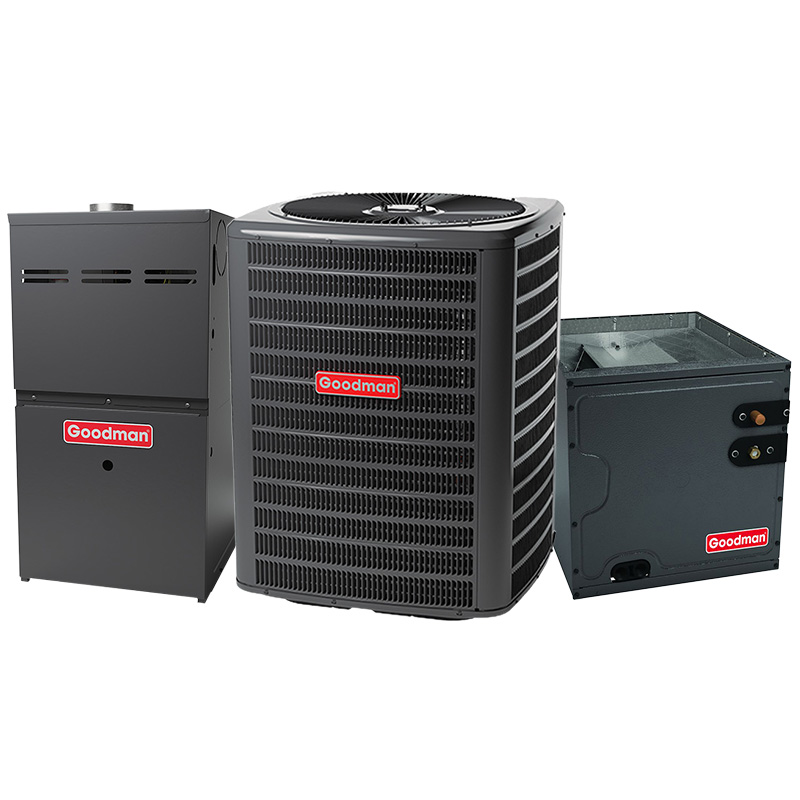
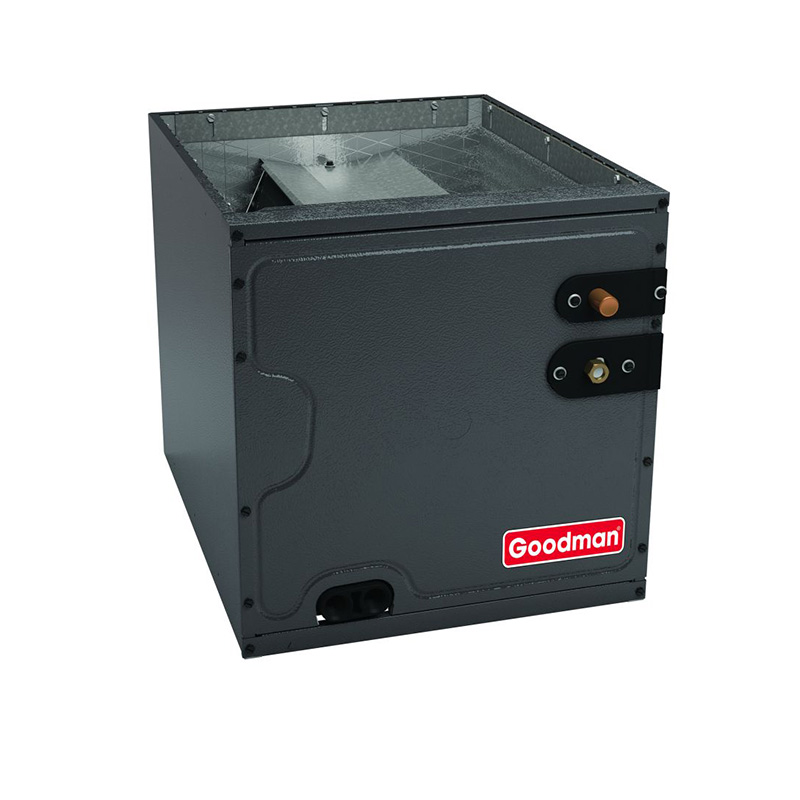
Goodman 4 Ton AC And 80000 BTU 80% AFUE Gas Furnace System | 15.2 SEER2 AC | Multi-Speed ECM Low NOx Furnace | Upflow | R32
View on AC Direct see your lowest price →Check current price on AC Direct →
Key features
- 4-ton cooling capacity with 15.2 SEER2 efficiency rating
- 80,000 BTU gas furnace at 80% AFUE with multi-speed ECM blower motor
- R-32 refrigerant with lower global warming potential than R-410A
- Low NOx burner meets California and strict regional air quality standards
- Upflow configuration for basement, closet, or utility room installations
- ECM motor improves humidity control and reduces blower electricity draw
About this system
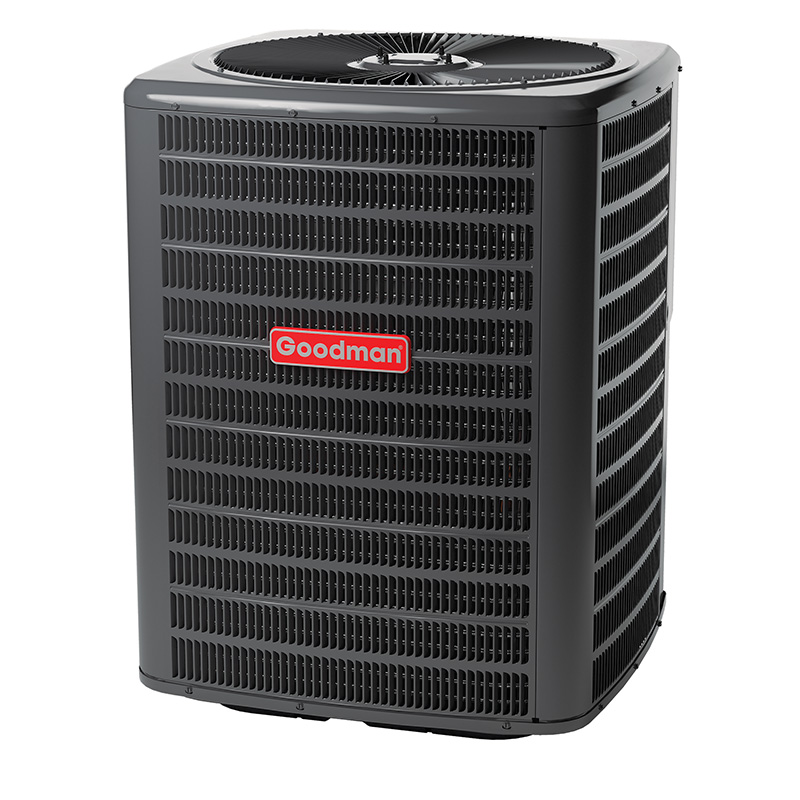
This Goodman bundle pairs a 4-ton, 15.2 SEER2 air conditioner with an 80,000 BTU, 80% AFUE upflow gas furnace to cover homes typically in the 2,000 to 2,600 square foot range, depending on climate zone and insulation. The AC uses R-32 refrigerant, a lower-global-warming-potential option that is becoming more common as the industry phases out older refrigerants. At 15.2 SEER2, this system clears the federal minimum efficiency threshold for most regions but sits at the lower end of the efficiency spectrum, meaning operating costs will be noticeably higher over time than a 17 or 18 SEER2 unit would produce.
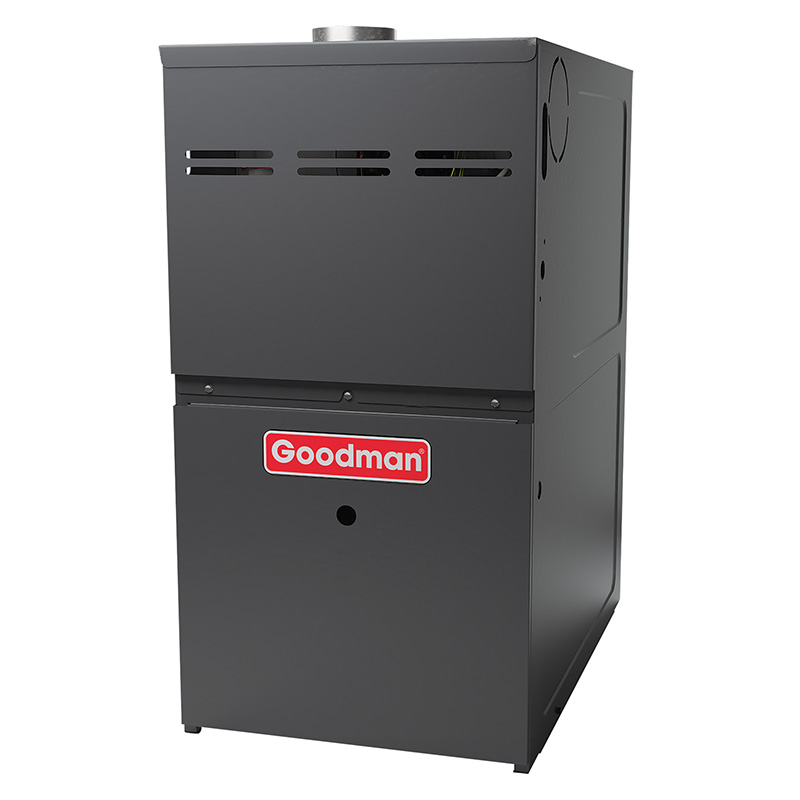
The furnace side runs an 80% AFUE rating, which means one dollar in five of your gas spend goes up the flue as waste heat. That is acceptable in mild-to-moderate climates or in homes where heating loads are modest, but homeowners in colder climates with long heating seasons will see a real payback advantage from stepping up to a 96% or 97% AFUE modulating unit. The multi-speed ECM blower motor is a genuine benefit here: it ramps fan speed up and down to improve comfort, reduce humidity swings, and cut blower electricity use compared to a fixed-speed PSC motor. The Low NOx burner designation meets California and other restrictive air-quality regulations, broadening where this system can legally be installed.
This Goodman bundle is a competitively priced entry point for replacing aging equipment in a mid-size home, and the ECM furnace motor adds genuine comfort value. Trade-offs include baseline-tier efficiency on both units and Goodman's documented history of capacitor failures and shorter compressor lifespans relative to premium brands.
Overall score is the average of the five ratings above.
What we like
- Purchase price runs roughly 15 to 25 percent below comparable Carrier, Trane, and Lennox systems
- Multi-speed ECM blower motor improves dehumidification and reduces blower energy use versus standard PSC motors
- R-32 refrigerant is more environmentally responsible and is increasingly well-supported by service technicians
- Low NOx certification allows installation in California and other air-quality-restricted markets
- Upflow furnace configuration fits common residential mechanical room layouts without modification
Trade-offs
- 15.2 SEER2 and 80% AFUE sit at the efficiency floor, so monthly operating costs are higher than mid- or high-efficiency alternatives
- Dual-run capacitors are the most frequently reported failure, typically appearing within the first several years of ownership
- Compressor lifespan averages 10 to 14 years in owner reports, noticeably shorter than the 15 to 20 years common on premium-brand compressors
- A minority of owners report refrigerant leaks in the first year, most often traced to installation quality or initial charge errors rather than a factory defect
What homeowners and pros say about Goodman
Homeowners who shop for Goodman equipment tend to land in one of two camps once they own it. Those with good installs by attentive contractors often describe years of trouble-free operation and point to the lower upfront price as money well spent. Those with rougher experiences frequently trace problems back to either a hurried installation or the documented capacitor and coil leak failure modes. On ConsumerAffairs, Goodman scores around 2.5 out of 5, a channel where dissatisfied owners are overrepresented, and the pattern in those reviews is repairs climbing noticeably after roughly year 7. Across Google dealer reviews the picture is more balanced at around 3.8 out of 5, where affordability is the most cited positive.
HVAC technicians are generally candid about the trade-offs. They note that dual-run capacitors are the most routine Goodman service call, a repair that is annoying but inexpensive at 300 to 600 dollars. More consequential is the compressor picture: Goodman compressors average roughly 10 to 14 years of service life in real-world reports, versus 15 to 20 years on premium-brand units, a gap that matters significantly if you are budgeting for the full ownership horizon. Evaporator coil leaks also appear with enough frequency in owner accounts to be worth noting. For this specific 4-ton, 15.2 SEER2, 80% AFUE bundle, pros tend to agree the ECM blower motor is a meaningful upgrade from older fixed-speed furnaces, and R-32 is a straightforward refrigerant to work with, but they are consistent that pairing any Goodman system with a thorough, experienced installation is the single biggest thing a buyer can do to protect their investment.
Sources: ConsumerAffairs Goodman owner reviews, AHRI Directory of Certified Product Performance, U.S. DOE appliance and equipment efficiency standards, Goodman product specification sheets.
What it costs to run
At 15.2 SEER2, cooling this 4-ton system for a typical 1200-hour cooling season at the U.S. average electricity rate of $0.17/kWh works out to roughly $644 per year in cooling, about $87 less per year than a minimum-efficiency 13.4 SEER2 unit of the same size. Your real cost depends on your climate and local rate.
Method: (48,000 BTU/hr ÷ 15.2 SEER2) × 1200 hours ÷ 1000 × $0.17/kWh. Rate source: U.S. EIA average; cooling hours: moderate-climate estimate.
How it compares
| Brand | Comparable model | SEER2 | Stage | Price position |
|---|---|---|---|---|
| Goodman | GSXH504810 / GMVC8 Series | 15.2 | Single-stage AC / Multi-speed furnace | Value pick |
| Carrier | Comfort 14 Series (24ACC636) | 15.2 | Single-stage | Moderately higher than Goodman, typically 15 to 20 percent more installed |
| Trane | XR15 Series (4TTR5048) | 15.5 | Single-stage | Higher than Goodman, typically 20 to 25 percent more installed |
| Lennox | Merit 14ACX Series | 15.1 | Single-stage | Higher than Goodman, typically 20 to 30 percent more installed |
Competitor rows are comparable single-stage units at similar efficiency; price is relative position, not a quote.
Questions about this system
Is 15.2 SEER2 going to cost me significantly more to run than a higher-efficiency unit?
Yes, noticeably so over time. A 17 or 18 SEER2 system can cut cooling electricity use by 10 to 15 percent annually. In a hot climate where the AC runs four to six months a year, that gap adds up, and the payback on a higher-efficiency unit can arrive well within the equipment's lifespan.
What does the R-32 refrigerant mean for me as a homeowner?
R-32 has a lower global warming potential than the R-410A it replaces, and it is now widely stocked by service contractors. If you need a refrigerant top-off or repair down the road, availability should not be a concern, though your technician must be certified to handle it.
How important is the installer when buying a Goodman system?
Very important, perhaps more so than with premium brands. Technicians consistently cite installation quality as the dominant factor in how long a Goodman lasts, and the documented first-year refrigerant leak issue is almost always an installation or charge problem rather than a factory defect. Hiring an experienced, licensed contractor and getting the system commissioned properly is not optional.
Should I be worried about the capacitor failure issue, and what does it cost to fix?
Dual-run capacitor failure is the most commonly reported problem on Goodman AC units. It is, however, one of the least expensive HVAC repairs, typically running between 300 and 600 dollars including labor. Keeping a service contract or getting an annual tune-up improves the chance of catching a weakening capacitor before it fails on the hottest day of the year.
Why does the furnace have a Low NOx rating, and does it matter outside California?
Low NOx means the burner produces fewer nitrogen oxide emissions during combustion. It is required by law in California and parts of the Southwest, but it is not mandated in most other states. If you are outside those areas it is a non-issue operationally, though some buyers view it as a minor quality indicator for combustion design.
Specifications
| Cooling capacity | 4 Ton |
| Efficiency | 15.2 SEER2 |
| Furnace output | 80000 BTU |
| Furnace efficiency | 80% AFUE |
| Configuration | Upflow |
| Refrigerant | R-32 |