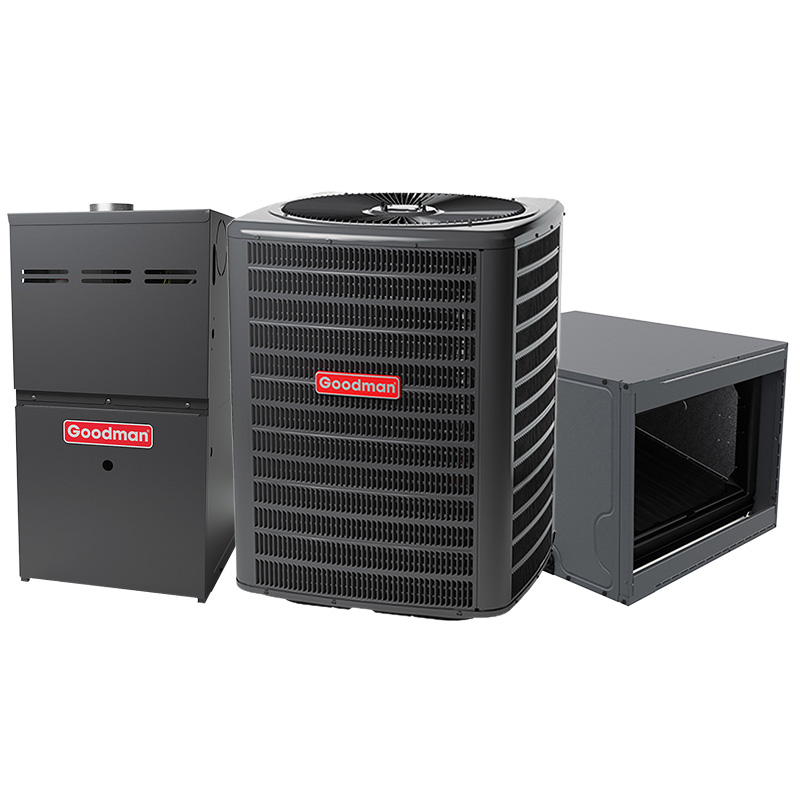
Goodman 4 Ton AC And 80000 BTU 80% AFUE Gas Furnace System | 15.2 SEER2 AC | Multi-Speed ECM Low NOx Furnace | Horizontal | R32
View on AC Direct see your lowest price →Check current price on AC Direct →
Key features
- 15.2 SEER2 cooling efficiency meets current federal minimums for most U.S. regions
- 80,000 BTU output at 80% AFUE for moderate-climate gas heating
- Multi-speed ECM blower motor reduces fan electricity draw vs. standard PSC motors
- Horizontal-only configuration designed for attic, crawl space, or side-load utility closet installs
- R-32 refrigerant with lower global warming potential than legacy R-410A
- Bundled system pricing typically 15 to 25 percent below comparable Trane, Carrier, and Lennox equipment
About this system
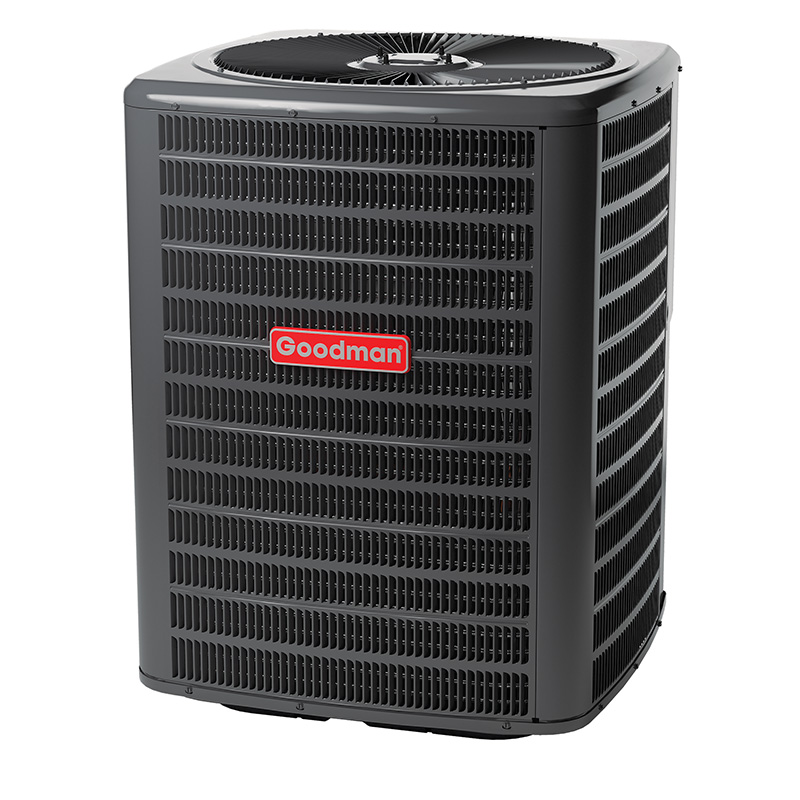
This Goodman bundle pairs a 4-ton, 15.2 SEER2 central air conditioner with an 80,000 BTU, 80% AFUE gas furnace in a horizontal configuration, making it a practical choice for homes where the air handler lives in a crawl space, attic, or utility closet laid on its side. The R-32 refrigerant charge is a forward-looking detail: R-32 has a lower global warming potential than the R-410A it replaces, and it tends to perform efficiently at the pressures this class of equipment runs. At 15.2 SEER2, the AC sits right at the federal minimum efficiency threshold for most northern and central U.S. climates, which means it meets the bar but does not exceed it.
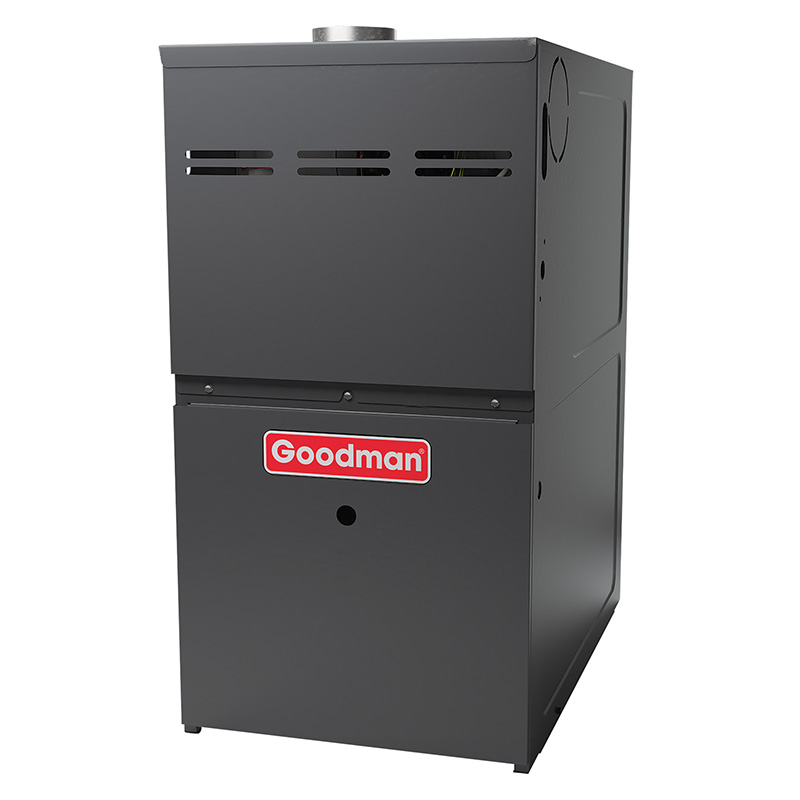
The furnace side runs a multi-speed ECM blower motor, which draws less electricity during fan operation than a standard PSC motor and gives your HVAC contractor finer airflow control during commissioning. The 80% AFUE rating means 80 cents of every dollar in gas becomes heat; the other 20 cents exits through the flue. That is a reasonable figure for a single-stage furnace in a mild-to-moderate heating climate, but households with long, cold winters will want to weigh whether a 96%+ AFUE two-stage unit would pay back the price difference over time. The horizontal-only configuration narrows the install pool, so confirm your contractor has experience with horizontal applications before purchasing.
This system suits a homeowner who needs to replace aging equipment on a realistic budget, lives in a climate that does not demand peak cooling or heating efficiency, and is willing to invest in a thorough installation by a qualified technician. Goodman’s real-world longevity tracks closely with how well the system is commissioned and maintained, so skimping on the install to save money undercuts the value proposition of the equipment itself.
This Goodman bundle delivers a workable, code-compliant system at a price point that is hard to match from the major premium brands, and the ECM furnace motor adds a genuine efficiency bonus on the heating side. The trade-off is that Goodman's documented reliability record, particularly for compressors and evaporator coils after year seven, means total cost of ownership depends heavily on warranty coverage and maintenance discipline. Buyers who budget for annual tune-ups and understand the brand's history will get fair value; those expecting premium-brand longevity without premium-brand pricing may be disappointed.
Overall score is the average of the five ratings above.
What we like
- Bundled price runs 15 to 25 percent below comparable Trane, Lennox, and Carrier systems
- ECM multi-speed blower motor lowers operating electricity costs on the furnace side
- R-32 refrigerant is more environmentally responsible and increasingly supported by technicians
- Horizontal configuration fills a specific install need that not every bundle addresses
- Widely available parts and a large national service network keep repair logistics straightforward
Trade-offs
- 80% AFUE is the low end of current efficiency options and will cost more to operate than 96%+ alternatives in cold climates
- Dual-run capacitors are a documented early failure point, and evaporator coil leaks appear in a meaningful share of owner reports
- Compressor lifespan averages 10 to 14 years versus 15 to 20 years for premium brands, affecting long-term cost calculations
- Horizontal-only configuration limits which contractors can install it and adds complexity versus standard upflow setups
What homeowners and pros say about Goodman
Homeowners who review Goodman equipment on ConsumerAffairs give the brand roughly 2.5 out of 5 stars, a score shaped in large part by the platform’s complaint-heavy audience. The recurring theme in those reviews is repair costs that begin climbing around year seven, with evaporator coil leaks and compressor issues cited most often by owners who feel the equipment underperformed relative to its expected lifespan. It is worth noting that ConsumerAffairs skews toward dissatisfied buyers, so the score reflects frustration more than a statistical average of all owners. Google dealer reviews tell a more moderate story, averaging around 3.8 out of 5 across hundreds of reviews per location, where affordability and accessible parts availability are the most consistent praise points.
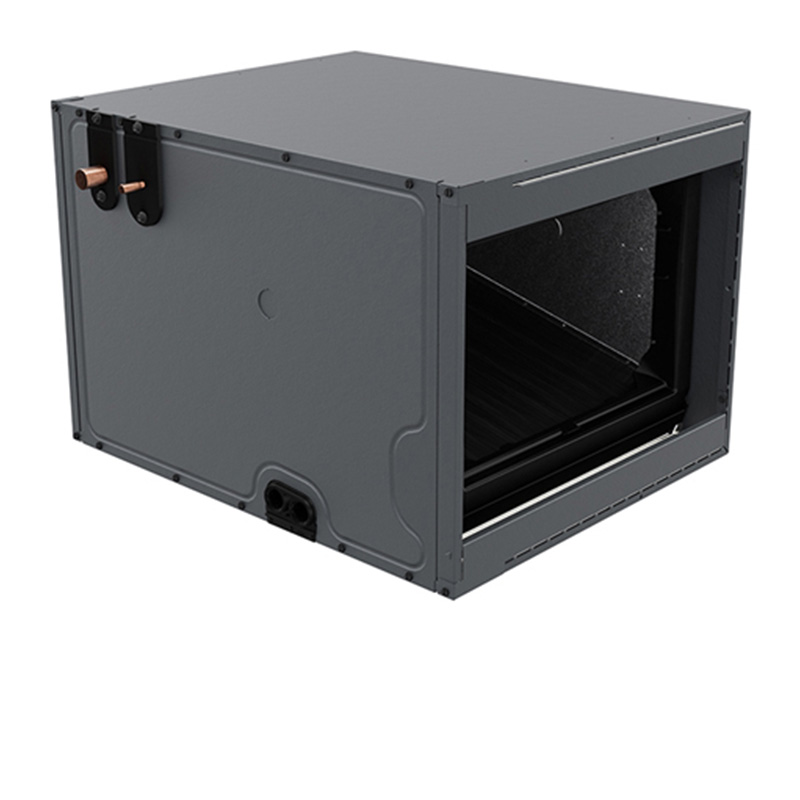
Among HVAC technicians, Goodman carries a known reputation: the equipment is serviceable, parts are easy to source, and the dual-run capacitor is a frequent but inexpensive call. Pros who work on Goodman regularly note that a careful installation, correct refrigerant charge, and proper airflow setup matter more with this brand than with some of its premium competitors, because the tighter tolerances of higher-end equipment can be somewhat more forgiving of minor commissioning imperfections. For this horizontal system specifically, contractors flag that horizontal coil installations require attention to condensate drainage and that a poorly sloped drain pan is a common source of the early refrigerant leak complaints that show up in a minority of first-year owner reports. The compressor averaging 10 to 14 years versus the 15 to 20 years typical of premium brands is a real consideration when calculating whether the lower purchase price offsets the higher likelihood of mid-life replacement costs.
Sources: ConsumerAffairs Goodman owner reviews, AHRI Directory of Certified Product Performance, U.S. DOE appliance and equipment efficiency standards, Goodman product specification sheets.
What it costs to run
At 15.2 SEER2, cooling this 4-ton system for a typical 1200-hour cooling season at the U.S. average electricity rate of $0.17/kWh works out to roughly $644 per year in cooling, about $87 less per year than a minimum-efficiency 13.4 SEER2 unit of the same size. Your real cost depends on your climate and local rate.
Method: (48,000 BTU/hr ÷ 15.2 SEER2) × 1200 hours ÷ 1000 × $0.17/kWh. Rate source: U.S. EIA average; cooling hours: moderate-climate estimate.
How it compares
| Brand | Comparable model | SEER2 | Stage | Price position |
|---|---|---|---|---|
| Goodman | GSXH504810 + GMVC8 (this system) | 15.2 | Single-stage | Value pick |
| Carrier | Comfort 24ACC636 + 58TP | 15.2 | Single-stage | Approximately 20 to 25 percent higher than this system |
| Trane | XR15 + S8X1 | 15.0 | Single-stage | Approximately 20 to 25 percent higher than this system |
| Lennox | Merit ML15XC1 + ML180 | 15.2 | Single-stage | Approximately 15 to 20 percent higher than this system |
Competitor rows are comparable single-stage units at similar efficiency; price is relative position, not a quote.
Questions about this system
Can this system be installed in an upflow or downflow position, or is it strictly horizontal?
This specific bundle is configured for horizontal installation only. If your air handler space requires upflow or downflow orientation, you would need a different Goodman model. Confirm the physical orientation of your existing duct connections before ordering.
Is R-32 refrigerant harder or more expensive to service than R-410A?
R-32 is becoming more common in new residential equipment, and most certified HVAC technicians in major markets are equipped to handle it. It does require slightly different handling procedures due to its mild flammability classification, so verify your service contractor has R-32 experience before scheduling any refrigerant work.
What does Goodman's warranty actually cover on this system, and are there conditions I need to meet?
Goodman typically offers a 10-year parts warranty on registered equipment, but the warranty must be registered within a set window after installation, and it generally requires that a licensed contractor perform the install. Read the specific warranty document for this model carefully, because coverage for the compressor and coil may differ from coverage for other components.
Goodman has a reputation for capacitor failures. How worried should I be, and what does that repair cost?
Dual-run capacitor failure is the most commonly reported Goodman repair, but it is also one of the least expensive HVAC fixes, typically running between 300 and 600 dollars including labor. Keeping a maintenance contract in place so a technician can catch a weakening capacitor before it fails completely is the most practical way to manage this.
Will 80% AFUE be enough for my climate, or should I pay more for a higher-efficiency furnace?
In climates with mild to moderate winters, the payback period for a 96% AFUE unit versus an 80% unit can stretch to 10 years or more, making the cheaper furnace a reasonable choice. In colder northern climates where the furnace runs heavily from October through April, a high-efficiency two-stage furnace typically pays back the price difference faster and may also be required by local codes in some jurisdictions.
Specifications
| Cooling capacity | 4 Ton |
| Efficiency | 15.2 SEER2 |
| Furnace output | 80000 BTU |
| Furnace efficiency | 80% AFUE |
| Configuration | Horizontal |
| Refrigerant | R-32 |