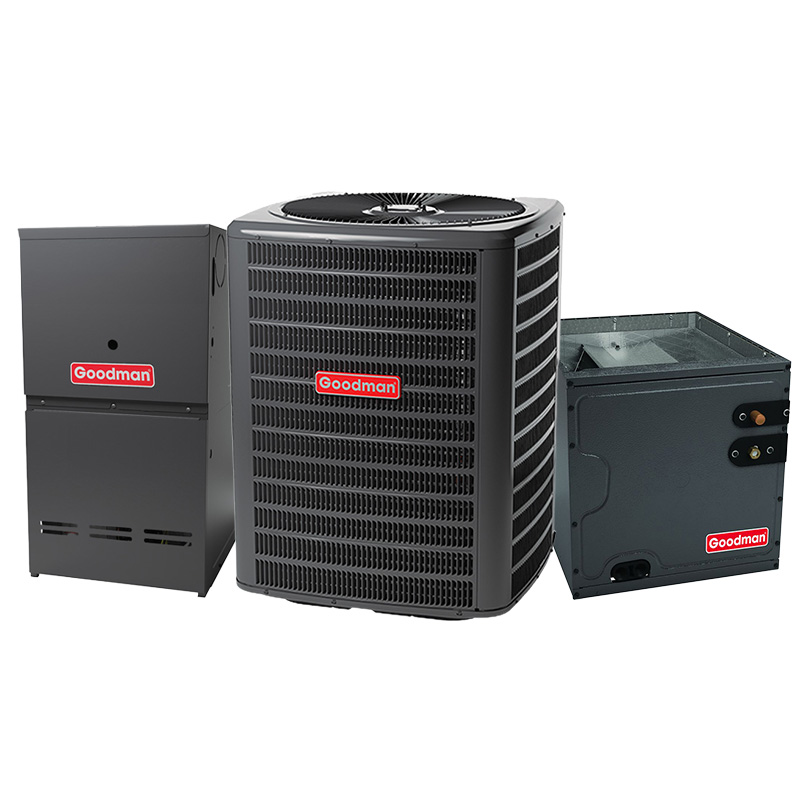
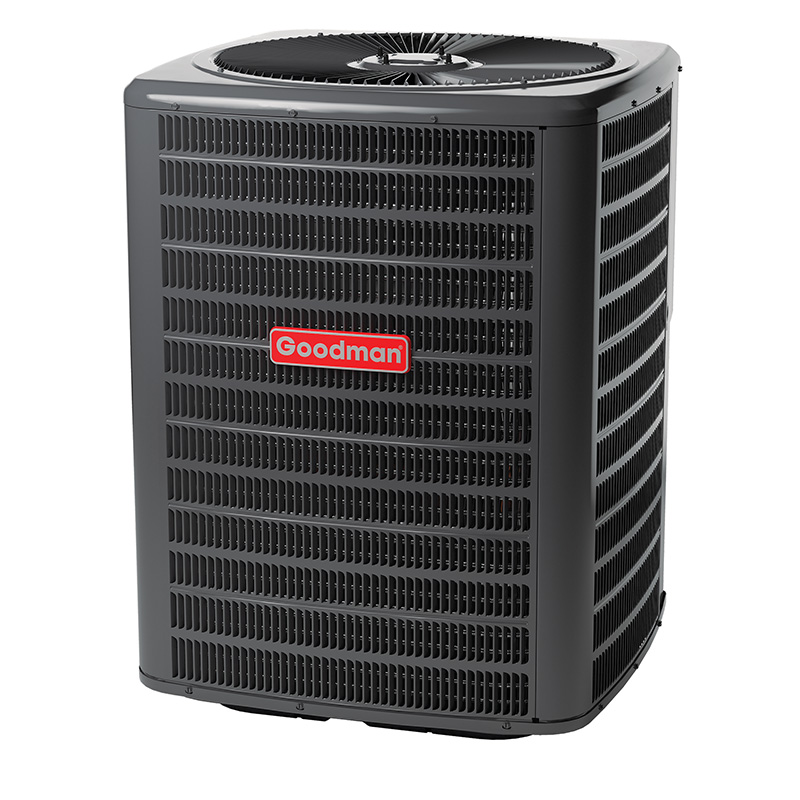
Goodman 1.5 Ton AC And 60000 BTU 80% AFUE Gas Furnace System | 14.5 SEER2 AC | Multi-Speed ECM Low NOx Furnace | Downflow | R32
View on AC Direct see your lowest price →Check current price on AC Direct →
Key features
- 1.5-ton AC rated at 14.5 SEER2, meeting the federal minimum efficiency standard for most U.S. regions
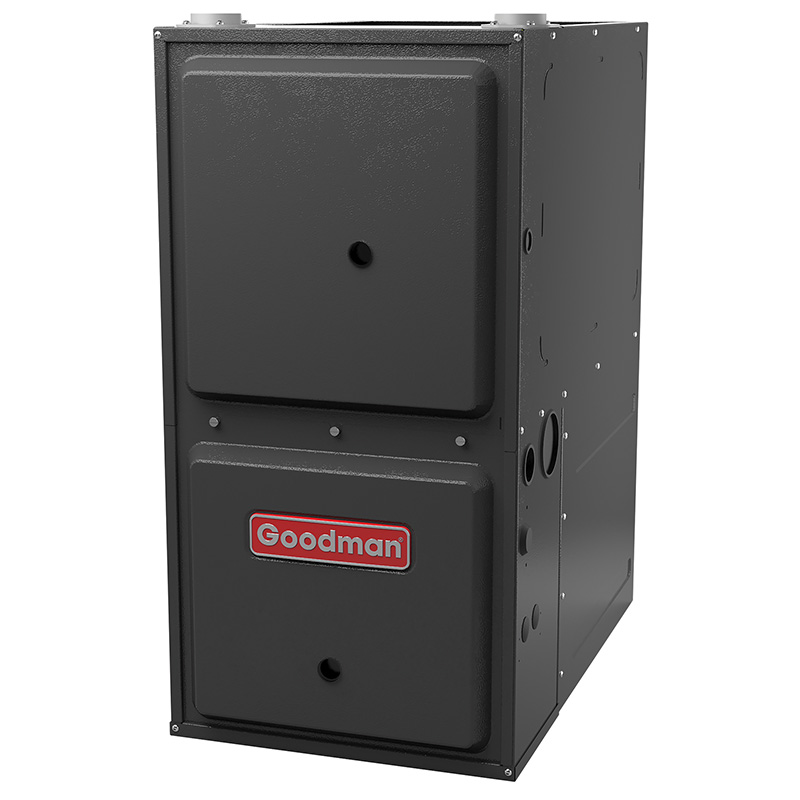
- 60,000 BTU gas furnace with 80% AFUE and multi-speed ECM blower motor for quieter, lower-wattage airflow
- Downflow configuration designed for installations where supply air exits beneath the unit
- R-32 refrigerant with lower global warming potential than R-410A and growing technician availability
- Low NOx burner meets California and other strict regional air quality emissions requirements
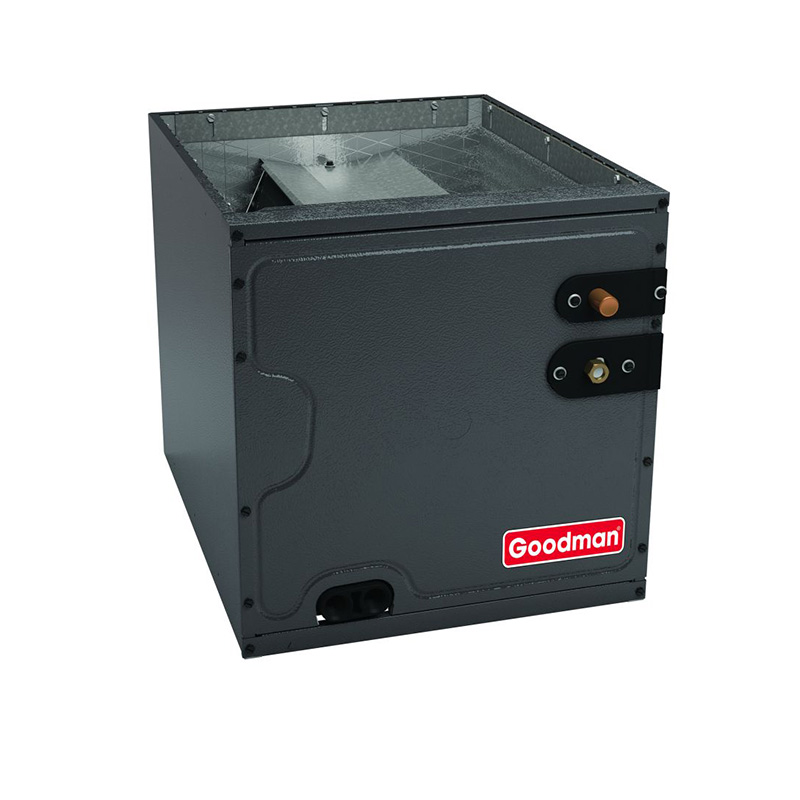
- Bundled system helps ensure AC coil and furnace are matched for rated performance and warranty compliance
About this system
This Goodman bundle pairs a 1.5-ton, 14.5 SEER2 central air conditioner with a 60,000 BTU, 80% AFUE gas furnace in a downflow configuration, making it a practical choice for homes where the air handler sits in a closet, utility room, or garage and blows conditioned air downward into the duct system beneath it. At 1.5 tons, the cooling side is sized for roughly 600 to 900 square feet of well-insulated living space, though a proper Manual J load calculation should always confirm sizing before purchase. The R-32 refrigerant charge is a forward-looking detail: R-32 has a lower global warming potential than the older R-410A it replaces and is becoming the industry standard, so future service calls will have access to a growing supply of technicians and refrigerant stock.
The furnace side runs a multi-speed ECM blower motor, which draws less electricity than a standard PSC motor and moves air more quietly across the speed range. The 80% AFUE rating means 80 cents of every dollar of gas burned becomes usable heat, which is the federal minimum efficiency for non-weatherized furnaces and a reasonable choice in mild climates or for budget-conscious buyers in moderate heating zones. Homeowners in the northern half of the country who run their furnace heavily from November through March will want to weigh whether a 96% AFUE unit pays back the price difference over time. The Low NOx burner design meets California and other stricter regional air quality standards, broadening where this unit can legally be installed.
This Goodman bundle delivers entry-level efficiency at a price point that is hard to argue with for straightforward replacements in mild climates, and the R-32 refrigerant and ECM blower motor are genuinely useful inclusions at this price tier. The trade-offs are real: Goodman's documented history of capacitor failures, evaporator coil leaks, and shorter average compressor life means ongoing maintenance costs can chip away at the upfront savings, particularly after year seven. Buyers who prioritize lowest installed cost and have a reliable local HVAC technician will be well served; those who want to minimize ten-year ownership costs should price out the step-up options.
Overall score is the average of the five ratings above.
What we like
- Priced 15 to 25 percent below comparable Carrier, Trane, and Lennox equipment, leaving real money for installation or a service contract
- R-32 refrigerant is future-friendly and meets stricter environmental standards compared to R-410A
- Multi-speed ECM blower motor reduces electricity consumption and noise versus basic single-speed PSC motors
- Low NOx burner satisfies California and other restrictive regional air quality rules, broadening installation options
- Matched bundle ensures the coil and furnace are engineered to work together, supporting warranty compliance and rated SEER2 performance
Trade-offs
- Dual-run capacitors are the most commonly reported failure point in owner accounts, typically requiring a repair visit in the $300 to $600 range within the first decade
- Evaporator coil leaks show up in a meaningful share of owner reviews and can be a costly mid-life repair
- Compressor lifespan averages 10 to 14 years versus 15 to 20 for premium brands, meaning replacement may come sooner than expected
- 80% AFUE is the federal minimum and will result in meaningfully higher heating bills than a 95% or 96% AFUE unit in cold-winter climates
What homeowners and pros say about Goodman
On ConsumerAffairs, Goodman carries roughly a 2.5 out of 5 rating, a score that reflects the platform’s complaint-heavy audience rather than a random sample of all owners. The recurring theme in those reviews is repair costs climbing after roughly year seven, with dual-run capacitor failures named most often as the first thing to go. Evaporator coil leaks also surface frequently enough to be a real pattern rather than an outlier. A small but documented minority of owners report refrigerant leaks within the first year, something technicians typically trace back to install quality or an improper charge rather than a factory defect, which underscores how much this brand’s real-world performance depends on who puts it in.
Google dealer reviews tell a more moderate story, averaging around 3.8 out of 5 across hundreds of reviews per location, where affordability is the most consistent praise. HVAC professionals tend to describe Goodman as a serviceable workhorse that rewards a careful installation and a consistent maintenance schedule, while noting that compressor lifespan averages 10 to 14 years compared to 15 to 20 years for Carrier, Trane, or Lennox equipment. For this specific 1.5-ton downflow bundle, the R-32 refrigerant and ECM blower motor are genuine value-adds that are not always present at this price tier, and a buyer who budgets for likely capacitor service and keeps up with annual maintenance has a reasonable chance of getting a solid decade of reliable operation from the system.
Sources: ConsumerAffairs Goodman owner reviews, AHRI Directory of Certified Product Performance, U.S. DOE appliance and equipment efficiency standards, Goodman product specification sheets.
What it costs to run
At 14.5 SEER2, cooling this 1.5-ton system for a typical 1200-hour cooling season at the U.S. average electricity rate of $0.17/kWh works out to roughly $253 per year in cooling, about $21 less per year than a minimum-efficiency 13.4 SEER2 unit of the same size. Your real cost depends on your climate and local rate.
Method: (18,000 BTU/hr ÷ 14.5 SEER2) × 1200 hours ÷ 1000 × $0.17/kWh. Rate source: U.S. EIA average; cooling hours: moderate-climate estimate.
How it compares
| Brand | Comparable model | SEER2 | Stage | Price position |
|---|---|---|---|---|
| Goodman | This system (1.5T AC + GMVC8 series 60k BTU 80% AFUE downflow bundle) | 14.5 | Single-stage AC / Multi-speed furnace | Value pick |
| Carrier | Comfort 24ACC4 AC + 58MCA 80% AFUE furnace bundle | 14.5 | Single-stage AC / Multi-speed furnace | Typically 15 to 25 percent higher than this Goodman bundle |
| Trane | XR14c AC + S8X1 80% AFUE furnace bundle | 14.5 | Single-stage AC / Single-speed furnace | Typically 20 to 30 percent higher than this Goodman bundle |
| Lennox | ML14XC1 AC + ML180 80% AFUE furnace bundle | 14.5 | Single-stage AC / Multi-speed furnace | Typically 20 to 35 percent higher than this Goodman bundle |
Competitor rows are comparable single-stage units at similar efficiency; price is relative position, not a quote.
Questions about this system
Is 1.5 tons the right size for my home, or do I need to have a load calculation done?
A Manual J load calculation is the only reliable way to confirm sizing for your specific home, and it accounts for insulation, window area, ceiling height, and local climate. As a rough rule of thumb, 1.5 tons is often appropriate for 600 to 900 square feet of well-insulated space in a moderate climate, but an oversized or undersized unit will short-cycle or struggle to dehumidify. Ask your installer to provide load calculation documentation before purchase.
Is R-32 refrigerant safe and easy to service in my area?
R-32 is mildly flammable (classified A2L) but has been used safely in residential systems worldwide and is increasingly common in the U.S. as R-410A is phased down. Technicians need to be certified to handle it, and most established HVAC companies now carry the proper equipment. Availability is growing steadily, so finding a qualified service tech should not be a problem in most markets.
What does the downflow configuration actually mean, and how do I know if my home needs it?
Downflow means the furnace pulls return air in at the top and discharges heated or cooled air downward into ductwork below the unit. This suits installations in a closet on the main floor or in a utility room where the supply ducts run under the floor or in a crawl space. If your existing system is upflow or horizontal, this unit will not fit without major duct modifications, so confirm your current configuration before ordering.
What are the most likely repair costs I should budget for over the first ten years?
Based on documented Goodman failure patterns, the most common early-to-mid-life repair is a dual-run capacitor replacement, typically in the $300 to $600 range including labor, and this can happen multiple times. Evaporator coil leaks are a more costly possibility and are worth monitoring. Setting aside a few hundred dollars per year in a maintenance fund is a reasonable approach for any budget-brand system.
Will the 80% AFUE furnace really cost me noticeably more to operate than a high-efficiency model?
The difference between 80% and 96% AFUE means a 96% unit converts about 20 percent more of the gas it burns into usable heat. In a mild climate where the furnace runs modestly, the annual savings may be small enough that the payback period on a higher-efficiency unit stretches to 10 years or more. In a cold-winter climate with high gas prices, the payback can be under five years, making the upgrade worth pricing out before committing.
Specifications
| Cooling capacity | 1.5 Ton |
| Efficiency | 14.5 SEER2 |
| Furnace output | 60000 BTU |
| Furnace efficiency | 80% AFUE |
| Configuration | Downflow |
| Refrigerant | R-32 |