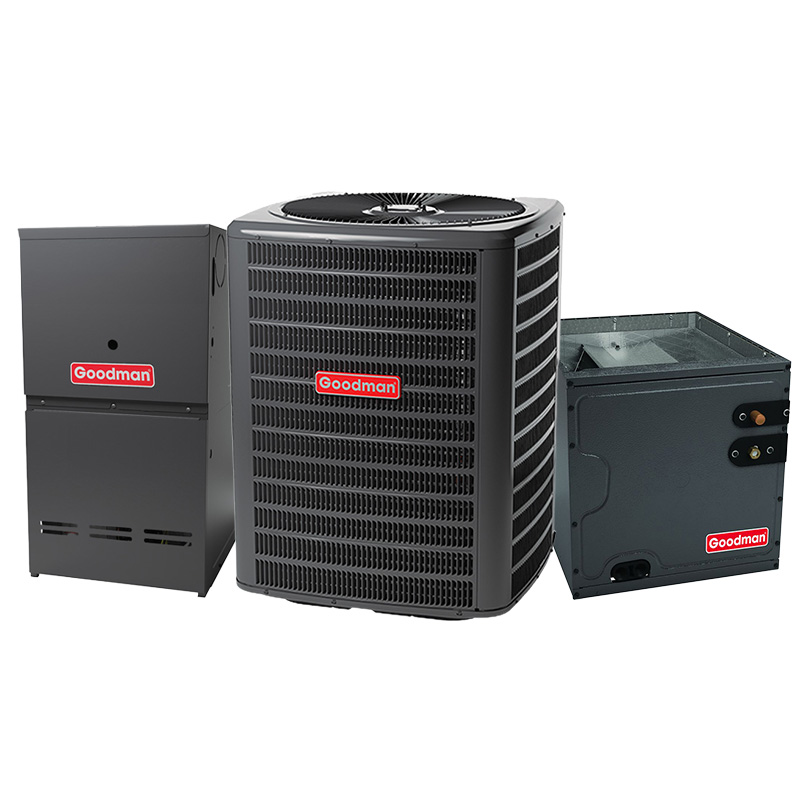
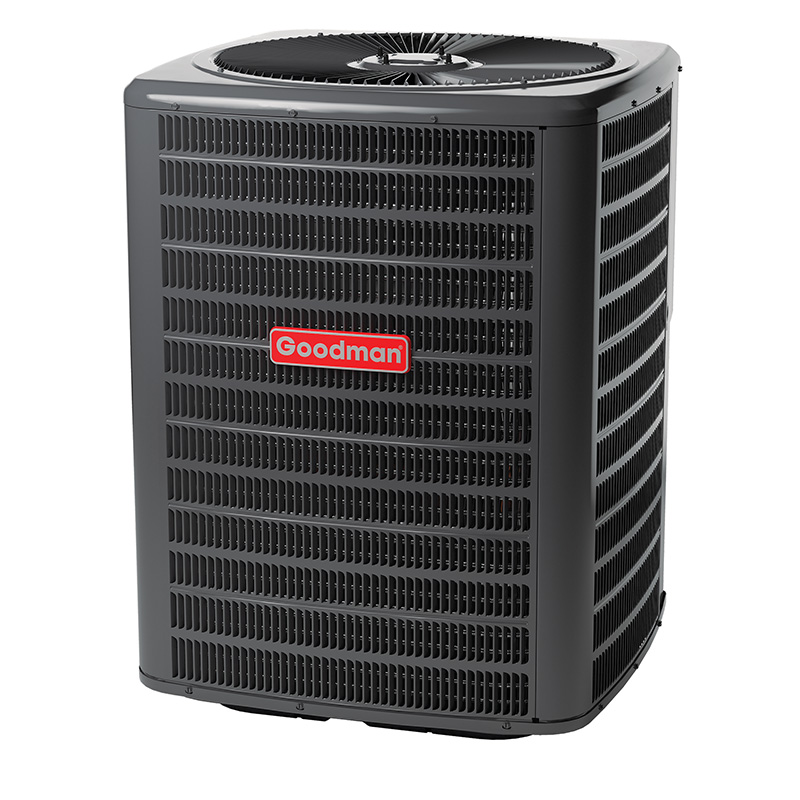
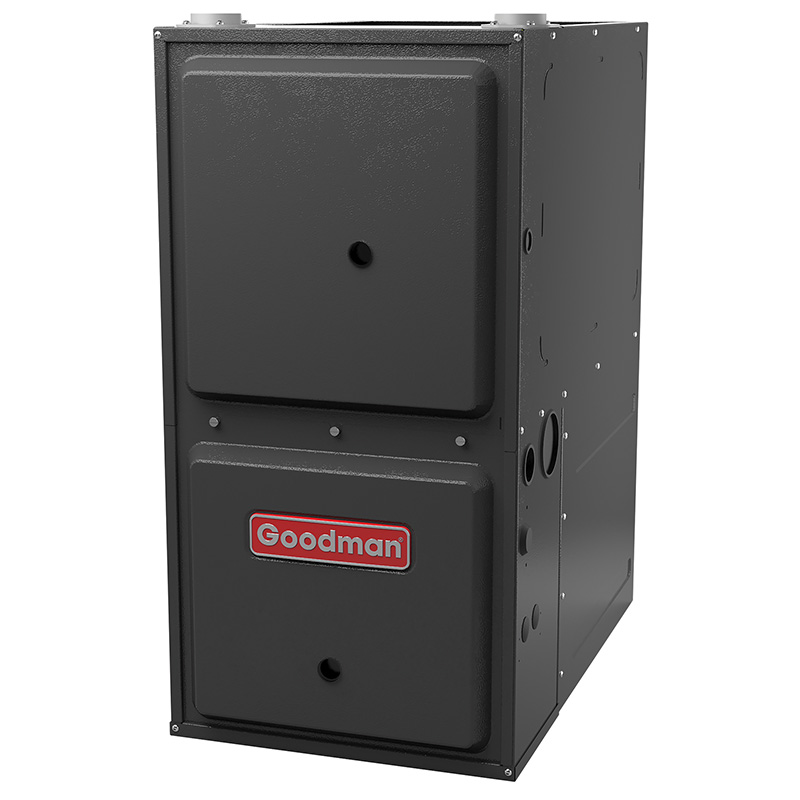
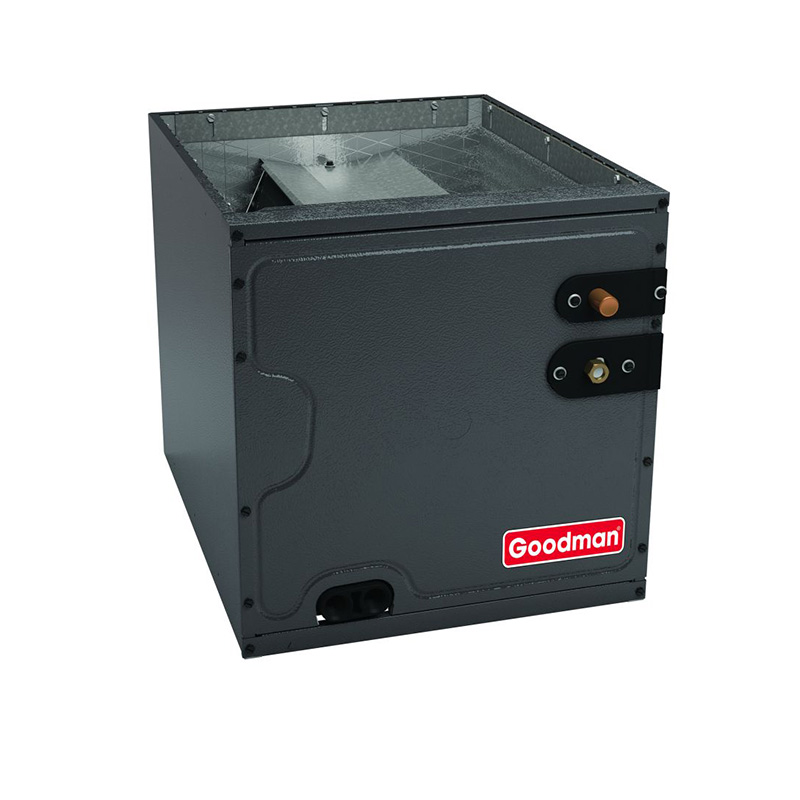
Goodman 2 Ton AC And 40000 BTU 80% AFUE Gas Furnace System | 14.5 SEER2 AC | Multi-Speed ECM Low NOx Furnace | Downflow | R32
View on AC Direct see your lowest price →Check current price on AC Direct →
Key features
- 2-ton cooling capacity with 14.5 SEER2 efficiency rating
- 40,000 BTU gas furnace at 80% AFUE heating efficiency
- Downflow configuration for basement or above-duct installations
- Multi-speed ECM blower motor for quieter partial-load operation
- R-32 refrigerant with lower global-warming potential than R-410A
- Low NOx burner design for reduced nitrogen oxide emissions
About this system
This Goodman bundle pairs a 2-ton, 14.5 SEER2 central air conditioner with a 40,000 BTU, 80% AFUE gas furnace in a downflow configuration, meaning the furnace sits above the air handler and pushes conditioned air downward into the duct system. That layout is common in homes with basement or utility-closet installations where supply ducts run beneath the unit. The system uses R-32 refrigerant, a lower global-warming-potential option that is becoming more common as the industry moves away from R-410A, and it incorporates a multi-speed ECM blower motor in the furnace, which runs at lower speeds during mild conditions to save electricity and reduce temperature swings compared to a fixed-speed motor.
On efficiency, 14.5 SEER2 sits right at the federal minimum threshold for most U.S. climate zones, so this is a baseline-efficiency choice rather than an energy-saver upgrade. The 80% AFUE furnace similarly represents the entry tier of gas heating efficiency, meaning roughly 20 cents of every dollar in gas is vented outside as exhaust. Buyers in colder climates or those with high heating bills may want to weigh a 96% AFUE unit before committing. Where this bundle earns its place is in mild-to-moderate climates, rental properties, budget-conscious replacements, or situations where the existing ductwork and electrical service are sized for a 2-ton system and owners simply need a reliable replacement without paying a premium-brand markup.
This Goodman bundle is a straightforward, budget-accessible replacement system that delivers code-minimum efficiency and a legitimate ECM blower upgrade at a price typically 15 to 25 percent below comparable Carrier, Trane, or Lennox packages. It suits homeowners who want a functional, properly sized system without paying for premium-brand overhead, provided they invest in a skilled installer, since Goodman's real-world longevity is closely tied to installation quality. Buyers expecting premium build quality or the compressor lifespan of higher-end brands should calibrate expectations accordingly.
Overall score is the average of the five ratings above.
What we like
- Purchase price runs 15 to 25 percent below comparable Carrier, Trane, and Lennox bundles
- Multi-speed ECM blower reduces electricity use and noise at part-load conditions
- R-32 refrigerant is more environmentally friendly and increasingly well-supported by technicians
- Downflow configuration is a direct fit for common basement and utility-closet duct layouts
- Low NOx furnace meets air-quality standards in stricter regional jurisdictions
Trade-offs
- 80% AFUE is the least-efficient furnace tier; homeowners in cold climates will see higher annual gas bills versus 90%-plus alternatives
- 14.5 SEER2 is code-minimum cooling efficiency, offering no meaningful energy savings over older baseline systems
- Compressor lifespan averages 10 to 14 years versus 15 to 20 years typical of premium brands, based on documented owner experience
- Dual-run capacitors and evaporator coil leaks are the most commonly reported failure modes, and repair costs tend to climb after year 7 according to ConsumerAffairs feedback
What homeowners and pros say about Goodman
Homeowners who have lived with Goodman equipment long enough to post about it tend to land in two camps. Those who had a skilled installer and caught minor issues early report years of uneventful service and point to the lower upfront cost as money well saved. Those who dealt with problems describe a familiar arc: the system runs fine for several years, then repair bills begin stacking up around year 7 or 8, which aligns with the recurring theme in Goodman’s ConsumerAffairs profile, where the brand scores roughly 2.5 out of 5 on a channel that admittedly skews toward frustrated owners. Google dealer reviews tell a more balanced story, averaging around 3.8 out of 5 across multiple locations, where affordability is the praise that comes up most often.
HVAC technicians who work on Goodman equipment regularly point to dual-run capacitors as the most common service call, usually a low-cost fix in the 300 to 600 dollar range. Evaporator coil leaks show up in a meaningful share of owner accounts and are a more expensive repair. Compressor longevity is the longer-term concern: documented experience puts Goodman compressors at roughly 10 to 14 years on average, noticeably shorter than the 15 to 20 years common on premium brands. A small share of owners also report refrigerant issues within the first year, which technicians generally attribute to installation problems or an improper initial charge rather than a manufacturing defect. For this specific 2-ton downflow R-32 system, the ECM blower and low NOx burner are genuine modern features, but the efficiency tiers remain entry-level, and the brand’s track record means installation quality and a proactive maintenance plan matter more here than they would with a premium-brand purchase.
Sources: ConsumerAffairs Goodman owner reviews, AHRI Directory of Certified Product Performance, U.S. DOE appliance and equipment efficiency standards, Goodman product specification sheets.
What it costs to run
At 14.5 SEER2, cooling this 2-ton system for a typical 1200-hour cooling season at the U.S. average electricity rate of $0.17/kWh works out to roughly $338 per year in cooling, about $27 less per year than a minimum-efficiency 13.4 SEER2 unit of the same size. Your real cost depends on your climate and local rate.
Method: (24,000 BTU/hr ÷ 14.5 SEER2) × 1200 hours ÷ 1000 × $0.17/kWh. Rate source: U.S. EIA average; cooling hours: moderate-climate estimate.
How it compares
| Brand | Comparable model | SEER2 | Stage | Price position |
|---|---|---|---|---|
| Goodman | This system (2-ton AC + 40K BTU 80% AFUE downflow furnace) | 14.5 | Single-stage | Value pick |
| Carrier | Comfort Series 24ACC636 + 58SB0 80% AFUE furnace bundle | 14.5 | Single-stage | Typically 15 to 20 percent more than this Goodman bundle |
| Trane | XR14c + S8X1 80% AFUE furnace bundle | 14.5 | Single-stage | Typically 20 to 25 percent more than this Goodman bundle |
| Lennox | ML14XC1 + ML180 80% AFUE furnace bundle | 14.5 | Single-stage | Typically 20 to 25 percent more than this Goodman bundle |
Competitor rows are comparable single-stage units at similar efficiency; price is relative position, not a quote.
Questions about this system
Is a downflow furnace the right choice for my home?
Downflow furnaces discharge air from the bottom of the unit and are designed for installations where supply ducts run beneath the equipment, typically in a basement, crawlspace-fed utility room, or on an upper floor with ducts in the ceiling below. If your existing furnace is already a downflow model, this is a straightforward swap. If your ducts connect from the side or top, you would need a different orientation.
Why does this system use R-32 refrigerant instead of R-410A?
R-32 has a significantly lower global-warming potential than R-410A and is part of the industry's broader transition away from older refrigerants ahead of upcoming regulatory changes. Most HVAC technicians in areas where R-32 equipment is sold are already certified to handle it, but it is worth confirming your local service contractors are equipped before purchasing.
How long should I realistically expect this Goodman system to last?
Based on documented owner experience, Goodman compressors tend to average 10 to 14 years, compared to 15 to 20 years for premium-brand equipment. Install quality is the single biggest factor in longevity, so choosing an experienced, licensed HVAC contractor is arguably more important than the brand itself. Budget for possible capacitor or coil service after year 7.
What does the multi-speed ECM blower actually do differently from a standard blower?
A multi-speed ECM (electronically commutated motor) blower can operate at lower fan speeds during mild conditions rather than running full blast on every cycle. This lowers electricity use, reduces noise during normal operation, and moderates temperature swings by distributing air more gradually. It does not make the system two-stage or variable in terms of heating or cooling output, only blower speed.
Does Goodman's warranty fully cover parts and labor if something goes wrong?
Goodman's standard registered warranty covers parts for 10 years on the compressor and heat exchanger and 5 years on other components, but it does not cover labor costs. That means a coil leak or capacitor failure after year 3, for example, could still result in a significant service bill. Some dealers offer extended labor warranties separately, and it is worth asking about that at purchase.
Specifications
| Cooling capacity | 2 Ton |
| Efficiency | 14.5 SEER2 |
| Furnace output | 40000 BTU |
| Furnace efficiency | 80% AFUE |
| Configuration | Downflow |
| Refrigerant | R-32 |