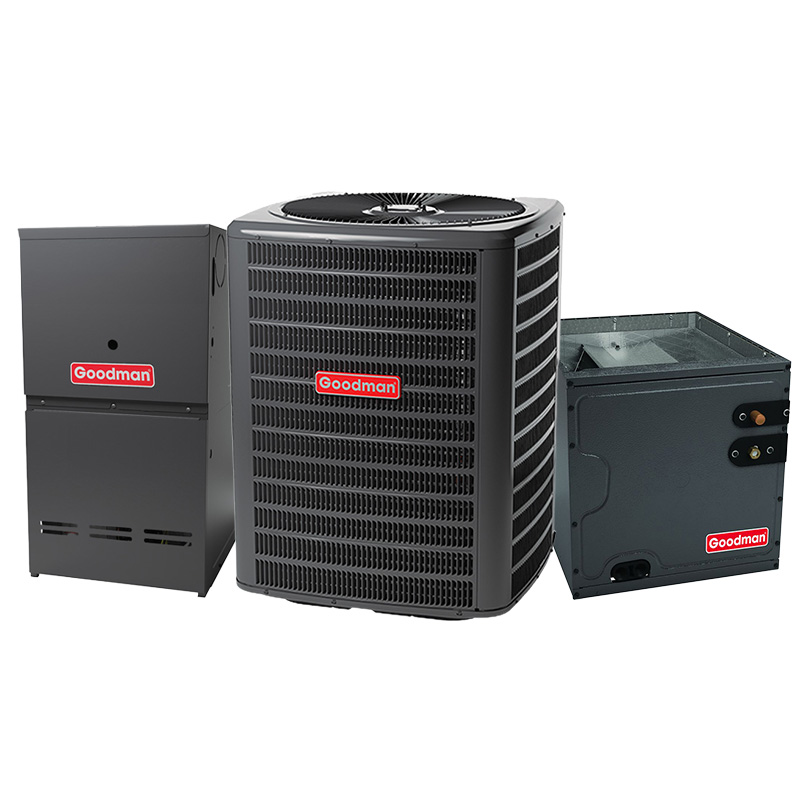
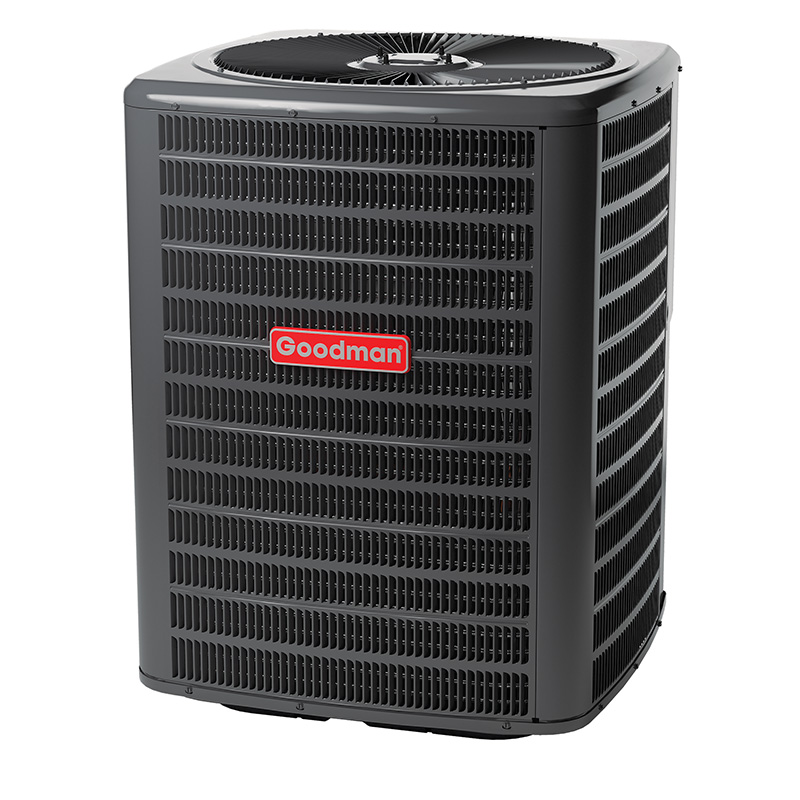
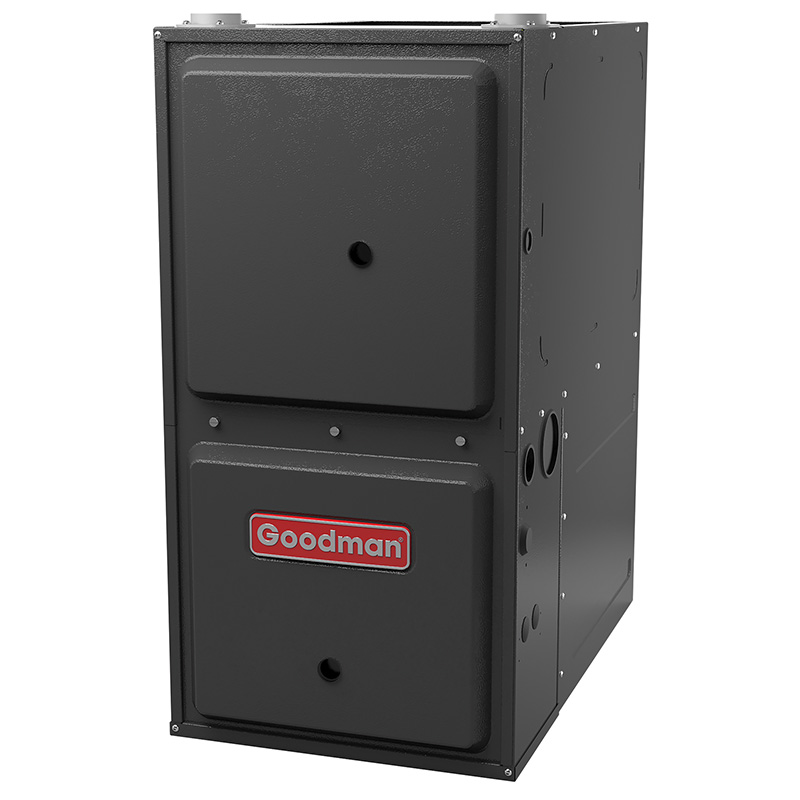
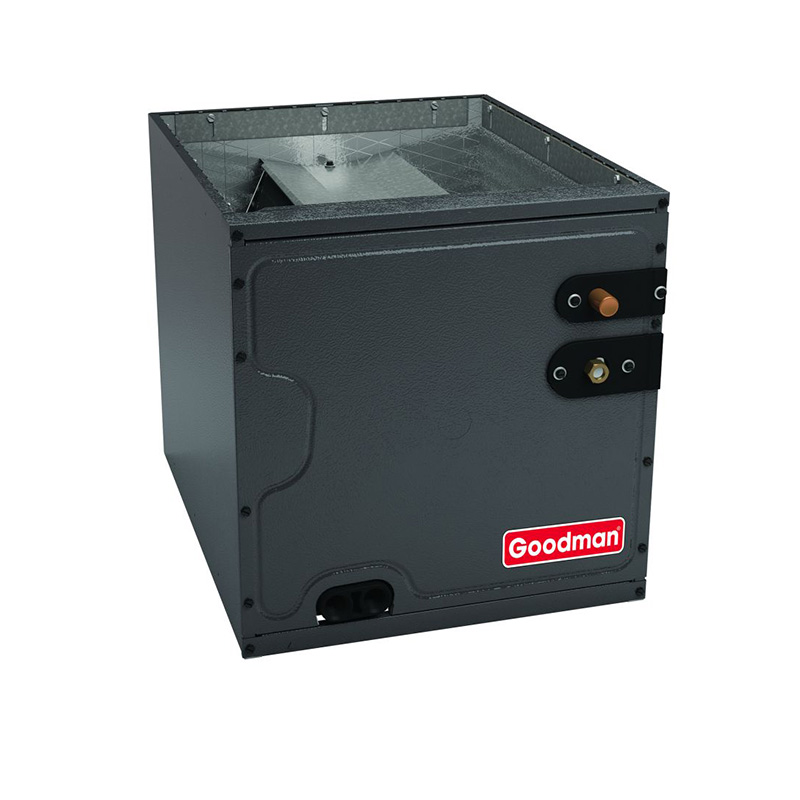
Goodman 2.5 Ton AC And 60000 BTU 80% AFUE Gas Furnace System | 14.5 SEER2 AC | Multi-Speed ECM Low NOx Furnace | Downflow | R32
View on AC Direct see your lowest price →Check current price on AC Direct →
Key features
- 14.5 SEER2 rated central air conditioner, 2.5-ton cooling capacity
- 60,000 BTU 80% AFUE gas furnace with multi-speed ECM blower motor
- Downflow cabinet configuration for attic or overhead duct systems
- R-32 refrigerant with lower global warming potential than R-410A
- Multi-speed ECM motor improves humidity control and reduces blower noise
- Goodman 10-year parts limited warranty when registered within 60 days
About this system
The Goodman 2.5-ton, 14.5 SEER2 / 80% AFUE system pairs a mid-efficiency central air conditioner with a 60,000 BTU multi-speed ECM gas furnace in a downflow configuration, making it well suited for homes where the air handler sits in an attic or closet above the living space and air is delivered downward. The R-32 refrigerant charge is a meaningful update: R-32 has a significantly lower global warming potential than the R-410A it replaces, and the smaller refrigerant charge required for equivalent capacity can reduce leak-related risks over time. Multi-speed ECM blower motor operation helps maintain steadier temperatures and delivers modest efficiency gains over a single-speed PSC motor, while keeping noise levels lower during normal operation.
At 14.5 SEER2 and 80% AFUE, this system sits at the federal minimum-efficiency tier. That means it qualifies for installation across most U.S. climate zones but will not earn federal tax credits that currently require at least 15 SEER2 for cooling or 97% AFUE for gas heating. Homeowners in mild-to-moderate climates who prioritize a lower upfront cost over maximum long-term energy savings will find this tier reasonable. Buyers in hot-summer regions who run their AC five or more months per year will likely see a faster payback from stepping up to a 16 or 17 SEER2 system, so the math is worth running before committing. The downflow-only cabinet limits installation flexibility, so confirm your existing or planned duct layout before ordering.
This system delivers a functional, code-compliant replacement or new-construction solution at a price point 15 to 25 percent below comparable Carrier, Trane, and Lennox equipment. The trade-off is a compressor and coil track record that lags premium brands, and long-term costs depend heavily on the quality of the installing contractor. Buyers who vet their installer carefully and budget for a capacitor replacement around the 7-to-10-year mark will likely come out ahead financially versus spending more upfront on a premium brand.
Overall score is the average of the five ratings above.
What we like
- Upfront cost is meaningfully lower than Carrier, Trane, or Lennox systems at the same efficiency tier
- R-32 refrigerant is more environmentally responsible and requires a smaller charge than R-410A
- Multi-speed ECM blower motor provides more consistent comfort and quieter operation than single-speed alternatives
- 10-year registered parts warranty is competitive for this price tier
- Widely available replacement parts and a large national network of certified Goodman dealers
Trade-offs
- Compressor lifespan averages 10 to 14 years versus 15 to 20 years for premium-brand compressors
- Evaporator coil leaks appear in a meaningful share of long-term owner reports, a repair that can run well into four figures
- ConsumerAffairs rating of roughly 2.5 out of 5 reflects a pattern of repair costs climbing noticeably after year 7
- 80% AFUE is the minimum efficiency allowed federally and will not qualify for current federal heat pump or furnace tax credits
What homeowners and pros say about Goodman
Homeowners who chose Goodman equipment generally land in one of two camps. Those who had it professionally installed by a contractor who sized the system correctly and verified the refrigerant charge tend to report years of uneventful operation and point to the lower upfront cost as a win. That experience is reflected in Google dealer review aggregates, which sit around 3.8 out of 5 across hundreds of location-level reviews, with affordability the most frequently praised factor. The other camp, more prominent on complaint-weighted channels like ConsumerAffairs where the brand scores roughly 2.5 out of 5, describes a pattern of repairs that begin compounding around the seven-year mark, often after a capacitor failure opens the door to a service call that reveals bigger issues.
HVAC technicians who work on multiple brands tend to describe Goodman as a system that rewards a careful installation and punishes a careless one more than premium alternatives. The two documented failure modes that come up most often are dual-run capacitor failures, which are inexpensive and quick to fix but signal that the system is entering a higher-maintenance phase, and evaporator coil leaks, which are more costly and show up in a meaningful portion of owner accounts over the life of the unit. Compressor longevity is a real consideration: Goodman compressors tend to average 10 to 14 years in the field, a gap that matters when comparing total ownership costs against brands where 15 to 20 years is more typical. For this specific system, the R-32 refrigerant and ECM blower are genuine improvements over older Goodman configurations, and they represent the brand keeping pace with industry direction even at the entry-level price point.
Sources: ConsumerAffairs Goodman owner reviews, AHRI Directory of Certified Product Performance, U.S. DOE appliance and equipment efficiency standards, Goodman product specification sheets.
What it costs to run
At 14.5 SEER2, cooling this 2.5-ton system for a typical 1200-hour cooling season at the U.S. average electricity rate of $0.17/kWh works out to roughly $422 per year in cooling, about $35 less per year than a minimum-efficiency 13.4 SEER2 unit of the same size. Your real cost depends on your climate and local rate.
Method: (30,000 BTU/hr ÷ 14.5 SEER2) × 1200 hours ÷ 1000 × $0.17/kWh. Rate source: U.S. EIA average; cooling hours: moderate-climate estimate.
How it compares
| Brand | Comparable model | SEER2 | Stage | Price position |
|---|---|---|---|---|
| Goodman | 2.5T 14.5 SEER2 / 60K BTU 80% AFUE Downflow R-32 | 14.5 | Single-stage | Value pick |
| Carrier | Comfort 14 (CA14NA / 58TP) | 14.3 | Single-stage | Typically 15 to 25% higher than this Goodman system |
| Trane | XR14 / S8X1 (80% AFUE) | 14.3 | Single-stage | Typically 15 to 25% higher than this Goodman system |
| Lennox | Merit 14ACX / ML180 | 14.3 | Single-stage | Typically 20 to 30% higher than this Goodman system |
Competitor rows are comparable single-stage units at similar efficiency; price is relative position, not a quote.
Questions about this system
Is a downflow furnace the same as a standard upflow unit? Can I use this in a basement or crawlspace?
No. A downflow furnace discharges conditioned air from the bottom of the cabinet and draws return air from the top, which is the opposite of an upflow unit. It is designed for installations where the furnace sits above the living space, such as a main-floor closet or attic, with ductwork running beneath it. Using it in a basement where an upflow configuration is required would mean returning it and ordering the correct cabinet orientation.
Does using R-32 refrigerant require special tools or certifications from my installer?
Yes, in a practical sense. R-32 is mildly flammable (A2L classification), so technicians need EPA 608 certification as usual, plus training and tools rated for A2L refrigerants. Most established HVAC contractors are already equipped or are actively getting certified as R-32 becomes the industry standard, but it is worth confirming with your installer before the job begins.
What is the most common repair I should budget for, and when should I expect it?
Dual-run capacitors are the most frequently reported failure on Goodman AC units and typically fail somewhere in the 7-to-12-year window. The repair usually costs between 300 and 600 dollars depending on your market and is a straightforward fix. Budgeting for one capacitor replacement during the system's life is reasonable planning.
Will this system qualify for the federal energy efficiency tax credit?
The cooling side at 14.5 SEER2 falls at the federal minimum and does not meet the 15 SEER2 threshold currently required for the 25C residential energy efficiency tax credit. The 80% AFUE gas furnace also does not qualify, as the gas furnace credit requires 97% AFUE or higher. If the tax credit is important to your budget, you would need to consider a higher-efficiency system.
How much does install quality actually matter with Goodman equipment?
It matters a great deal, more so than with premium brands that have tighter manufacturing tolerances and more forgiving controls. Technicians consistently note that Goodman systems installed correctly by experienced contractors perform reliably, while the same units installed poorly, with improper refrigerant charge, undersized ductwork, or incorrect airflow, generate the kinds of complaints that drive the brand's lower consumer ratings. Getting at least two quotes from contractors who will perform a Manual J load calculation is worth the effort.
Specifications
| Cooling capacity | 2.5 Ton |
| Efficiency | 14.5 SEER2 |
| Furnace output | 60000 BTU |
| Furnace efficiency | 80% AFUE |
| Configuration | Downflow |
| Refrigerant | R-32 |