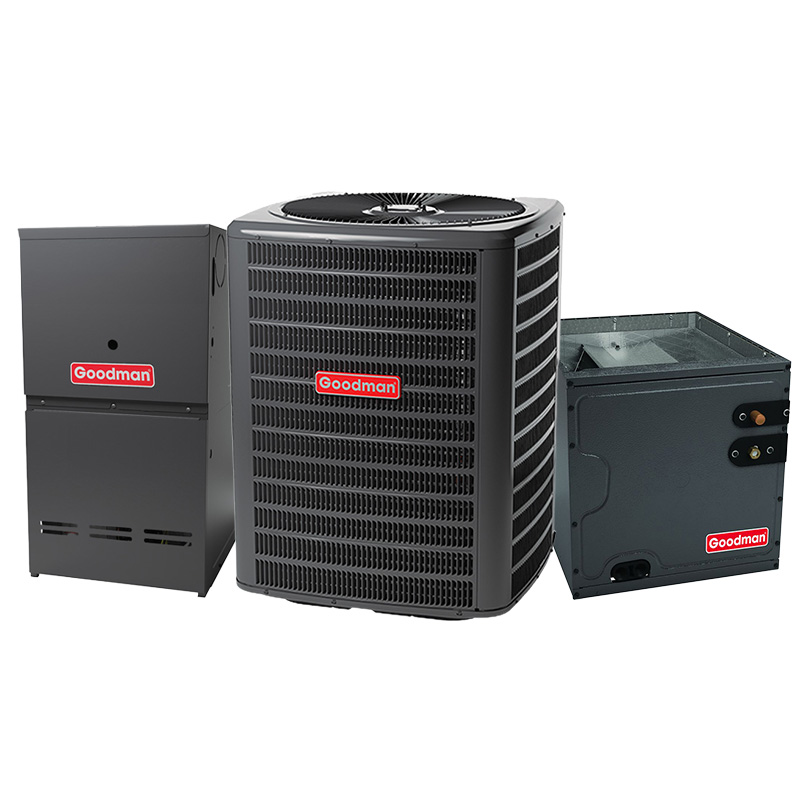
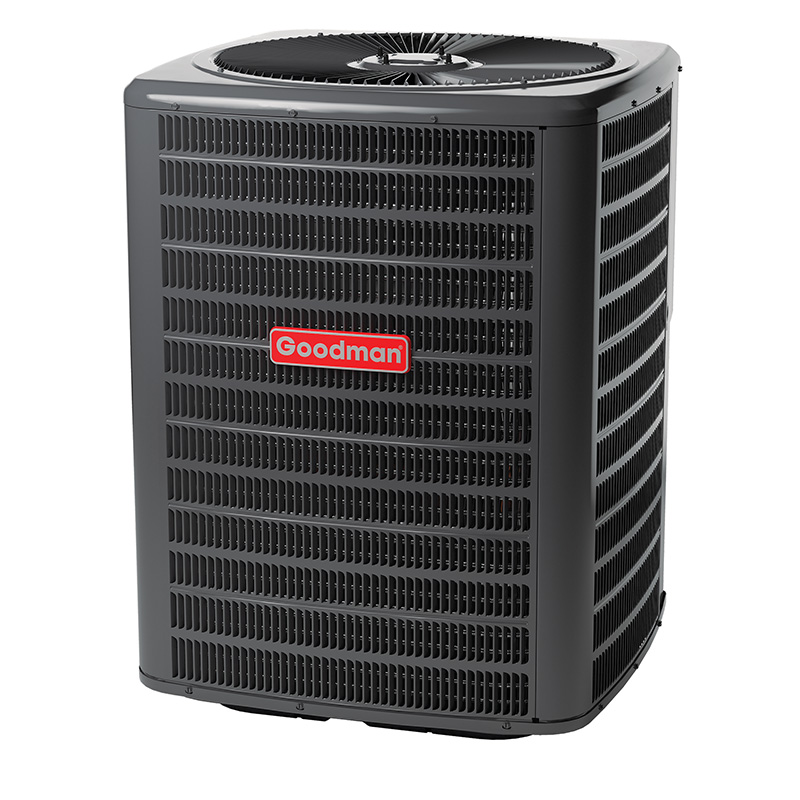
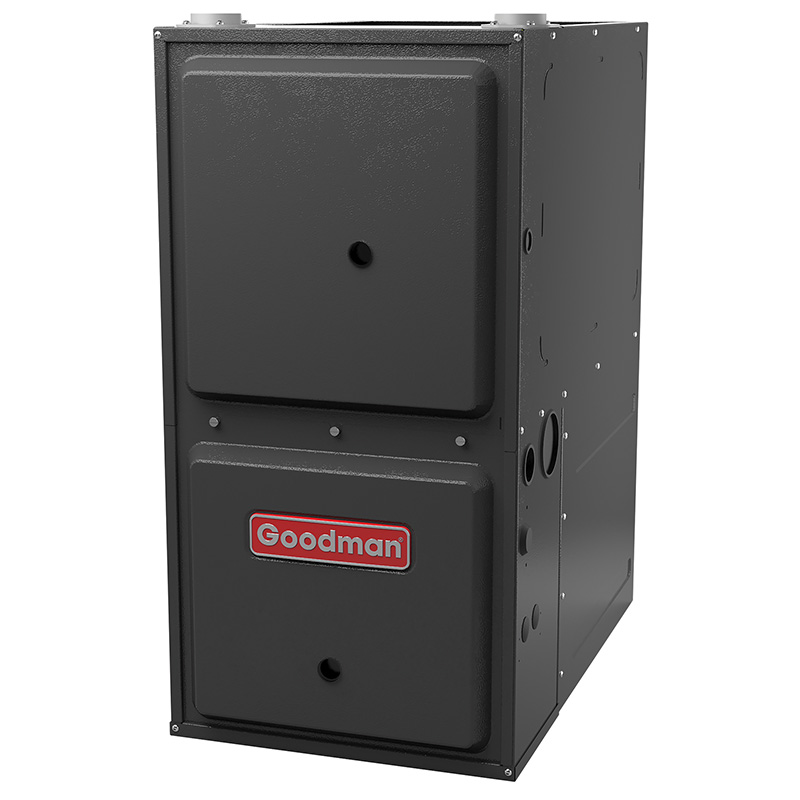
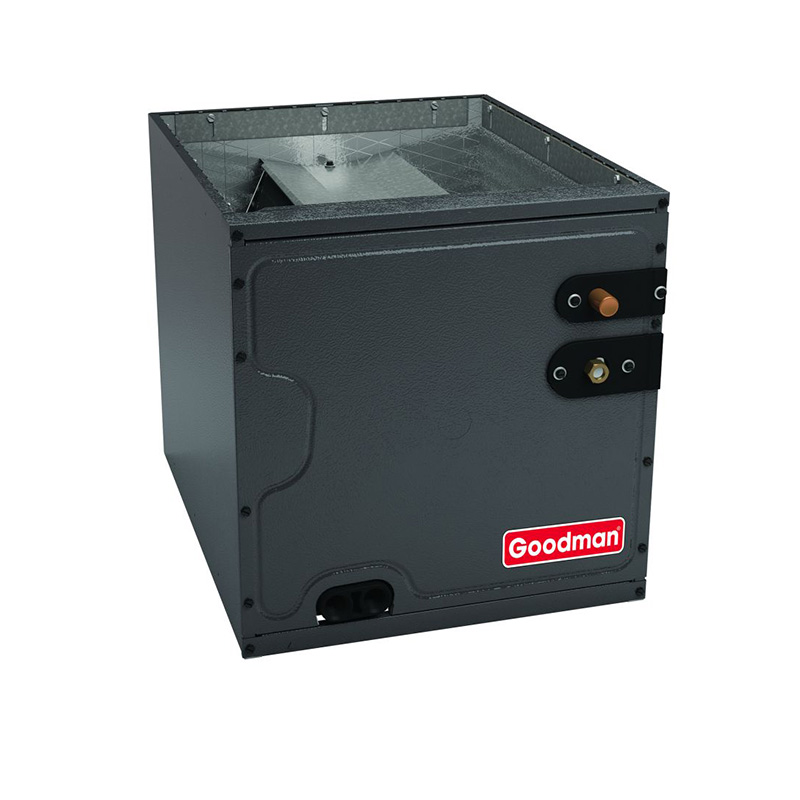
Goodman 3.5 Ton AC And 80000 BTU 80% AFUE Gas Furnace System | 15.2 SEER2 AC | Multi-Speed ECM Low NOx Furnace | Downflow | R32
View on AC Direct see your lowest price →Check current price on AC Direct →
Key features
- 3.5-ton cooling capacity rated at 15.2 SEER2 efficiency
- 80,000 BTU gas furnace with 80% AFUE single-stage heating
- Multi-speed ECM blower motor for quieter, more efficient airflow
- Downflow configuration for closet, alcove, or above-crawlspace installs
- R-32 refrigerant with lower global warming potential than R-410A
- Factory-matched system design for simplified commissioning and warranty compliance
About this system
This Goodman bundle pairs a 3.5-ton, 15.2 SEER2 central air conditioner with an 80,000 BTU, 80% AFUE gas furnace in a downflow configuration, making it a practical choice for homes where the air handler sits in a closet, utility room, or above a crawlspace with ductwork running beneath. The system uses R-32 refrigerant, a lower-global-warming-potential refrigerant that is increasingly common as the industry moves away from R-410A. The multi-speed ECM blower motor in the furnace runs at variable fan speeds, which improves humidity control, quiets operation compared to single-speed units, and reduces electricity consumption during fan-only and heating cycles.
At 15.2 SEER2 the cooling side clears the federal minimum for most U.S. climate zones but sits in the entry-to-mid efficiency tier rather than the premium tier. Homeowners in moderate climates with average cooling loads will find the operating costs reasonable without paying for efficiency they may never recover. The 80% AFUE furnace is the budget-conscious choice for heating: one-fifth of the fuel energy exits through the flue, so if your home has long, cold winters or high gas prices, a 96% AFUE unit could pay back its premium over time. For milder heating climates or buyers prioritizing upfront cost, 80% AFUE is a defensible trade-off.
Goodman positions this system as an accessible full replacement for homeowners who need both heating and cooling updated at once without the price tag of premium brands. Because R-32 requires technicians to hold specific certifications and equipment for handling, confirming your installer is R-32 qualified before purchase is worth doing, particularly as the refrigerant is still gaining widespread adoption in residential service networks.
This Goodman bundle delivers a complete heating and cooling replacement at a price point 15 to 25 percent below comparable Carrier, Trane, and Lennox systems, and the ECM furnace motor is a genuine upgrade over single-speed blowers at this price tier. The trade-offs are real: compressor longevity averages shorter than premium brands, certain failure points like capacitors and evaporator coil leaks appear in owner histories, and the 80% AFUE furnace is not the right choice for every climate. A strong install by a qualified R-32 technician is the single biggest factor in how well this system performs over its life.
Overall score is the average of the five ratings above.
What we like
- Priced 15 to 25 percent below comparable Trane, Lennox, and Carrier equipment, lowering the upfront replacement cost
- Multi-speed ECM blower improves dehumidification and quiets airflow versus standard single-speed motors
- R-32 refrigerant has a lower environmental footprint than R-410A and is the direction the industry is heading
- Factory-matched pairing simplifies installation and protects warranty coverage across both components
- Downflow configuration suits a wide range of residential installs where top-supply ductwork is impractical
Trade-offs
- Compressor lifespan averages 10 to 14 years versus 15 to 20 years documented for premium-brand compressors
- Evaporator coil leaks and dual-run capacitor failures are the most commonly reported repair issues in owner feedback
- 80% AFUE means 20% of fuel is exhausted unused, which raises operating costs compared to high-efficiency furnaces in cold climates
- R-32 requires certified technicians and dedicated service equipment, limiting your repair options in areas where adoption is still catching up
What homeowners and pros say about Goodman
Homeowners who choose Goodman most often cite affordability as the deciding factor, and dealer Google reviews averaging around 3.8 out of 5 reflect a mostly satisfied base that got a working system at a lower cost than competing brands. The more complaint-heavy ConsumerAffairs channel scores Goodman at roughly 2.5 out of 5, and the pattern in those reports is telling: owners are generally fine in the early years, but repair costs and frustration rise noticeably after the seven-year mark. The documented failure modes bear that out. Dual-run capacitor failures are the most frequently cited repair, usually a straightforward fix in the 300 to 600 dollar range, but evaporator coil leaks have shown up in a meaningful share of reviews and are a more disruptive repair. Compressors on Goodman systems average 10 to 14 years of service life, which is a real gap compared to the 15 to 20 years owners of Trane, Carrier, and Lennox equipment more commonly report.
HVAC technicians tend to have a nuanced view of Goodman. Many will install it without hesitation for budget-minded clients while being upfront that installation quality is the dominant variable. A well-commissioned Goodman system in a properly sized application, with correct refrigerant charge and airflow, outperforms a carelessly installed premium unit. The R-32 refrigerant in this specific bundle adds a layer of consideration: service technicians need proper certification and recovery equipment, which narrows the field of who can work on the system. That is worth factoring into your long-term service plan, not just the installation day. Taken together, Goodman is a reasonable buy for owners who understand the trade-offs, budget for eventual repairs, and prioritize a qualified installer above all else.
Sources: ConsumerAffairs Goodman owner reviews, AHRI Directory of Certified Product Performance, U.S. DOE appliance and equipment efficiency standards, Goodman product specification sheets.
What it costs to run
At 15.2 SEER2, cooling this 3.5-ton system for a typical 1200-hour cooling season at the U.S. average electricity rate of $0.17/kWh works out to roughly $564 per year in cooling, about $75 less per year than a minimum-efficiency 13.4 SEER2 unit of the same size. Your real cost depends on your climate and local rate.
Method: (42,000 BTU/hr ÷ 15.2 SEER2) × 1200 hours ÷ 1000 × $0.17/kWh. Rate source: U.S. EIA average; cooling hours: moderate-climate estimate.
How it compares
| Brand | Comparable model | SEER2 | Stage | Price position |
|---|---|---|---|---|
| Goodman | 3.5 Ton 15.2 SEER2 AC + 80K BTU 80% AFUE ECM Downflow R-32 | 15.2 | Single-stage | Value pick |
| Carrier | Comfort 24ACC6 + 58MCA | 15.2 | Single-stage | Approximately 15 to 25 percent more than Goodman |
| Trane | XR15 + S8B1 | 15.0 | Single-stage | Approximately 15 to 25 percent more than Goodman |
| Lennox | Merit ML15XC1 + ML180 | 15.2 | Single-stage | Approximately 20 to 30 percent more than Goodman |
Competitor rows are comparable single-stage units at similar efficiency; price is relative position, not a quote.
Questions about this system
Is my HVAC technician allowed to work on an R-32 system, or do I need a specialist?
R-32 is classified as a mildly flammable (A2L) refrigerant, and technicians need specific training, certification, and compatible recovery equipment to handle it safely and legally. Before buying, confirm your installer is R-32 qualified, because not every residential HVAC contractor has made that investment yet, and it also affects who can service the system down the road.
What does the multi-speed ECM blower actually do differently from a standard furnace motor?
An ECM motor adjusts its speed based on system demand rather than running at full blast every cycle. That means quieter airflow, better distribution of conditioned air, improved humidity removal in cooling mode, and lower electricity consumption during fan operation. It is a meaningful upgrade over single-speed motors common at this price tier.
The system is labeled downflow only. What does that mean for my install, and can I use it in any orientation?
Downflow means the furnace pulls return air in at the top and discharges heated or cooled air downward into the supply ductwork below. This configuration is designed for installs where the air handler sits above the duct system, such as a first-floor closet with basement ducts or an above-crawlspace setup. Using it in any other orientation is not supported and voids the warranty.
Given Goodman's reliability reputation, are there specific parts I should have my technician inspect or stock at installation?
Dual-run capacitors are the most commonly reported failure point on Goodman AC units and typically cost 300 to 600 dollars to repair. Some installers recommend confirming the capacitor is within spec at startup and noting the part number so a replacement can be sourced quickly later. Evaporator coil integrity and refrigerant charge accuracy at installation are also worth verifying, since coil leaks and first-year refrigerant issues appear in documented owner feedback.
With an 80% AFUE furnace, how much more would I spend on gas compared to a 96% AFUE unit?
At 80% AFUE, 20 cents of every dollar spent on gas leaves through the flue as waste heat. A 96% AFUE unit would waste only 4 cents per dollar, roughly a 20 percent reduction in fuel consumption for heating. Whether that difference pays back the higher upfront cost of a condensing furnace depends on your local gas rates, climate severity, and how long you own the home. In mild-winter climates with low annual heating hours, the payback period can stretch beyond a decade.
Specifications
| Cooling capacity | 3.5 Ton |
| Efficiency | 15.2 SEER2 |
| Furnace output | 80000 BTU |
| Furnace efficiency | 80% AFUE |
| Configuration | Downflow |
| Refrigerant | R-32 |