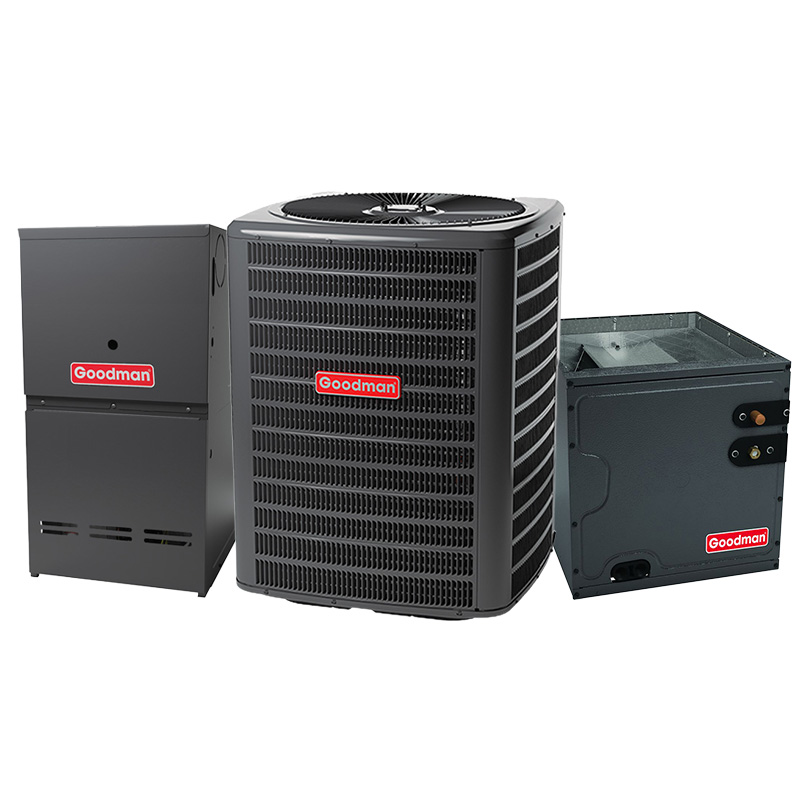
Goodman 4 Ton AC And 80000 BTU 80% AFUE Gas Furnace System | 15.2 SEER2 AC | Multi-Speed ECM Low NOx Furnace | Downflow | R32
View on AC Direct see your lowest price →Check current price on AC Direct →
Key features
- 15.2 SEER2 central air conditioner, 4-ton cooling capacity
- 80,000 BTU output, 80% AFUE single-stage gas furnace
- Multi-speed ECM blower motor for quieter, more efficient airflow
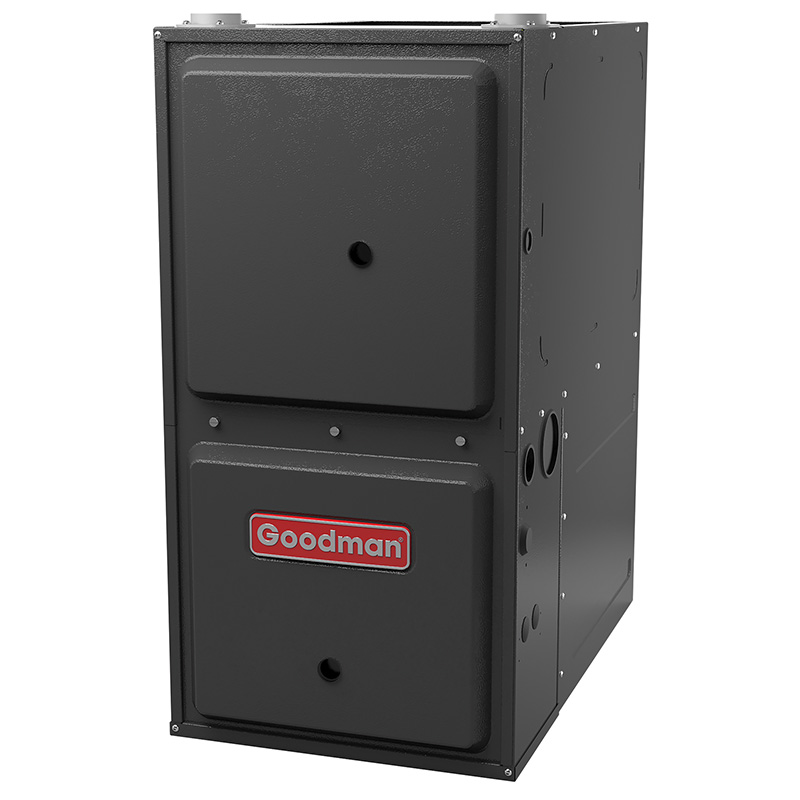
- Downflow cabinet orientation for under-floor or crawl-space duct systems
- R-32 refrigerant with lower global warming potential than R-410A
- Low NOx burner design meets stricter California and regional air-quality standards
About this system
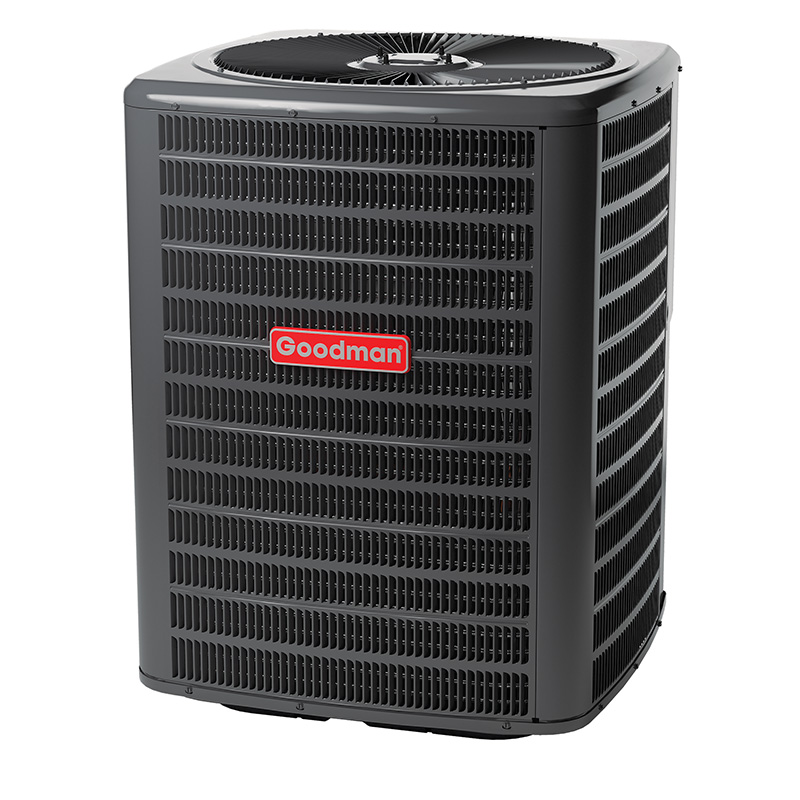
The Goodman 4-ton, 15.2 SEER2 air conditioner paired with an 80,000 BTU, 80% AFUE downflow gas furnace is a straightforward ducted split system aimed at homeowners who want a complete HVAC replacement without the price premium of top-tier brands. At 4 tons, the cooling side is sized for roughly 1,800 to 2,400 square feet of average-insulated space, though a Manual J load calculation should always confirm sizing. The 15.2 SEER2 rating clears the current federal minimum in most regions but sits at the lower end of mid-efficiency territory, meaning operating costs will be higher than a 17 or 18 SEER2 system over a decade of use.
The furnace side runs at 80% AFUE, so 20 cents of every gas dollar goes out the flue. That is the federally legal minimum in southern states and acceptable in mild climates, but homeowners in cold regions who run their heat heavily from October through March will see a real cost difference compared with a 96% condensing unit. The multi-speed ECM blower motor is a genuine upgrade over single-speed PSC motors: it ramps airflow up and down to match demand, which reduces humidity swings, lowers blower electricity use, and moves air more quietly. The downflow configuration means warm air exits the bottom of the furnace cabinet, making this the correct choice for installations where ductwork runs under the floor or in a crawl space rather than an attic. R-32 refrigerant has a lower global warming potential than R-410A and is becoming more common as the industry moves away from older refrigerants.
This Goodman bundle is a competitively priced entry into mid-efficiency HVAC that delivers honest, workable performance for budget-focused buyers in moderate climates. The ECM motor and R-32 refrigerant are real spec wins at this price point, but an 80% AFUE furnace and 15.2 SEER2 rating mean you are buying the minimum rather than the optimal, and long-term reliability will depend heavily on who installs and services it.
Overall score is the average of the five ratings above.
What we like
- Priced 15 to 25 percent below comparable Carrier, Trane, and Lennox bundles
- Multi-speed ECM blower improves comfort and reduces electricity vs. single-speed motors
- R-32 refrigerant is lower-impact and increasingly easier to service as technician familiarity grows
- Low NOx burner meets California and other strict regional air-quality requirements
- Downflow configuration fills a specific need that many competing bundles do not address at this price
Trade-offs
- 80% AFUE loses one-fifth of fuel energy to the flue, a meaningful cost gap versus 95-96% condensing furnaces in cold climates
- 15.2 SEER2 is near the federal minimum, so monthly cooling bills will run higher than with a 17+ SEER2 unit over the system's life
- Goodman compressors average 10 to 14 years in owner reports, shorter than the 15 to 20 years often seen with premium brands
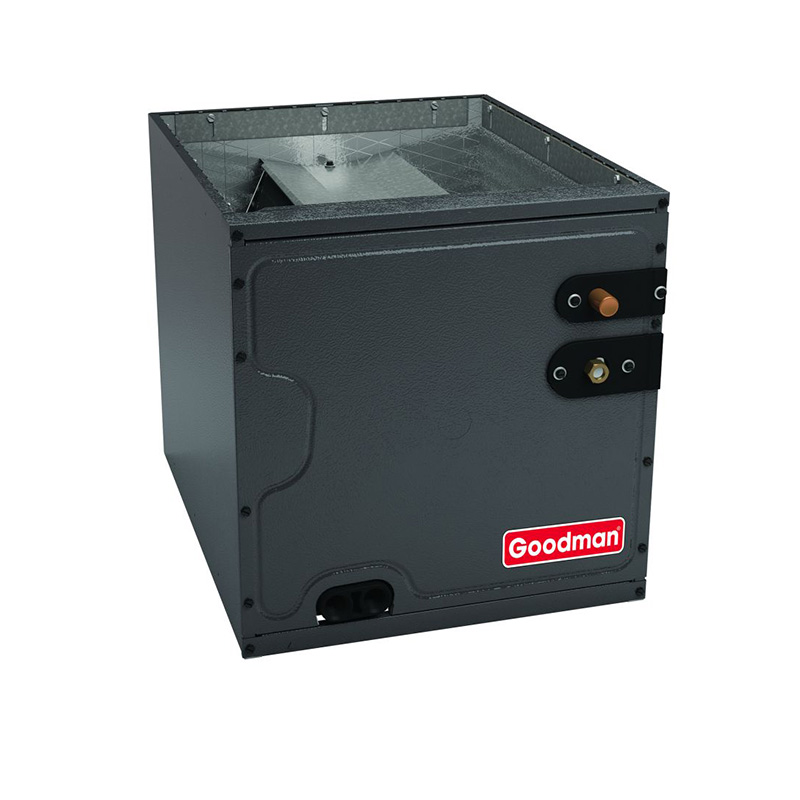
- Dual-run capacitor and evaporator coil leak failures are the most commonly documented repair issues, and repair costs tend to climb after roughly year 7 per ConsumerAffairs feedback
What homeowners and pros say about Goodman
On consumer platforms, Goodman equipment lands around 2.5 out of 5 on ConsumerAffairs, a channel that skews toward frustrated owners rather than satisfied ones, but the recurring theme is worth noting: repair costs tend to rise after roughly year seven, with capacitors and evaporator coil issues cited most often. Google dealer reviews paint a more moderate picture, typically around 3.8 out of 5, where the most consistent praise is that Goodman lets budget-conscious homeowners get new equipment installed without stretching into debt. The gap between those two scores reflects a real split: buyers who get a solid install and a good technician relationship often stay happy for a decade; those who get a marginal install or neglect maintenance tend to see problems compound.
HVAC technicians are generally candid about this system. They point to dual-run capacitors as the most predictable wear item, usually a fast and affordable fix but an almost certain one over a long ownership period. Evaporator coil leaks are less predictable but show up often enough in service histories to be worth discussing with your contractor before install. The compressor longevity gap is real: Goodman compressors average 10 to 14 years in field experience, compared to 15 to 20 years reported for premium brands. Pros consistently say that install quality is the single biggest variable in how this system performs, which means spending on an experienced, licensed contractor matters more here than it might with a more forgiving premium brand.
Sources: ConsumerAffairs Goodman owner reviews, AHRI Directory of Certified Product Performance, U.S. DOE appliance and equipment efficiency standards, Goodman product specification sheets.
What it costs to run
At 15.2 SEER2, cooling this 4-ton system for a typical 1200-hour cooling season at the U.S. average electricity rate of $0.17/kWh works out to roughly $644 per year in cooling, about $87 less per year than a minimum-efficiency 13.4 SEER2 unit of the same size. Your real cost depends on your climate and local rate.
Method: (48,000 BTU/hr ÷ 15.2 SEER2) × 1200 hours ÷ 1000 × $0.17/kWh. Rate source: U.S. EIA average; cooling hours: moderate-climate estimate.
How it compares
| Brand | Comparable model | SEER2 | Stage | Price position |
|---|---|---|---|---|
| Goodman | GSXH504810 + GCVC800805CX (this bundle) | 15.2 | Single-stage | Value pick |
| Carrier | Performance 15 (24ACC6) + 58MCA Furnace | 15.2 | Single-stage | 15 to 25 percent higher than this Goodman bundle |
| Trane | XR15 (4TTR5) + S8X1 Furnace | 15.2 | Single-stage | 20 to 30 percent higher than this Goodman bundle |
| Lennox | Merit ML15XC1 + ML180 Furnace | 15.2 | Single-stage | 20 to 30 percent higher than this Goodman bundle |
Competitor rows are comparable single-stage units at similar efficiency; price is relative position, not a quote.
Questions about this system
Is 80% AFUE enough for my climate, or should I upgrade to a 96% furnace?
If you are in the southern U.S. or a mild climate where the furnace runs only a few months a year, 80% AFUE is financially defensible. In northern states where heating runs from October through April, a 96% condensing furnace will typically recover its higher upfront cost through lower gas bills within four to seven years, so the upgrade is usually worth it there.
What does downflow actually mean, and how do I know if this is the right configuration for my house?
Downflow means the furnace pulls return air in at the top and pushes conditioned air out the bottom into ductwork below the unit. This matches homes where ducts run through a crawl space or under a slab. If your ductwork is in an attic and the furnace sits in a closet blowing air upward, you need an upflow configuration instead.
What are the most likely repairs I should budget for over the first ten years?
Dual-run capacitors are the most commonly reported failure on Goodman equipment and typically cost 300 to 600 dollars to replace. Evaporator coil leaks appear in a notable share of owner reports and are more expensive to address. Setting aside a repair fund after year five is a practical step.
Does R-32 refrigerant affect how I find service technicians?
R-32 is becoming more common as the industry moves away from R-410A, and most certified HVAC technicians can handle it, but you should confirm with your service provider before signing a maintenance agreement since some smaller shops have not yet updated their recovery equipment.
Is a 4-ton unit the right size for my home, or should I get a load calculation first?
Sizing by square footage alone is unreliable. A 4-ton unit is often appropriate for roughly 1,800 to 2,400 square feet, but ceiling height, insulation levels, window area, local climate, and duct condition all affect the correct size. An oversized unit will short-cycle and leave your home feeling humid; an undersized one will run constantly. A Manual J load calculation from your installer is the only way to confirm the right tonnage.
Specifications
| Cooling capacity | 4 Ton |
| Efficiency | 15.2 SEER2 |
| Furnace output | 80000 BTU |
| Furnace efficiency | 80% AFUE |
| Configuration | Downflow |
| Refrigerant | R-32 |