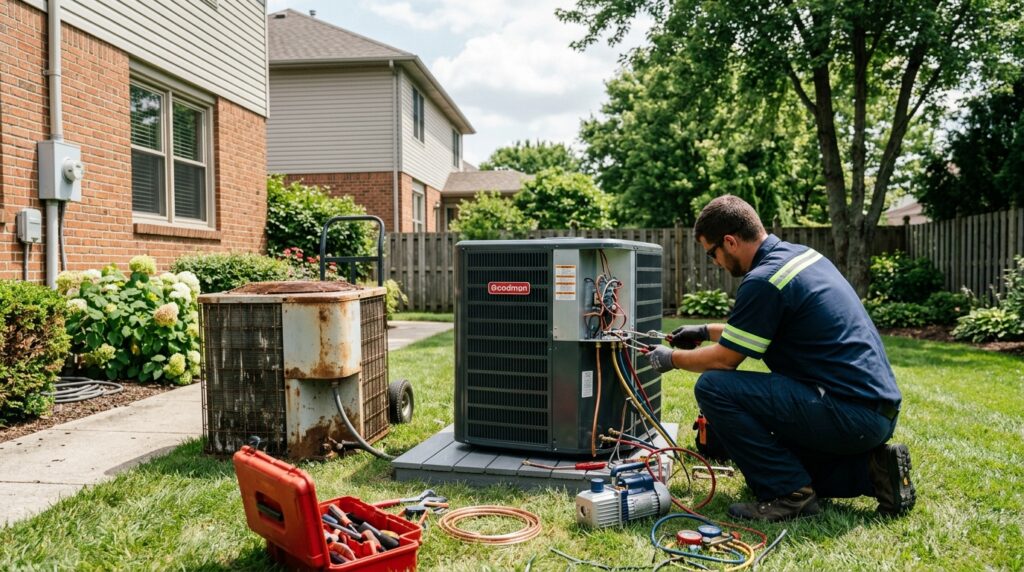
The typical cost to replace a central air conditioner in 2026 ranges from $3,000 to $7,500 for most homes, including the unit and professional installation. Larger homes, higher efficiency equipment, and added work like ductwork or electrical upgrades can push a full central AC replacement to $3,500 to $14,000, with some complex projects reaching $15,000 or more.
The average homeowner with a 1,500 to 2,000 square foot home typically pays around $6,600 for a mid-range system. For a standard 1,500 square foot home, a new central AC installation generally runs between $5,500 and $9,000. If you are replacing the AC together with a furnace or heat pump, a full HVAC system replacement can range nationally from $5,000 to $28,000, with most full-system replacements landing between $7,500 and $15,500.
Air Conditioner Replacement Cost by Size and Type
Browse complete AC systems at contractor pricing, then have a local pro install. Compare models and current prices on our complete AC systems page.
Cooling capacity is measured in tons, and it is one of the biggest factors in your final price. The equipment cost alone can vary by $2,000 to $4,000 between a 1.5-ton and a 5-ton system, and each additional ton typically adds $1,000 to $1,500 to the project. The table below summarizes typical 2026 installed costs.
| System / Size | Home Size (Sq. Ft.) | Tonnage (Approx.) | Average Installed Cost (2026) |
|---|---|---|---|
| Central AC (small home) | ~1,500 | 1.5 to 2.5 tons | $5,500 to $9,000 |
| Central AC (mid-range, average home) | 1,500 to 2,000 | 2.5 to 3.5 tons | Around $6,600 |
| Central AC (larger home) | 2,000+ | 4 to 5 tons | $13,000 to $17,000 (5-ton) |
| Full HVAC (AC + furnace/heat pump) | Varies | Varies | $5,000 to $28,000 |
| High-end, top-tier full HVAC | Larger homes | Varies | $15,000 to $17,000 |
Use these as planning numbers, not quotes. The right size for your home should come from a contractor who performs a proper load calculation rather than guessing from square footage alone. The Air Conditioning Contractors of America (ACCA) publishes the industry standards that guide accurate equipment sizing.
What Drives Air Conditioner Replacement Cost
Two homes the same size can get very different quotes. Here is where the money goes.
- Size and tonnage: The primary cost driver. A 5-ton unit with full installation can cost between $13,000 and $17,000 in 2026, while a 1.5-ton system is far less.
- Ductwork: The condition of your existing ducts matters a lot. Repairs or replacement can add $500 to $5,000. A brand-new duct system changeout costs around $4,300 in 2026, while full ductwork replacement ranges from $2,000 to $12,000, or roughly $16 to $19 per linear foot. Partial duct replacement usually runs $1,000 to $3,500.
- Electrical upgrades: Older homes may need upgrades to support modern, higher-efficiency systems. An AC electrical panel upgrade typically costs $1,500 to $3,500, and can exceed $4,000 for older homes needing a full service upgrade. Simpler breaker upgrades may run $500 to $1,200, and subpanel installs $1,000 to $2,500.
- Permits: Most municipalities require permits and inspections. Budget $150 to $500. The average HVAC replacement permit fee in 2026 is $139 across 28 U.S. cities, ranging from $25 to $558, with flat residential fees commonly $75 to $300.
- Region and labor: Labor typically accounts for 40 to 60 percent of the total bill. Contractors generally charge $50 to $150 per hour, and Western and Northeastern states often pay 15 to 25 percent above the national average.
- Other factors: Premium brands can run about 20 percent more. Older R-22 systems may require costly recycled refrigerant or full replacement, and difficult installs like attic access, tight spaces, or crane use add cost, as does removing and disposing of the old unit.
Efficiency Tiers: SEER2, HSPF2, and AFUE
Efficiency ratings tell you how much cooling or heating you get for the energy you pay for. Higher numbers mean more efficient equipment and lower running costs, but a higher upfront price.
- SEER2 (Seasonal Energy Efficiency Ratio 2): Measures cooling efficiency. Higher SEER2 ratings cost more to buy but cut energy use over the life of the system. Upgrading from a SEER 10 to a SEER 16 system can reduce cooling energy use by up to 30 percent.
- HSPF2 (Heating Seasonal Performance Factor 2): Measures heating efficiency for heat pumps. A higher HSPF2 helps if you rely on a heat pump for both cooling and heating.
- AFUE (Annual Fuel Utilization Efficiency): Applies to furnaces. A higher AFUE means more of your fuel becomes usable heat.
The math is straightforward: you pay more now for a more efficient system and recover some of that through lower monthly bills. To compare verified efficiency ratings between specific models, check the AHRI Directory, and look for qualifying models through ENERGY STAR.
Tax Credits and Rebates
Federal incentives can meaningfully lower the net cost of a high-efficiency system, and many states and utilities add their own rebates on top. Because incentive amounts and eligibility rules can change, confirm current details before you buy.
As of late 2025, federal energy efficiency home improvement credits for qualifying central air conditioners and heat pumps are administered by the IRS. Rather than relying on a figure that may shift for the 2026 tax year, verify the current credit amount, eligibility, and equipment requirements directly with the official source at IRS.gov and review program guidance at Energy.gov. To find local utility and state rebates, ENERGY STAR’s rebate finder is a good starting point.
A practical tip: ask your contractor to confirm that the exact model you are buying qualifies for any credit or rebate you plan to claim. Qualification usually depends on the specific efficiency rating, not just the product category.
Professional Install vs. DIY: Code and EPA Realities
Central AC replacement is not a do-it-yourself project for most homeowners, and not just because of the difficulty. There are legal and code requirements involved.
- Refrigerant handling: Working with refrigerant requires EPA certification. Handling, charging, and recovering refrigerant without proper certification is not permitted, which rules out DIY for the core of the job.
- Permits and inspections: Most municipalities require permits and inspections to confirm the work meets current energy and safety codes. Skipping permits can create problems when you sell the home.
- Sizing and warranty: Improper sizing leads to higher bills, poor comfort, and shorter equipment life. Many manufacturer warranties also require professional installation to stay valid.
You can still save by doing prep work, clearing access to the unit, and getting multiple quotes, but the installation itself should go to a licensed contractor.
How to Save Money on AC Replacement
- Get at least three quotes. Since labor is 40 to 60 percent of the bill and rates vary widely, competing bids can save thousands.
- Right-size the system. An oversized unit costs more upfront and runs less efficiently. A proper load calculation prevents overpaying.
- Stack incentives. Combine federal credits with state and utility rebates, and confirm your specific model qualifies.
- Choose efficiency that fits your climate. The highest SEER2 tier is not always worth it in mild regions. Match the rating to how much you actually cool.
- Bundle ductwork wisely. If ducts are sound, leave them. If they leak badly, addressing them during the install avoids paying for access twice.
- Time your purchase. Replacing before a total breakdown lets you shop on your schedule rather than paying emergency premiums.
- Ask about brand tiers. Premium brands can cost about 20 percent more for similar performance from a mid-tier line.
Signs You Need to Replace Your AC
- The system uses R-22 refrigerant, which can make repairs expensive due to recycled refrigerant costs or the need for full replacement.
- Repair bills are climbing and approaching the cost of a new system.
- Cooling is uneven, weak, or the unit runs constantly without keeping up.
- Energy bills keep rising even though your usage habits have not changed, a sign of falling efficiency.
- The unit is aging and using outdated, low-efficiency technology that a modern higher-SEER2 system could replace for up to 30 percent less cooling energy use.
If two or more of these apply, replacement often makes more financial sense than another repair. Start with a load calculation, gather multiple quotes, verify your incentives with the official sources above, and choose an efficiency tier that matches your home and climate.
Get quotes from vetted HVAC contractors in your area. Comparing two or three installers is the single best way to control the price.
Frequently Asked Questions
How much does it cost to replace a central air conditioner in 2026?
Most homes pay between $3,000 and $7,500 for a central AC replacement including the unit and professional installation. A full replacement can range from $3,500 to $14,000, with some complex projects reaching $15,000 or more.
What is the average AC replacement cost for a typical home?
The average homeowner with a 1,500 to 2,000 square foot home typically pays around $6,600 for a mid-range system. A standard 1,500 square foot home generally costs between $5,500 and $9,000 to install a new central AC system.
How much does a 5-ton AC unit cost installed?
A 5-ton air conditioning unit with full installation can cost between $13,000 and $17,000 in 2026. Each additional ton of cooling capacity typically adds $1,000 to $1,500 to the project.
Are there tax credits or rebates for a new AC system?
Yes. As of late 2025, federal energy efficiency home improvement credits for qualifying high-efficiency systems are available through the IRS, and many states and utilities offer additional rebates. Because amounts and rules can change, verify current details at IRS.gov and Energy.gov.
Can I replace my AC myself?
Central AC replacement is not a DIY project for most homeowners because handling refrigerant requires EPA certification, and most municipalities require permits and inspections. Improper sizing and installation can also void manufacturer warranties.
How much does ductwork add to the cost?
Ductwork repairs or replacement can add $500 to $5,000 to the project. A brand-new duct system changeout costs around $4,300 in 2026, while full replacement ranges from $2,000 to $12,000, or roughly $16 to $19 per linear foot.