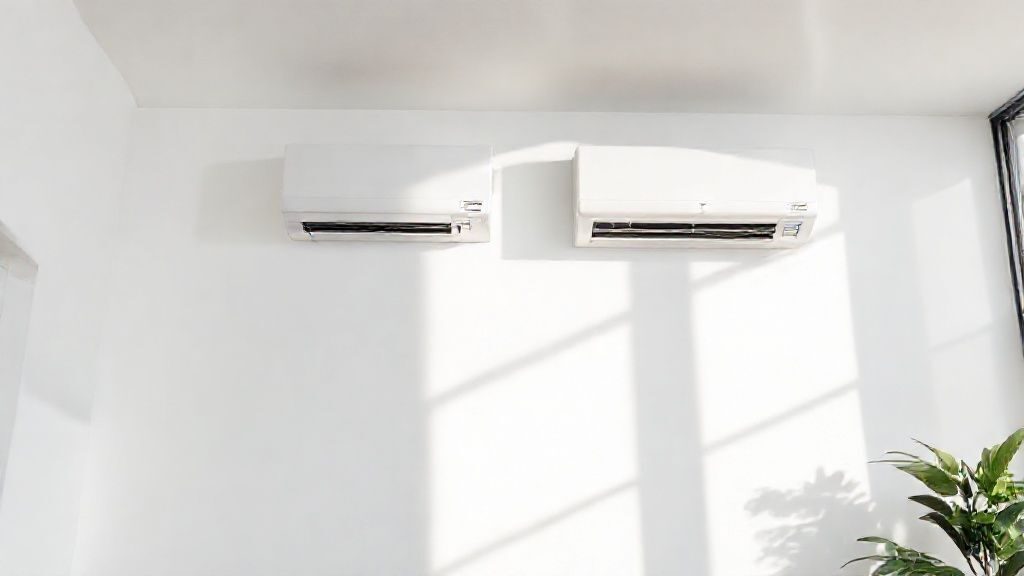
Mini split systems aren’t new technology, but their popularity in the U.S. has rightfully exploded over the last decade. I remember about fifteen years ago, I was working a job out in Denver, Colorado. We were retrofitting an old triplex built in the 1920s. Running new ducts through that plaster and lath was going to be a nightmare and frankly, cost prohibitive for the owner. The ceilings were low, the walls were thick, and every attempt at adding traditional ductwork added $5,000 to the project budget.
We switched the plan entirely and installed individual mini splits in each unit. We ran the linesets neatly along the exterior, using line-set covers to protect them from the elements. The difference in comfort control, thanks to the zoning capabilities, and the reduction in the overall project time and cost was substantial. That job cemented my view: for specific applications—garages, sunrooms, additions, conversions, or heating and cooling just one difficult space—nothing beats a mini split. They provide targeted, efficient heating and cooling without the complexity or energy loss associated with traditional ductwork.
Key Highlights
- Mini splits offer highly efficient, zoned heating and cooling without requiring any ductwork.
- Sizing (measured in BTUs) is crucial; an improperly sized unit, whether too small or too large, wastes energy and struggles to maintain consistent temperature.
- Always look for systems with high SEER (Seasonal Energy Efficiency Ratio) and HSPF (Heating Seasonal Performance Factor) ratings for maximum savings.
- The total cost involves the unit price, installation labor, and necessary accessories like line-set covers and condensate pumps.
- Inverter technology is standard in quality mini splits; it allows the compressor to modulate its speed, providing consistent temperature control and significantly improving energy efficiency compared to traditional fixed-speed units.
- Cold climate models are essential if you rely on the mini split for primary heat and live somewhere that regularly drops below freezing.
Why Choose a Ductless Mini Split System for Your Home?
Homeowners often come to us thinking they need a full replacement of their central air conditioning system when, in reality, they only need relief in one or two problem areas. This is where the mini split shines. A mini split system is primarily composed of two main components: an outdoor condenser/compressor unit and one or more indoor air handling units (heads).
The core advantage of this design is zoning. If you have a two-story home, your upstairs rooms likely cook in the afternoon sun, even if the downstairs is comfortable. With central air, you run the whole system inefficiently, trying to push cold air to the furthest, hottest zone. With a mini split, you cool or heat only the space that needs it. This targeted approach is incredibly energy efficient. You aren’t paying to condition unoccupied spaces.
Another major factor is installation simplicity, relative to traditional HVAC. Since there is no ductwork required, installation involves drilling a small three-inch hole through the wall to connect the refrigerant lines (the line-set) and electrical wiring between the indoor head and the outdoor condenser. This minimizes structural intrusion and speeds up the process significantly.
We’ve also seen a massive increase in demand for mini splits in converted spaces—garages turned into home offices, basement apartments, or attic conversions. These spaces typically have zero existing duct access. Installing a mini split is often the only practical and code-compliant solution for providing consistent, controlled comfort in these areas.
Furthermore, modern ductless units are remarkably quiet. The indoor heads are designed to run silently, often producing less than 20 decibels of sound, which is quieter than a soft whisper. The outdoor unit is also far less noisy than older traditional AC condensers, especially because of the inverter technology that allows them to run at lower, modulated speeds most of the time.
Single-Zone vs. Multi-Zone Mini Splits: Which Is Right for You?
When you are looking at mini splits for sale, the first choice you need to nail down is whether you need single-zone or multi-zone coverage. This decision impacts not just the price, but the complexity of the installation and the overall efficiency profile of the system.
Single-Zone Systems
A single-zone mini split system consists of one outdoor unit connected to one indoor head. This is the simplest configuration and is ideal for targeted applications:
- Cooling a server room or a workshop in a garage.
- Adding heat and AC to a newly built sunroom or home addition.
- Providing climate control for a stand-alone guest house or studio.
Because there is only one head, the system is engineered specifically for that BTU output. Single-zone units are usually the most cost-effective option for addressing a single area, and their installation is straightforward.
Multi-Zone Systems
A multi-zone system uses one outdoor condenser unit to power two, three, four, or even five separate indoor heads. These heads can be wall-mounted, ceiling-cassette, or even short-run ducted units, offering flexibility in how the air is delivered.
- Key Advantage: Every indoor head operates independently. If the head in the master bedroom needs cooling but the head in the guest room needs heating (perhaps due to sun exposure differences), the outdoor unit manages both demands simultaneously.
- Application: Perfect for replacing central HVAC in homes where running new ducts is impossible, or for homes where family members have drastically different comfort preferences.
While the initial cost of a multi-zone condenser is higher than a single-zone unit, the cost per zone decreases as you add more heads. However, proper sizing is exponentially more critical for multi-zone systems. The outdoor unit must have enough capacity to handle the maximum possible load if all indoor heads are running at peak capacity simultaneously. An undersized multi-zone unit will constantly struggle, leading to higher energy bills and early component failure.
Key Factors to Consider Before Buying a Mini Split
Buying a mini split is more technical than buying a window AC unit. You need to understand the specifications that truly determine long-term performance and efficiency.
BTU Requirements (Sizing)
The single most common mistake I see homeowners make when shopping for mini splits for sale is guessing the size. BTU stands for British Thermal Unit, and it measures the cooling (or heating) capacity of the unit. Too small, and the unit runs non-stop, never reaching temperature. Too large, and the unit short-cycles—it blasts cold air, satisfies the thermostat too quickly, and shuts off, leading to humidity problems and temperature swings. You need to achieve proper dehumidification, and short-cycling prevents that.
Calculating the correct BTU capacity requires factoring in ceiling height, insulation quality, window type and orientation, and the local climate. A standard rule of thumb is roughly 20 BTUs per square foot, but this is a very basic starting point. If you have poor insulation or large, south-facing windows, you need to increase that calculation by 25% or more.
SEER and HSPF Ratings (Efficiency)
Efficiency is arguably the biggest selling point of ductless technology. When comparing models, pay close attention to the ratings:
- SEER (Seasonal Energy Efficiency Ratio): Measures cooling efficiency. The minimum SEER rating required by federal law changes often, but for mini splits, you should aim for 20 SEER or higher to maximize long-term savings.
- HSPF (Heating Seasonal Performance Factor): Measures heating efficiency. Since mini splits are heat pumps, they move heat rather than generating it. An HSPF rating of 10 or above indicates excellent performance, especially in moderate climates.
The higher these numbers, the more efficiently the unit uses electricity, and the lower your monthly utility bills will be.
Inverter Technology
If a mini split doesn’t have inverter technology, walk away. Period. Inverter technology allows the compressor to vary its speed and output based on the precise demands of the room. Traditional HVAC units are single-speed; they are either 100% on or 100% off. This constant cycling creates temperature fluctuations and draws massive electricity upon startup.
An inverter system, however, gently ramps up until the set temperature is achieved, and then settles into a low-speed maintenance mode. It runs almost continuously but at a minimal power draw, maintaining a precise temperature and humidity level. This steady operation is what makes mini splits so comfortable and so energy efficient.
Installation Requirements
You may see “DIY” mini splits for sale. While these kits often come pre-charged and use quick-connect fittings, my professional recommendation is always to have a licensed HVAC technician handle the installation. Running the line-set, ensuring proper pitch for condensate drainage, managing the electrical connection, and, most importantly, pulling a proper vacuum on the refrigerant lines are steps that require specialized tools and expertise.
Failing to pull a proper, deep vacuum is the single fastest way to destroy the lifespan of your unit. Any moisture or non-condensable gas left in the lineset will contaminate the refrigerant and damage the compressor over time. When you are making an investment this large, cheaping out on the installation is counterproductive. If you want to view our comprehensive selection of best HVAC systems, including both DIY and professional models, we can help ensure you select the correct size and type for your needs.
Understanding Mini Split Pricing: What Determines the Cost?
The price tag attached to mini splits for sale can be deceiving. The final cost of getting a mini split up and running in your home is typically broken down into three main categories: the equipment cost, the installation labor cost, and potential auxiliary costs.
Equipment Costs
Equipment prices are determined primarily by capacity (BTU), efficiency ratings (SEER/HSPF), and brand reputation. A basic 9,000 BTU single-zone unit with a 19 SEER rating will naturally cost far less than a 4-zone, 36,000 BTU unit with a 23 SEER rating designed for cold climate performance. Higher efficiency requires more advanced components, such as larger coils and more sophisticated inverter controls, which increases the manufacturing cost.
It is important to remember that the overall cost of the unit itself is only part of the equation, similar to the initial price of new air conditioner. You need to budget for the line-sets, wire, condensate lines, wall mounts or ground stands for the condenser, and line-set covers to protect the piping from UV damage and weather.
Labor and Installation Costs
Labor is highly variable based on where you live and the complexity of the job. Installing a single-zone unit on a ground-level wall is relatively straightforward. Installing a multi-zone system that requires complex routing of line-sets (perhaps through an attic or over a long distance) will significantly increase labor hours.
We typically estimate that professional installation will cost anywhere from 50% to 100% of the equipment price itself. This includes the labor, specialized equipment usage (vacuum pump, manifold gauges), and necessary permitting, which is critical for warranty validation.
Auxiliary Costs and Alternatives
You may also need to budget for electrical work, especially for multi-zone systems that require dedicated 220V circuits. If you are comparing ductless units to traditional systems, and decide a ducted system is better for your whole-home solution, check the options for furnace systems. Mini splits are heat pumps, and while effective, some very cold regions still rely on auxiliary gas heat.
When evaluating which brand to purchase, look for manufacturers that specialize in inverter technology. They often have longer warranties and better customer support structures. If you are researching traditional heat sources alongside mini splits, you might want to review the current furnace manufacturers list for comparison.
Featured Mini Split Systems For Sale: Top Rated Models
I don’t play favorites with brands, but I can tell you what reliable performance looks like across the board. When shopping, prioritize features like low ambient heating and warranty coverage.
The Cold Climate Specialist
If you live in a region where temperatures consistently drop below freezing (think northern states or mountainous regions), you need a Hyper-Heat or equivalent low-ambient model. Standard mini splits lose significant capacity below 15°F. Specialized cold climate units are guaranteed to deliver 100% of their rated heating capacity down to 5°F and often operate effectively down to -13°F. This makes them a viable primary heat source, not just supplemental heat.
The High-Efficiency Minimalist
For small, well-insulated additions or single rooms in mild climates, look for a 9,000 or 12,000 BTU unit with a SEER rating approaching 25. These highly efficient units will pay for themselves quickly through lower operational costs. They are generally simple to install and require minimal amperage.
The Flexible Multi-Zone
If you need to cool or heat an entire small home, focus on modular multi-zone systems. These systems allow you to start with two heads now and add a third or fourth head later, without replacing the outdoor unit, provided the original condenser was sized appropriately for the future maximum load. This staged approach helps manage the initial upfront investment.
Ready to Buy? Contact Us for Installation Quotes
Choosing the equipment is step one. The quality of the installation is what guarantees the longevity and performance of that equipment. A great mini split installed poorly will underperform every time. A decent mini split installed perfectly will usually exceed expectations.
Once you have the right model picked out—or if you need assistance calculating the exact BTU requirements for your space—the next critical step is installation. Mini splits are complex heat pump systems that need proper refrigerant management and vacuum procedures that most homeowners simply don’t have the tools or experience for. We strongly advise using certified technicians.
You can contact us for a quote on professional installation. We will ensure the system is sized correctly, installed to manufacturer specifications, and registered properly to activate the full factory warranty. Improper installation is the most common reason warranties are voided, and we eliminate that risk entirely.
FAQ
Can I install a mini split myself?
While DIY kits exist, I advise against it for professional-grade units. Installation involves electrical wiring, routing refrigerant lines, and using a vacuum pump to remove all moisture and air from the lineset—a process called “pulling a vacuum.” If you don’t achieve a vacuum down to 500 microns or less, moisture remains in the system, which causes acid formation, sludge buildup, and premature compressor failure. This specialized process is essential and requires expensive, dedicated tools.
How long do mini split systems typically last?
A high-quality mini split, professionally installed and properly maintained, should last 15 to 20 years. That lifespan is comparable to a traditional central air conditioning system. Poor installation or failure to perform routine cleaning (especially cleaning the indoor coil and filters) can cut that lifespan in half.
Are mini splits good for heating in very cold climates?
Yes, but you must select a cold climate or “Hyper-Heat” model. Standard models use refrigerant R410A, and their capacity drops off sharply once temperatures fall below freezing. Cold climate models utilize advanced compressors, enhanced vapor injection, and auxiliary heating elements in the outdoor unit to maintain high heating output even when the outdoor temperature is far below zero.
How often do I need to clean the indoor unit filters?
The filters in the indoor head are meant to be cleaned, not thrown away. I recommend removing them and washing them with soap and warm water every month, or at minimum, every six weeks, especially during peak cooling or heating season. Restricted airflow due to dirty filters is the number one cause of poor performance and decreased efficiency in a mini split system.
Do I need an electrician for mini split installation?
In most jurisdictions, yes, you will need an electrician or a licensed HVAC professional who is also certified to handle electrical work. All but the smallest 9,000 BTU units typically require a dedicated 220V circuit and specific disconnect boxes to meet safety codes. Improper wiring can be dangerous and damage the unit.
Final Thoughts
Mini splits offer fantastic comfort, unparalleled energy efficiency, and necessary flexibility for modern home heating and cooling needs. They are excellent solutions for zoning and difficult spaces, and the technology continues to improve rapidly.
However, when looking for mini splits for sale, remember that you are purchasing a complex, pressurized heat pump system, not a simple appliance. Don’t let a low sticker price distract you from the importance of correct sizing and professional installation. Take the time to understand your home’s specific needs—its insulation, its solar exposure, and your comfort goals—before committing to a model.
By prioritizing high SEER/HSPF ratings and ensuring the system is sized and installed by an expert, you guarantee yourself decades of reliable, quiet, and highly efficient comfort.