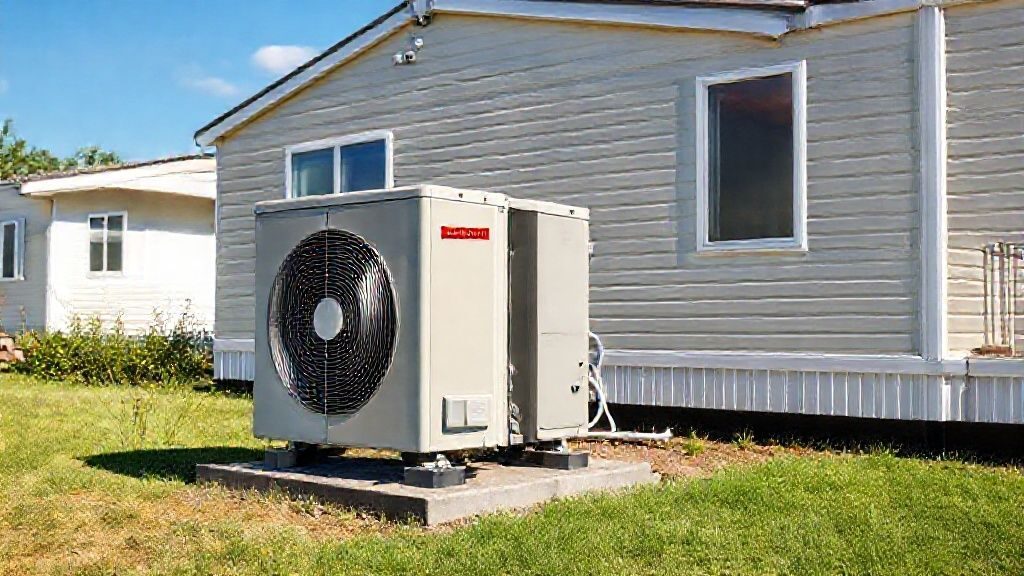
If you own a manufactured home and are looking into replacing or upgrading your heating and cooling system, you have likely run into specific challenges that traditional stick-built homeowners don’t face. Finding the right HVAC equipment for a mobile home is not just about finding a small unit; it is about finding a unit specifically certified to operate under the unique conditions of a manufactured housing structure. When you focus on a 2 ton heat pump, you are usually looking for efficiency and performance in a space generally ranging from 700 to 1,000 square feet.
I have spent decades troubleshooting installations across the country, and the problems with manufactured homes are consistent. For example, down in Tampa, Florida, I repeatedly saw homeowners who had installed standard residential equipment thinking they were saving money. They quickly found themselves facing high humidity, poor airflow, and rapid equipment failure because the standard residential air handlers and coils are not designed to handle the smaller return plenums and often undersized, flexible ductwork common in these homes. You need equipment that is listed specifically for manufactured housing (MH units) to ensure both safety and operational longevity. A 2 ton unit, or 24,000 BTUs, is one of the most common requirements for these smaller, tighter spaces, assuming the home is properly insulated.
Key Highlights
- Mobile home heat pumps must be MH-certified and meet HUD standards for safe operation within restricted duct spaces.
- A 2 ton unit (24,000 BTU) is typically appropriate for manufactured homes between 700 and 1,000 square feet, but Manual J calculation remains essential.
- Packaged units (often placed on a ground pad or roof) are common in mobile homes due to easier installation and simplified connections to existing perimeter ductwork.
- Focus heavily on the Heating Seasonal Performance Factor (HSPF) if you rely on the heat pump for winter warmth, as heat pumps are less efficient in extreme cold.
- Ensure the installer seals the connection point between the unit and the home’s main cross-over ductwork securely to prevent air loss under the skirting.
Why Mobile Homes Require Specialized HVAC Units
I cannot stress this enough: you cannot treat a manufactured home like a standard residential site-built structure when it comes to HVAC. The engineering is completely different, which affects airflow, safety, and unit lifespan. Manufactured homes have several unique characteristics that necessitate specialized equipment:
Ductwork and Static Pressure
Mobile home ductwork is often run beneath the floor, within the crawlspace, or in very tight ceiling spaces. The ducts themselves tend to be smaller in diameter or height compared to traditional residential ductwork, which requires the furnace or air handler to push air harder. This creates higher static pressure. Standard residential units are not designed to handle this sustained high static pressure. Over time, trying to force air through restrictive ducts with a standard blower motor leads to reduced airflow, overheating (if it’s a furnace), freezing coils (if it’s an AC/heat pump), and significantly premature motor failure. MH units are specifically designed with appropriate blower assemblies to overcome this high static load.
Safety and Certification
The Department of Housing and Urban Development (HUD) sets specific safety standards for manufactured homes. HVAC equipment installed in these homes must meet these standards. This is not negotiable. These units are tested and listed to ensure they meet clearance requirements for installation near flammable materials and maintain safe operational temperatures within the limited space they occupy.
Physical Constraints and Installation Location
The plenum—the chamber connecting the air handler to the ductwork—is often significantly shorter and narrower in a mobile home. If you install a conventional unit, you are looking at substantial, complex, and often dangerous modification of the home’s structure to fit the necessary components. Specialized MH equipment is designed for minimal footprint and straightforward connection to the existing structure.
Understanding the 2 Ton (24,000 BTU) Sizing Requirement
Sizing is the first mistake many homeowners make. They often believe bigger is better, but an oversized system short-cycles, which means it turns on and off too frequently. This leads to poor dehumidification in the summer and unnecessary wear and tear on the compressor. A properly sized 2 ton heat pump provides 24,000 BTUs of cooling capacity.
While I always recommend having a certified professional perform a Manual J load calculation, based on my field experience, a 2 ton unit is the sweet spot for many single-wide or smaller double-wide manufactured homes. Here is a general breakdown of where the 2 ton size typically fits:
- Square Footage: Generally, 700 to 1,000 square feet.
- Insulation Age: This calculation assumes the home is newer (post-1990) or has had significant insulation upgrades. Older homes with poor insulation may require closer to 3 tons, but that increase must be weighed against the capacity of the existing ductwork.
- Climate: In extremely mild climates, 2 tons might cover up to 1,100 square feet. In very hot climates, you might cap it closer to 850 square feet.
When you are looking at specific equipment, be precise about the tonnage. Buying a unit that is too small leaves you hot and constantly running the system, which doesn’t save you money. Buying too large means high operating costs and sticky, damp air because the system doesn’t run long enough to pull the moisture out. The 2 ton capacity must be matched exactly to your home’s needs.
Understanding capacity is key, whether you are dealing with a small residential unit or a major commercial installation. For context on how dramatically sizing can scale up, you can look at the requirements for a much larger system, such as a 30 ton ac unit, but for manufactured housing, we keep the focus tight on the appropriate 2 ton rating.
Key Features to Look for in Mobile Home Heat Pumps
When evaluating different models of 2 ton heat pumps specifically for manufactured homes, several features move the unit from “acceptable” to “excellent.”
Corrosion Resistance
If your unit is a packaged system placed outside on a pad, it is constantly exposed to the elements. Look for models featuring enhanced coil protection, such as aluminum fins or specialized coating. This is especially important if you live near the coast where salt air accelerates corrosion dramatically.
High Static Capability Blower
As mentioned earlier, high static pressure is inevitable. The unit you select must explicitly state its ability to handle high static pressure associated with mobile home ductwork without significant performance degradation. This is often indicated by an ECM (Electronically Commutated Motor) blower, which adjusts its speed dynamically to maintain proper airflow regardless of resistance.
Low-Ambient Operation
A standard heat pump loses significant heating capacity as the outdoor temperature drops below 40°F. If you live in a northern climate, you need a unit rated for low-ambient operation, which means it can provide efficient heating even when temperatures dip into the 20s or teens. If your climate sees regular freezing temperatures, you must confirm the unit’s auxiliary electric heat strips (the backup heating source) are sized appropriately—usually 8 kW to 10 kW for a 2 ton system.
Accessory Compatibility
Check the manual to ensure the unit is compatible with common accessories like UV light sanitation systems or upgraded filtration (MERV 11 or higher). Retrofitting these items later can be costly if the air handler isn’t designed for the increased filter resistance.
Split System vs. Packaged Unit: Selecting the Right Type
For mobile homes, the choice between a split system and a packaged unit often comes down to budget, space, and efficiency goals. Both are viable for a 2 ton installation, but they solve problems differently.
Packaged Unit (P-TAC)
A packaged unit, or self-contained unit, holds the compressor, condenser, evaporator coil, and air handler all in one metal cabinet. These are typically installed on a pad outside the home or occasionally on the roof. They connect directly to the existing supply and return duct openings that run beneath the floor of the manufactured home.
- Pros: Easier and less expensive to install. Highly secure installation since all refrigerant lines are factory-sealed. Minimal interior space required.
- Cons: Lower efficiency ratings overall compared to split systems. If one component fails, the entire exterior unit must be serviced or replaced.
Split System
A split system consists of an outdoor condenser (the unit with the fan and compressor) and an indoor air handler or furnace. In a mobile home application, the indoor air handler must be specifically designed for manufactured housing, often smaller and slimmer to fit in closets or utility areas.
- Pros: Higher SEER and HSPF ratings are readily available, leading to lower operating costs. Easier to service individual components.
- Cons: Installation is more complex, requiring refrigerant line sets to be run between the indoor and outdoor units, which means higher initial labor costs. Requires interior space for the air handler.
My recommendation generally leans toward a packaged unit for replacement situations where the home was originally equipped with one. If you are doing a full HVAC upgrade in a double-wide or a newer mobile home designed for higher efficiency, then a split system may offer the best long-term value, provided you use certified MH indoor components.
SEER, HSPF, and Efficiency Ratings Explained for Manufactured Housing
When buying a heat pump, you are dealing with two primary efficiency metrics: SEER (Seasonal Energy Efficiency Ratio) for cooling and HSPF (Heating Seasonal Performance Factor) for heating.
SEER (Cooling Efficiency)
SEER measures the total cooling output during a typical cooling season divided by the total electric energy input. As of 2023, the minimum efficiency standards increased. For manufactured housing, the minimum SEER rating depends on the climate region. For most parts of the US, you will be looking at minimums around 14 SEER or the newer SEER2 equivalent. While 14 SEER is the baseline, units rated 16 SEER or higher are common for premium 2 ton models and usually offer a fast return on investment through reduced energy bills.
HSPF (Heating Efficiency)
Since you are buying a heat pump, the HSPF rating is crucial. It measures the total heating output during a typical heating season divided by the total electric energy input. A higher number means greater heating efficiency. A standard efficient unit will have an HSPF around 7.7. High-efficiency units can reach 9.0 or higher. If you live in a mild climate (like the Southern U.S.) where heating is minimal, a lower HSPF is acceptable. If you rely heavily on your heat pump for warmth, prioritize the highest HSPF your budget allows.
The Role of Variable Speed Technology
For the best efficiency and comfort, look for two-stage or variable-speed compressor technology, even on 2 ton systems. Traditional single-stage units run at 100% capacity or they are off. Variable speed units can modulate their output, often running at 40% to 70% capacity most of the time. This keeps the temperature steadier, removes more humidity, and uses significantly less power than constantly cycling on and off. While they cost more upfront, the performance benefit is substantial.
When budgeting for the power consumption of your unit, it is helpful to understand the electrical load required. Knowing how many watts does a 2.5 ton air conditioner use can give you a good frame of reference for the power demands of your slightly smaller 2 ton system.
Installation and Safety Considerations for Mobile Home Skirting
Improper installation is the single biggest cause of premature failure and poor performance in mobile home HVAC. A 2 ton heat pump may be small, but the installation demands precision, especially around the connection points.
Securing the Pad
Packaged units must be installed on a level, stable concrete pad or a heavy-duty composite pad that will not shift or sink over time. Since the ductwork connects directly to the unit, movement can tear the flexible connection boot, causing massive air leaks and system failure.
Sealing the Connection
The connection boot—the flexible collar that joins the exterior unit to the home’s main duct—must be sealed perfectly. If air leaks out under the skirting, you are essentially trying to heat or cool the outdoors. This is especially true for the return air side. All connections must be double-checked for airtight integrity.
Skirting and Ventilation
The skirting around your manufactured home is critical. If you have an outdoor unit that pulls air from the crawlspace (or returns air into it, though this is rare and usually problematic), that space must be properly ventilated to prevent moisture and mold buildup, which can also affect the air quality inside the home. Furthermore, the unit must be kept clear of all obstructions. Debris, tall grass, or anything restricting airflow to the condenser coil will reduce efficiency and eventually cause the compressor to fail.
Electrical Requirements
Mobile homes often have 100-amp service, meaning electrical capacity is tighter than in a standard home. A 2 ton heat pump requires dedicated circuits. Ensure the electrical wiring is correctly sized (gauge) and that the breaker panel can handle the load of the heat pump and the necessary auxiliary heat strips (typically 30-50 amp dedicated breakers, depending on the heater size). Never use extension cords or temporary wiring.
If you are upgrading from an older gas furnace system to a 2 ton electric heat pump, the electrical upgrade required is substantial and often requires working closely with a specialized mobile home electrician.
Cost Analysis: Factors Affecting 2 Ton Heat Pump Pricing
When considering the cost of a 2 ton mobile home heat pump, you must look at the full picture: equipment, labor, and potential modifications.
Equipment Cost (Unit Only)
A bare 2 ton packaged heat pump designed for manufactured housing typically ranges from $2,500 to $4,500, depending on the brand and efficiency rating (SEER/HSPF). A high-end, variable-speed split system rated for MH use will be higher, usually starting around $3,800 for the components alone.
Installation Labor
Installation costs vary based on region and complexity, but for a straightforward replacement of an existing packaged unit, expect labor to run between $1,500 and $3,000. If you are converting from a furnace to a heat pump, upgrading the electrical service, or installing a complex split system, the total installed cost can easily reach $6,000 to $8,000.
Warranties and Registration
Always register your unit immediately after installation to maximize your warranty coverage. Many manufacturers double the warranty period (e.g., from 5 years to 10 years on parts) if the unit is registered within 60 or 90 days of installation. Check the procedure for your chosen brand—for example, the process for amana hvac product registration is often handled online by the installing contractor, but you should confirm the paperwork is filed.
To help budget for your project and explore your options for equipment, consider reaching out to vendors who specialize in wholesale hvac components, as they often have competitive pricing on MH-certified units.
Frequently Asked Questions About Mobile Home HVAC
Can I install a 3 ton unit instead of a 2 ton unit for better cooling?
Generally, no. Unless a certified Manual J calculation specifically proves your mobile home requires 3 tons (36,000 BTUs), upsizing by a full ton is likely to cause significant comfort problems, mainly poor humidity control and short-cycling, leading to higher repair bills down the road. Stick to the determined tonnage.
How long should a mobile home heat pump last?
With proper, annual maintenance, a quality 2 ton manufactured home heat pump should last between 12 and 15 years. Due to the high static pressure environment, neglect of annual coil cleaning and filter changes will significantly shorten that lifespan, sometimes cutting it in half.
Are mini-split systems a good alternative to a traditional 2 ton unit?
Mini-splits are excellent for zonal control and often boast very high efficiency. For manufactured homes, they are a fantastic solution, especially if you are having issues running ductwork. A single 2 ton multi-zone mini-split system can efficiently handle a smaller home, but the cost can sometimes be higher than a centralized packaged system.
Is it safe to install a mobile home heat pump myself?
No. Installing or replacing a heat pump involves highly regulated refrigerant handling, high-voltage electrical connections, and crucial safety compliance for manufactured housing (HUD). Improper installation can void your warranty, lead to dangerous electrical faults, and violate building codes. I strongly advise that you always hire a licensed and MH-certified HVAC technician. If you are ready to move forward, the first step should be to contact us for a quote from a qualified installer.
Do I need to check the foundation before installing a new unit?
Absolutely. Any sinking or instability in the foundation or footers near where the packaged unit will sit must be corrected prior to installation. If the home shifts, the connection boot will tear, and you will lose efficiency immediately.
Final Thoughts
The core message regarding a 2 ton mobile home heat pump is consistency and certification. Do not compromise on buying an MH-certified unit. If a salesman tries to tell you a standard residential unit will work just fine because “it’s only 2 tons,” walk away. They are either inexperienced with manufactured housing standards or are trying to unload equipment that will not perform properly in your home’s unique airflow environment.
Take the time to verify the SEER and, more importantly, the HSPF ratings based on your local climate. Ensure the installer is familiar with manufactured housing connections and sealing procedures. When the job is done right—with the correct 2 ton rating and proper safety compliance—your new heat pump will provide reliable, efficient comfort for over a decade. Invest in quality installation, and you invest in peace of mind.