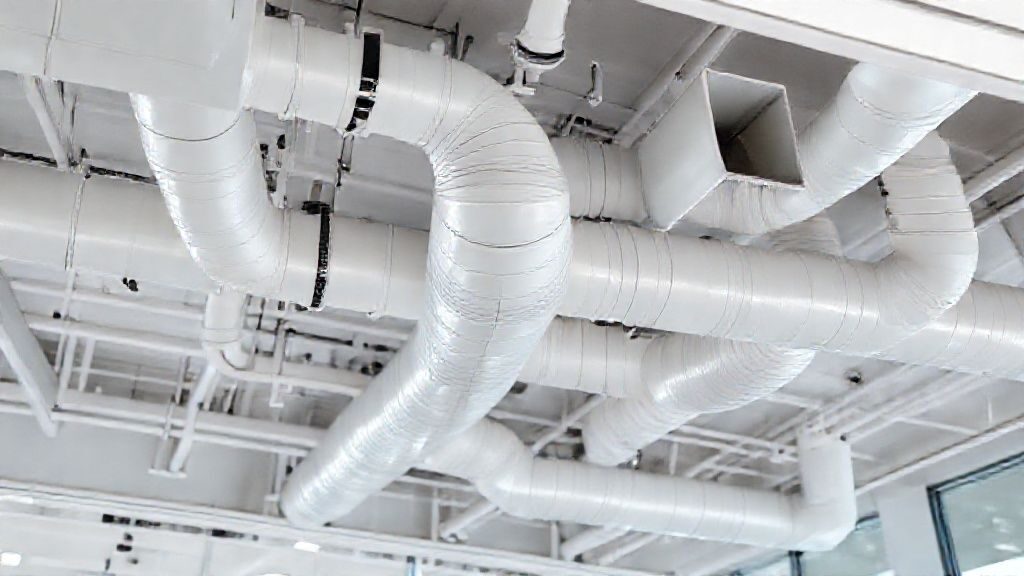
After decades in this business, I’ve learned that a lot of folks think HVAC is just about the furnace or the air conditioner itself. They focus on the big boxes in the basement or outside. But I can tell you, from countless service calls, the real unsung hero – or often, the hidden culprit – is the ductwork. It’s the circulatory system of your home’s air. If that system isn’t designed right, or if it’s not moving air efficiently, you’re going to have problems, no matter how good your equipment is.
I remember a particular job in Denver, Colorado. Homeowner was complaining about one room always being freezing in winter and baking in summer. They’d replaced their furnace a few years back, thought they had a top-tier system. When I got there, I could feel the weak airflow coming out of that particular register. We did some checks and found the branch duct feeding that room was simply undersized for the required airflow. The previous installers had cut corners. We had to modify that section of ductwork, and once we did, the homeowner couldn’t believe the difference. That’s a perfect example of why understanding something like a duct CFM table isn’t just for installers; it helps homeowners understand what’s happening in their own system.
Key Highlights
- CFM (Cubic Feet Per Minute) is the measure of airflow and is critical for HVAC system efficiency and comfort.
- Correct duct sizing, guided by CFM tables, ensures proper heating and cooling distribution throughout your home.
- Under- or oversized ducts lead to inefficient operation, higher energy bills, and premature equipment wear.
- Factors like static pressure, duct material, and bends significantly impact actual CFM delivery.
- Professional evaluation is often necessary for accurate CFM calculation and optimal ductwork design.
What is CFM (Cubic Feet Per Minute) in HVAC?
CFM stands for Cubic Feet Per Minute. In the world of HVAC, it’s a direct measurement of airflow volume. Think of it like this: if you have a hose, the CFM is how much water comes out of that hose in one minute. In an HVAC system, it’s the amount of air, measured in cubic feet, that passes through a specific point in your ductwork every minute. This air is what carries the heating or cooling from your furnace or air conditioner to the various rooms in your house.
Why is this important? Well, your furnace or air conditioner is designed to move a specific amount of air. For example, a typical residential air conditioner might be rated for 400 CFM per ton of cooling. So, a 3-ton unit needs to move around 1200 CFM. If your ductwork isn’t capable of moving that much air effectively, your system won’t perform as intended. It’s like trying to drink a thick milkshake through a very thin straw – you’re just not going to get enough. Too little CFM means insufficient heating or cooling. Too much CFM can lead to noise and uneven temperatures.
Why is Correct Duct Sizing and CFM Important?
This is where the rubber meets the road. Proper duct sizing, which relies heavily on understanding CFM, is foundational to a well-functioning HVAC system. If your ducts aren’t sized correctly for the amount of air your system needs to move, you’re asking for trouble. I’ve seen it all, and the problems are pretty consistent:
-
Inefficient Operation: If your ducts are too small, your furnace or air conditioner has to work harder to push the required amount of air through. This increases static pressure in the system, which puts a strain on the blower motor. The motor consumes more electricity, driving up your energy bills. It also means the air isn’t moving fast enough to deliver the conditioned air effectively to all areas, especially those farthest from the unit.
-
Reduced Comfort: This is the most common complaint I hear. Hot and cold spots. One room is stifling, another is chilly. This often comes down to uneven airflow, which is a direct result of improper CFM distribution. If a duct leading to a bedroom isn’t delivering its share of conditioned air, that room won’t be comfortable.
-
Premature Equipment Failure: When your blower motor constantly struggles against high static pressure due to undersized ducts, it’s working overtime. This extra strain generates more heat and causes components to wear out faster. It shortens the lifespan of your expensive equipment. I’ve seen blower motors burn out years before their time, and often, the root cause was inadequate ductwork, not a faulty unit itself. Proper duct sizing, considering factors like the appropriate linesets for your system, contributes to overall system health.
-
Higher Energy Bills: This ties into inefficient operation. A struggling system uses more energy to achieve less. You’re paying more for electricity or gas, but not getting the comfort you expect. It’s money wasted, plain and simple.
-
Excessive Noise: Air moving through ducts that are too small will be forced through at higher velocities. This high-speed air can create whistling or roaring noises, especially at registers or through bends in the ductwork. It’s an irritating issue that can often be traced back to incorrect sizing.
-
Poor Indoor Air Quality: While not a direct CFM issue, a system struggling with airflow may not effectively filter air or maintain proper humidity levels, impacting your home’s air quality.
So, you see, getting the duct sizing right based on CFM requirements isn’t just about technical specifications; it’s about comfort, efficiency, and the longevity of your entire HVAC system. It pays to get it right from the start, or to address it if you suspect issues.
How to Use a Duct CFM Table: A Step-by-Step Guide
Duct CFM tables are charts that help HVAC professionals determine the correct size of ductwork needed to deliver a specific amount of airflow (CFM) with an acceptable amount of friction loss. Friction loss is essentially the resistance the air encounters as it moves through the duct. The goal is to keep this resistance low enough for the blower to handle without overworking.
While you, as a homeowner, won’t typically be designing your entire duct system with these tables, understanding how they work can help you appreciate the complexity and the importance of professional design. Here’s the general process an expert would follow:
-
Determine Required CFM for Each Room: This is the starting point. Using a process called “Manual J load calculation,” an HVAC professional figures out how much heating and cooling each room in your house needs. This calculation considers factors like room size, window area, insulation levels, local climate, and even the number of occupants. From this, they determine the CFM required for each individual room to maintain comfort.
-
Calculate Total CFM for the System: Sum up the CFM requirements for all rooms. This gives you the total CFM your furnace or air conditioner needs to deliver.
-
Select Acceptable Friction Rate: This is a crucial design parameter. The friction rate represents how much air pressure is lost per 100 feet of duct. A common target for residential systems is around 0.08 to 0.10 inches of water column (IWC) per 100 feet. This value is chosen to ensure the system’s blower can overcome the resistance without excessive strain or noise.
-
Identify Duct Material and Shape: Duct CFM tables are often specific to the type of duct. Round metal ducts have different airflow characteristics than rectangular fiberglass ducts or flexible ducts. The smoother the interior, the less friction loss. For instance, a square duct will have different CFM capabilities than a round duct of the same cross-sectional area due to surface area and corners.
-
Locate CFM in the Table: With the required CFM for a specific section of duct (e.g., a branch going to one room, or a main trunk line serving several rooms), and the chosen friction rate, the installer consults the appropriate duct CFM table. They will look for the intersection of the CFM and the friction rate column/row.
-
Find Corresponding Duct Size: At that intersection, the table will recommend a specific duct diameter (for round ducts) or dimensions (for rectangular ducts) that will carry the required CFM at the chosen friction rate. If it’s a rectangular duct, there might be several combinations of width and height that work, so the installer will choose based on space availability.
-
Consider Velocity: Many tables also include air velocity. While not the primary sizing factor, keeping velocity within recommended ranges (e.g., 600-900 feet per minute in branch ducts, up to 1200-1500 FPM in main trunks) helps prevent noise issues.
-
Account for Fittings and Bends: Duct CFM tables primarily deal with straight duct runs. However, every elbow, tee, reducer, or damper adds additional resistance to airflow. A good design accounts for these “equivalent lengths” of straight duct, which are added to the actual duct length when calculating total friction loss. This adjustment ensures the chosen duct size can still meet the CFM demands despite the added resistance from fittings.
As you can see, it’s a methodical process. It’s not just guessing. It’s about engineering a system to deliver conditioned air efficiently and quietly. If you’re looking into purchasing a new system, be sure to check out what the central air condenser prices are like, but remember the ductwork is just as important as the unit itself.
Factors Affecting Duct CFM and Airflow
Several variables can significantly influence the actual CFM delivered by your ductwork. Understanding these helps diagnose issues and appreciate why good design matters:
-
Duct Size and Shape: This is the most obvious factor. Larger ducts can carry more CFM at a lower velocity and less friction. Round ducts are generally more efficient than rectangular ducts of the same cross-sectional area because they have less surface area per volume and no sharp corners to create turbulence.
-
Duct Material: The interior surface of the duct affects friction. Smooth metal ducts (galvanized steel, aluminum) offer less resistance than flexible ducts, which have corrugated interiors that create turbulence. Fiberglass duct board also has a higher friction factor than smooth metal. The difference can be substantial.
-
Duct Length and Layout: Longer duct runs naturally increase friction loss, requiring a larger duct size or higher static pressure from the blower. Complex layouts with many bends, elbows, and transitions also add significant resistance, reducing effective CFM. Each turn is like a little speed bump for the air.
-
Fittings and Accessories: Every elbow, tee, reducer, damper, and register introduces additional resistance. These are quantified as “equivalent length” in duct design calculations. A common mistake is to ignore these losses, leading to undersized ducts in complex sections.
-
Static Pressure: This is the resistance to airflow in the duct system. It’s what the blower motor has to overcome. High static pressure, often caused by undersized or poorly designed ducts, dirty filters, or blocked coils, reduces the amount of CFM the blower can move. Most systems are designed to operate within a certain static pressure range; exceeding it drastically drops performance and strains the equipment.
-
Air Filter Condition: A dirty air filter is one of the quickest ways to reduce CFM. It acts as a major blockage, increasing static pressure across the system. This starves the blower of air, reducing airflow to all rooms. Regular filter changes are paramount for maintaining good CFM.
-
Coil Cleanliness: Both the evaporator coil (inside) and the condenser coil (outside) need to be clean. A dirty evaporator coil can impede airflow, similar to a dirty filter. A dirty condenser coil, while not directly impacting internal CFM, reduces the system’s ability to transfer heat, making it less efficient and potentially causing the indoor coil to freeze up, which *will* reduce airflow.
-
Blower Motor Speed: Modern variable-speed blower motors can adjust their speed to maintain a target CFM or static pressure. Single-speed blowers operate at a fixed speed. The motor’s capability to move air against resistance directly determines the maximum achievable CFM.
-
System Leaks: Leaky ductwork can drastically reduce the amount of conditioned air actually delivered to your living spaces. If air escapes into unconditioned attics, basements, or wall cavities, you’re losing CFM where it counts. Sealing ducts is a high-return investment for improving CFM delivery and efficiency.
All these factors interact. A minor issue in one area might be manageable, but several compounding issues can cripple a system’s ability to deliver the necessary CFM, leading to discomfort and high bills.
Common Duct CFM Table Examples for Residential Systems
While I can’t provide an actual, comprehensive table here, I can give you an idea of the types of numbers you’d see and how they relate to residential systems. Keep in mind that exact figures vary based on the specific table’s friction rate assumptions and duct materials.
Generally, a residential system aims for a friction rate around 0.08 to 0.10 inches of water column per 100 feet of duct. Here’s a simplified illustration of what a table might indicate:
Example: Round Metal Duct (0.08 IWC/100 ft Friction Rate)
-
6-inch diameter duct: Might handle around 90-110 CFM.
- Typically used for small individual rooms or very short branch runs.
-
8-inch diameter duct: Might handle around 180-220 CFM.
- Common for medium-sized rooms or connecting two smaller rooms.
-
10-inch diameter duct: Might handle around 300-360 CFM.
- Used for larger rooms or as a sub-main branch.
-
12-inch diameter duct: Might handle around 450-550 CFM.
- Often seen as a main trunk line serving multiple rooms.
-
14-inch diameter duct: Might handle around 650-750 CFM.
- Larger main trunk lines, especially for systems above 3 tons.
Example: Rectangular Metal Duct (Equivalent to 0.08 IWC/100 ft)
Rectangular ducts are more complex because they have two dimensions. An equivalent circular diameter is often used. For example:
-
4×10 inch rectangular duct: Roughly equivalent to a 6-7 inch round duct, handling about 90-120 CFM.
- Often fits well in wall cavities.
-
6×12 inch rectangular duct: Roughly equivalent to an 8-9 inch round duct, handling about 180-250 CFM.
-
8×16 inch rectangular duct: Roughly equivalent to a 12-13 inch round duct, handling about 450-600 CFM.
These are general guidelines. A good technician doesn’t just pick the closest number; they’ll consider the specific length of the run, the number of turns, and the type of register used. They also need to ensure that the total CFM capacity of all supply ducts adds up to the total CFM required by the furnace or air conditioner, and that the return ductwork is similarly sized to handle the air coming back to the unit. Many homeowners might be surprised to learn how much engineering goes into a proper installation. This is part of what makes a reputable company the best hvac option for your home.
Calculating CFM Requirements for Your Home
Accurately calculating the CFM requirements for your home isn’t a simple task you can do with a rough estimate. It’s a precise process that forms the foundation of any well-designed HVAC system. This calculation determines how much conditioned air each room needs to maintain comfortable temperatures, and by extension, the size of your heating and cooling equipment and ductwork.
The gold standard for this is the “Manual J” load calculation, developed by the Air Conditioning Contractors of America (ACCA). Here’s what it involves:
-
Room-by-Room Analysis: A professional assesses every single room in your house. They don’t just look at the total square footage.
-
Window Specifications: They consider the size, type (single-pane, double-pane, low-E), orientation (north, south, east, west), and shading of all windows. Windows are major heat gain/loss points.
-
Wall and Ceiling Insulation: The R-value of your walls, ceilings, and floors is critical. Better insulation means less heat transfer and lower CFM requirements.
-
Door Types and Locations: Exterior doors also contribute to heat gain/loss.
-
Local Climate Data: The outdoor design temperatures for your specific geographical location (both summer highs and winter lows) are factored in.
-
Infiltration and Ventilation: How much outside air leaks into your home, and any mechanical ventilation systems, are included.
-
Internal Heat Gains: This includes heat generated by occupants, lighting, and appliances (computers, TVs, kitchen equipment). Yes, even your family contributes to the heat load!
-
Duct Leakage: The Manual J calculation often assumes a certain amount of duct leakage unless ducts are verified to be sealed.
Once all this data is input into specialized software, the Manual J calculation provides a precise BTU (British Thermal Unit) requirement for each room for both heating and cooling. From these BTU values, the required CFM for each room can be derived. A general rule of thumb for cooling is about 400 CFM per ton (12,000 BTU) of cooling capacity. So, if a room needs 4,000 BTU of cooling, it would require roughly 133 CFM (4000/12000 * 400 = 133).
Without a proper Manual J, any duct sizing is just a guess, and guesswork leads to the problems I mentioned earlier – discomfort, inefficiency, and premature equipment wear. Never let someone size your system or ductwork based solely on square footage or by simply replacing existing equipment without doing the math. Your home is unique, and its HVAC system should be too. If you’re considering system upgrades, even something like a carrier 2 ton mini split, understanding the necessary CFM is still key.
Tips for Optimizing Your Ductwork for Better Airflow
Even if your system was installed correctly, or if you’re dealing with an older system, there are things you can do to optimize your ductwork and improve airflow. These steps can lead to better comfort and lower energy bills.
-
Seal Duct Leaks: This is arguably the most impactful improvement. Studies show that average duct systems lose 20-30% of their air to leaks. That’s a lot of conditioned air going into attics, crawlspaces, or wall cavities instead of your living space. Use mastic sealant or specialized aluminum foil tape (not regular duct tape!) to seal all seams, connections, and penetrations. You can often see dust streaks around leaks. This is a DIY-friendly project for accessible ducts, but larger systems may benefit from professional sealing.
-
Insulate Ducts in Unconditioned Spaces: If your ducts run through an unconditioned attic, crawl space, or garage, they should be insulated. Uninsulated ducts lose significant heat in winter and gain significant heat in summer. This means the air arriving in your rooms isn’t at the temperature it should be, making your system work harder. Proper insulation maintains the temperature of the air throughout its journey.
-
Ensure Proper Register and Grille Selection: The grilles and registers (where the air comes out and goes back in) play a role in airflow. Ensure they are not blocked by furniture or drapes. Also, ensure they are appropriately sized for the duct they connect to and designed for the airflow required. Some registers are better at directing air than others. Return air grilles should be unrestricted to allow easy air intake for the system.
-
Replace Dirty Air Filters Regularly: I can’t stress this enough. A clogged filter is the single most common cause of reduced airflow and increased static pressure. Check your filter monthly and replace it every 1-3 months, or more often if you have pets or allergies. This is a cheap and easy way to maintain CFM.
-
Clean Coils: Have your evaporator coil professionally cleaned as part of regular maintenance. Dust and grime on the coil reduce its heat transfer capability and can restrict airflow, mimicking a dirty filter.
-
Balance Your System: If you have persistent hot or cold spots, your system might be out of balance. This means some rooms are getting too much air, and others not enough. A professional can use a flow hood to measure CFM at each register and adjust dampers in the ductwork to redirect airflow, ensuring each room gets its calculated share. This can make a huge difference in comfort.
-
Minimize Sharp Bends and Obstructions: If you’re doing renovations or having new ductwork installed, try to minimize sharp 90-degree bends. Gradual, sweeping elbows allow air to flow with less resistance. Avoid running ducts over or through sharp objects that could crimp them.
-
Address Crushed or Kinked Flexible Ducts: Flexible ducts are convenient but can easily be crushed or kinked if not installed properly. Check accessible flexible duct runs for any severe bends or compressions that are restricting airflow. Straighten them out and support them properly if needed.
These actions, whether DIY or professional, directly address factors that impede CFM, leading to a more efficient and comfortable home. For more detailed information, I always recommend you read our blog or consult with an experienced technician.
Tools and Resources for Duct Sizing and CFM Calculation
For homeowners, the best “tool” is a reliable HVAC professional. However, understanding what tools and resources are available can help you ask informed questions and appreciate the work involved.
-
ACCA Manual J, D, and S: These are the industry standards.
- Manual J: For calculating heating and cooling loads (BTUs) for a specific building, leading to room-by-room CFM requirements.
- Manual D: For designing and sizing residential duct systems based on the CFM requirements from Manual J. This is where the duct CFM tables come in.
- Manual S: For selecting appropriate HVAC equipment (furnace, AC, heat pump) based on the Manual J load calculation.
These manuals provide the methodologies and data used by professionals. You can find condensed versions or summaries online, but the full documents are complex and intended for trained professionals.
-
Duct Sizing Software: HVAC professionals use specialized software programs that incorporate the Manual J, D, and S methodologies. These programs automate the complex calculations, factoring in all building characteristics, climate data, and ductwork parameters to generate precise CFM requirements, duct sizes, and equipment selections. Examples include Elite Software’s CHVAC and DUCTSIZE, or Wrightsoft’s Right-J® and Right-D®.
-
Online Duct Calculators (Caution Advised): You can find various free online duct calculators. These can be helpful for conceptual understanding but should *not* be used for actual system design. They typically make many simplifying assumptions and don’t account for the detailed factors a Manual J or D calculation does. Use them for rough estimates or learning, not for making design decisions.
-
Anemometers and Flow Hoods: These are physical tools used by technicians to *measure* actual airflow (CFM) at registers and within ducts. An anemometer measures air velocity, and with the duct’s cross-sectional area, CFM can be calculated. A flow hood is a more accurate device that fits over a register and directly measures the CFM coming out. These tools are critical for diagnosing airflow problems and balancing systems.
-
Static Pressure Gauges (Manometers): These devices measure the pressure difference across components like the filter or coil, or the total static pressure of the duct system. High static pressure is a tell-tale sign of airflow restrictions, and a technician uses this to diagnose issues like dirty filters, clogged coils, or undersized ductwork.
For the average homeowner, trying to manually perform a Manual J calculation or size ducts with tables is simply too complex and prone to error. The investment in a professional who uses these tools and methodologies is well worth it for ensuring your system performs optimally.
When to Consult an HVAC Professional for Ductwork
While some basic maintenance, like changing filters or sealing accessible leaks, can be done by a homeowner, there are definitive times when you absolutely need to bring in an experienced HVAC professional. Ductwork is a complex system, and incorrect modifications can create more problems than they solve.
-
Persistent Hot or Cold Spots: If certain rooms are always too hot or too cold despite regular thermostat adjustments, it’s a strong indicator of an airflow problem. This often points to incorrectly sized branch ducts, blocked airflow, or an unbalanced system, which requires professional diagnosis and correction.
-
High Energy Bills with No Obvious Cause: If your energy consumption is unusually high, and you’ve already checked insulation and window seals, poor ductwork might be the culprit. A professional can conduct a blower door test and duct leakage test to pinpoint inefficiencies.
-
Excessive Noise from Ducts or Vents: Whistling, roaring, or rushing air noises are often symptoms of undersized ducts or obstructions, forcing air to move at too high a velocity. A technician can identify the source and recommend solutions.
-
Planning a Major Renovation or Addition: If you’re adding rooms, converting a garage, or making significant changes to your home’s layout, your existing HVAC system and ductwork will likely be inadequate. A professional must perform a new Manual J load calculation and re-design the ductwork to accommodate the changes. This is not a place to cut corners.
-
Replacing Your HVAC System: When installing a new furnace, air conditioner, or heat pump, it’s the ideal time to have your ductwork evaluated. New, more efficient equipment requires properly sized ducts to deliver its full potential. Don’t let an installer just hook up new equipment to old, potentially undersized ducts. Demand a Manual J and Manual D calculation.
-
Visible Duct Damage or Collapse: If you see ducts that are crushed, disconnected, or significantly corroded, these need immediate professional attention. Compromised ducts are not only inefficient but can also introduce contaminants into your home’s air.
-
Poor Air Quality or Excessive Dust: Leaky return ducts can draw in dust and contaminants from unconditioned spaces. While not always a CFM issue directly, it indicates a ductwork problem that needs professional sealing and possibly cleaning.
-
Any Time You’re Unsure: If you have concerns about your HVAC system’s performance, comfort, or efficiency, and you suspect the ductwork might be involved, call a pro. They have the tools, training, and experience to accurately diagnose and resolve issues. Trying to fix complex duct problems yourself without the right knowledge can easily lead to more expensive repairs down the line. If you’re ready to get some expert eyes on your system, you can always contact us for a quote.
Remember, the best HVAC system in the world won’t perform optimally if it’s connected to poorly designed or damaged ductwork. Investing in professional ductwork evaluation and service is an investment in your home’s comfort, efficiency, and the longevity of your equipment.
Frequently Asked Questions About Duct CFM
Q: Can I just increase my fan speed to get more CFM?
A: While increasing the fan speed can boost CFM, it’s not a magic bullet. If your ductwork is undersized, increasing fan speed will also drastically increase static pressure. This makes the blower motor work harder, consume more energy, shorten its lifespan, and can lead to excessive noise. It’s like forcing more water through a too-small pipe; it might increase flow temporarily, but it strains the pump and can burst the pipe. Proper duct sizing is always better than relying solely on higher fan speed.
Q: How do I know if my ducts are too small?
A: Common signs include hot or cold spots in rooms, excessive noise from vents (whistling or roaring), weak airflow from registers, and high energy bills despite a new or efficient HVAC system. A professional HVAC technician can perform a static pressure test and measure CFM at registers to confirm if your ducts are undersized.
Q: Does flexible ducting reduce CFM compared to rigid ducting?
A: Yes, generally. Flexible ducts have a corrugated interior surface which creates more friction and turbulence compared to smooth rigid metal ducts. This means for the same diameter, flexible ducts will typically deliver less CFM or require higher static pressure. They are also prone to kinks and crushing if not installed correctly, which further restricts airflow. Use flexible ducting sparingly and ensure it is stretched taut and supported to minimize resistance.
Q: How often should I have my ductwork inspected?
A: It’s a good idea to have your ductwork inspected every 5-10 years, or whenever you notice performance issues. If you are having a new HVAC system installed, a full ductwork assessment should be part of the installation process. Regular HVAC maintenance often includes a visual check of accessible ductwork, but a dedicated inspection goes deeper.
Q: Can a dirty air filter really affect CFM that much?
A: Absolutely. A dirty air filter is one of the quickest and most common reasons for a significant drop in CFM. It acts as a major obstruction, increasing static pressure and forcing your blower to work much harder to move less air. Always check and replace your air filter regularly—every 1 to 3 months for most homes.
Q: What is the ideal CFM for a bedroom or living room?
A: There’s no single “ideal” CFM for a room because it depends on various factors like room size, window area, insulation, and climate (determined by a Manual J calculation). However, as a very rough rule of thumb, for cooling, you might expect anywhere from 80-150 CFM for a typical bedroom and 200-400 CFM for a larger living area, depending on its specific load. These are illustrative figures only; a precise calculation is needed for proper design.
Final Thoughts
Understanding duct CFM tables and the principles behind proper airflow might seem like a deep dive into HVAC esoterica, but it’s fundamental to your home’s comfort and efficiency. My years in the field have taught me that a well-designed and maintained duct system is just as crucial as the high-quality furnace or air conditioner it serves. You can have the best equipment money can buy, but if your ductwork isn’t up to the task, you’re throwing money away on energy bills and sacrificing comfort.
Don’t overlook your ductwork. Whether you’re experiencing uncomfortable hot and cold spots, suspect high energy bills, or are planning a new installation or renovation, pay attention to the airflow. It’s the invisible force that makes your home comfortable. When in doubt, always call a trusted professional. They have the knowledge, the tools, and the experience to ensure your home’s circulatory system for air is healthy and performing as it should.