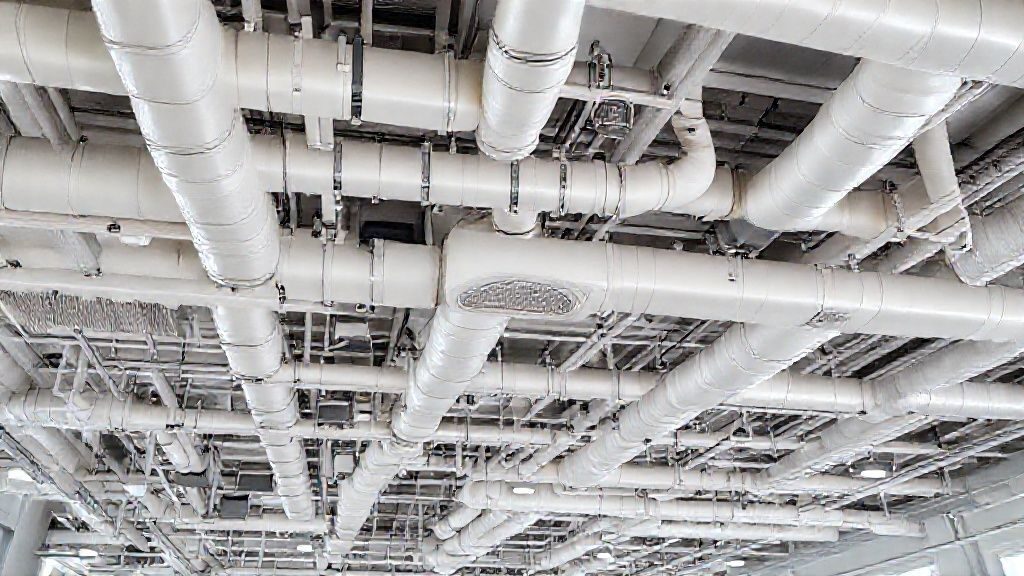
After decades in the HVAC field, I can tell you one thing for sure: the best heating and cooling equipment in the world won’t do its job right if the ductwork isn’t properly sized. It’s like putting a race car engine in a bicycle – it just doesn’t work. The duct system is the circulatory system of your home’s HVAC, and if it’s too restricted or too wide, your whole system suffers.
I’ve seen countless homes where homeowners were frustrated with uneven temperatures, high energy bills, and noisy vents. I remember a job out in Tampa, Florida, a few years back. The homeowner had a brand new, high-efficiency system, but the upstairs bedrooms were always sweltering. Turns out, the original duct installer, trying to save a buck and a few hours, had simply replaced the old unit without ever bothering to check the ducts. They were undersized for the new system’s airflow and the home’s cooling load. Once we resized and reconfigured the main trunk lines and critical branch runs, that house cooled down like it was supposed to, quietly and efficiently. That’s where a good CFM duct chart comes in handy – it helps you get it right the first time.
Key Highlights
- Accurate duct sizing is critical for HVAC efficiency, comfort, equipment longevity, and indoor air quality.
- CFM (Cubic Feet per Minute), static pressure, and duct velocity are fundamental terms you need to understand.
- Duct charts help correlate airflow requirements with appropriate duct dimensions and friction rates.
- Always start with a professional load calculation (Manual J and S) before using a duct chart.
- Overlooking return air sizing is a common and costly mistake.
- When in doubt, always consult a qualified HVAC professional.
What is a CFM Duct Chart?
Let’s strip away the jargon and get to brass tacks. A CFM duct chart is a fundamental tool we use in the HVAC trade. CFM stands for “Cubic Feet per Minute,” and it’s simply a measure of how much air is moving through a duct in sixty seconds. Think of it like the flow rate of water through a pipe. A duct chart, then, is a visual or tabular guide that helps us match a specific amount of airflow (CFM) to the right size and shape of ductwork, while also considering other critical factors like the speed of the air and the resistance it encounters.
In essence, these charts provide a relationship between three main variables: the volume of air you need to move (CFM), the dimensions of the duct (its width, height, or diameter), and the friction or resistance that air experiences as it travels through that duct. They often include a fourth variable, which is the velocity of the air, or how fast it’s moving. By using these charts, we can ensure that we pick a duct size that allows the correct amount of air to reach each room without causing excessive noise, undue strain on the fan, or simply not delivering enough heating or cooling.
You’ll find these charts in various forms. Some are graphical, with lines and curves representing different parameters. Others are tabular, presenting data in rows and columns. Regardless of their appearance, their purpose is the same: to provide a systematic way to engineer an efficient air delivery system. They are based on established principles of fluid dynamics and have been refined over many years to give us reliable data for sizing both supply and return air ducts. Understanding how to use one isn’t just for HVAC professionals; it’s vital information for any homeowner considering new ductwork or troubleshooting existing issues.
Why is Accurate Duct Sizing Crucial for HVAC Performance?
I can’t stress this enough: proper duct sizing isn’t just a nicety; it’s absolutely essential for your HVAC system to perform as intended. When the ducts aren’t sized correctly, it creates a cascade of problems that impact everything from your comfort to your wallet and even the lifespan of your equipment.
Efficiency and Energy Costs
First off, let’s talk about efficiency. If your ducts are too small for the amount of air your furnace or air conditioner is trying to move, the system has to work much harder to push that air through. This increased effort translates directly into higher energy consumption. The blower motor draws more electricity, running longer and harder, just to overcome the resistance in those undersized ducts. Over time, this adds up to significantly higher utility bills. It’s like trying to drink a thick milkshake through a coffee stirrer – you’ll use a lot more energy trying to get the job done.
Comfort and Even Temperatures
Next up is comfort. This is usually the first thing homeowners notice. Undersized ducts often mean that not enough conditioned air reaches certain rooms. This leads to hot and cold spots throughout the house. You might have one room that’s perfectly comfortable while another down the hall is always too warm in summer or too chilly in winter. Oversized ducts can also be an issue, leading to low air velocity, which means poor air mixing and stratification, where warm air sits up high and cool air settles low, making the thermostat readings misleading.
Equipment Longevity and Reliability
When an HVAC system consistently struggles against improperly sized ductwork, it puts undue strain on critical components, especially the blower motor. This constant overwork can lead to premature wear and tear, eventually causing breakdowns and shortening the overall lifespan of your expensive heating and cooling equipment. Think of it as forcing a car to drive uphill in too high of a gear all the time – it’s going to wear out faster. Your furnace and air conditioner are significant investments, and proper duct sizing helps protect that investment.
Noise Levels
Another common complaint I hear is about noise. If air is being forced through ducts that are too small, it will travel at excessively high velocities. This high-speed airflow often results in whistling, hissing, or howling sounds coming from your registers and ductwork. It can be incredibly annoying and disrupt the peace in your home. Correctly sized ducts allow air to move at appropriate velocities, keeping noise levels to a minimum.
Indoor Air Quality
Finally, there’s the less obvious but equally important aspect of indoor air quality. Proper airflow is essential for your filtration system to work effectively. If air isn’t moving through the system at the right rate, your filters won’t capture dust, pollen, and other contaminants as efficiently. This can lead to a build-up of allergens and pollutants inside your home, potentially impacting the health and comfort of occupants. Everything is interconnected.
Understanding Key Terms: CFM, Static Pressure, and Duct Velocity
Before you even look at a CFM duct chart, you need to have a solid grasp of the basic terms involved. These aren’t just technical words; they’re the language of airflow, and understanding them is key to making sense of why we size ducts the way we do.
CFM (Cubic Feet per Minute)
As I mentioned, CFM is your airflow volume. It’s the amount of air, measured in cubic feet, that passes through a specific point in your duct system every minute. This is the starting point for all duct sizing. How do we determine the required CFM? For heating and cooling purposes, a general rule of thumb for residential systems is 400 CFM per ton of cooling capacity. So, a 3-ton air conditioner would typically require 1200 CFM (3 tons x 400 CFM/ton). However, this is just a guideline. The precise CFM needed for each room and for the entire house should be determined by a detailed load calculation, often referred to as a Manual J calculation. This calculation takes into account your home’s insulation, windows, climate, orientation, and even the number of occupants to determine the exact heating and cooling loads, which then dictate the necessary airflow.
Static Pressure
This is where things can get a little more abstract, but it’s crucial. Static pressure is the resistance that airflow encounters as it moves through the ductwork, coils, filters, and other components of your HVAC system. Think of it as the ‘pushback’ the air experiences. It’s measured in “inches of water column” (in. w.c.). Every component in your duct system – every elbow, every bend, every change in duct size, and especially your air filter – contributes to static pressure. Your blower fan is designed to operate within a specific range of static pressure. If the static pressure is too high (due to undersized ducts, clogged filters, or too many restrictive bends), the fan struggles, airflow drops, and efficiency plummets. If it’s too low, the fan might be over-performing, potentially causing noise and reduced system performance in other ways. Duct charts help you select duct sizes that keep the static pressure within your system’s design limits, ensuring the fan can move the air effectively.
Duct Velocity
Duct velocity refers to how fast the air is moving through the ducts. It’s usually measured in feet per minute (FPM). Why does velocity matter? Primarily for two reasons: noise and air delivery. If the air moves too fast, it creates whistling and howling noises at the registers and within the ductwork, making your home uncomfortable. On the other hand, if the air moves too slowly, it might not have enough force to properly mix with the room air or reach the far corners of a room, leading to uneven temperatures. For residential systems, typical recommended velocities are often in the range of 600-900 FPM for main supply lines and around 400-600 FPM for branch ducts and returns. Duct charts will usually have velocity columns or lines, allowing you to check that your selected duct size will keep the air speed within acceptable limits for a quiet and effective system.
How to Read and Interpret a CFM Duct Chart
Alright, let’s get down to actually using one of these charts. While there are different styles, most CFM duct charts share common elements and operate on similar principles. They typically present a grid or a set of curves that relate CFM, duct size, air velocity, and a factor called ‘friction rate’.
Common Chart Layouts
You’ll often see charts specifically for round ducts and others for rectangular ducts, or tables that provide “equivalent round duct” sizes for various rectangular dimensions. Many charts use a friction rate as a primary input or output. The friction rate represents the pressure drop per 100 feet of duct run. A common target friction rate for residential systems is between 0.08 and 0.10 inches of water column per 100 feet of equivalent duct length. This rate aims to balance efficient airflow with reasonable duct sizes and noise levels.
Step-by-Step Interpretation:
- Determine Your Required CFM: This is your starting point, derived from your Manual J and Manual S calculations for the specific section of ductwork you’re sizing (e.g., a main trunk line, a branch to a single room).
- Select an Appropriate Friction Rate: Based on the design of your system and the available static pressure from your equipment, you’ll choose a target friction rate. As mentioned, 0.08-0.10 in. w.c./100 ft is a good starting point for many residential applications.
- Locate CFM and Friction Rate on the Chart: On a typical chart, you’ll find CFM values along one axis (often the horizontal or a specific curve) and friction rates along another (often the vertical or a different set of curves).
- Find the Intersection: Where your required CFM intersects with your chosen friction rate, you’ll find the corresponding duct size. For round ducts, this will be a diameter. For rectangular ducts, you might find a range of width x height combinations or an equivalent round diameter.
- Verify Velocity: Most charts will also show the air velocity associated with that CFM and duct size. You need to check that this velocity falls within acceptable ranges (e.g., 600-900 FPM for mains, 400-600 FPM for branches) to avoid noise and ensure good air distribution. If the velocity is too high, you might need a larger duct, even if the friction rate seems okay. If it’s too low, you might have issues with throw or stratification.
Understanding Different Duct Shapes
Round ducts are generally more efficient for airflow because they have less surface area per unit of volume, which reduces friction. Rectangular ducts are common because they fit well into wall cavities and ceiling spaces. When working with rectangular ducts, charts will often provide multiple width and height combinations that deliver the same CFM at a similar friction rate and velocity. You might need to choose the one that best fits your space constraints. Some charts also show “aspect ratio” (width divided by height), which is important; generally, an aspect ratio of 4:1 or less is preferred to maintain good airflow dynamics and minimize turbulence.
Remember, a duct chart is a tool. It takes practice to become proficient, and knowing your system’s specific requirements, including the total external static pressure (TESP) allowed by your blower, is crucial to selecting the correct friction rate target.
Factors Affecting CFM Requirements and Duct Sizing
Sizing ductwork isn’t just about plugging numbers into a chart. There are several real-world factors that influence both the CFM requirements for a space and the actual physical size of the ducts you’ll need to deliver that airflow efficiently. Ignoring these can lead to a system that looks good on paper but performs poorly in your home.
System Capacity (Tonnage)
The total CFM required by your entire home’s HVAC system is directly tied to the capacity of your furnace and air conditioner. As I mentioned, the rule of thumb is 400 CFM per ton of cooling. So, a 2.5-ton unit needs about 1000 CFM, a 4-ton unit needs 1600 CFM, and so on. This total CFM must be distributed throughout the house, and the sum of all individual room CFMs should ideally equal this system total. This also applies if you have a specific system like an a/c split system which still needs adequate airflow, though its ducting might be minimal or non-existent depending on the type.
Building Load (Manual J)
This is the absolute foundation. You cannot accurately determine CFM requirements without a proper load calculation, commonly known as a Manual J calculation. This isn’t guesswork. It’s a detailed engineering process that considers:
- Your local climate data
- The orientation of your home (which way it faces)
- Insulation levels in walls, ceilings, and floors
- Window types, sizes, and orientations
- Air leakage and infiltration rates
- Internal heat gains (from people, appliances, lighting)
A Manual J calculation tells you exactly how much heating and cooling your home (and each individual room) needs to maintain comfortable temperatures. This, in turn, dictates the CFM needed for each zone and the total system. Without it, you’re just guessing, and guessing in HVAC almost always leads to problems.
Occupancy
The number of people regularly occupying a space contributes to the internal heat gain. More people mean more body heat, which adds to the cooling load. While Manual J accounts for typical occupancy, significant variations can slightly adjust room-specific CFM needs.
Duct Material & Construction
The type of material used for your ductwork matters. Smooth materials like sheet metal (galvanized steel or aluminum) offer less resistance to airflow, meaning lower friction rates. Flexible ducts, while easy to install, have a corrugated interior surface that creates more friction, often requiring a larger diameter to move the same amount of air compared to smooth metal duct. If flex duct is kinked or stretched improperly, its effective cross-sectional area can be reduced dramatically, significantly increasing static pressure and friction. Fibrous ducts, like duct board, fall somewhere in between.
Duct Layout and Equivalent Length
It’s not just the straight runs of duct that create friction. Every elbow, every turn, every transition (reducing or expanding in size), and every register or grille adds resistance to the airflow. We account for this by using “equivalent length.” For example, a 90-degree elbow might have the same friction as 15 feet of straight duct. A T-fitting might be equivalent to 20 feet. These equivalent lengths are added to the actual physical length of your duct runs to get a total “equivalent length,” which is then used with the friction rate to ensure proper sizing. A long, winding duct path with many bends will require larger ducts or a higher fan speed to deliver the same CFM as a short, straight run.
Filtration
The air filter is a necessary component, but it’s also a significant source of static pressure in your system. Higher MERV (Minimum Efficiency Reporting Value) filters, while better at capturing small particles, inherently create more resistance to airflow. When sizing ducts, you must account for the pressure drop across your chosen filter. Failing to do so can lead to an undersized system despite correct duct calculations.
Return Air Sizing
This is a major point of failure I see. Many people focus only on the supply ducts that deliver conditioned air. But for every cubic foot of air supplied to a room, a cubic foot of air must be returned to the furnace or air handler. If your return air ducts are undersized, the system will become “air starved.” This creates negative pressure in the house, reduces system airflow, and can lead to a host of problems including reduced efficiency, uneven temperatures, and even potential safety issues with combustion appliances. Return air ducts need just as much, if not more, attention than supply ducts during the sizing process.
Step-by-Step: Using a CFM Duct Chart for Your Project
Using a CFM duct chart effectively requires a systematic approach. You can’t just pick a number and hope for the best. Here’s how a seasoned professional like me would approach a duct sizing project, emphasizing the steps that come before you even touch the chart.
Step 1: Perform a Load Calculation (Manual J)
This is where everything begins. You absolutely must perform a detailed room-by-room load calculation. As I mentioned before, this Manual J calculation considers every aspect of your home that affects heat gain and loss – insulation, windows, doors, orientation, climate, internal loads, and more. It will tell you precisely how much heating and cooling capacity each room needs, expressed in BTUs per hour. This isn’t optional; it’s the bedrock of a properly designed system. Without it, any duct sizing is just guesswork.
Step 2: Determine Total System CFM
Once you have your total cooling load (in BTUs/hour) from the Manual J, you can determine your total system CFM. The general rule is 400 CFM per ton of cooling (where 1 ton = 12,000 BTUs/hour). So, if your total cooling load is 36,000 BTUs/hour, you’ll need a 3-ton system, which translates to approximately 1200 CFM (3 x 400). This is the total volume of air your central fan needs to move.
Step 3: Sketch Your Duct System Layout
Before you size anything, draw out your proposed duct system. This involves sketching the main trunk lines that run from your furnace/air handler, and then mapping out all the branch ducts that extend from the trunk lines to each register in every room. Don’t forget to sketch out your return air pathways as well, showing where the main return ducts connect to the return air grilles. This visual plan will help you conceptualize the system and accurately measure lengths and identify fittings.
Step 4: Distribute CFM to Each Room (Manual S)
After you have the BTU requirements for each room from Manual J, you then use a process called Manual S (equipment selection) to determine the exact CFM each room requires. This is done by taking the room’s BTU load and converting it to CFM, usually using the 400 CFM/ton rule or a more precise formula based on temperature difference. The sum of all individual room CFMs should equal your total system CFM from Step 2.
Step 5: Calculate Friction Rate and Equivalent Length
Now, you’ll select a target friction rate for your duct system. As discussed, 0.08 to 0.10 in. w.c. per 100 feet is a common starting point for residential systems. You also need to account for all fittings. Every elbow, tee, reducing tap, and register box has an “equivalent length” – the length of straight duct that creates the same amount of friction. You’ll add these equivalent lengths to the actual measured length of each section of ductwork to get the total effective length for that segment. This is crucial for accurate friction loss calculations.
Step 6: Use the Duct Chart for Supply Ducts
With your required CFM for a specific duct section, your chosen friction rate, and your calculated equivalent length, you can now turn to the CFM duct chart.
- For Trunk Lines: Start with the largest sections closest to the air handler. For each segment of the trunk line, use the cumulative CFM (the total CFM for all branches downstream of that segment) and your target friction rate to find the appropriate duct size on the chart. Remember to check the velocity to ensure it’s within acceptable limits. As you move further down the trunk line and branches peel off, the CFM for the remaining section decreases, and therefore, its size will likely decrease.
- For Branch Ducts: For each individual branch duct feeding a register, use the CFM required for that specific room and your target friction rate to determine the optimal branch duct size. Again, verify the velocity.
If you’re using rectangular ducts, the chart might give you several width/height combinations for a given CFM. Choose the one that best fits your space while keeping a low aspect ratio (e.g., closer to square than a long, flat rectangle).
Step 7: Size Return Air Ducts
Do not neglect the return air side! The return air system needs to be able to handle the exact same total CFM as the supply side. If the supply side is 1200 CFM, the return side also needs to handle 1200 CFM. Use the same principles and a CFM duct chart to size your return air plenums, main return trunks, and individual return grilles. Undersized returns are a very common reason for poor system performance and higher static pressure. Proper return sizing ensures your system can breathe freely.
Common Mistakes to Avoid When Sizing HVAC Ducts
I’ve seen my share of ductwork disasters over the years, and most of them stem from a few common, avoidable mistakes. Getting this right saves you headaches and money down the road.
Guessing or Eyeballing Duct Sizes
This is probably the most frequent offender. Someone looks at an old duct and says, “Oh, that looks like a 10-inch round, let’s just use that again.” Or they just pick a size based on what’s cheapest or easiest to fit. This is a recipe for disaster. Duct sizing is engineering, not guesswork. Always use proper calculations and charts.
Ignoring Manual J and Manual S Calculations
I can’t emphasize this enough. Skipping the Manual J (load calculation) and Manual S (equipment selection) is like trying to build a house without blueprints. You won’t know the actual heating and cooling needs of each room, which means you can’t accurately determine the CFM required for each space. This leads directly to undersized or oversized ducts, comfort issues, and wasted energy.
Not Accounting for Fittings and Equivalent Length
People often measure only the straight runs of ductwork and forget about the resistance added by every bend, elbow, tee, and register. These fittings significantly increase the “effective length” of your duct system and, therefore, the total friction. Failing to include equivalent length in your calculations will lead you to undersize your ducts, creating higher static pressure and reduced airflow.
Undersizing Return Air Ducts
This is a chronic problem. Many installers focus only on getting conditioned air to the rooms and completely neglect the importance of getting air back to the air handler. If the return air path is restricted, the blower struggles, airflow drops, and the system can’t deliver its rated capacity. You need just as much, if not more, attention on the return side as the supply side.
Using Too Much Flexible Ductwork or Improper Installation
Flexible ductwork is convenient, but it has its limitations. It has a higher friction rate than rigid metal duct and is easily kinked or crushed during installation. When flex duct is used excessively, installed with sharp bends, or not stretched taut (allowing it to sag), its effective diameter is reduced, drastically increasing resistance and making your system work harder. Use rigid duct for main runs and minimize flex duct to short, straight connections where possible.
Ignoring Filter Pressure Drop
Your air filter is a vital part of your system, but it also creates resistance to airflow. A higher MERV filter will cause more pressure drop. If you don’t account for this in your overall static pressure budget, your ducts might be perfectly sized, but the system will still be starved for air because of the filter’s resistance. Always know the expected pressure drop of the filters you plan to use.
Not Balancing the System After Installation
Even with perfectly sized ducts, a system needs to be balanced. This means using dampers in the ductwork to fine-tune the airflow to each room, ensuring that every space receives its precise calculated CFM. Without proper balancing, even an expertly designed duct system might not deliver optimal comfort and efficiency. This usually involves measuring airflow at each register and adjusting accordingly.
When to Consult an HVAC Professional for Ductwork
While understanding CFM duct charts and duct sizing principles is valuable for any homeowner, there are definite times when you absolutely need to bring in a qualified HVAC professional. In my experience, attempting complex ductwork design or modifications without the right expertise often leads to costly mistakes and ongoing performance issues.
New HVAC System Installation or Replacement
If you’re installing a brand new HVAC system or replacing an old one, professional ductwork design is non-negotiable. A new, more efficient unit might have different airflow requirements or static pressure limits than your old one. A professional will perform the critical Manual J and Manual S calculations, design the ductwork using appropriate charts and software, and ensure the entire system is perfectly matched and balanced. This is your biggest investment, so you want to ensure it’s done right from the start. If you’re looking for a new setup, feel free to contact us for a quote, we’re always happy to help.
Major Renovations or Additions
Anytime you’re adding rooms, significantly altering your home’s layout, or doing a major renovation that impacts the existing ductwork, you need professional guidance. These changes can dramatically affect your home’s heating and cooling loads and the required CFM distribution. An HVAC technician can assess the impact and redesign or extend your ductwork appropriately.
Persistent Comfort Issues, High Bills, or Excessive Noise
If you’re constantly battling hot and cold spots, inexplicably high energy bills, or hear whistling and rumbling from your vents, these are classic signs of improperly sized or poorly designed ductwork. A professional can diagnose the root cause, which might involve anything from a simple blockage to a complete redesign of certain duct sections. They have specialized tools to measure airflow and static pressure, pinpointing exactly where the problem lies.
Complex Systems or Unique Building Designs
Homes with multiple zones, unusual layouts, very high ceilings, or specific architectural features often require more intricate ductwork design. These situations go beyond basic chart interpretation and benefit greatly from the experience and nuanced understanding of a professional who can account for these complexities.
Ensuring Compliance with Building Codes
Local building codes often have specific requirements for ductwork design and installation, particularly regarding insulation, sealing, and fire safety. A professional will be familiar with these codes and ensure your system meets all necessary regulations, preventing issues during inspections or future sales of your home.
While you can learn a lot from a CFM duct chart, remember that it’s just one tool in a professional’s arsenal. Their experience, knowledge of local codes, and ability to troubleshoot real-world challenges are invaluable. Don’t hesitate to call in the experts when the job calls for it. It’s often cheaper in the long run than trying to fix DIY mistakes.
Optimizing Your HVAC System Beyond Duct Sizing
Getting your duct sizing right is a huge step, but it’s just one piece of the puzzle for a truly efficient and comfortable HVAC system. There are other areas where you can make improvements that complement your perfectly sized ductwork and deliver even better performance.
Proper Insulation and Air Sealing
The best HVAC system and ductwork in the world can’t overcome a leaky, poorly insulated house. Air sealing around windows, doors, and utility penetrations prevents conditioned air from escaping and unconditioned air from entering. Upgrading insulation in your attic, walls, and crawl spaces reduces heat transfer, significantly lowering your heating and cooling loads. This reduces the demand on your HVAC system, allowing it to run less often and more efficiently. A well-sealed and insulated home means your properly sized ducts have an easier job to do.
Regular Maintenance
Just like a car, your HVAC system needs routine check-ups. Regular maintenance by a professional ensures that all components are clean, lubricated, and operating correctly. This includes cleaning evaporator and condenser coils, checking refrigerant levels, inspecting electrical connections, and of course, changing your air filter regularly. A well-maintained system runs more efficiently and is less prone to breakdowns. You can even read our blog for more HVAC tips.
Zoning Systems
If you have a larger home or varying comfort preferences among family members, consider a zoning system. This allows you to divide your home into different temperature zones, each controlled by its own thermostat. Dampers in the ductwork automatically open and close to direct conditioned air only where it’s needed. This prevents you from overheating or overcooling unoccupied areas, saving energy and improving comfort in occupied zones. It works perfectly with a well-designed duct system.
Smart Thermostats
Upgrading to a smart thermostat can significantly enhance your system’s efficiency. These devices learn your preferences, allow remote control via smartphone, and can optimize heating and cooling schedules based on occupancy and even local weather forecasts. They ensure your system only runs when necessary, complementing your well-sized ducts by providing intelligent control over air delivery.
High-Efficiency Equipment
If you’re replacing your HVAC equipment, choose high-efficiency models. Look for systems with high SEER (Seasonal Energy Efficiency Ratio) for air conditioners and heat pumps, and high AFUE (Annual Fuel Utilization Efficiency) for furnaces. While these units might have a higher upfront cost, they offer significant energy savings over their lifespan. Modern systems, like a high-efficiency propane furnace and ac unit, are designed to work optimally with properly engineered ductwork, maximizing their efficiency potential. Even the base your outdoor unit sits on, like a good composite pad for air conditioner, contributes to the overall stability and longevity of your system.
Sealing Existing Ducts
Even if your ducts are perfectly sized, leaks can undermine their performance. Leaky ducts can lose a significant amount of conditioned air into unconditioned spaces like attics, crawl spaces, or basements. Sealing duct seams and connections with mastic sealant or specialized foil tape (not regular duct tape!) can drastically improve efficiency and airflow delivery to your living spaces. This is one of the most cost-effective improvements you can make to an existing system.
FAQ
Q: What is the ideal friction rate for residential ductwork?
A: While there isn’t a single “ideal” rate that applies to every system, a common target range for residential ductwork design is between 0.08 and 0.10 inches of water column per 100 feet of equivalent duct length. This range typically balances effective airflow with manageable duct sizes and acceptable noise levels. The specific friction rate you aim for will also depend on the manufacturer’s recommended total external static pressure for your particular HVAC unit’s blower.
Q: Can I use flexible ductwork for my entire system?
A: While flexible ductwork is convenient and easy to install, it’s generally not recommended for an entire duct system, especially for main trunk lines. Flex duct has a higher friction rate than rigid metal duct, and it’s much more prone to kinks, crushing, and improper installation (like sagging), all of which significantly restrict airflow and increase static pressure. It’s best used in short, straight runs for branch connections from rigid mains to registers, ensuring it’s properly stretched and supported to maintain its full diameter.
Q: How much CFM per ton should I use for calculations?
A: For residential cooling systems, the general rule of thumb is 400 CFM (Cubic Feet per Minute) per ton of cooling capacity. So, a 3-ton air conditioner would typically require 1200 CFM. However, this is a simplified guideline. A professional load calculation (Manual J) and equipment selection (Manual S) will provide the precise CFM required based on your home’s unique characteristics and climate, which might sometimes vary slightly from the 400 CFM/ton rule.
Q: What happens if my ducts are too small?
A: If your ducts are too small (undersized), your HVAC system will suffer from several problems: reduced airflow, which leads to hot and cold spots in your home; increased static pressure, making your blower motor work harder and consume more energy; premature wear and tear on your equipment; and excessive noise (whistling or hissing) from the vents as air is forced through at high velocities. Ultimately, it means lower efficiency, higher bills, and reduced comfort.
Q: What is static pressure and why is it important?
A: Static pressure is the resistance to airflow within your duct system, including resistance from the furnace/air handler, evaporator coil, and air filter. It’s measured in inches of water column (in. w.c.). Every component in the airflow path contributes to static pressure. It’s important because your HVAC system’s blower fan is designed to operate within a specific range of static pressure. If the actual static pressure is too high (due to undersized ducts, clogged filters, or too many restrictive bends), the fan struggles, airflow decreases, and the system cannot deliver its rated heating or cooling capacity efficiently. Proper duct sizing aims to keep static pressure within the optimal range for your equipment.
Final Thoughts
After decades of working with HVAC systems in real homes and small businesses, I can tell you that the ductwork is often the unsung hero, or the silent saboteur, of your entire heating and cooling setup. You can install the most advanced, high-efficiency furnace or air conditioner on the market, but if the ducts aren’t correctly sized and installed, you’re leaving comfort, efficiency, and money on the table. A CFM duct chart isn’t just a technical tool; it’s a blueprint for a comfortable, energy-efficient home.
My hope is that this guide has demystified the process a bit and empowered you to understand the critical role duct sizing plays. It’s about more than just moving air; it’s about creating an environment where you feel good, your energy bills are manageable, and your expensive equipment lasts as long as it should. Don’t underestimate the power of properly engineered airflow. When you invest in your HVAC, make sure you’re investing in the entire system, starting from the ductwork.