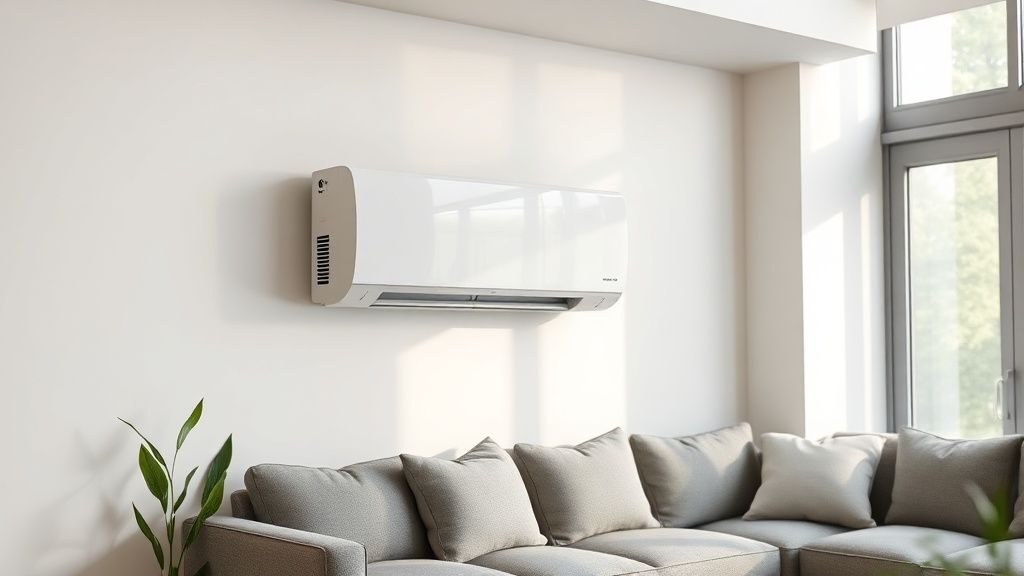
As an HVAC expert with decades in the field, I’ve seen just about every heating and cooling challenge a home can throw at you. From sweltering summers to freezing winters, people are always looking for smarter ways to stay comfortable without breaking the bank. That’s where mini split systems often come into play.
I remember a job in Tampa, Florida, a few years back. The homeowner had added a sunroom and a new office space, but their existing central AC just couldn’t keep up. Extending the ductwork was going to be a nightmare, tearing into walls and ceilings, and the cost was looking pretty high. We suggested a multi-zone mini split system. It was the perfect fit. We got those new areas comfortable, and the homeowner noticed their energy bills didn’t spike like they expected. It solved their problem without a major renovation.
Key Highlights
- Mini split systems offer flexible, zoned heating and cooling without ductwork.
- They are known for high energy efficiency, especially with inverter technology.
- Installation is generally less invasive than traditional ducted systems.
- Ideal for additions, renovations, garages, or homes without existing ductwork.
- Available in single-zone and multi-zone configurations to suit various needs.
- Proper sizing and professional installation are crucial for optimal performance.
What Are Ductless Mini Split Systems?
Let’s start with the basics. A ductless mini split system is a heating and cooling system that, as the name suggests, doesn’t rely on a network of air ducts to distribute conditioned air. Instead, it consists of two main components: an outdoor condensing unit and one or more indoor air-handling units. These two parts are connected by a small conduit that houses the refrigerant lines, power cable, and condensate drain. It’s a straightforward setup that offers a lot of flexibility.
Unlike traditional central air conditioning, where one large outdoor unit pumps air through a complex duct system to cool an entire house, mini splits allow for zoned control. This means you can heat or cool specific rooms or areas independently. Each indoor unit typically has its own thermostat, giving occupants precise control over their comfort levels in different spaces. This individual control is one of the big selling points for many homeowners.
Mini splits are often seen in homes with additions where extending existing ductwork would be impractical or too expensive. They’re also great for older homes that were built without ductwork, like many historic properties, or even in spaces like garages, workshops, or finished basements that need dedicated climate control. You’ll find different styles of indoor units, the most common being wall-mounted, but there are also ceiling cassettes, floor-standing units, and even concealed duct units that provide a more subtle look while still minimizing duct runs.
How Do Mini Split Systems Work?
The operational principle of a mini split is similar to that of a conventional air conditioner or heat pump, but with a key difference in air distribution. In cooling mode, the indoor unit draws in warm room air. The refrigerant inside the coils absorbs heat from this air. The now-heated refrigerant then travels through the line set to the outdoor unit. In the outdoor unit, a compressor pressurizes the refrigerant, increasing its temperature, and then a fan blows air over the outdoor coil to release the heat into the ambient air. The cooled refrigerant then returns to the indoor unit to repeat the cycle, continuously absorbing heat from your home.
For heating, a mini split system acts as a heat pump. It reverses the refrigerant flow. Instead of moving heat out of your home, it extracts heat from the outside air, even when it’s quite cold, and transfers it indoors. This process is remarkably efficient compared to electric resistance heating because it’s moving heat rather than generating it. Modern mini splits are equipped with inverter-driven compressors. This technology allows the compressor to vary its speed and output based on the precise heating or cooling demand. Instead of cycling on and off at full power, an inverter system can run continuously at lower speeds, maintaining a consistent temperature, which leads to greater efficiency and quieter operation. This steady, variable operation is a major reason why mini splits often have high SEER (Seasonal Energy Efficiency Ratio) and HSPF (Heating Seasonal Performance Factor) ratings.
The refrigerant R410A has been standard for a while, but newer systems are starting to use R32 refrigerant. This newer refrigerant has a lower Global Warming Potential (GWP), making it more environmentally friendly. As technology advances, you’ll see more options like a 14.5 x 45 inch R32 unit come to market, indicating a shift towards more sustainable HVAC solutions.
Key Benefits of Choosing a Mini Split HVAC System
From my experience, homeowners choose mini splits for several compelling reasons. The biggest one often revolves around energy efficiency. Because these systems allow you to heat or cool only the rooms you are using, you avoid wasting energy on unoccupied spaces. This “zoned comfort” can lead to significant savings on your utility bills. Traditional central systems cool or heat the entire house, even if you’re only in one or two rooms. With a mini split, if you’re working in your home office, you can set that unit to a comfortable temperature and turn off or set back the units in other rooms.
Another major advantage is the straightforward installation process. Since there’s no need for extensive ductwork, the installation is far less invasive than putting in a traditional central system. A small hole, typically 3 inches in diameter, is drilled through an exterior wall for the conduit connecting the indoor and outdoor units. This means less disruption to your home, no tearing down walls or ceilings, and a quicker installation time. It’s not a DIY job for most, but it’s certainly less complicated than retrofitting ducts into an existing structure.
Mini splits are also remarkably quiet. The loudest component, the compressor, is located outside. The indoor units operate at very low decibel levels, often quieter than a whisper, which is a big improvement over the noisy window units many people are used to. This quiet operation contributes significantly to overall home comfort. Furthermore, many mini split systems come with advanced air filtration features, helping to improve indoor air quality by removing allergens, dust, and other particulates. Some even offer dehumidification functions, acting as an air conditioning unit and dehumidifier in one, which is a real bonus in humid climates.
The flexibility in design is another strong point. With various styles of indoor units, you can often find one that blends seamlessly with your interior décor. For example, if you don’t like a wall-mounted unit, a ceiling cassette might be a better fit. This adaptability makes mini splits a versatile solution for almost any residential or light commercial application where traditional ducted systems aren’t feasible or desired. For those looking for the best hvac solutions for specific challenging spaces, mini splits are often at the top of my recommendation list.
Types of Mini Split Systems and Configurations
When we talk about mini split systems, it’s not a one-size-fits-all situation. There are distinct types and configurations designed to meet different needs and spaces. The primary distinction is between single-zone and multi-zone systems.
Single-Zone Mini Split Systems
A single-zone mini split consists of one outdoor unit connected to one indoor unit. This setup is perfect for conditioning a single room or an open area. Think about a new home office, a garage conversion, an attic bedroom, or a sunroom. If you only need to heat or cool one specific space efficiently, a single-zone system is the most cost-effective and straightforward choice. It provides dedicated comfort for that isolated area without affecting other parts of your home.
Multi-Zone Mini Split Systems
Multi-zone mini splits, on the other hand, allow a single outdoor unit to connect to multiple indoor units. Depending on the brand and model, one outdoor unit can typically support anywhere from two to eight indoor units. Each indoor unit operates independently with its own remote control or wall thermostat, providing individualized comfort for multiple rooms or zones. This is incredibly useful for whole-house applications, where you want zoned control over several rooms, or for larger additions where you need climate control in multiple new spaces. For instance, you could have one indoor unit in the living room, another in the master bedroom, and a third in a guest room, all running off the same outdoor unit but set to different temperatures.
Indoor Unit Styles
Beyond the single-zone/multi-zone distinction, there are several styles of indoor units to consider, each with its own advantages:
- Wall-Mounted Units: These are the most common and recognizable type. They’re installed high on a wall and deliver excellent airflow. They are efficient, relatively easy to install, and come in various designs to blend with décor.
- Ceiling Cassette Units: These units are recessed into the ceiling, with only a decorative grille visible. They distribute air in four directions for even cooling and heating and are a good choice when wall space is limited or a less obtrusive look is desired.
- Floor-Standing Units: Placed on the floor against a wall, similar to a traditional radiator. They are ideal for spaces with sloped ceilings or where wall mounting isn’t practical. They distribute air upward and outward.
- Concealed Duct/Slim Duct Units: These units are hidden in ceilings or crawl spaces, connecting to very short runs of ductwork to deliver air through grilles. They offer the most discreet appearance while still providing the benefits of a mini split.
- Multi-Position Air Handlers: Similar to traditional air handlers but designed for mini split systems, these can be installed in attics or basements and connect to some limited ductwork, providing a more centralized feel in certain applications.
Choosing the right configuration and indoor unit style depends on your specific needs, the layout of your home, and your aesthetic preferences. It’s always best to have a qualified HVAC professional assess your space to recommend the optimal solution.
Mini Split System Installation: What to Expect
While mini split installation is less disruptive than traditional ducted systems, it’s still a job for professionals. Here’s what you can expect during the process. First, a site visit is crucial. A technician will evaluate your home, measure the rooms you want to condition, and determine the appropriate size (BTUs) for each indoor unit and the overall outdoor unit. Proper sizing is absolutely critical; an undersized unit won’t cool or heat effectively, and an oversized unit will short-cycle, leading to inefficiencies and reduced lifespan.
Once sizing is determined and the equipment ordered, the actual installation begins. The outdoor unit will be placed on a solid, level pad or mounted on a sturdy wall bracket. It needs to be in a location with good airflow, away from obstructions, and with enough clearance for maintenance. The indoor units will then be mounted on the interior walls (or recessed into ceilings/floors depending on the type). This requires drilling a small hole, typically 2.5 to 3 inches in diameter, through the exterior wall to pass the conduit bundle.
The conduit, also known as the line set, contains the copper refrigerant lines, electrical wiring, and the condensate drain line. These are run between the indoor and outdoor units. The refrigerant lines are then carefully connected and sealed. This is where precision matters. Any leaks in the refrigerant lines will severely impact performance and can be costly to fix. The electrical connections are made, ensuring proper power supply and communication between the units.
A crucial step that often gets overlooked by inexperienced installers is evacuating the refrigerant lines. This involves using a vacuum pump to remove all air and moisture from the copper lines. Moisture and non-condensable gases can cause significant damage to the compressor and reduce system efficiency. Once evacuated, the refrigerant is released from the outdoor unit into the system. Finally, the condensate drain line needs to be properly sloped and routed to an appropriate drainage point, often outside, to prevent water leaks and mold growth. After all connections are made and verified, the system is started up, tested for proper operation, and the technician will explain how to use your new system and its remote control. This entire process, while quicker than ductwork installation, requires specialized tools and expertise to ensure long-term reliability and efficiency.
Cost of Mini Split Systems: Factors and Estimates
The cost of a mini split system can vary quite a bit, depending on several factors. It’s not a one-size-fits-all price tag. Understanding these variables will help you budget effectively for your project.
Factors Influencing Cost:
- System Type: Single-zone systems are generally less expensive than multi-zone systems because they have fewer indoor units and a smaller outdoor unit.
- Number of Zones: For multi-zone systems, the more indoor units you need, the higher the overall cost. Each additional indoor unit adds to the equipment and labor expenses.
- BTU Capacity: The cooling and heating capacity (measured in BTUs) of both the outdoor and indoor units plays a significant role. Larger capacity units for bigger rooms or whole-house solutions will cost more.
- SEER/HSPF Rating: Higher efficiency ratings mean the system will save you more on energy bills over its lifetime, but the initial purchase price will typically be higher. Investing in a higher SEER unit often pays off in the long run.
- Brand: Just like with cars, different brands have different price points. Well-established, reputable brands often have higher upfront costs but may offer better warranties and support.
- Indoor Unit Style: Wall-mounted units are usually the most affordable. Ceiling cassettes or concealed duct units, while aesthetically pleasing, often come at a higher price due to their more complex design and installation.
- Installation Complexity: Factors like the distance between indoor and outdoor units, the number of walls needing drilling, electrical upgrades required, and accessibility can all influence labor costs. If you need a dedicated electrical circuit installed, that will add to the price.
- Location: Labor rates vary by region, so the overall installation cost can differ significantly depending on where you live.
General Cost Estimates:
To give you a rough idea, keep in mind these are broad estimates and can change rapidly due to market conditions and specific circumstances:
- Single-Zone System: For one outdoor unit and one indoor unit, expect to pay anywhere from $2,000 to $6,000, including installation. This range accounts for varying BTU sizes and efficiency levels.
- Multi-Zone System (2-3 Zones): A system for two or three rooms might cost between $4,000 and $10,000, installed. The price climbs as you add more indoor units.
- Multi-Zone System (4-5+ Zones): For larger homes requiring four or more zones, costs can easily range from $8,000 to $15,000 or more, especially for high-efficiency units with specialized indoor units.
These figures typically include the equipment, labor, refrigerant, and basic materials. Don’t forget to inquire about any available rebates or tax credits for high-efficiency systems, as these can help offset the initial investment. Always get multiple detailed quotes from licensed HVAC contractors to ensure you’re getting a fair price and a system that’s properly sized for your needs. If you’re considering an upgrade, it’s a good idea to contact us for a quote so we can assess your specific situation and provide an accurate estimate.
Maintaining Your Ductless Mini Split for Longevity
Like any HVAC system, your ductless mini split needs regular maintenance to operate efficiently and reliably over its lifespan. Neglecting maintenance can lead to reduced performance, higher energy bills, and premature system failure. The good news is that much of the routine care is something you can handle yourself.
Routine Homeowner Maintenance:
- Clean or Replace Air Filters: This is probably the most important task you can do. Each indoor unit has its own air filter. Depending on usage and household dust levels, you should clean these filters every 2-4 weeks. Most mini split filters are washable; simply rinse them under lukewarm water, let them dry completely, and put them back in. Dirty filters restrict airflow, making the unit work harder, increasing energy consumption, and reducing comfort.
- Keep Indoor Units Clean: Periodically wipe down the exterior of the indoor units to prevent dust buildup. Ensure the air intake and output vents are clear of obstructions.
- Check Outdoor Unit: Keep the area around the outdoor unit clear of leaves, grass clippings, weeds, and other debris. Make sure there’s at least two feet of clearance on all sides for proper airflow. Clear any snow accumulation from the top and sides during winter months.
- Inspect Condensate Drain Line: The drain line carries condensed moisture away from the indoor unit. If it gets clogged with mold or algae, water can back up and overflow, potentially causing water damage. Visually inspect the drain line for any blockages or kinks. Some homeowners periodically pour a small amount of distilled vinegar down the line to inhibit mold growth.
Professional Maintenance (Annual or Bi-Annual):
Beyond what you can do yourself, I always recommend professional tune-ups, typically once a year for cooling-only systems or twice a year for heat pump models (before heating and cooling seasons). A professional technician will perform a more thorough inspection and cleaning, which includes:
- Coil Cleaning: Over time, the indoor and outdoor coils can get dirty, impacting heat transfer. A professional will clean them thoroughly using specialized coil cleaners.
- Refrigerant Level Check: They will check the refrigerant charge to ensure it’s at the optimal level. Low refrigerant can indicate a leak and severely impact efficiency.
- Electrical Connections: All electrical connections will be inspected for tightness and corrosion.
- Fan Motor and Blades: The technician will check the fan motors and blades for proper operation and cleanliness.
- Thermostat Calibration: They’ll verify that the thermostat or remote control is accurately reading temperatures and communicating with the system. Knowing how to set a pro thermostat correctly can also enhance system efficiency.
- Drain Pan and Line Flush: A professional cleaning will include flushing the drain pan and line to ensure there are no blockages.
Consistent maintenance ensures your mini split operates at peak efficiency, extends its operational life, and helps you avoid costly breakdowns. Think of it like regular oil changes for your car – a small investment that prevents much bigger problems down the road.
Mini Split vs. Traditional HVAC: A Comparison
When you’re trying to decide on a new heating and cooling system, you’re likely weighing mini splits against traditional central HVAC systems. Both have their merits, and the “best” choice really depends on your specific home, budget, and comfort priorities. Let’s break down some key differences.
Energy Efficiency and Zoned Control:
- Mini Split: This is where mini splits shine. Their ability to provide zoned heating and cooling means you only condition the spaces you’re actively using. This eliminates energy waste in unoccupied rooms and can lead to significant savings on utility bills. Modern mini splits, with their inverter technology, also adjust their output precisely, avoiding the energy-intensive on/off cycles of older central systems.
- Traditional HVAC: Central systems are designed to condition the entire home simultaneously. While thermostats can be programmed for different times, they typically don’t offer true room-by-room zoning unless a complex (and expensive) zoning system with dampers is installed. Air leaks in ductwork can also lead to substantial energy loss, sometimes as much as 20-30% of conditioned air.
Installation and Renovation:
- Mini Split: Installation is less invasive because it doesn’t require ductwork. This makes them ideal for homes without existing ducts, new additions, or renovations where tearing into walls for duct installation isn’t feasible or desired. The main work involves drilling a small hole for the line set and connecting the indoor and outdoor units.
- Traditional HVAC: Requires extensive ductwork to be installed throughout the house. This can be a major undertaking in existing homes, often requiring cutting into walls, ceilings, and floors. For new construction, it’s easier to plan for, but still a significant part of the build.
Comfort and Air Quality:
- Mini Split: Offer precise temperature control in individual zones, leading to high comfort levels. Many models also have advanced filtration to improve indoor air quality. They are generally quieter than traditional central systems, especially the indoor units.
- Traditional HVAC: Provides consistent temperature throughout the entire home, assuming the system is properly sized and the ductwork is well-maintained. Air quality depends heavily on the filter quality and how often it’s changed. Noise levels can be an issue if the furnace or air handler is located near living spaces.
Aesthetics and Space:
- Mini Split: While offering various indoor unit styles (wall-mounted, ceiling cassette, etc.), some homeowners dislike the visible indoor units on walls. They do, however, free up floor space that would otherwise be taken by registers or return air vents.
- Traditional HVAC: The main components (furnace/air handler and ductwork) are typically hidden in closets, attics, basements, or walls, offering a more seamless aesthetic. Only supply and return registers are visible.
Initial Cost and Maintenance:
- Mini Split: Initial costs for a single-zone can be comparable or slightly higher than a traditional central system for a similar area. Multi-zone systems can be more expensive upfront, but often recoup costs through energy savings. Maintenance involves cleaning individual filters and periodic professional service.
- Traditional HVAC: Often has a lower upfront cost for installation in homes already equipped with ductwork. Maintenance typically involves one central filter change and annual professional tune-ups. However, duct cleaning can be an added maintenance cost.
Ultimately, if you have specific areas that need dedicated heating and cooling, or if you’re dealing with a home without existing ductwork, a mini split system is often the superior choice. For whole-house comfort where ductwork is already in place or easily installed, a high-efficiency central system can also be an excellent option. It’s a matter of assessing what’s most practical and beneficial for your unique situation.
Common Questions About Mini Split Systems (FAQs)
I get a lot of questions about mini splits. Here are some of the most common ones I hear from homeowners:
Can mini splits heat as well as cool?
Absolutely. Most mini split systems sold today are heat pumps, meaning they provide both efficient heating and cooling. In heating mode, they extract heat from the outside air and transfer it indoors, even when outdoor temperatures are quite low. This makes them a very versatile year-round solution, especially in climates that don’t experience extreme, sustained sub-zero temperatures.
Are mini splits loud?
No, quite the opposite. Mini splits are known for their quiet operation. The loudest component, the compressor, is located in the outdoor unit. The indoor units operate at very low decibel levels, often as low as 19-24 dB, which is quieter than a whisper. This makes them a great choice for bedrooms, offices, or any space where noise is a concern, significantly quieter than a window air conditioner.
How much electricity do mini splits use?
Mini splits are highly energy efficient, especially compared to window units or electric baseboard heaters. Their inverter technology allows them to modulate their output, running at lower speeds more often to maintain temperature, rather than cycling on and off at full power. This, combined with zoned control, means you only pay to condition the spaces you’re using. Specific energy consumption depends on factors like the system’s SEER/HSPF rating, the size of the space, insulation levels, and your local electricity rates.
What is the lifespan of a mini split system?
With proper installation and regular maintenance, a mini split system can last 15 to 20 years, sometimes even longer. This is comparable to the lifespan of a traditional central HVAC system. Consistent cleaning of filters and annual professional tune-ups are key to maximizing its longevity and efficiency.
Can I install a mini split myself?
While some handy homeowners might be tempted, I strongly advise against DIY mini split installation. Installing a mini split requires specialized knowledge and tools, especially for handling refrigerant lines, making proper electrical connections, and evacuating the lines. Incorrect installation can lead to refrigerant leaks, electrical hazards, poor performance, reduced efficiency, voided warranties, and costly repairs down the road. It’s always best to hire a certified HVAC professional.
Do mini splits need maintenance?
Yes, they do. Regular maintenance is crucial for optimal performance and longevity. This includes cleaning or replacing the air filters in the indoor units every 2-4 weeks, keeping the outdoor unit clear of debris, and scheduling professional tune-ups annually or bi-annually. Neglecting maintenance can lead to decreased efficiency, higher energy bills, and premature system failure.
Are mini splits good for whole houses?
They can be. For homes without existing ductwork, or where ductwork replacement is too costly, a multi-zone mini split system can be an excellent whole-house solution. Each indoor unit can be strategically placed to cover different zones, providing customized comfort throughout the home. For some homes, a hybrid approach, using a central system for core areas and mini splits for additions or specific rooms, might also be considered.
Final Thoughts
After years of evaluating and installing heating and cooling systems, I can tell you that mini splits have earned their place as a reliable and efficient option for many homeowners. They offer a unique blend of comfort, energy savings, and installation flexibility that traditional systems often can’t match, especially in certain applications. From turning an unconditioned garage into a comfortable workshop to providing zoned climate control for an entire home without ducts, these systems are incredibly versatile.
The key to getting the most out of a mini split system is proper sizing and professional installation. Don’t cut corners there. An experienced technician will ensure your system is matched to your specific needs and installed correctly, which means it will run efficiently and reliably for years to come. Remember, consistent maintenance, particularly keeping those filters clean, will also go a long way in ensuring your investment continues to deliver comfort and savings.
If you’re considering a mini split system for your home, take the time to research the options, understand the benefits, and always consult with a qualified HVAC professional. They can help you determine if a mini split is the right solution for your unique situation and provide an accurate assessment and installation plan. These systems are a smart choice for modern comfort, and I’ve seen them deliver excellent results time and time again.