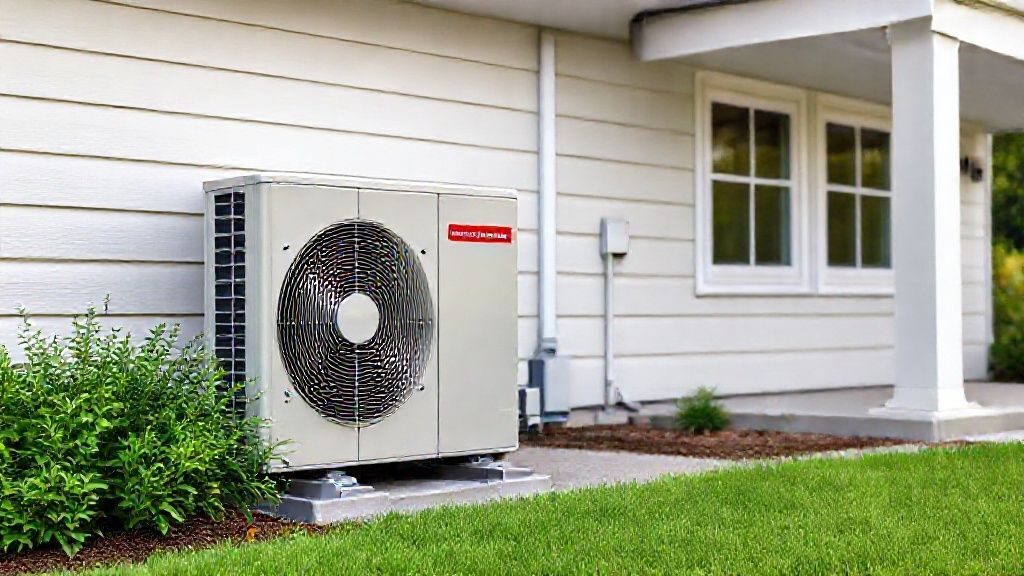
Hello, I’m Dave Watson. I’ve spent decades working with HVAC systems, seeing just about every make and model out there, and helping homeowners figure out what works best for their specific needs. When it comes to reliable, no-nonsense heating and cooling, Tempstar is a name that often comes up, and their R4H5S model is a solid example of what they do well. It’s a heat pump system, meaning it’s designed to handle both your cooling in the summer and your heating when the temperatures drop.
I remember a call I got out in Denver a few years back. The homeowner had an old, inefficient system that was costing them a fortune and just barely keeping up with the city’s temperature swings, especially those sudden cold snaps. They weren’t looking for all the bells and whistles of a top-tier, variable-speed unit; they just wanted something dependable, reasonably efficient, and built to last without breaking the bank. The Tempstar R4H5S, or a very similar model from that line, would have fit their bill perfectly. It’s a system built for consistency and value, providing comfort without unnecessary complexity.
Key Highlights
- The Tempstar R4H5S is a single-stage heat pump, offering both cooling and heating.
- It boasts a SEER2 rating between 14.5 and 15.2 and an HSPF rating between 8.0 and 8.5, making it an efficient choice for many homes.
- Known for its durable construction, including a steel louver coil guard and a baked-on powder coat finish.
- Utilizes R-410A refrigerant, which is an industry standard for efficient performance.
- Designed for quiet operation, ensuring your home environment remains peaceful.
- Backed by a solid warranty, requiring professional installation and registration for full coverage.
- A cost-effective option for homeowners seeking reliable comfort without the premium price tag of multi-stage or variable-speed systems.
Understanding the Tempstar R4H5S Model: An Overview
Let’s talk about what the Tempstar R4H5S actually is. It’s an air source heat pump system. Now, if you’re not entirely familiar with heat pumps, here’s the quick rundown: in the summer, they work like a standard air conditioner, moving heat from inside your home to the outside. But here’s where they earn their name – in the winter, they reverse that process. They pull heat from the outside air (yes, even cold air has heat in it!) and transfer it into your home. This makes them a very efficient way to heat, especially in milder climates, or as a primary heater with a furnace or electric strip heat as backup in colder regions.
The R4H5S specifically is a single-stage unit. What that means is the compressor runs at one speed – full blast – when it’s on. This design choice simplifies the system, often making it more robust and less expensive upfront compared to two-stage or variable-speed units. It’s a workhorse, designed to get the job done reliably. Tempstar positions this model as a solid, mid-efficiency option. It’s not trying to be the most technologically advanced system on the market, but it aims to be a dependable, efficient choice for the average homeowner.
I’ve seen this type of system installed in everything from modest suburban homes to smaller commercial spaces. Its straightforward operation makes it a favorite for many HVAC technicians because they know it’s generally easy to maintain and diagnose. For you, the homeowner, this translates to fewer potential headaches and predictable performance. It’s designed to integrate smoothly with existing ductwork and most standard thermostats, making it a flexible option for upgrades or new installations.
Key Features and Benefits of the R4H5S
When you’re looking at an HVAC system, you want to know what it brings to the table. The Tempstar R4H5S, while being a single-stage unit, comes packed with features that contribute to its overall value and your comfort.
Single-Stage Operation: Simplicity and Reliability
As I mentioned, the R4H5S operates in a single stage. This means when your thermostat calls for heating or cooling, the compressor kicks on at full capacity. While multi-stage or variable-speed units offer more precise temperature control and can be more efficient in certain situations, single-stage systems have their own advantages. They are generally less complex, which can mean fewer things to go wrong and potentially lower repair costs down the line. They’re built for consistent, dependable performance day in and day out.
Quiet Operation
Nobody wants a loud outdoor unit rumbling away outside their window or while they’re trying to enjoy their patio. The Tempstar R4H5S is designed with sound reduction in mind. It often includes features like a sound blanket for the compressor and a fan motor designed for quieter airflow. While not whisper-quiet like some premium models, it’s typically far from intrusive. This makes a noticeable difference, especially if your outdoor unit is located near a living area or a neighbor’s property.
Durable Construction: Built to Last
Durability is crucial for any outdoor unit that’s exposed to the elements year-round. Tempstar understands this, and the R4H5S reflects that. You’ll typically find a heavy-gauge galvanized steel cabinet, which resists rust and corrosion. A common feature is the louvered steel coil guard, which protects the outdoor coil from debris, hail, and accidental damage – a common culprit for efficiency loss and costly repairs. The baked-on powder coat finish adds another layer of protection, keeping the unit looking good and resisting wear and tear over its lifespan. In my experience, these kinds of details make a big difference in how long a system truly lasts and performs well.
Environmentally Friendly Refrigerant
The R4H5S uses R-410A refrigerant. This has been the standard for residential HVAC systems for quite some time, replacing older, ozone-depleting refrigerants. It’s efficient and effective. While the industry is transitioning to newer, lower Global Warming Potential (GWP) refrigerants, R-410A systems like the R4H5S are still widely available, supported, and a perfectly viable choice for homeowners today. Understanding these transitions is important, but for the immediate future, R-410A remains a strong performer.
Cost-Effectiveness and Value
One of the biggest benefits of the R4H5S is its excellent balance of initial cost, operating efficiency, and reliability. It provides a significant upgrade in efficiency and comfort over older systems without requiring the larger investment of a high-end, variable-speed unit. For many homeowners, this balance represents the best value for their money. You get dependable heating and cooling, good efficiency, and the peace of mind of a recognized brand, all at a price point that makes sense.
Improved Home Comfort
A well-matched and properly installed R4H5S system can significantly improve the comfort in your home. By efficiently removing humidity during cooling cycles and providing consistent warmth during heating cycles, it helps maintain stable temperatures throughout your living space. The single-stage operation, while not as nuanced as variable speed, still delivers a powerful and steady flow of conditioned air, quickly bringing your home to your desired temperature.
Tempstar R4H5S Specifications: SEER2, Tonnage, and More
When you’re looking at a specific model like the R4H5S, the numbers tell an important part of the story. Understanding these specifications helps you compare it to other systems and ensures you’re getting something that will meet your home’s demands.
SEER2 Rating: Cooling Efficiency
SEER2 stands for Seasonal Energy Efficiency Ratio 2. It’s an updated metric from the older SEER rating, reflecting more realistic testing conditions. A higher SEER2 number means better cooling efficiency. The Tempstar R4H5S typically comes with a SEER2 rating in the range of 14.5 to 15.2. This is considered a good, modern efficiency level. It’s significantly better than older 10-12 SEER units, meaning lower electricity bills for cooling. While not the absolute highest available (some systems go into the 20s), it offers a strong balance of efficiency and cost, making it a smart choice for most climates.
HSPF Rating: Heating Efficiency
For heat pumps, the Heating Seasonal Performance Factor (HSPF) is just as important as SEER2. HSPF measures how efficiently the unit heats your home. The R4H5S typically has an HSPF rating between 8.0 and 8.5. This is a respectable efficiency level for heating. The higher the HSPF, the less electricity the heat pump uses to warm your home. This is where heat pumps really shine over traditional electric furnaces, as they move heat rather than generate it.
Tonnage Options: Sizing Your System
HVAC systems are sized in “tons,” which refers to their cooling capacity. One ton equals 12,000 BTUs (British Thermal Units) per hour. The Tempstar R4H5S is available in a range of sizes to suit different homes, typically from 1.5 tons up to 5 tons:
- **1.5 Ton:** Approximately 18,000 BTU, suitable for smaller homes or specific zones.
- **2 Ton:** Approximately 24,000 BTU.
- **3 Ton:** Approximately 36,000 BTU.
- **4 Ton:** Approximately 48,000 BTU.
- **5 Ton:** Approximately 60,000 BTU, for larger homes or those with significant cooling demands.
Getting the right size is critical. An undersized system won’t cool or heat your home adequately, while an oversized system will cycle on and off too frequently (short cycling), leading to poor dehumidification, uneven temperatures, and increased wear and tear. This is why a professional load calculation, taking into account your home’s insulation, windows, climate, and more, is non-negotiable. For instance, a system delivering 40 000 btu is typically a 3-ton unit, suitable for many average-sized homes, but again, verification is key.
Sound Levels
While specifications can vary slightly by tonnage, the R4H5S models generally operate in the 70-76 decibel (dB) range. To put that in perspective, a normal conversation is around 60 dB, and a vacuum cleaner is about 70-75 dB. So, while you’ll know it’s running, it’s not going to be overwhelmingly loud for most people.
Refrigerant Type and Compressor
As discussed, the R4H5S uses R-410A refrigerant. The compressor itself is typically a scroll compressor. Scroll compressors are known for being more efficient, quieter, and having fewer moving parts compared to older reciprocating compressors. This contributes to both the system’s efficiency and its longevity.
Dimensions and Electrical Requirements
Outdoor unit dimensions will vary by tonnage, but they are generally designed to be compact enough for most residential applications. Electrical requirements typically involve a 208/230-volt, single-phase power supply, and your installer will confirm the correct breaker size based on the specific model and local electrical codes.
Installation and Maintenance Tips for Optimal R4H5S Performance
You can buy the best HVAC system in the world, but if it’s not installed correctly or maintained properly, it won’t perform as expected. This holds true for the Tempstar R4H5S, just like any other unit.
The Critical Role of Professional Installation
I cannot stress this enough: professional installation by a qualified, certified HVAC technician is paramount. This isn’t a DIY job. Here’s why:
- **Proper Sizing:** As I mentioned earlier, getting the right tonnage for your home is crucial. A professional will perform a load calculation (often called a Manual J calculation) to determine the precise heating and cooling needs of your home.
- **Ductwork Inspection and Sealing:** An efficient heat pump needs efficient ductwork. Leaky ducts can waste a significant amount of conditioned air. A good installer will inspect your existing ductwork, recommend repairs or sealing, and ensure proper airflow.
- **Refrigerant Charge:** The amount of refrigerant in the system needs to be exact. Too much or too little, and the system’s efficiency and lifespan will be severely impacted. This requires specialized tools and expertise.
- **Electrical Work:** Heat pumps require specific electrical connections and breaker sizes. This must be done safely and according to code.
- **Condensate Drainage:** Proper drainage for the indoor coil’s condensate is essential to prevent water damage and mold growth.
- **Warranty Validity:** Most manufacturers, including Tempstar, require professional installation for the warranty to be valid.
Location of the Outdoor Unit
Your installer will also consider the best placement for the outdoor unit. This involves ensuring adequate clearances around the unit for proper airflow, avoiding direct exposure to excessive sunlight (which can sometimes increase heat absorption), and ensuring it’s on a level pad with good drainage. Placing it away from bedrooms or patio areas can also help minimize any operational sound.
Thermostat Compatibility and Zoning
The R4H5S is compatible with most standard 24-volt thermostats. However, I highly recommend investing in a good programmable or smart thermostat. These allow you to set schedules, optimize energy usage, and often control your system remotely. If you have different temperature needs in various parts of your home, you might consider a zoning system. A multi-zone setup with a honeywell zone panel hz322, for example, can give you much more granular control over comfort and energy usage, especially in larger homes or homes with unique layouts.
Regular Maintenance: Your System’s Lifeline
Once installed, ongoing maintenance is key to keeping your R4H5S running efficiently and extending its lifespan. Think of it like changing the oil in your car. It’s not optional if you want it to last.
- **Filter Changes:** This is the easiest and most important thing you can do. Check your air filter monthly, especially during peak heating and cooling seasons, and replace it when it’s dirty. A dirty filter restricts airflow, forcing your system to work harder, which wastes energy and can lead to breakdowns.
- **Coil Cleaning:** Annually, your outdoor coil will accumulate dirt and debris, which acts as an insulator and reduces efficiency. The indoor coil can also get dirty. A professional technician will clean these coils, ensuring optimal heat transfer.
- **Drainage Inspection:** The condensate drain line can become clogged with algae or sludge. Your technician will check and clear this during a tune-up to prevent water backup.
- **Seasonal Tune-Ups:** I always recommend scheduling professional tune-ups twice a year – typically in the spring before cooling season and in the fall before heating season. During these visits, a technician will:
- Inspect and clean coils.
- Check refrigerant levels.
- Inspect electrical connections.
- Lubricate moving parts (if applicable).
- Test thermostat operation.
- Check for proper airflow and ductwork issues.
- Ensure safety controls are working.
These preventive measures can catch small problems before they become expensive repairs and ensure your system is running at its peak efficiency, saving you money on utility bills. Regular maintenance is also often a requirement to keep your manufacturer’s warranty valid.
Tempstar R4H5S Warranty and Support Information
A good warranty is a testament to a manufacturer’s confidence in its product. Tempstar, as part of the Carrier family, generally offers solid warranty coverage for its equipment, including the R4H5S. However, understanding the terms is crucial.
Standard Warranty Details
Typically, the Tempstar R4H5S will come with a multi-year limited warranty on functional parts and the compressor. For instance, you might see a 10-year limited warranty on the compressor and a 10-year limited warranty on parts. It’s important to remember that these are usually “limited” warranties, covering defects in manufacturing and materials, but not issues arising from improper installation, lack of maintenance, or normal wear and tear.
Registration Requirements
One common pitfall homeowners overlook is product registration. Most manufacturers require you to register your new equipment, often within 60 or 90 days of installation, to qualify for the full extended warranty coverage. If you don’t register, the warranty period might revert to a shorter, standard term (e.g., 5 years instead of 10). Your installing contractor should inform you about this process, or even handle it for you. Always double-check and make sure your system is registered.
Importance of Professional Service for Warranty Validity
As I touched on with installation and maintenance, these aspects play a direct role in your warranty. If a system fails due to an issue that can be traced back to incorrect installation or a lack of proper, routine maintenance by a qualified professional, the manufacturer may have grounds to deny a warranty claim. This isn’t to scare you, but to highlight why it’s so important to partner with reputable HVAC professionals who can ensure everything is done by the book.
Finding Support
Tempstar doesn’t typically sell directly to homeowners. Instead, they rely on a network of authorized dealers and distributors. If you have questions about your R4H5S system, warranty claims, or need service, your first point of contact should always be the licensed HVAC contractor who installed the unit. They are your primary resource for support, parts, and service. If for some reason you can’t reach them, you can typically find a dealer locator on the Tempstar brand website to find other authorized service providers in your area.
Is the Tempstar R4H5S the Right Choice for Your Home?
Deciding on an HVAC system is a big decision, and what’s “right” for one home might not be ideal for another. The Tempstar R4H5S is a solid contender, but let’s break down who it’s best suited for and what factors you should consider.
Ideal Scenarios for the R4H5S
- **Budget-Conscious Homeowners:** If you’re looking for a reliable system that offers good efficiency without the premium price tag of a top-tier, variable-speed unit, the R4H5S is an excellent value.
- **Seeking a Reliable Single-Stage System:** For those who prioritize straightforward operation and robust design over the incremental comfort gains of multi-stage systems, the R4H5S delivers.
- **Moderate Climates:** In areas with less extreme temperature swings, where a single-stage system can easily keep up, the R4H5S will perform admirably. Even in colder climates, when paired with a supplemental heating source, it’s a very efficient choice for a good portion of the year.
- **Replacement for Older, Less Efficient Units:** If you’re upgrading from an old, 10-12 SEER unit, the R4H5S will provide a noticeable improvement in efficiency and comfort, leading to lower utility bills.
- **Homes with Good Insulation and Ductwork:** A single-stage system works best in a home that holds its temperature well. If your home is well-insulated and your ductwork is in good shape, the R4H5S will maintain comfort effectively.
Considerations and Alternatives
- **Highest Efficiency isn’t the Top Priority:** While the R4H5S is efficient, it’s not designed to compete with 18-20+ SEER2 variable-speed systems. If maximum energy savings and the smallest carbon footprint are your absolute top priorities, you might look at other models in the Tempstar line or other brands that offer higher efficiency options.
- **Single-Stage vs. Two-Stage/Variable Speed:** A single-stage unit turns on and off at full capacity. Two-stage units can run at a lower capacity (e.g., 70-80%) for longer periods, providing more consistent temperatures and better dehumidification. Variable-speed units modulate their output in tiny increments for the ultimate in comfort and efficiency. If you live in a very humid climate or are extremely sensitive to temperature fluctuations, a multi-stage or variable-speed system might offer a more refined comfort experience.
- **Extremely Cold Climates:** While heat pumps are excellent for heating, their efficiency decreases as outdoor temperatures drop significantly. In very cold climates (e.g., consistently below 20°F), the R4H5S will rely more heavily on its backup heat source (electric heat strips or a gas furnace) to keep your home warm. This is perfectly normal, but it’s a factor to consider for long-term heating costs. You can learn more about air heat pump running costs to see how they stack up.
The Importance of a Home Evaluation
Ultimately, the best way to determine if the Tempstar R4H5S is the right fit for your home is to get a professional, in-home evaluation from a qualified HVAC contractor. They will consider all the unique factors of your home – its size, insulation, window efficiency, local climate, and your personal comfort preferences and budget. They can then recommend the appropriate tonnage and system type, ensuring you get the most efficient and comfortable solution. Don’t hesitate to reach out and contact us for a quote, or check out our other services to find the best hvac solution for your home.
Common Questions About the Tempstar R4H5S System
I get a lot of similar questions from homeowners about systems like the R4H5S. Let me tackle a few of the most common ones.
What’s the typical lifespan of a Tempstar R4H5S?
With professional installation and regular, proper maintenance, you can expect an R4H5S system to last anywhere from 12 to 15 years, or even longer. Neglecting maintenance or improper installation will significantly shorten its life.
Is the R4H5S noisy?
Compared to older units, the R4H5S is relatively quiet, typically operating in the low 70-decibel range. While you’ll hear it run, it’s generally not considered intrusive by most homeowners. The design includes features to help mitigate sound.
Can it be used with a smart thermostat?
Yes, absolutely. The R4H5S is compatible with most 24-volt smart thermostats on the market. Upgrading to a smart thermostat can enhance your comfort control, provide energy usage insights, and allow for remote management of your system.
What kind of refrigerant does it use?
The Tempstar R4H5S uses R-410A refrigerant. This is an industry-standard, non-ozone-depleting refrigerant that has been widely used in residential HVAC systems for many years.
How often should I get my R4H5S serviced?
I recommend professional service at least once a year, ideally twice a year – a tune-up in the spring for cooling readiness and another in the fall for heating readiness. This proactive approach helps prevent breakdowns, maintains efficiency, and extends the life of your unit.
Is the Tempstar R4H5S good in cold climates for heating?
Heat pumps like the R4H5S are very efficient for heating in most climates. However, as temperatures drop significantly (typically below 30-35°F), their heating efficiency decreases, and they will rely more on a supplemental heat source (like electric resistance coils in your indoor unit or a furnace) to maintain your desired indoor temperature. This is normal heat pump operation. If you live in a region with extremely cold winters, your installer will ensure the backup heat is appropriately sized for those conditions. The R4H5S is a strong performer as a primary heat source in mild to moderate winters.
Final Thoughts
The Tempstar R4H5S is a solid, reliable, and value-oriented heat pump system that delivers consistent heating and cooling performance. It’s built with durability in mind, offers good energy efficiency for its class, and uses proven technology. For homeowners looking for dependable comfort without unnecessary complexity or the highest upfront cost, it represents an excellent choice.
Just remember what I’ve always preached: the best HVAC system is only as good as its installation and maintenance. Partner with a trusted, certified HVAC professional for sizing, installation, and regular tune-ups. Do that, and your Tempstar R4H5S will provide you with comfortable, efficient service for many years to come.