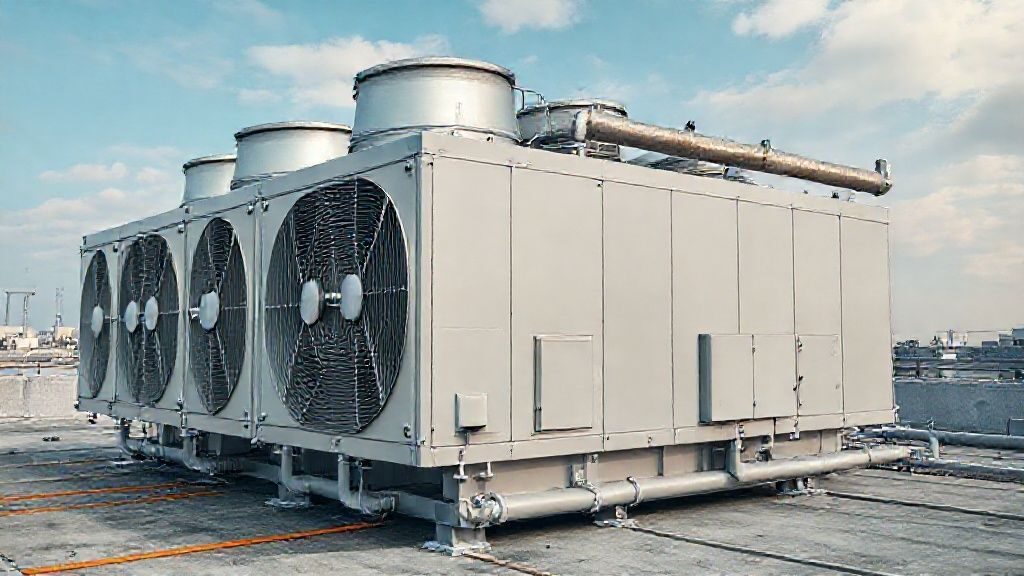
When you’re running a business, whether it’s a bustling manufacturing plant, a critical data center, or a vast warehouse, the cooling needs are far beyond what a typical residential air conditioner can handle. We’re talking about industrial air conditioners here – heavy-duty systems designed to tackle extreme temperatures, maintain specific environmental conditions, and keep operations running smoothly, day in and day out. It’s a completely different ballgame than cooling your living room, and understanding these systems is key to your business’s efficiency and longevity.
I remember a few years back, I was out in Denver, Colorado, evaluating a large food processing facility. They had an aging refrigeration system, and during a particularly hot summer, their entire production line was struggling. The existing units couldn’t keep up with the heat generated by the machinery and the strict temperature requirements for their products. We designed a custom solution involving a robust chiller system coupled with precision air handlers. It wasn’t just about dropping the temperature; it was about maintaining consistent humidity and air quality, which are critical in food safety. Getting that system right meant they could boost production, reduce spoilage, and maintain compliance, all while keeping their workforce comfortable. That’s the power of appropriate industrial cooling.
Key Highlights
- Industrial vs. Residential: Industrial AC systems are built for larger scale, higher heat loads, and more demanding environmental control than residential units.
- Diverse Applications: They serve a wide range of sectors, including manufacturing, data centers, warehouses, and clean rooms, each with unique requirements.
- System Types: Options include rooftop packaged units, chillers, large split systems, and specialized precision cooling solutions.
- Critical Factors: Choosing the right system depends on BTU needs, space, environmental conditions, energy efficiency, and budget.
- Maintenance is Key: Regular, professional maintenance is crucial for optimal performance, energy efficiency, and extending system lifespan.
- Energy Savings: Modern industrial AC units offer significant energy efficiency improvements, leading to substantial operational cost savings over time.
What Are Industrial Air Conditioners?
An industrial air conditioner isn’t just a bigger version of the unit you have at home. These are specialized, heavy-duty HVAC systems engineered to cool vast spaces, manage extreme heat loads, and maintain precise environmental conditions in commercial and industrial settings. Think about the heat generated by rows of servers in a data center, the machinery in a factory, or the sheer volume of air in a large warehouse. Standard residential units simply aren’t built to withstand that kind of demand or to deliver the consistent, powerful cooling required.
The core purpose of industrial AC is multi-faceted. It’s about preserving sensitive equipment, ensuring product quality, maintaining employee comfort and safety, and often, meeting stringent regulatory requirements. These systems are designed for continuous operation, built with more robust components, and often feature advanced control systems that allow for precise temperature, humidity, and even air quality management. We’re talking about units that can range from tens of tons of cooling capacity to hundreds, sometimes even thousands, depending on the scale of the facility. The engineering behind them is focused on durability, reliability, and performance under demanding conditions.
Unlike a home gas furnace, which primarily heats a residential space, industrial AC systems are integral to the operational infrastructure of many businesses. They are often custom-designed or selected based on a thorough load calculation, taking into account everything from building materials and insulation to process heat generated by equipment and the number of occupants. This detailed approach ensures that the system is not only capable of handling the current demands but also offers scalability for future growth or changes in operations.
Why Industrial Cooling is Critical for Businesses
For many businesses, industrial cooling isn’t a luxury; it’s a fundamental operational necessity. The impact of insufficient or failing AC can ripple through an entire operation, leading to significant financial losses and operational headaches. Let’s break down why it’s so critical:
Equipment Protection and Longevity
Modern industrial equipment, especially electronics and sensitive machinery, generates a lot of heat. If not properly cooled, these components can overheat, leading to malfunctions, reduced lifespan, and costly breakdowns. Think about data centers: if servers overheat, data can be lost, and services can go down, incurring massive costs and reputational damage. Industrial AC systems are designed to dissipate this heat efficiently, ensuring optimal operating temperatures for critical assets and extending their service life.
Product Integrity and Quality Control
Many industries rely on precise temperature and humidity control to maintain product integrity. In food processing, pharmaceuticals, or even delicate manufacturing, variations in temperature or humidity can spoil products, compromise quality, or halt production entirely. Consistent cooling, often with humidity control, ensures that products are stored, processed, and manufactured under ideal conditions, meeting quality standards and reducing waste.
Employee Comfort, Safety, and Productivity
A hot, uncomfortable work environment isn’t just unpleasant; it’s a safety hazard and a productivity killer. Extreme heat can lead to heat stress, fatigue, and decreased concentration, increasing the risk of accidents. By maintaining comfortable temperatures, industrial AC systems create a safer and more conducive work environment, which directly translates to higher employee morale, reduced absenteeism, and improved productivity. People simply work better when they’re not struggling against the heat.
Compliance and Regulatory Requirements
Certain industries are subject to strict environmental control regulations. Hospitals, clean rooms, laboratories, and some manufacturing facilities must adhere to specific temperature, humidity, and air quality standards. Industrial HVAC systems are often key components in meeting these compliance requirements, helping businesses avoid fines, shutdowns, and maintain their operational licenses. It’s not just about comfort; it’s about legality and operational viability.
Types of Industrial Air Conditioning Systems
The world of industrial air conditioning is broad, with various systems designed for different scales and specific needs. Understanding the main types can help you grasp the options available for your facility.
Rooftop Packaged Units
These are common in larger commercial and some industrial settings. A packaged unit consolidates all components—compressor, condenser, evaporator, and fan—into a single cabinet, usually installed on the roof. This saves indoor space and simplifies installation. They come in various capacities and are often used for cooling large open areas or multiple zones through extensive ductwork. Maintenance is generally easier as all components are in one accessible location.
Chillers (Water-Cooled and Air-Cooled)
Chiller systems are powerhouses, typically used for very large facilities like manufacturing plants, large commercial complexes, and data centers. They work by removing heat from a liquid, usually water or a water-glycol solution, and then circulating this chilled liquid through coils in air handlers to cool the space. Air-cooled chillers reject heat directly to the outside air, while water-cooled chillers use a cooling tower to dissipate heat into the atmosphere, often being more efficient for very large applications. Chillers are incredibly versatile and can handle massive cooling loads.
Large Split Systems
While similar in concept to residential split systems, industrial-grade split systems are far more robust. They separate the condensing unit (placed outdoors) from the evaporator coil and air handler (placed indoors). This allows for greater flexibility in installation, especially where rooftop space is limited or aesthetics are a concern. They can be scaled up to handle significant cooling demands, often serving specific zones or areas within a larger facility.
Evaporative Coolers (Swamp Coolers)
These systems work by drawing warm air over water-saturated pads, causing the water to evaporate and cool the air. Evaporative coolers are most effective in dry climates where humidity is low. They are energy-efficient and can provide significant cooling in large, open industrial spaces like warehouses or workshops, especially where some air exchange with the outdoors is acceptable or even desired. They don’t offer the precise temperature and humidity control of refrigerant-based systems but are great for general comfort cooling in suitable environments.
Variable Refrigerant Flow (VRF/VRV) Systems
VRF systems are an advanced form of ductless technology that allows a single outdoor condensing unit to connect to multiple indoor units, each capable of independent temperature control. While often considered commercial, larger VRF systems can certainly cross into industrial applications, particularly in facilities with many different zones requiring individual climate control, like office spaces within a larger plant or specialized research areas. If you’re looking into more flexible, multi-zone solutions, you might also consider what is typically involved with a what is a ductless mini split air conditioner, though these are generally for smaller applications than industrial VRF systems. For larger projects, mini split wholesale options might be explored, but again, these are typically aimed at commercial rather than heavy industrial usage.
Spot Coolers and Portable Industrial AC
Sometimes, you don’t need to cool an entire facility, but rather a specific workstation, piece of equipment, or a temporary area. This is where industrial spot coolers or portable AC units come in handy. These mobile units provide targeted cooling, delivering a blast of cold air exactly where it’s needed. They are excellent for addressing hot spots, providing temporary relief during maintenance, or offering cooling in areas where permanent AC installation isn’t feasible or cost-effective.
Key Factors When Choosing an Industrial AC Unit
Selecting the right industrial AC system is a significant investment and a decision that needs careful consideration. There isn’t a one-size-fits-all solution. Here’s what I always tell folks to look at:
BTU/Tonnage Requirements and Load Calculation
This is the starting point. You need to accurately determine the cooling load of your facility. This isn’t just about square footage. A proper load calculation accounts for external heat gains (sunlight through windows, wall insulation), internal heat gains (machinery, lighting, people), fresh air ventilation requirements, and humidity levels. Underestimating can lead to an ineffective system that constantly runs but never cools properly; overestimating means unnecessary capital expense and higher operating costs. Always work with a professional for this critical step.
Space Considerations and System Layout
Where will the equipment go? Do you have available rooftop space for packaged units? Is there room for outdoor condenser units and indoor air handlers for split systems? If you’re considering a chiller, do you have space for the chiller itself, pumps, and potentially a cooling tower? Existing ductwork, electrical capacity, and structural integrity of the building all play a role in determining the most viable system layout. Sometimes, a combination of systems might be the most practical approach.
Environmental Conditions and Specific Needs
What are the unique environmental challenges? Is it extremely hot and humid, or hot and dry? Are there airborne contaminants or corrosive substances that require specialized filtration or coil coatings? Do you need precise humidity control for sensitive processes or products? Data centers, for instance, need extreme precision cooling to maintain a narrow temperature and humidity range. Manufacturing plants might need filtration for dust or fumes. These specific conditions dictate the type of system, materials, and controls required.
Energy Efficiency Ratings and Operational Costs
The upfront cost of an industrial AC unit is just one part of the equation. Operating costs, primarily electricity, will be a recurring expense for decades. Look at energy efficiency ratings like SEER (Seasonal Energy Efficiency Ratio), EER (Energy Efficiency Ratio), and especially IPLV (Integrated Part Load Value) for larger equipment, which measures efficiency at various operating capacities. A higher efficiency unit might have a greater initial cost but can lead to substantial savings over its lifespan. Understanding the total cost of ownership is paramount.
Budget: Initial Investment vs. Long-Term Value
While budget is always a factor, it’s important to view an industrial AC system as an investment rather than just an expense. Skimping on the initial investment can lead to higher operating costs, frequent breakdowns, and shorter system life, ultimately costing more in the long run. Balance the upfront capital expenditure with the projected operational costs, maintenance requirements, and the expected lifespan of the equipment. Sometimes, investing more in a high-quality, efficient system pays off handsomely through reduced energy bills and fewer repair costs.
Control Systems and Building Management Integration
Modern industrial AC units often come with sophisticated control systems. These can range from simple thermostats to advanced Building Management Systems (BMS) that integrate heating, ventilation, cooling, lighting, and security. The ability to precisely control temperatures, schedule operations, monitor performance, and receive alerts remotely can significantly enhance efficiency and responsiveness. Consider how the new AC system will integrate with your existing building controls or if a new BMS is part of the upgrade.
Reliability and Redundancy
For mission-critical applications, such as data centers or certain manufacturing processes, system downtime due to AC failure is simply unacceptable. In these cases, reliability is paramount, and redundancy often becomes a key consideration. This might involve having backup units, N+1 or 2N configurations where extra capacity is installed to take over if a primary unit fails, or systems designed for quick component swap-outs. The cost of downtime must be weighed against the investment in higher reliability and redundancy.
Installation and Maintenance for Optimal Performance
Getting your industrial AC system installed correctly and maintaining it regularly are just as important as choosing the right unit. Even the best equipment will underperform if these aspects are neglected.
The Importance of Professional Installation
Industrial AC systems are complex. They involve significant electrical work, precise refrigerant charging, heavy equipment placement, and often extensive ductwork or piping. This is not a DIY job. Professional installation by experienced HVAC technicians ensures that the system is sized correctly, installed according to manufacturer specifications and local codes, and commissioned properly. Incorrect installation can lead to efficiency losses, premature breakdowns, safety hazards, and voided warranties. Always use certified professionals who specialize in industrial HVAC for this work.
Establishing a Regular Maintenance Schedule
Once installed, an industrial AC system needs consistent care. Neglecting maintenance is the fastest way to diminish efficiency, shorten lifespan, and invite costly breakdowns. A robust preventive maintenance schedule is absolutely critical. This typically includes:
- Filter Replacement/Cleaning: Dirty filters restrict airflow, reduce efficiency, and strain the system.
- Coil Cleaning: Evaporator and condenser coils collect dirt and grime, hindering heat exchange. Regular cleaning restores efficiency.
- Refrigerant Level Checks: Low refrigerant levels indicate a leak and severely impair cooling capacity. Checking and topping up (if leaks are repaired) is vital.
- Electrical Inspections: Checking wiring, connections, contactors, and motors for wear, corrosion, or signs of overheating.
- Ductwork and Insulation Checks: Ensuring no leaks in ductwork and that insulation is intact to prevent energy loss.
- Component Lubrication: Lubricating moving parts like fan motors to reduce friction and wear.
- Drainage System Clearing: Ensuring condensate drains are clear to prevent water damage and microbial growth.
- Operational Testing: Verifying all components are functioning correctly and the system is meeting performance specifications.
The Value of Preventative Maintenance Contracts
For industrial operations, I always recommend a preventative maintenance contract with a reputable HVAC service provider. These contracts typically include scheduled inspections and services, often at a reduced rate compared to emergency calls. They help identify minor issues before they become major problems, ensure peak efficiency, and extend the life of your equipment. It’s an investment that reliably pays for itself through avoided downtime, lower energy bills, and fewer expensive repairs. Think of it as insurance for your critical cooling infrastructure.
Energy Efficiency and Cost Savings in Industrial HVAC
In today’s economy, energy efficiency isn’t just a buzzword; it’s a direct line to your bottom line. Industrial AC systems, due to their scale, are major energy consumers. Optimizing their efficiency can lead to substantial cost savings and a reduced environmental footprint.
Investing in High-Efficiency Units
Modern industrial AC units come with significantly improved energy efficiency ratings compared to older models. Features like variable speed compressors, advanced heat exchange technologies, and intelligent controls mean they can deliver the required cooling with less energy input. While these units might have a higher initial purchase price, the long-term operational savings often far outweigh the upfront cost. When considering the best hvac solutions for your facility, efficiency should be at the top of the list.
Leveraging Variable Speed Drives (VFDs)
Many industrial AC components, such as compressors and fans, can now be equipped with Variable Speed Drives (VFDs). Instead of running at full power or cycling on and off, VFDs allow motors to operate at varying speeds, precisely matching the cooling load. This significantly reduces energy consumption, especially during periods of partial load, which is most of the time for many systems. The energy savings from VFDs can be dramatic, often providing a quick return on investment.
Optimized Controls and Building Management Systems (BMS)
Smart control systems are vital for efficiency. A well-programmed BMS can optimize system operation based on real-time data, outdoor conditions, occupancy, and process loads. This can include features like demand-controlled ventilation, optimized start/stop routines, and automated adjustments to setpoints. By integrating your HVAC with a comprehensive building management system, you gain unparalleled control and the ability to fine-tune performance for maximum efficiency.
Effective Zoning
Cooling an entire facility to a uniform temperature when only certain areas require it is wasteful. Effective zoning allows you to cool specific areas or zones independently, based on their actual needs. This means you can maintain tighter control in critical areas while reducing cooling in less critical or unoccupied spaces, leading to significant energy savings. This approach is particularly beneficial in facilities with diverse heat loads or varied occupancy schedules.
Building Envelope Improvements
It’s not just about the AC unit; it’s about the building itself. Improving the building envelope through better insulation for walls and roofs, installing energy-efficient windows, and sealing air leaks can drastically reduce the cooling load on your HVAC system. A well-sealed and insulated building requires less energy to maintain desired temperatures, allowing your AC system to work less and consume less power. This is often the first step in a comprehensive energy efficiency strategy.
Heat Recovery Systems
In some industrial processes, significant waste heat is generated. Heat recovery systems can capture this otherwise wasted heat and repurpose it for other uses within the facility, such as preheating incoming fresh air or domestic hot water. While not directly cooling, reducing the demand for other heating sources indirectly impacts overall energy consumption and can contribute to the HVAC system’s efficiency by reducing the delta T it needs to overcome.
Custom Solutions for Various Industrial Applications
The diversity of industrial operations means there’s no single solution for cooling. Each sector and even individual facility often requires a tailored approach to meet its unique challenges and demands.
Data Centers: Precision Cooling
Data centers are perhaps the most demanding environments for industrial AC. They require extreme precision cooling to maintain a narrow range of temperature and humidity, usually 72-78°F and 40-55% relative humidity, 24/7/365. Systems like Computer Room Air Conditioners (CRACs) and Computer Room Air Handlers (CRAHs) are specifically designed for this, focusing on high sensible cooling (removing heat without much dehumidification) and airflow management. Redundancy is also paramount to prevent downtime, which can be devastating. Solutions here are highly specialized and focused on uptime and energy efficiency.
Manufacturing Facilities: Process Cooling and Air Quality
Manufacturing plants present complex cooling challenges. Heat is generated by machinery, production processes, and sometimes even the product itself. Industrial AC systems here often serve dual purposes: comfort cooling for workers and process cooling for equipment or materials. Air quality is also a major concern, requiring robust filtration to remove dust, fumes, or particulate matter. Chillers are frequently used for process cooling, while large rooftop units or split systems handle ambient air. The solution needs to be durable enough to withstand harsh industrial environments.
Warehouses: Large Open Space Cooling
Warehouses are often vast, open spaces with high ceilings and large doors, making them notoriously difficult to cool efficiently. Here, the focus is often on providing general comfort cooling or maintaining a stable temperature range for stored goods. Evaporative coolers are popular in dry climates for their cost-effectiveness. Large packaged units or strategically placed spot coolers can also be effective. Zoning and destratification fans (to push hot air down) are critical for managing temperature variations across such large volumes.
Laboratories: Humidity Control and Air Filtration
Laboratories require precise environmental control, often more so than standard offices. Critical factors include tight temperature and humidity control, as well as strict air filtration to prevent contamination and ensure safety. Specialized HVAC systems with high-efficiency particulate air (HEPA) filters, laminar flow capabilities, and dedicated dehumidification are common. Exhaust systems for fume hoods also play a crucial role, and the AC system must be designed to accommodate the negative or positive pressure requirements of different lab spaces.
Restaurants and Commercial Kitchens: Ventilation and Cooling
Commercial kitchens are extreme environments, battling intense heat from cooking equipment and high humidity. While exhaust hoods are critical for removing heat and grease-laden air, robust cooling systems are needed to provide comfort for staff and patrons. Often, a combination of dedicated make-up air units (to replace exhausted air) and high-capacity cooling systems are integrated. The design must manage air pressure dynamics to prevent cooking odors from entering dining areas.
Pharmaceuticals and Clean Rooms: Ultra-Precise Environmental Control
In pharmaceutical manufacturing and clean rooms, environmental control is paramount. These facilities require ultra-precise temperature and humidity control, along with multi-stage air filtration (often HEPA and ULPA filters) to maintain specific cleanliness classifications. Airflow patterns are meticulously designed to prevent contamination, and systems are often highly redundant to ensure continuous operation. This demands sophisticated HVAC engineering and specialized equipment that can maintain incredibly stable conditions.
Frequently Asked Questions About Industrial AC
What’s the main difference between commercial and industrial AC?
Generally, commercial AC refers to systems for offices, retail stores, or small businesses, focusing on comfort and moderate loads. Industrial AC, on the other hand, handles much larger spaces, significantly higher heat loads (often from machinery or processes), and frequently requires more precise environmental control for product integrity or equipment protection. Industrial units are typically more robust, larger in capacity, and engineered for continuous, demanding operation.
How often should industrial AC units be serviced?
For most industrial systems, I recommend professional servicing at least two to four times a year. Critical systems, like those in data centers or clean rooms, might benefit from even more frequent checks. A comprehensive preventative maintenance contract is the best way to ensure your system gets the regular attention it needs to operate efficiently and reliably. Missing these crucial maintenance appointments is a surefire way to invite problems and higher operating costs.
Can industrial AC units be moved?
Some smaller industrial AC units, like portable spot coolers, are designed to be moved. However, large installed systems such as rooftop units, chillers, or extensive split systems are permanent installations. Moving them would require professional decommissioning, transport, and re-installation, which is a significant undertaking, essentially a new installation project. It’s not a simple relocation.
What’s the typical lifespan of an industrial AC system?
With proper installation and diligent maintenance, an industrial AC system can last anywhere from 15 to 25 years, sometimes even longer for well-maintained chillers. Factors like the quality of the initial equipment, the severity of the operating environment, and the consistency of maintenance all play a huge role. Neglecting maintenance will drastically shorten this lifespan.
Are industrial AC units expensive to run?
Industrial AC units do consume a significant amount of energy due to their size and power. However, modern high-efficiency units, combined with smart controls and proper maintenance, are designed to minimize operating costs. The expense is relative to the cooling load and the specific requirements of the facility. Investing in energy-efficient models and optimization strategies can lead to substantial long-term savings. For more information or to discuss your specific needs, feel free to contact us for a quote.
Final Thoughts
Industrial air conditioning is a complex but vital component of many successful businesses. It’s not just about keeping things cool; it’s about protecting assets, ensuring product quality, maintaining a productive workforce, and often, meeting critical regulatory standards. The right system, properly installed and meticulously maintained, will serve your operation reliably for years, contributing directly to your efficiency and profitability.
Choosing the right industrial AC requires a thorough understanding of your facility’s unique demands, a detailed load calculation, and careful consideration of factors like energy efficiency, control systems, and budget. My advice, based on decades in the field, is always to consult with experienced HVAC professionals. They can help you navigate the options, design a custom solution that perfectly fits your needs, and ensure your investment delivers maximum return. Don’t underestimate the power of a well-designed and maintained industrial cooling system—it’s foundational to keeping your business operating at its best.