Condensate Drain Problems: Causes, Clearing, and Prevention
Every air conditioning system and high-efficiency furnace produces water as a byproduct of normal operation. The condensate drain system removes this moisture from the equipment and channels it safely away from the building. When this system fails, the consequences range from minor water stains to severe structural damage, mold contamination, and complete system shutdown. Condensate drain problems rank among the most frequent service calls in the HVAC industry, yet many of these issues are entirely preventable. This article covers the full scope of condensate drain problems, including what causes them, how to clear blockages effectively, and the maintenance strategies that keep drains flowing freely for years.
Understanding the Condensate Drain System
Purpose and Function
During the cooling cycle, the evaporator coil absorbs heat from indoor air while simultaneously removing moisture through condensation. As warm, humid air passes over the cold coil surface (typically maintained between 35°F and 45°F), water vapor in the air reaches its dew point and condenses into liquid droplets on the coil fins. This process, known as latent heat removal, is a critical part of the dehumidification function that makes air conditioning effective. The collected moisture must be drained away continuously to prevent overflow, corrosion, and microbial growth inside the air handler.
System Components and Materials
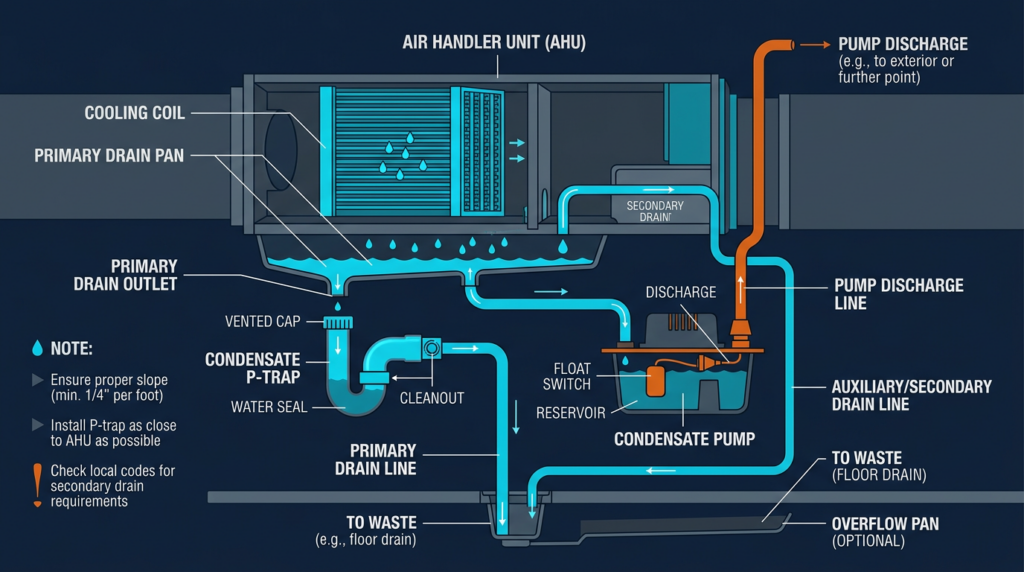
A complete condensate drain system consists of several interconnected components:
- Drip pan (condensate pan): Positioned directly beneath the evaporator coil, this tray collects falling condensate. Drip pans are manufactured from galvanized steel, stainless steel, polymer composites, or molded plastic. They must slope a minimum of 1/8 inch toward the drain outlet. Units installed in attics or above finished ceilings should include a secondary auxiliary drain pan as a backup safety measure, typically required by building codes such as the International Mechanical Code (IMC) Section 307.2.3.
- Drain line: Most residential systems use 3/4-inch PVC or CPVC pipe, though larger commercial systems may require 1-inch or larger lines. The drain line must slope at a minimum of 1/4 inch per foot toward the termination point. Proper pipe supports every 4 to 6 feet prevent sagging that creates low spots where water pools and biofilm accumulates. Outdoor sections exposed to sunlight should use UV-resistant materials or be shielded to prevent degradation.
- Drain termination: The drain line exits to the building exterior, connects to a plumbing drain through a proper air gap (required by most plumbing codes to prevent backflow), or empties into a condensate pump reservoir. Termination points should include a screen or mesh to prevent pest entry.
- Condensate pump: When gravity drainage is not possible, such as in basement installations, a condensate pump lifts the water to a suitable drain or exterior discharge point. These pumps use a float switch to activate a small motor and impeller, with most residential models capable of lifting water 15 to 20 feet vertically.
Condensate Production Rates
The volume of condensate a system produces depends directly on humidity levels, cooling load, and system runtime. Under average conditions, a residential air conditioner generates roughly 1 to 3 gallons of condensate per ton of cooling capacity per day. In hot, humid climates like the Gulf Coast states, production can exceed 5 gallons per ton per day during peak summer conditions. A standard 3-ton system in Houston, Texas, may produce 9 to 15 gallons of water daily. These volumes make it clear why a functioning drain system is not optional but essential.
Causes of Condensate Drain Problems
Clogs
Blockages are the single most common condensate drain problem and account for the majority of water damage claims related to HVAC systems.
- Slime and algae growth: The warm, damp, and dark interior of a condensate drain line creates an ideal habitat for bacteria, algae, and fungi. These organisms form a gelatinous biofilm that coats the interior of the drain pan and pipe walls. Over time, the biofilm thickens and traps additional organic matter, eventually forming a plug that blocks water flow entirely. Research published in the International Journal of Refrigeration has confirmed that biofilm formation accelerates significantly when drain pan temperatures remain between 68°F and 86°F, the exact range found in most residential systems during cooling season.
- Debris accumulation: Dust, pollen, pet hair, insect remains, and other airborne particles settle on the evaporator coil and wash into the drain pan with condensate. Poor air filter maintenance dramatically increases debris levels. A clogged or undersized filter allows particulate matter to bypass the filtration system and deposit directly on the coil and pan surfaces.
- Mineral buildup: In regions with hard water, calcium and magnesium deposits can form scale inside the drain pan and line. While condensate itself is relatively pure distilled water, mineral-laden dust and evaporative concentration of dissolved solids near the drain opening contribute to scale formation over time. Older metal drip pans also shed corrosion products that add to the accumulation.
- Improper installation: Drain lines installed without adequate slope, with sharp bends or kinks, or with insufficient diameter restrict flow from the start. These installation defects may not cause immediate problems but create chronic weak points where blockages develop more readily.
Pan Problems
The condensate pan itself is a frequent source of trouble:
- Cracks and corrosion: Plastic pans become brittle with age and UV exposure, developing hairline cracks that leak water onto surrounding surfaces. Metal pans corrode over time, especially when standing water remains in contact with bare steel. Impact damage from tools during service visits is another common cause of pan failure.
- Standing water: An uneven pan surface, inadequate slope, or partial drain blockage allows water to sit in the pan between cooling cycles. Even a thin layer of stagnant water promotes rapid biofilm growth and accelerates corrosion.
- Pan overflow: A complete drain blockage combined with continued system operation results in pan overflow, sending water into ductwork, ceilings, walls, and flooring.
Pump Problems
Systems that rely on condensate pumps introduce additional failure points. Motor burnout, impeller damage, and float switch malfunction can all stop the pump from operating. Debris clogs the pump intake and discharge lines. Pumps installed in locations with extreme temperature exposure experience shortened lifespans. A failed condensate pump causes the same overflow damage as a blocked drain line.
Environmental Factors
High ambient humidity increases condensate volume and accelerates biological growth. Geographic regions with consistently humid climates or hard water face more frequent drain issues. Poor indoor air quality from construction dust, renovation activities, or inadequate filtration compounds debris accumulation in the drain system.
Clearing Condensate Drain Blockages
Safety Precautions
Before performing any work on the condensate drain system, shut off the HVAC system at the thermostat and the electrical disconnect. Wear gloves and eye protection when handling cleaning solutions or working near standing water that may contain bacteria and mold. Dispose of cleaning chemicals according to local regulations.
DIY Methods for Homeowners
- Wet/dry vacuum: Connect a wet/dry vacuum to the outdoor end of the drain line, creating a tight seal with a rag or rubber coupling. Run the vacuum for 2 to 3 minutes to suction out the blockage. This method is often the most effective first step and avoids introducing any chemicals into the system.
- Hot water flush: Pour hot (not boiling) water slowly into the drain pan or the drain line access point. The heat helps dissolve organic slime and loosen debris. Use this method only on PVC or CPVC drain lines, as thermal shock can stress soldered joints in metal piping.
- Vinegar solution: Mix equal parts white distilled vinegar and warm water. Pour 1 cup into the drain pan or the top of the drain line through the access point. Allow it to sit for 30 minutes, then flush with clean water. Repeat monthly during cooling season to inhibit algae and biofilm growth.
- Flexible brush or pipe cleaner: Insert a flexible wire brush or long pipe cleaner into the drain line to physically dislodge material. Work carefully to avoid cracking fittings or puncturing the pipe. This works best for blockages near accessible points.
Professional Techniques for HVAC Technicians
- Nitrogen blow-out: Using dry nitrogen with a pressure regulator set to no more than 50 psi, technicians can clear stubborn blockages by blowing them out through the drain termination. Always use a regulator and never substitute shop compressed air, which contains oil and moisture that contaminate the system and can exceed safe pressures.
- Specialized drain cleaning tools: Flexible drain snakes and miniature augers designed for HVAC drain lines reach blockages deep within the pipe run. Video inspection cameras allow technicians to locate and identify the exact nature of a blockage before selecting a clearing method.
- EPA-registered chemical cleaners: Professional-grade biocides and enzymatic drain treatments formulated specifically for HVAC systems break down organic blockages without damaging PVC, CPVC, or metal components. Always follow manufacturer instructions, use appropriate PPE, and flush the system thoroughly after application. Avoid household drain cleaners containing sodium hydroxide or sulfuric acid, which corrode drain components and release harmful fumes into the air stream.
- Condensate pump service: Test the pump by manually lifting the float switch. Inspect and clean the reservoir, intake screen, and discharge line. Replace pumps that show signs of motor failure or persistent float switch malfunction.
Addressing Pan Issues
Clean the drain pan thoroughly using a stiff brush and a mild detergent or vinegar solution. Inspect for cracks, corrosion, and proper slope. Small cracks in plastic pans can sometimes be sealed with waterproof epoxy as a temporary repair, but replacement is the only reliable long-term solution. Corroded metal pans should be replaced immediately.
Prevention Strategies
Regular Maintenance Schedule
- Monthly: Flush the drain line with 1 cup of vinegar solution or clean water during cooling season. Visually inspect the drain pan and drain termination point for signs of blockage or overflow.
- Quarterly: Clean the drain pan surface and check drain line connections for leaks or loose fittings.
- Annually: Schedule a professional inspection that includes thorough drain system cleaning, pump testing (if applicable), and verification of proper slope and flow.
- Ongoing: Replace or clean air filters every 30 to 90 days, depending on filter type and environmental conditions. Clean filters are the first line of defense against debris accumulation in the evaporator coil and drain pan.
Preventative Products
- Drain pan tablets and strips: Slow-release biocide tablets placed in the drain pan inhibit algae and slime growth for 1 to 6 months, depending on the product. Look for EPA-registered products that are compatible with your drain pan material.
- Automatic drain line cleaners: These devices periodically inject a measured dose of biocide or cleaning solution into the drain line on a programmable schedule.
- UV germicidal lights: Installed inside the air handler near the evaporator coil and drain pan, UV-C lights kill bacteria, mold spores, and algae before they colonize the drain system. These lights also improve overall indoor air quality.
System Modifications
- Condensate overflow switch: Also called a float switch or wet switch, this device shuts off the HVAC system if water rises above a safe level in the drain pan. Many jurisdictions now require overflow switches on systems installed in attics or above finished spaces. This is a low-cost safeguard that prevents catastrophic water damage.
- Clean-out ports: Installing T-fittings with removable caps at strategic points along the drain line provides easy access for flushing and inspection without disassembling the piping.
- P-traps: A properly installed P-trap on the drain line prevents sewer gases or conditioned air from being drawn back through the drain. The trap must be sized and located correctly relative to the unit’s negative or positive pressure zone to function properly.
- Upsized drain lines: Replacing a 3/4-inch drain line with a 1-inch line provides additional capacity and reduces the likelihood of complete blockage.
Common Misconceptions
- “The condensate drain only needs attention once a year.” Monthly visual inspections and periodic flushing during cooling season are essential. Annual service alone is not frequent enough to prevent mid-season blockages in humid climates.
- “Any drain cleaner will work.” Household drain cleaners containing caustic chemicals damage PVC pipe, corrode metal components, and release toxic fumes into the air distribution system. Only use products specifically formulated for HVAC condensate systems.
- “A little standing water in the pan is normal.” While a small amount of water in a properly trapped pan is expected, persistent standing water in the pan itself indicates a drainage problem that promotes biological growth and corrosion.
- “New systems don’t have drain problems.” Biofilm growth can begin within weeks of installation. Brand-new systems are just as susceptible to drain clogs as older equipment, especially when preventative maintenance is neglected.
Troubleshooting Scenarios
- Water leaking from the ceiling near the air handler: Check for a blocked primary drain line first. Inspect the auxiliary drain pan for water, which confirms primary drain failure. Clear the blockage using vacuum or nitrogen, verify drain flow, and inspect the ceiling for moisture damage requiring remediation.
- System not cooling properly or cycling off frequently: A condensate overflow switch will shut down the system when the drain pan fills. Check the pan for standing water, clear the drain, and reset the system. Cooling performance should return to normal once drainage is restored.
- Musty odor from supply vents: Stagnant water and biofilm in the drain pan and line produce musty, mildew-like odors that the blower distributes throughout the home. Clean the pan and drain line thoroughly, treat with an EPA-registered biocide, and consider installing a UV light to prevent recurrence.
- Unexplained increase in energy bills: A partially blocked drain can cause ice formation on the evaporator coil by trapping moisture against the coil surface. This reduces heat transfer efficiency, forces longer run times, and increases energy consumption. Clearing the drain and verifying proper airflow across the coil resolves the issue.
Key Takeaways
Condensate drain problems are among the most preventable issues in HVAC service. The combination of biological growth, debris accumulation, and mineral deposits creates blockages that lead to water damage, mold contamination, and system shutdowns. Homeowners can significantly reduce their risk by maintaining clean air filters, flushing the drain line monthly with a vinegar solution, and installing a condensate overflow switch as a safety backup. HVAC technicians should include thorough drain system inspection and cleaning in every maintenance visit, verify proper slope and flow, and recommend system modifications like clean-out ports and UV lights where appropriate. Proactive attention to the condensate drain system protects building structures, preserves indoor air quality, and keeps cooling systems running at peak efficiency throughout the season.