Running a business means you’ve got a lot on your plate. From managing staff to serving your customers, the last thing you want to worry about is whether your air conditioning system is going to quit on the hottest day of the year. But let me tell you, when it does, it becomes everybody’s number one problem. I’ve seen it firsthand. I remember a few years back, I got a call from a busy diner in downtown Tampa, Florida, right in the middle of summer. Their commercial AC unit had sputtered out. The owner was losing customers by the minute, and his kitchen staff were baking. Getting that unit fixed fast wasn’t just about comfort; it was about keeping the doors open and payroll covered. A reliable commercial AC unit isn’t a luxury; it’s a core piece of your business infrastructure.
The truth is, your commercial air conditioning system is a workhorse. It’s expected to maintain comfortable temperatures, manage humidity, and ensure good air quality, often for long hours, day after day. This isn’t just about keeping people cool; it’s about productivity for your employees, a pleasant experience for your customers, and protecting sensitive equipment. When you’re dealing with the demands of a commercial space, you need an HVAC solution that’s built for the job, not just one adapted from a residential setup. That means understanding the specific needs of your building and choosing the right equipment to meet them head-on. Don’t underestimate the impact a well-maintained and properly sized system can have on your bottom line.
Key Highlights
- Commercial vs. Residential: Commercial AC units are designed for larger spaces, different occupancy loads, and more complex zoning and ventilation needs than residential systems.
- Variety of Systems: Businesses have options like rooftop package units, split systems, VRF/VRV, and chillers, each suited for different building types and requirements.
- Energy Efficiency is Key: Modern commercial HVAC systems offer significant energy savings through advanced technology, leading to lower operating costs.
- Critical Sizing: Proper sizing of a commercial AC unit is paramount for optimal performance, efficiency, and comfort; undersized or oversized units cause problems.
- Professional Installation: Due to complexity, commercial AC installation and replacement should always be handled by experienced, certified HVAC professionals.
- Preventative Maintenance Pays Off: Regular, scheduled maintenance extends unit lifespan, prevents breakdowns, improves efficiency, and maintains indoor air quality.
Understanding Commercial Air Conditioning Systems
When we talk about commercial air conditioning systems, we’re discussing something fundamentally different from what you’d find in a typical home. The scale, complexity, and demands placed on these units are significantly higher. Residential systems are generally designed to cool a single zone or a few zones within a relatively small, consistent occupancy space. Commercial buildings, on the other hand, might have dozens of zones, varying occupancy levels throughout the day, specialized equipment generating heat, and strict indoor air quality (IAQ) requirements.
A commercial HVAC system isn’t just about cooling air. It’s an integrated solution that handles cooling, heating, ventilation, and humidity control. For instance, an office building might need different temperatures in server rooms compared to executive offices or common areas. A retail store might need robust ventilation to handle foot traffic and maintain air freshness. Restaurants have unique challenges with kitchen heat and exhaust. All these factors contribute to the “load” on a system, which dictates its size and design.
The components themselves are often much larger and more robust. You’ll find commercial units measured in “tons” of cooling capacity, where one ton equals 12,000 BTUs per hour. A small commercial space might need a 5-ton unit, while a large office building could require hundreds of tons of cooling distributed across multiple units or a central plant. These systems often incorporate sophisticated controls, building management systems (BMS), and advanced filtration to ensure precise environmental control and occupant comfort. Understanding these distinctions is the first step toward making informed decisions for your business’s HVAC needs.
Types of Commercial AC Units for Businesses
There isn’t a one-size-fits-all solution when it comes to commercial air conditioning. Different businesses, building types, and budgets call for different approaches. Knowing the main types of systems available helps you understand what might be the best fit for your operation.
Rooftop Package Units
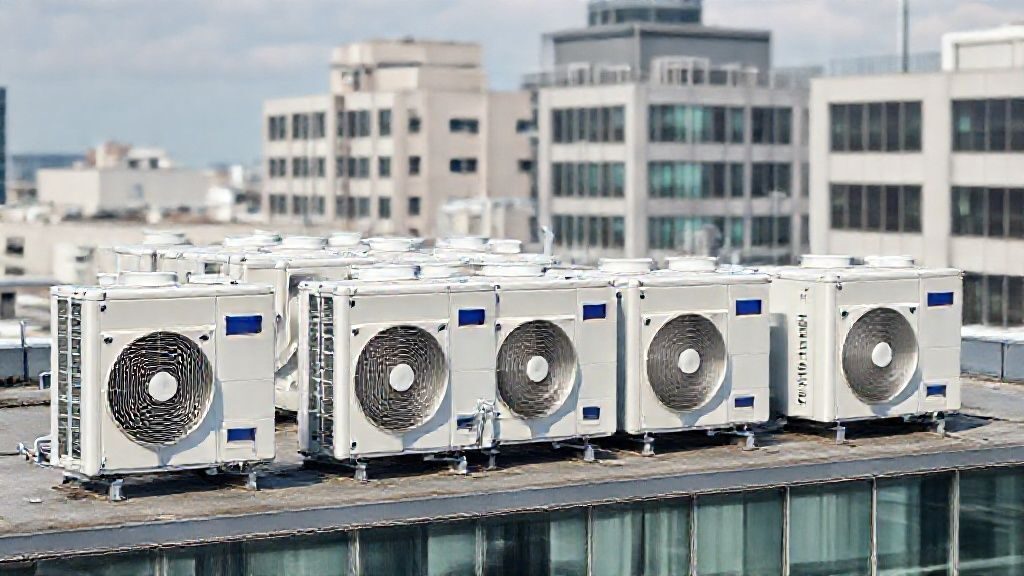
These are probably what most people picture when they think of commercial AC. Rooftop package units are self-contained systems where all components—evaporator, condenser, and compressor—are housed in a single cabinet, typically installed on the roof of a commercial building. They’re popular for their space-saving design, ease of installation (compared to multi-component systems), and relatively straightforward maintenance access. They connect to ductwork that distributes conditioned air throughout the building. Rooftop units are common for retail stores, warehouses, light industrial spaces, and many office buildings. They come in a wide range of sizes and configurations.
Split Systems
Similar to residential units but much larger, commercial split systems have an outdoor condensing unit and an indoor air handler unit. These two components are “split” and connected by refrigerant lines and electrical wiring. This setup offers flexibility in terms of where the indoor unit can be placed, which might be beneficial if roof space is limited or if the building design makes a rooftop unit impractical. They are effective for many small to medium-sized commercial applications, like smaller offices, medical clinics, or specific zones within a larger building.
VRF/VRV Systems (Variable Refrigerant Flow/Volume)
VRF or VRV (Variable Refrigerant Volume, a proprietary term by Daikin) systems are highly advanced, incredibly efficient solutions. They use a single outdoor condensing unit connected to multiple indoor units via a common refrigerant line. What makes them stand out is their ability to vary the refrigerant flow to each indoor unit, allowing for precise, individualized temperature control in multiple zones simultaneously. Even better, some VRF systems can provide simultaneous heating and cooling in different zones, recovering heat from one area to warm another. This leads to significant energy savings and superior comfort. They are ideal for larger office buildings, hotels, schools, and any space requiring diverse temperature control across different areas.
Chillers and Cooling Towers
For very large commercial or industrial buildings, campuses, or facilities with substantial cooling loads, chillers are often the go-to solution. Chillers cool water (or a glycol solution), which is then circulated through pipes to air handlers located throughout the building. These air handlers use the chilled water to cool and dehumidify the air. Cooling towers are often paired with chillers to dissipate the heat removed from the building into the atmosphere. This is a complex but highly efficient way to cool vast spaces, commonly found in high-rise office buildings, hospitals, manufacturing plants, and large data centers.
Ductless Mini-Split Systems
While often associated with residential use, ductless mini-splits are also valuable for specific commercial applications. They consist of an outdoor condenser unit connected to one or more indoor air handler units, but without requiring extensive ductwork. This makes them perfect for smaller commercial spaces, retrofitting older buildings without existing ducts, or providing supplemental cooling/heating to specific zones or server rooms that require independent temperature control. They offer flexibility, energy efficiency, and quiet operation.
Each of these systems has its place, and choosing the right one requires a thorough understanding of your building’s specifics and operational needs. It’s not just about raw cooling power; it’s about efficiency, control, and long-term reliability.
Benefits of Modern Commercial HVAC Solutions
Investing in a modern, well-designed commercial HVAC system offers far more than just comfortable temperatures. These benefits directly impact your business’s operational efficiency, finances, and the well-being of your occupants.
Significant Energy Efficiency and Cost Savings
This is often the primary driver for businesses to upgrade or carefully choose new commercial AC units. Modern systems incorporate technologies like variable speed compressors, intelligent controls, and improved heat exchangers. These innovations allow the system to precisely match cooling output to demand, avoiding the wasteful “all-on” or “all-off” cycling of older units. Higher SEER, EER, and IPLV ratings translate directly into lower utility bills, which, over the lifespan of a large commercial unit, can amount to substantial savings. Thinking about energy savings in HVAC can also extend to other areas. For example, some businesses even use specialized systems like a heat pump for pool heating to keep operational costs down for amenities.
Improved Indoor Air Quality (IAQ)
Good indoor air quality is no longer a luxury; it’s a necessity, especially in today’s environment. Modern commercial HVAC systems are designed with advanced filtration capabilities, often exceeding basic residential standards. They can integrate with UV lights, specialized purifiers, and sophisticated ventilation systems to remove pollutants, allergens, pathogens, and odors from the air. This leads to a healthier environment for employees and customers, potentially reducing sick days and enhancing comfort. Proper ventilation also helps manage humidity, preventing mold and mildew growth.
Enhanced Comfort and Productivity
A consistently comfortable environment directly impacts productivity and satisfaction. Employees who aren’t battling extreme temperatures or stuffy air can focus better on their work. Customers in a retail store or restaurant are more likely to stay longer and have a positive experience if they are comfortable. Modern systems offer precise temperature control, better humidity management, and uniform air distribution, eliminating hot and cold spots that can plague older systems. This creates a more pleasant and productive atmosphere for everyone.
Increased Reliability and Longevity
New commercial AC units are built with durable components and advanced diagnostics. When properly installed and maintained, they are designed to handle continuous operation with greater reliability than older models. This means fewer breakdowns, less downtime for your business, and lower repair costs over time. The longer lifespan of a well-maintained modern unit also means you get a better return on your initial investment.
Smart Controls and Automation
Today’s commercial HVAC systems can be integrated with sophisticated building management systems (BMS) or smart thermostats. These controls allow for remote monitoring and adjustments, scheduled operation, energy usage tracking, and even predictive maintenance alerts. This level of automation provides unparalleled control over your building’s climate, optimizing performance and reducing manual intervention. You can tailor settings to occupancy patterns, weather forecasts, and specific zone requirements, all from a central interface.
Reduced Environmental Impact
With increasing awareness of environmental responsibility, modern HVAC systems play a role in sustainability. Their higher energy efficiency means less energy consumption and a reduced carbon footprint. Furthermore, newer units often use refrigerants with lower global warming potential (GWP), aligning with evolving environmental regulations. Businesses that prioritize green initiatives can showcase their commitment through energy-efficient HVAC solutions.
These benefits combine to make a compelling case for carefully selecting and maintaining your commercial air conditioning units. It’s an investment that pays dividends in comfort, efficiency, and operational stability.
Key Factors When Choosing a Commercial AC Unit
Selecting the right commercial AC unit isn’t something you want to guess at. It requires careful consideration of several critical factors specific to your business and building. Getting this right upfront will save you headaches and money down the road.
Accurate Sizing (Tonnage)
This is, without a doubt, the most important factor. An undersized unit won’t be able to cool your space effectively, leading to continuous running, high energy bills, and premature wear. An oversized unit will cycle on and off too frequently (short-cycling), which also wastes energy, doesn’t adequately dehumidify the air, and shortens the system’s lifespan. Sizing isn’t just about square footage. It accounts for:
- Building Envelope: Insulation levels, window types and quantity, roof materials.
- Occupancy: The number of people typically in the space, as humans generate heat.
- Internal Heat Load: Lighting, computers, machinery, cooking equipment, and other heat-generating appliances.
- Climate: Average temperatures, humidity levels in your geographic location.
- Ceiling Height: Taller ceilings mean more air volume to condition.
- Zoning Requirements: If different areas need different temperatures.
A professional HVAC contractor will perform a detailed load calculation (often using Manual J or similar methodologies) to determine the exact tonnage required. You can even find calculators online that help estimate capacity needs by inputting details like square footage, though these are approximations. For example, some tools ask for general area inputs like 2200 1500 to give a rough estimate of tonnage, but a professional assessment is always best for commercial applications.
Energy Efficiency Ratings (SEER, EER, IPLV)
Understand the efficiency ratings:
- SEER (Seasonal Energy Efficiency Ratio): Primarily for residential, but often referenced. Measures cooling output during a typical cooling season divided by total electric energy input during the same period.
- EER (Energy Efficiency Ratio): Measures cooling output divided by electric energy input at a single, specific operating condition (typically 95°F ambient temperature).
- IPLV (Integrated Part Load Value): This is particularly important for commercial units. It measures efficiency at various load conditions, reflecting how a commercial unit operates most of the time (not just at peak capacity). A higher IPLV indicates better part-load efficiency, which directly translates to significant energy savings for units that aren’t always running at 100% capacity.
Always aim for units with higher efficiency ratings that make sense for your budget and projected energy savings.
Budget: Upfront vs. Operational Costs
Don’t just look at the purchase price. A cheaper unit might have lower upfront costs but higher operational costs due to poor efficiency, leading to higher utility bills and more frequent repairs over its lifespan. Conversely, a more expensive, high-efficiency system might have a higher initial investment but deliver substantial long-term savings. Factor in installation costs, maintenance agreements, and projected energy usage when evaluating your total cost of ownership.
Building Type & Layout
Is your building an open-plan office, a series of small retail shops, a warehouse, or a multi-story complex? The physical layout dictates the best type of system. Rooftop units are excellent for single-story buildings. VRF systems excel in multi-zone environments. Buildings with specific aesthetic concerns might prefer systems that keep outdoor units out of sight or minimize noise.
Occupancy Levels and Fluctuations
A busy restaurant has vastly different occupancy patterns and heat loads than a law office. Some spaces, like event halls, have highly variable occupancy. Your HVAC system needs to be capable of handling these peaks and valleys effectively without excessive energy use. Systems with variable speed technology or advanced zoning can adapt better to changing occupancy.
Noise Levels
In offices, libraries, or retail environments, quiet operation is crucial. Some commercial units, especially outdoor condensers, can be quite noisy. Check sound ratings (decibels) and consider placement to minimize disturbance to your staff and customers.
Indoor Air Quality (IAQ) Requirements
Depending on your business, you might have specific IAQ needs. Medical facilities, schools, or businesses handling chemicals might require advanced filtration, ventilation, or specialized air purification systems. Ensure the chosen system can accommodate these requirements, possibly with add-on components.
Maintenance & Accessibility
Consider how easy the unit will be to access for routine maintenance and repairs. Rooftop units are often simpler for technicians to service. Systems with complex indoor components might require more intricate planning for maintenance. Ease of access impacts maintenance costs and how quickly issues can be resolved.
Refrigerant Type
Be aware of the type of refrigerant used. Regulations are continually changing to phase out refrigerants with high global warming potential. Choosing a unit that uses newer, environmentally friendlier refrigerants can future-proof your investment and ensure compliance with upcoming standards.
By thoroughly evaluating these factors with a qualified HVAC professional, you can select a commercial AC unit that not only meets your current needs but also serves your business efficiently and reliably for years to come. This strategic investment in best hvac solutions truly matters.
Professional Commercial AC Installation & Replacement
When it comes to commercial air conditioning units, proper installation isn’t just important; it’s absolutely critical. Unlike a residential AC where a minor installation flaw might just mean higher bills, an incorrect commercial installation can lead to catastrophic system failure, voided warranties, significant downtime for your business, and even safety hazards. This is definitely not a DIY job, or even a job for a general contractor without specialized HVAC expertise.
Why Professional Installation is Non-Negotiable
A professional HVAC contractor brings a wealth of knowledge and experience to the table. They understand the intricacies of large-scale systems, complex ductwork, electrical requirements, and refrigerant handling. Here’s why you need experts:
- Accurate Sizing and Design: As discussed, proper sizing is paramount. Professionals perform detailed load calculations to ensure the unit is perfectly matched to your building’s specific needs. They also design the ductwork (or verify existing ductwork) to ensure optimal airflow and distribution, which is key for both efficiency and comfort. Incorrect duct sizing, for instance, can drastically reduce efficiency and system performance. You might even wonder what size main duct to use for heat pump installations if you’re looking into those, and a pro can calculate that precisely.
- Code Compliance: Commercial HVAC installations must adhere to a myriad of local, state, and national building codes, electrical codes, and environmental regulations. Professionals are up-to-date on these requirements and ensure your installation meets all necessary standards, avoiding costly fines or mandates for rework.
- Safety: Working with large electrical loads, heavy equipment (especially rooftop units), and refrigerants requires specialized training and safety protocols. Professional installers have the tools, rigging equipment, and expertise to perform the job safely for themselves and your property.
- Optimal Performance and Efficiency: Proper installation ensures that all components are correctly connected, calibrated, and charged. This includes precise refrigerant charging, correct wiring, secure duct connections, and proper drainage. An expertly installed system will operate at its peak efficiency, delivering the expected comfort and energy savings.
- Warranty Protection: Most manufacturers’ warranties for commercial AC units require professional installation to be valid. Attempting to install it yourself or using an unqualified contractor can void your warranty, leaving you exposed to full repair or replacement costs if something goes wrong.
- System Integration: Commercial HVAC often integrates with building management systems, fire suppression systems, and other building controls. Professionals ensure seamless integration and proper communication between these complex systems.
The Replacement Process
Replacing an existing commercial AC unit involves more than just swapping out old for new. It’s an opportunity to improve your system. A professional will:
- Assess Existing Infrastructure: Evaluate the condition of existing ductwork, electrical service, and mounting pads. Sometimes, upgrades are necessary to accommodate a newer, more efficient unit.
- Careful Removal: Safely disconnect and remove the old unit, ensuring proper disposal of refrigerants and other materials in an environmentally responsible manner.
- Precision Installation: Install the new unit, making all necessary electrical, refrigerant, and duct connections. This might involve crane services for rooftop units.
- Testing and Commissioning: After installation, the system undergoes rigorous testing and commissioning. This involves checking airflow, temperature differentials, refrigerant levels, controls, and overall operation to ensure everything is working perfectly before handover.
- Training: Provide training on the new system’s controls and operational aspects to your facility managers or designated personnel.
Choosing a reputable, experienced HVAC contractor for installation or replacement is perhaps the most important decision you’ll make regarding your commercial AC unit. It ensures your investment performs as expected and provides reliable comfort for years to come. For top-tier services, always look for the best hvac professionals in your area.
Essential Maintenance for Commercial Air Conditioners
You wouldn’t run a delivery truck for years without an oil change, would you? The same logic applies to your commercial air conditioning unit. It’s a complex piece of machinery that works tirelessly, often under extreme conditions. Neglecting maintenance is a surefire way to shorten its lifespan, increase energy bills, and invite expensive, inconvenient breakdowns. Regular, preventative maintenance is not an expense; it’s an investment that pays for itself many times over.
The Benefits of a Preventative Maintenance Plan
- Extended Equipment Lifespan: Just like any machine, consistent care reduces wear and tear, allowing your unit to last longer. This delays the need for costly replacements.
- Improved Energy Efficiency: A clean, well-tuned system doesn’t have to work as hard to achieve desired temperatures. This means lower energy consumption and significant savings on your utility bills.
- Fewer Costly Breakdowns: Technicians can spot potential issues during routine checks and address them before they escalate into major failures, often preventing inconvenient downtime for your business.
- Enhanced Indoor Air Quality: Regular filter changes and coil cleaning contribute to cleaner air, reducing allergens and pollutants in your commercial space.
- Maintained Warranty: Many commercial AC warranties require proof of regular professional maintenance to remain valid.
- Optimal Performance: A well-maintained unit provides consistent, reliable cooling and heating, ensuring comfort for your employees and customers.
Key Components of Commercial AC Maintenance
- Filter Replacement: This is fundamental. Dirty filters restrict airflow, reduce efficiency, and degrade indoor air quality. Commercial filters are often larger and require specific types (e.g., MERV ratings) depending on the system and IAQ needs.
- Coil Cleaning: Evaporator and condenser coils can accumulate dirt, dust, and grime, which acts as an insulating layer, reducing heat transfer efficiency. Professional cleaning restores their ability to exchange heat effectively.
- Refrigerant Level Check: Low refrigerant levels indicate a leak and can severely impact cooling capacity and efficiency. Technicians will check levels and identify/repair leaks if necessary, ensuring the system is properly charged.
- Electrical Connections Inspection: Loose or corroded electrical connections can be a fire hazard and lead to system malfunctions. All wiring and connections are inspected and tightened as needed.
- Lubrication of Moving Parts: Motors and fans have bearings that require lubrication to prevent friction and premature wear.
- Drain Pan and Condensate Line Cleaning: Clogged condensate lines can lead to water leaks, humidity issues, and mold growth. Cleaning ensures proper drainage.
- Fan and Motor Inspection: Checking fan blades for damage, ensuring motors are running smoothly, and belts are in good condition helps maintain airflow and prevent overheating.
- Ductwork Inspection: Leaks or damage in ductwork can lead to significant energy loss and uneven cooling. Technicians can identify and seal these issues.
- Controls and Thermostat Calibration: Ensuring thermostats and control systems are accurate and functioning correctly is vital for maintaining desired temperatures and system efficiency.
- Operational Performance Test: A technician will run the unit through its paces, checking temperatures, pressures, and overall operation to confirm it’s performing within manufacturer specifications.
Most businesses opt for a professional preventative maintenance agreement, typically with bi-annual or quarterly visits, depending on the system’s size, age, and usage. This proactive approach ensures your commercial AC unit runs smoothly, efficiently, and reliably, giving you peace of mind to focus on your core business operations. Skipping this step is a false economy that almost always ends up costing more in the long run.
Why Partner with HVAC Experts for Your Business
Just like you wouldn’t trust your accounting to someone without a CPA, your commercial HVAC system requires specialized expertise. Partnering with a dedicated team of HVAC professionals isn’t just about getting a repair done; it’s about forming a relationship that ensures your business stays comfortable, efficient, and operational year-round. We’re not just contractors; we’re problem solvers and long-term partners in your building’s climate control.
Deep Expertise and Experience
HVAC experts specializing in commercial systems have specific training and years of field experience dealing with the unique challenges of business environments. They understand the complex schematics, diverse equipment types (from rooftop units to chillers), and sophisticated control systems that differ significantly from residential setups. This expertise allows them to accurately diagnose problems, recommend the most effective solutions, and perform installations and repairs efficiently and correctly the first time.
Customized Solutions, Not One-Size-Fits-All
Every commercial building has its own unique heating and cooling profile. A reputable HVAC partner will take the time to understand your specific needs—your building’s layout, occupancy patterns, operational hours, budget, and future growth plans. They won’t just sell you a box; they’ll design and implement a tailored solution that optimizes comfort, energy efficiency, and cost-effectiveness for your particular business, whether you’re running a small retail shop or a large manufacturing facility.
Reliable Emergency Services
When a commercial AC unit goes down, it’s often an emergency. Lost productivity, uncomfortable customers, potential damage to sensitive equipment – the stakes are high. Partnering with an HVAC expert means you have access to prompt, reliable emergency services. They understand the urgency of commercial breakdowns and have the resources and personnel to get your system back online quickly, minimizing disruption to your business.
Ensuring Code Compliance and Safety
Commercial HVAC systems are subject to rigorous building codes, safety regulations, and environmental standards. An experienced HVAC partner stays current with all these requirements, ensuring that all installations, repairs, and maintenance work comply fully. This protects your business from potential legal issues, fines, and most importantly, ensures the safety of your employees and customers.
Long-Term Value and Peace of Mind
A professional HVAC partnership extends beyond a single service call. It typically includes preventative maintenance plans designed to maximize the lifespan and efficiency of your equipment. This proactive approach not only saves you money on energy bills and repairs but also gives you peace of mind, knowing that your critical climate control system is being regularly monitored and expertly cared for. You can focus on running your business, confident that your HVAC is in capable hands.
Choosing the right HVAC partner is a strategic business decision. It’s about ensuring the comfort, efficiency, and longevity of your commercial space. When you’re ready to discuss your commercial AC needs, don’t hesitate to contact us for a quote. We’re here to help.
Frequently Asked Questions About Commercial AC
How often should commercial AC filters be changed?
Generally, commercial AC filters should be inspected monthly and replaced every 1 to 3 months. However, this can vary significantly based on several factors: the type of business (e.g., dusty workshop vs. clean office), the level of foot traffic, the operating hours of the system, and environmental factors like local pollen or construction dust. High-traffic areas or environments with more airborne contaminants will require more frequent changes. Your HVAC technician can recommend a specific schedule based on your building’s unique conditions.
What’s the typical lifespan of a commercial AC unit?
The lifespan of a commercial AC unit typically ranges from 15 to 20 years. However, several factors influence this, including the quality of the original installation, the unit’s operating hours (heavy use versus light use), the local climate, and most importantly, the consistency and quality of preventative maintenance. Units that receive regular, professional maintenance tend to last longer and operate more efficiently throughout their life.
Can I use a residential AC unit for a small business?
While tempting due to lower upfront costs, it’s generally not recommended to use a residential AC unit for a small business. Commercial spaces have different demands: typically longer operating hours, higher occupancy loads, greater internal heat gains from equipment, and often specific ventilation requirements. Residential units are not designed for this continuous, heavy-duty operation and will likely fail prematurely, leading to higher energy bills, frequent breakdowns, and inadequate cooling. It’s always best to invest in a commercial-grade unit, even for a small business, to ensure reliability and efficiency.
What’s the best temperature setting for a commercial space?
There isn’t one “best” temperature, as it can depend on the type of business, employee preferences, and customer comfort. However, a common recommendation for energy efficiency and general comfort during cooling season is between 72°F and 76°F (22°C to 24°C). During heating season, 68°F to 72°F (20°C to 22°C) is often suggested. Utilizing programmable thermostats or a building management system to adjust temperatures after hours or in unoccupied zones can lead to significant energy savings without sacrificing comfort during operating hours.
How can I improve my commercial building’s indoor air quality?
Improving indoor air quality (IAQ) involves several strategies:
- Regular Filter Changes: Use high-efficiency filters (e.g., MERV 8-13) and change them on schedule.
- Proper Ventilation: Ensure your HVAC system brings in sufficient fresh outdoor air and exhausts stale indoor air, meeting local ventilation codes.
- Duct Cleaning: Periodically clean your ductwork to remove dust, mold, and other contaminants.
- Humidity Control: Maintain indoor humidity levels between 30-60% to inhibit mold and mildew growth.
- UV-C Lights: Consider installing UV-C germicidal lights within the HVAC system to kill airborne pathogens.
- Source Control: Reduce indoor pollutants by using low-VOC products, ensuring proper exhaust for kitchens or chemical areas, and maintaining regular cleaning schedules.
A comprehensive IAQ assessment by an HVAC professional can help identify specific issues and recommend targeted solutions.
Final Thoughts
Navigating the world of commercial air conditioning units might seem complex, but with the right approach and the right partners, it doesn’t have to be a headache. What I’ve seen over my many years in this business is that making informed decisions upfront about your HVAC system is one of the smartest investments a business owner can make. It impacts your operational costs, the comfort and productivity of your staff, and the overall experience of your customers.
Don’t underestimate the value of a system that’s properly sized, expertly installed, and diligently maintained. It’s the backbone of your indoor environment. Cutting corners here often leads to bigger problems and more significant expenses down the road. Instead, look at your commercial AC as a long-term asset, one that, with the right care, will quietly and reliably keep your business thriving in comfort for years to come. If you’ve got questions, or you’re ready to take a closer look at your commercial HVAC needs, reach out to a professional. That’s what we’re here for.