Running a business means you’ve got a lot on your plate. One thing that often gets overlooked until it’s a problem is the HVAC system. But a comfortable environment isn’t just a nice-to-have; it’s essential for productivity, customer satisfaction, and even the longevity of your equipment. I’ve seen this firsthand over my decades in the field. From the scorching summers in Phoenix, where an inadequate AC system could literally shut down a server room, to the bitter winters in Minneapolis, where a failed furnace meant businesses had to send employees home, I’ve learned that commercial HVAC isn’t something you can cut corners on. It’s a vital part of your operational infrastructure.
My job has always been to help business owners understand their options and make smart decisions about their heating, ventilation, and air conditioning systems. These aren’t just bigger versions of what you have at home. Commercial units are complex, designed for heavier loads, longer operating hours, and often integrate with sophisticated building management systems. Getting it right, from installation to regular tune-ups, can save you a significant amount of money and hassle down the road. Let’s dig into what you need to know about these critical systems.
Key Highlights
- Commercial HVAC units are designed for heavy-duty, continuous operation in larger spaces.
- Common types include Rooftop Units (RTUs), Split Systems, Variable Refrigerant Flow (VRF), Chillers, and Boilers.
- Proper sizing is critical for efficiency and comfort; oversizing or undersizing leads to problems.
- Regular, proactive maintenance prevents costly breakdowns and extends system lifespan.
- Upgrading older systems can significantly reduce energy costs and improve indoor air quality.
- Working with experienced professionals ensures correct installation, repair, and optimal performance.
What Are Commercial HVAC Units?
When we talk about commercial HVAC units, we’re referring to the systems that control the climate in non-residential buildings. This includes everything from office buildings, retail stores, restaurants, and warehouses to schools and hospitals. Unlike residential units, which are typically designed for smaller spaces and less intensive use, commercial systems are built to handle much larger volumes of air, more demanding loads, and often operate almost continuously. They need to manage temperature, humidity, and air quality across expansive and sometimes complex floor plans.
The core functions remain the same as residential HVAC: heating, ventilation, and air conditioning. However, the scale and complexity are vastly different. Commercial units often feature more robust components, advanced controls, and specialized filtration systems to meet specific industry standards or occupant needs. For instance, a restaurant kitchen needs powerful ventilation to remove grease and odors, while a hospital requires meticulous air filtration to prevent the spread of airborne pathogens. Understanding these differences is the first step in making informed decisions for your business environment.
Key Types of Commercial HVAC Systems
The world of commercial HVAC offers a variety of systems, each with its own advantages and ideal applications. Knowing the basic types will help you understand what might be best for your specific building.
Rooftop Units (RTUs)
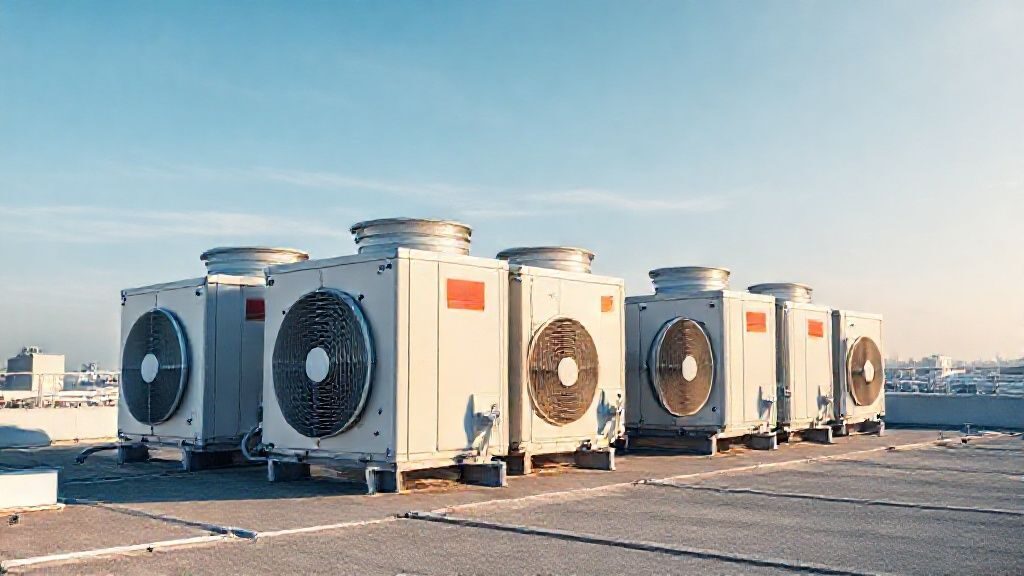
These are probably the most common commercial HVAC units you see, especially on single-story commercial buildings like strip malls or big-box stores. As the name suggests, they are installed on the roof. RTUs are self-contained, meaning all heating, cooling, and ventilation components are housed in one large cabinet. This design saves interior space, simplifies installation, and makes maintenance generally accessible. They’re robust and come in various capacities, making them versatile for many business types.
Split Systems
Just like residential split systems, commercial split systems separate the outdoor condensing unit from the indoor air handler. The outdoor unit contains the compressor and condenser coil, while the indoor unit, often placed in a mechanical room or ceiling plenum, contains the evaporator coil and fan. Refrigerant lines connect the two. Split systems offer flexibility in placement, as the indoor units can be distributed to zone different areas of a building. This can be beneficial for multi-tenant buildings or spaces with varying heating and cooling needs.
Variable Refrigerant Flow (VRF) Systems
VRF systems are a more advanced form of split system, offering incredibly precise temperature control and energy efficiency. They use a single outdoor condensing unit connected to multiple indoor units, each capable of independently heating or cooling a specific zone. What makes VRF unique is its ability to vary the refrigerant flow to each indoor unit, allowing for simultaneous heating in one zone and cooling in another. This is highly efficient for buildings with diverse occupant needs or sun exposure, such as hotels or large office complexes. While the initial investment can be higher, the long-term energy savings are often significant.
Chillers and Boilers
For very large buildings, like high-rises, hospitals, or manufacturing plants, chillers and boilers are often the backbone of the HVAC system. Chillers produce chilled water, which is then pumped through coils to cool the air. Boilers, on the other hand, generate hot water or steam for heating. These systems typically work in conjunction with air handlers and a network of pipes and ducts to distribute conditioned air throughout the building. They offer immense capacity and are designed for extreme demands. Maintaining these systems requires specialized expertise.
Geothermal HVAC Systems
While less common in existing commercial buildings, new constructions sometimes consider geothermal systems. These systems tap into the stable temperature of the earth to provide heating and cooling. A loop system is buried underground, circulating a fluid that absorbs or dissipates heat. Geothermal systems are incredibly energy-efficient and environmentally friendly, leading to substantial long-term operating cost savings, though the initial installation cost is significant due to the excavation involved.
Choosing the Right Commercial HVAC Unit for Your Business
Selecting the correct commercial HVAC unit is not a one-size-fits-all decision. It requires careful consideration of several factors unique to your business and building. Making the wrong choice can lead to discomfort, high energy bills, and premature system failure.
Building Size and Layout
The physical dimensions of your building are paramount. A small retail shop will have very different requirements than a multi-story office building or a large warehouse. Consider ceiling heights, the number of floors, and how the space is partitioned. Open-plan offices, for example, might benefit from a centralized system, while a building with many individual offices could do better with zoned control offered by split or VRF systems.
Occupancy Levels and Usage
How many people occupy your building and for how long? A call center with hundreds of employees working long shifts will generate a lot more body heat and demand more fresh air than a lightly occupied storage facility. Similarly, a restaurant with fluctuating customer traffic needs a system that can quickly adapt to changing loads. High occupancy means higher demand for ventilation and cooling.
Specific Business Needs and Processes
What kind of business do you operate? A data center requires constant, precise cooling to protect sensitive electronics, often with redundant systems. A laboratory might need specialized ventilation to handle fumes and maintain sterile environments. Retail spaces need comfortable temperatures to keep customers browsing, while industrial facilities might prioritize robust systems that can handle dusty or harsh conditions. Consider any specific temperature, humidity, or air quality requirements that are critical to your operations.
Energy Efficiency Goals and Budget
Energy costs are a significant operating expense for most businesses. Investing in a high-efficiency system, even if it has a higher upfront cost, can lead to substantial savings over the system’s lifespan. Look for units with high Seasonal Energy Efficiency Ratio (SEER) or Integrated Part Load Value (IPLV) ratings. Factor in your budget for both the initial purchase and long-term operating costs. Sometimes, the cheapest option upfront ends up being the most expensive in the long run.
Local Climate and Environmental Factors
The climate where your business is located plays a huge role. Do you experience extreme summers, harsh winters, or both? Humidity levels can also significantly impact comfort and system performance. Coastal areas might need systems that resist corrosion, while dusty regions might require enhanced filtration. Your system needs to be robust enough to handle the local weather extremes effectively and efficiently.
Commercial HVAC Installation & System Sizing
Proper installation and accurate system sizing are perhaps the two most critical factors determining the long-term performance, efficiency, and lifespan of your commercial HVAC unit. Get these wrong, and you’re set up for problems from day one.
Why Sizing Matters So Much
Many business owners assume bigger is always better, but that’s a common misconception in HVAC. An oversized system will cool or heat your space too quickly, then shut off (short cycling). This leads to:
- Poor Dehumidification: The system doesn’t run long enough to remove adequate moisture from the air, making the space feel clammy.
- Increased Wear and Tear: Frequent on/off cycles put stress on components, leading to more breakdowns and a shorter lifespan.
- Higher Energy Bills: Each start-up surge consumes a lot of power.
Conversely, an undersized system will struggle to reach desired temperatures, running constantly without relief. This also leads to:
- Inadequate Comfort: The space will always feel too hot or too cold.
- Higher Energy Bills: Constant operation consumes more power than an appropriately sized unit.
- Premature Failure: Continuous operation without sufficient capacity overworks the system components.
The Sizing Process
Accurate sizing requires a detailed load calculation. This isn’t just a simple rule of thumb based on square footage. A professional technician will consider a wide range of factors, including:
- Building Envelope: Insulation levels in walls, roof, and floor; window types and sizes; air leakage.
- Orientation: Which direction the building faces impacts sun exposure and heat gain.
- Internal Heat Loads: Number of occupants, heat-generating equipment (computers, kitchen appliances, lighting), and machinery.
- Local Climate Data: Average high and low temperatures, humidity levels.
- Ductwork Condition: Existing ductwork efficiency and sealing.
These calculations are complex and require specialized software and expertise. If you’re wondering about the rough estimates, you can get a general idea of air conditioner btu to square feet, but always defer to a professional assessment for your commercial space.
The Importance of Professional Installation
Once the right size and type of unit are selected, professional installation is non-negotiable. Commercial HVAC systems involve intricate electrical, plumbing, and ductwork connections. A shoddy installation can negate all the benefits of a high-efficiency unit and lead to significant issues down the line.
A qualified commercial HVAC installer will:
- Ensure all components are correctly connected and sealed.
- Properly size and install ductwork for optimal airflow.
- Calibrate controls and thermostats for precise operation.
- Perform commissioning to verify the system operates as designed.
- Adhere to all local building codes and safety regulations.
Don’t underestimate the impact of installation quality. It’s an investment that pays off in reliability and efficiency for years to come.
Essential Commercial HVAC Maintenance & Repair Services
Think of your commercial HVAC system like a fleet of vehicles for your business. You wouldn’t skip oil changes or ignore a warning light, would you? The same principle applies here. Regular maintenance is not just about fixing things when they break; it’s about preventing breakdowns and ensuring your system operates at peak efficiency.
Preventative Maintenance is Key
A solid preventative maintenance plan is the best defense against unexpected failures and costly repairs. These plans typically involve scheduled visits from a qualified technician, usually twice a year (spring for cooling, fall for heating), but sometimes more frequently depending on your system’s demands. During these visits, the technician will:
- Inspect and Clean Coils: Dirty coils reduce efficiency and can lead to compressor failure.
- Check Refrigerant Levels: Low refrigerant causes the system to work harder, decreasing efficiency and potentially damaging the compressor.
- Lubricate Moving Parts: Reduces friction, wear, and energy consumption.
- Inspect Electrical Connections: Loose connections can be a fire hazard and lead to system malfunctions.
- Test Thermostats and Controls: Ensure accurate temperature sensing and proper system response.
- Clean or Replace Air Filters: Crucial for maintaining indoor air quality and airflow. Clogged filters restrict airflow, making the system work harder.
- Inspect Ductwork: Check for leaks or damage that can lead to energy loss.
- Check Drains: Ensure condensate drains are clear to prevent water damage and mold growth.
- Assess Overall System Performance: Measure temperature differentials, airflow, and pressure.
This proactive approach helps identify minor issues before they escalate into major problems, extends the lifespan of your equipment, and maintains optimal energy efficiency. For comprehensive support, consider reaching out to a company that offers best hvac services, including robust maintenance plans.
When Repairs Are Necessary
Even with excellent maintenance, mechanical systems can sometimes falter. When a repair is needed, quick and accurate diagnosis is essential. Common commercial HVAC issues include:
- Refrigerant Leaks: Causes poor cooling and can be environmentally harmful.
- Compressor Failure: Often the most expensive component to replace, sometimes due to lack of maintenance.
- Fan Motor Problems: Affects airflow, leading to uneven temperatures.
- Electrical Malfunctions: Can cause intermittent operation or complete system shutdown.
- Thermostat or Control Issues: Incorrect temperature readings or faulty programming.
- Ductwork Problems: Leaks, blockages, or disconnections that reduce efficiency.
When you encounter an issue, it’s vital to call a commercial HVAC specialist immediately. They have the tools, parts, and experience to diagnose complex problems and perform repairs safely and effectively. Trying to fix a commercial system yourself can be dangerous and lead to further, more expensive damage.
Benefits of Upgrading Your Commercial HVAC System
Many businesses operate with older HVAC systems, often seeing them as a functional expense rather than an asset. However, upgrading your commercial HVAC unit can offer significant returns that go far beyond just providing heating and cooling.
Reduced Energy Consumption and Costs
This is often the primary driver for an upgrade. Older systems, even those well-maintained, are inherently less efficient than modern units. Advances in compressor technology, fan designs, heat exchangers, and control systems mean new units can deliver the same comfort with significantly less energy. For instance, replacing an old system with a new high-efficiency model can cut your energy bills by 20% to 50% or more. Consider options like a natural gas powered air conditioner or a high-efficiency electric heat pump for substantial savings.
Improved Comfort and Productivity
A new system offers more consistent temperatures, better humidity control, and quieter operation. This leads to a more comfortable environment for employees and customers. Comfortable employees are generally more productive, and comfortable customers are more likely to stay longer and spend more. Eliminating hot and cold spots also reduces complaints and improves overall satisfaction.
Enhanced Indoor Air Quality (IAQ)
Modern commercial HVAC systems are often equipped with advanced filtration capabilities. They can filter out more dust, allergens, pollutants, and even some airborne pathogens. Some systems integrate UV lights or other IAQ technologies. Better indoor air quality is crucial for employee health, reducing sick days, and creating a healthier environment for everyone in the building.
Increased Reliability and Reduced Downtime
New systems come with warranties and are less prone to breakdowns. This means fewer unexpected repair costs and, critically, less downtime for your business. A reliable HVAC system ensures continuous operation, preventing disruptions to your services or production.
Environmental Benefits
Newer HVAC units often use refrigerants that have a lower environmental impact than older refrigerants like R-22, which is being phased out. Their higher energy efficiency also means a reduced carbon footprint, aligning your business with environmental sustainability goals and potentially qualifying for energy rebates or incentives.
Smart Controls and Integration
Modern commercial HVAC systems often come with sophisticated smart controls and can integrate with building management systems (BMS). This allows for remote monitoring, scheduling, and optimization, providing unprecedented control over your building’s climate and energy use. You can program systems to run only when needed, adjust temperatures based on occupancy, and diagnose issues remotely.
Frequently Asked Questions About Commercial HVAC Units
Q: How often should I have my commercial HVAC system serviced?
A: For most commercial HVAC units, I recommend at least two preventative maintenance visits per year – one in the spring before the cooling season and one in the fall before the heating season. For systems that run continuously or are in critical environments, more frequent checks might be necessary. This proactive approach catches minor issues before they become major problems.
Q: What’s the typical lifespan of a commercial HVAC unit?
A: The lifespan varies significantly based on the type of unit, how well it’s maintained, and how heavily it’s used. Generally, commercial rooftop units and split systems can last anywhere from 15 to 25 years with proper maintenance. Chillers and boilers can sometimes last 20 to 30 years or even more. Neglecting maintenance will drastically reduce these figures.
Q: Can I use a residential AC unit for a small commercial space?
A: While it might seem tempting for very small businesses, it’s generally not advisable. Residential units are not designed for the continuous operation, heavier loads, and larger air volumes typically found even in small commercial settings. They will likely break down prematurely and struggle to maintain comfort and humidity levels, leading to higher energy bills and frequent repairs. It’s almost always better to invest in a properly sized commercial unit.
Q: How can I tell if my commercial HVAC unit needs repair or replacement?
A: Several signs point to trouble. If your energy bills are spiking without a change in usage, your system is making unusual noises, constantly running, failing to heat or cool effectively, or requiring frequent repairs, it’s time for a professional assessment. Often, systems over 15 years old that are experiencing these issues are strong candidates for replacement due to inefficiency and declining reliability. You can also search for the best air conditioner near me and get a quote for a new unit to compare costs.
Q: What is a Building Management System (BMS) and do I need one?
A: A Building Management System (BMS), also known as a Building Automation System (BAS), is a computer-based control system installed in buildings that controls and monitors the building’s mechanical and electrical equipment, including HVAC, lighting, security, and fire systems. You might need one if you have a large commercial building, multiple tenants, specific zoning requirements, or want to maximize energy efficiency and operational control. It offers centralized command and can lead to significant operational savings.
Why Partner With Us for Your Commercial HVAC Needs?
When it comes to your commercial HVAC system, you need a partner you can trust. This isn’t just about technical expertise; it’s about understanding your business, your budget, and your unique operational demands. We’ve spent years in this industry, working with businesses of all sizes, and we know what it takes to keep your commercial space comfortable, efficient, and operational.
We approach every project with a focus on reliability and long-term value. From the initial consultation and precise load calculations for a new installation to routine maintenance and emergency repairs, our team is equipped with the knowledge, tools, and experience to handle the complexities of commercial HVAC systems. We pride ourselves on clear communication, transparent pricing, and delivering solutions that make sense for your bottom line. We understand that downtime costs money, and we work diligently to minimize disruption and maximize the performance of your systems. When you’re ready to discuss your specific needs, don’t hesitate to contact us for a quote. We’re here to help.
Final Thoughts
Your commercial HVAC system is a significant investment and a critical component of your business infrastructure. It impacts everything from employee comfort and productivity to energy costs and equipment longevity. Don’t let it be an afterthought. By understanding the different types of units, the importance of proper sizing and installation, and the undeniable value of regular maintenance, you can ensure your system runs efficiently and reliably for years to come.
Making informed decisions about your HVAC isn’t just about avoiding problems; it’s about creating an optimal environment that supports your business goals. Whether you’re considering a new installation, a much-needed repair, or simply looking to set up a robust maintenance plan, partnering with experienced professionals is the smartest move you can make. They can guide you through the complexities, ensuring your business stays comfortable, efficient, and ready for whatever the weather brings.