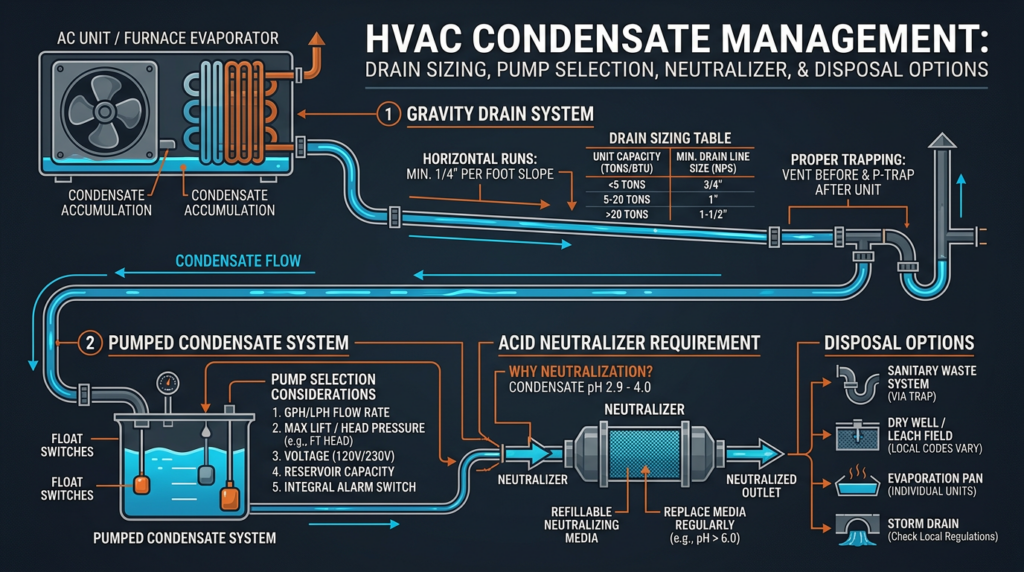
Condensate management encompasses the collection, drainage, pumping, and treatment of water produced by HVAC equipment during normal operation. Every air conditioner, heat pump, dehumidifier, and high-efficiency furnace generates condensate that must be properly handled to prevent water damage, mold growth, equipment failure, and degraded indoor air quality. A clogged drain line or failed condensate pump can cause thousands of dollars in damage within hours. Proper condensate management is not optional. It is a fundamental requirement of any well-designed and maintained HVAC system.
How Condensate Is Generated
In cooling systems such as air conditioners and heat pumps, warm indoor air passes over the evaporator coil, which operates below the dew point of the surrounding air. Moisture in the air condenses on the coil surface, collects on the fins, and drips into a drain pan below. The volume of condensate depends on indoor humidity, outdoor conditions, system capacity, and runtime.
A common rule of thumb places condensate production at approximately 1 gallon per hour per ton of cooling capacity under typical summer conditions. A 3-ton residential air conditioner may therefore produce 3 gallons per hour or more during peak humidity. In humid climates like the Gulf Coast, production rates can exceed this estimate significantly. In arid climates, production drops well below the average.
High-efficiency condensing furnaces (AFUE 90% and above) generate condensate through a different mechanism. These units extract so much heat from combustion gases that the water vapor in the flue gas condenses inside a secondary heat exchanger. A single 100,000 BTU/hr condensing furnace can produce 0.5 to 1 gallon of condensate per hour of operation. This condensate is notably acidic, with pH values typically ranging from 2.9 to 4.0 due to dissolved combustion byproducts including carbonic, sulfuric, and nitric acids. This acidity distinguishes furnace condensate from cooling condensate, which is generally near neutral pH but may contain biological contaminants.
Condensate Drainage Systems
Gravity Drainage
Most residential and commercial HVAC systems rely on gravity drainage to move condensate from the drain pan to an approved disposal point. The drain line must slope continuously downward from the equipment to the termination point.
- Minimum slope: 1/4 inch per foot of horizontal run, as specified by the International Mechanical Code (IMC) and Uniform Mechanical Code (UMC).
- Residential drain line sizing: 3/4-inch PVC is standard for equipment up to 5 tons. Systems above 5 tons or with long horizontal runs typically require 1-inch or larger diameter piping.
- Material options: Schedule 40 PVC is the most common choice. CPVC offers higher temperature resistance and is sometimes specified for condensing furnace drains where condensate exits at elevated temperatures. ABS is acceptable in some jurisdictions but less commonly used.
Proper drain line sizing follows guidance found in the ASHRAE Handbook on HVAC Systems and Equipment and local mechanical codes. Undersized drain lines create backups. Oversized lines waste material and may not maintain adequate flow to self-clean.
Traps and Venting
A P-trap installed in the condensate drain line prevents air from being drawn through the drain and into the HVAC system, which can cause gurgling, reduced airflow, and sewer gas infiltration. The trap depth should equal or exceed the maximum negative static pressure at the drain pan connection. For most residential systems, a trap with a 2- to 3-inch seal depth is adequate.
Air vents (or vent tees) installed downstream of the trap prevent vacuum lock, which occurs when negative pressure inside the air handler holds water in the drain pan instead of allowing it to flow freely. Without proper venting, condensate accumulates and eventually overflows.
Secondary Drain Pans and Safety Switches
Building codes in most jurisdictions require a secondary drain pan beneath air handlers installed in attics, above finished ceilings, or in any location where overflow could damage the structure. The IMC (Section 307.2.3) and UMC contain specific requirements for secondary pans, including minimum depth and separate drain connections.
Float switches and electronic condensate sensors provide additional protection. These devices shut down the HVAC system if water levels in the primary or secondary drain pan exceed a safe threshold. Types include:
- Mechanical float switches: A buoyant float rises with water level and trips a switch to interrupt the control circuit. Simple, reliable, and inexpensive.
- Electronic sensors: Use conductivity probes or capacitance sensing to detect water presence. More precise and less prone to mechanical sticking than float switches.
- Combination switches: Integrate into the drain pan or mount on the drain line to detect both slow accumulation and sudden backups.
Condensate Pumps
When gravity drainage is not feasible, such as when the air handler sits below grade in a basement or when no nearby drain point exists, a condensate pump moves the water mechanically. Pumps collect condensate in a small reservoir and activate automatically when the water level triggers a float switch.
Types of Condensate Pumps
- Submersible pumps: The motor and impeller sit inside the condensate reservoir. These units tend to be quieter during operation but can be harder to service without removing the entire assembly.
- In-line (non-submersible) pumps: Mount externally and draw condensate through an intake line. Easier to access for maintenance and replacement but may produce more vibration and noise.
Pump Selection Criteria
Choosing the correct condensate pump requires matching the pump’s specifications to the installation’s demands:
- Pumping capacity: Common residential condensate pumps are rated between 30 and 80 gallons per hour (GPH). For a 5-ton system producing up to 5 gallons per hour, a 30 GPH pump provides ample margin. Commercial systems may require pumps rated at 100 GPH or more.
- Head pressure (vertical lift): Most residential pumps can lift water 15 to 20 feet vertically. Commercial pumps may handle 25 feet or more. Always confirm the manufacturer’s maximum lift specification and account for friction losses in the discharge line.
- Electrical requirements: Residential pumps typically operate on 115V/60Hz and draw less than 1 amp. Dedicated circuits are not usually required, but a grounded outlet is essential.
- Safety features: Look for integral overflow switches that shut down the HVAC system if the pump fails. Thermal overload protection prevents motor burnout.
- Noise level: Important for installations near living spaces. Submersible models generally operate more quietly.
Installation and Maintenance
Condensate pumps should be mounted on a level, stable surface with vibration isolation pads to reduce transmitted noise. The discharge line should include a check valve to prevent backflow. Pumps are not maintenance-free. The reservoir, float switch, and check valve should be inspected and cleaned at least twice per year. Algae and mineral buildup are the primary causes of pump failure in residential applications.
Typical costs for condensate pump replacement range from $150 to $400 including labor for residential systems. Commercial-grade pumps with higher capacity and redundancy features cost $500 to $1,500 or more, plus installation.
Condensate Treatment
Algae and Biological Growth Control
The warm, moist environment inside drain pans and condensate lines is ideal for algae, mold, and bacterial growth. Left unchecked, biological growth clogs drain lines and degrades indoor air quality. EPA-registered algaecides formulated specifically for HVAC systems are the standard treatment.
- Slow-dissolve tablets: Placed directly in the drain pan, these tablets release biocide gradually over 1 to 3 months. They are the most common residential treatment.
- Liquid treatments: Poured into the drain pan or drain line during maintenance visits. These provide immediate treatment but require more frequent application.
- Antimicrobial drain pans: Some manufacturers offer drain pans with antimicrobial coatings or materials that resist biological growth. These reduce but do not eliminate the need for chemical treatment.
Only use products specifically labeled for HVAC use. General-purpose bleach, while sometimes recommended informally, can degrade certain rubber and plastic components over time. Always follow manufacturer dosage instructions and safety data sheets.
Neutralization of Acidic Furnace Condensate
Condensate from high-efficiency furnaces is corrosive enough to damage cast iron waste pipes, copper plumbing, and municipal wastewater treatment systems. Condensate neutralizers raise the pH from the typical 2.9 to 4.0 range up to an acceptable 6.5 to 8.0 before the condensate enters the drainage system.
- Limestone chip neutralizers: The most common type. Condensate flows through a canister filled with crusite or calcite limestone chips. As the acidic water contacts the alkalite media, a chemical reaction raises the pH. The media dissolves over time and must be replenished annually or as needed.
- Neutralizing cartridges: Self-contained units that install in-line with the condensate drain. Convenient for tight spaces but may need more frequent replacement.
Some jurisdictions now require condensate neutralization by code for all condensing furnace installations. Even where not mandated, neutralization protects plumbing infrastructure and is considered a best practice. A basic neutralization system costs $100 to $300 installed. Check local regulations for specific disposal requirements, as some municipalities prohibit discharging acidic condensate into storm drains or septic systems.
Troubleshooting Common Condensate Problems
Condensate-related service calls are among the most frequent in residential HVAC work. The most common issues and their diagnostic approaches include:
- Clogged drain lines: Symptoms include water pooling around the air handler, a tripped safety switch, or a system that shuts off unexpectedly. Clear clogs using compressed nitrogen, a wet/dry vacuum applied to the drain termination point, or a flexible brush. Follow up with a vinegar or approved chemical flush.
- Pump failure: Check for power at the outlet, test the float switch by manually raising it, and inspect for debris in the reservoir. A pump that runs continuously but does not move water may have a failed check valve or a blocked discharge line.
- Leaking drain pans: Metal drain pans corrode over time, especially when exposed to acidic furnace condensate. Inspect for cracks, rust-through, and failed seals. Replacement is typically more reliable than patching.
- Overflow despite clear drain lines: This often indicates a missing, improperly sized, or clogged trap. It can also result from a vacuum lock condition caused by inadequate venting.
Service costs for drain line cleaning typically range from $75 to $200. Replacing sections of damaged drain piping costs $50 to $150 in parts plus labor. These are modest expenses compared to the thousands of dollars in water damage, ceiling repair, and mold remediation that result from neglected condensate systems.
Industry Updates and Evolving Standards
Several recent developments affect condensate management practices:
- SEER2 transition: As of January 1, 2023, new air conditioners and heat pumps are rated under the SEER2 standard, which uses a more realistic test procedure accounting for external static pressure. While the impact on condensate production rates is marginal, the push toward higher-efficiency equipment generally means more moisture removal per unit of energy consumed.
- Refrigerant phase-down: The AIM Act is driving the transition from R-410A to lower-GWP alternatives like R-32 and R-454B. New refrigerants may require different coil materials (such as aluminum instead of copper), which could subtly affect condensate chemistry over time. Technicians should monitor manufacturer guidance on condensate handling for next-generation systems.
- Inflation Reduction Act (IRA) incentives: Federal tax credits of up to $2,000 for qualifying high-efficiency heat pumps and up to $600 for high-efficiency furnaces encourage equipment upgrades. As homeowners install more condensing furnaces and high-SEER2 cooling equipment, demand for proper condensate management increases proportionally.
- Smart monitoring: Wi-Fi-enabled condensate sensors and smart float switches now integrate with building management systems and home automation platforms. These devices send alerts to phones and can trigger system shutdowns before overflow occurs, reducing the risk of undetected water damage.
Key Takeaways
- Condensate is not just water. It can contain biological contaminants, mineral deposits, and corrosive acids depending on the equipment type.
- Gravity drain lines require a minimum slope of 1/4 inch per foot, proper trapping, and adequate venting to function reliably.
- Secondary drain pans and safety switches are code-required in many installations and should be considered essential in all above-ceiling or attic applications.
- Condensate pumps require regular inspection and cleaning. They are not install-and-forget components.
- High-efficiency furnace condensate must be neutralized to a pH of 6.5 to 8.0 before disposal to protect plumbing and comply with local codes.
- EPA-registered algaecide tablets placed in drain pans during routine maintenance are the simplest and most effective way to prevent biological clogs.
- Even small leaks demand immediate attention. Water damage and mold growth compound rapidly in enclosed spaces like attics and wall cavities.
- Proper condensate management begins at system design, continues through installation, and depends on consistent preventive maintenance throughout the life of the equipment.