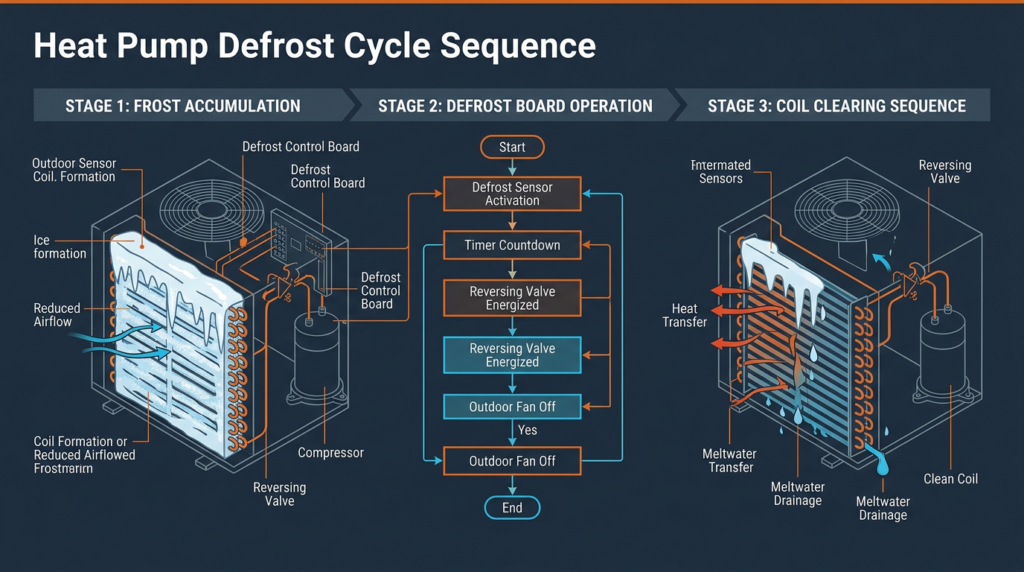
A heat pump defrost cycle is the automatic process by which a heat pump temporarily reverses its refrigerant flow to melt frost that accumulates on the outdoor coil during heating season. This cycle is not a malfunction. It is a normal, essential function that keeps the system running efficiently and prevents damage to critical components. Understanding how defrost cycles work, what triggers them, and what goes wrong when they fail is fundamental knowledge for homeowners, technicians, and anyone involved in building performance.
Why Frost Forms on the Outdoor Coil
During heating mode, a heat pump extracts thermal energy from outdoor air by circulating cold refrigerant through the outdoor coil, which functions as the evaporator. The refrigerant temperature inside this coil is typically 10 to 20°F below the ambient air temperature. When outdoor conditions hover near or below freezing, the coil surface temperature drops well below 32°F (0°C), causing moisture in the air to condense and freeze on the coil fins.
Several factors determine how quickly frost builds up:
- Ambient temperature: Frost accumulates most aggressively when outdoor temperatures range between approximately 25°F and 45°F (-4°C to 7°C). At these temperatures, there is still significant moisture in the air, and the coil is cold enough to freeze it on contact.
- Humidity and dew point: Higher relative humidity means more moisture is available to freeze on the coil. When the outdoor dew point is close to the ambient temperature, condensation and frost formation accelerate.
- Airflow across the coil: Restricted airflow from dirty coils, vegetation, or snow allows the coil to drop even colder, increasing frost formation rates.
Frost acts as an insulator on the coil surface. As it thickens, it blocks airflow through the fins and reduces the coil’s ability to absorb heat from the surrounding air. This forces the compressor to work harder, lowers the system’s coefficient of performance (COP), and reduces heating capacity. Left unchecked, heavy ice buildup can cause physical damage to fan blades, coil fins, and the compressor itself.
How the Defrost Cycle Works
The defrost cycle follows a predictable sequence: the system detects frost, reverses refrigerant flow to heat the outdoor coil, melts the accumulated ice, and then returns to normal heating operation. Each step involves coordinated action from multiple components.
Step 1: Defrost Initiation
The heat pump must determine when frost has built up enough to require removal. Manufacturers use several detection methods:
- Time-initiated, temperature-terminated defrost: A timer triggers the defrost cycle at fixed intervals, typically every 30, 60, or 90 minutes of compressor run time. A temperature sensor on the outdoor coil confirms frost is actually present before proceeding. If the coil temperature is above the frost threshold, the cycle is skipped. This method is simple and reliable but can initiate unnecessary cycles in mild conditions. Many modern systems use adaptive defrost boards that adjust the timer interval based on cumulative compressor runtime, outdoor temperature history, or previous defrost frequency.
- Differential pressure sensing: As frost builds on the coil fins, it restricts airflow and increases the pressure drop across the coil. A pressure switch or transducer measures this differential. When the pressure drop exceeds a calibrated threshold, defrost begins. Digital pressure transducers provide more precise measurements than simple mechanical switches. This method initiates defrost only when frost is genuinely affecting performance.
- Multi-sensor temperature-based defrost: Advanced systems use multiple temperature sensors positioned on the outdoor coil, the ambient air, and the refrigerant lines. A microprocessor compares these readings against algorithms to determine frost severity. These systems defrost only when conditions warrant it, reducing unnecessary energy use.
- Smart defrost systems: The latest generation of heat pumps incorporates learning algorithms that analyze historical operating data, weather patterns, and real-time sensor inputs to predict when defrost will be needed. Some manufacturers, including Mitsubishi Electric and Daikin, have implemented proprietary smart defrost logic in their cold climate models that reduces defrost frequency by 20 to 40 percent compared to conventional time-based systems.
Step 2: Reversing Valve Activation
Once defrost is initiated, the system energizes the reversing valve (also called a four-way valve) to redirect refrigerant flow. In normal heating mode, hot compressed refrigerant flows to the indoor coil (condenser) and cold low-pressure refrigerant flows to the outdoor coil (evaporator). During defrost, this reverses: the outdoor coil becomes the condenser, receiving hot, high-pressure refrigerant directly from the compressor.
The reversing valve uses a pilot valve controlled by a solenoid to shift an internal slide mechanism that redirects refrigerant. When the solenoid energizes, high-pressure refrigerant pushes the slide to the defrost position. The pressure inside the outdoor coil rises rapidly, and the hot refrigerant transfers its heat directly into the frosted coil surface, melting the ice.
Step 3: Outdoor Fan Shutdown
The outdoor fan motor is switched off during defrost in most systems. Stopping the fan serves two purposes: it prevents cold outdoor air from blowing across the coil and counteracting the melting process, and it concentrates the heat from the hot refrigerant on the coil surface, accelerating ice removal. Some newer variable-speed heat pumps may run the outdoor fan at a very low speed during defrost to improve refrigerant heat transfer, but full-speed fan operation during defrost is counterproductive.
Step 4: Auxiliary Heat Activation
Because the heat pump is effectively running in cooling mode during defrost, the indoor coil temporarily becomes an evaporator, absorbing heat from the indoor air rather than releasing it. To prevent noticeable cooling of the conditioned space, the defrost control board activates auxiliary heat. This is typically electric resistance heat strips in the air handler or, in dual-fuel systems, a gas furnace. The auxiliary heat offsets the cooling effect and maintains indoor comfort. In systems with staged auxiliary heat, only the first stage may activate during short defrost cycles to minimize energy consumption.
Step 5: Defrost Termination
The defrost cycle ends when one of two conditions is met:
- Temperature termination: A sensor on the outdoor coil detects that the coil temperature has risen to approximately 45°F to 58°F (7°C to 14°C), indicating that all frost has melted. This is the primary termination method.
- Time limit safety: A built-in maximum timer, usually set between 5 and 10 minutes, terminates the cycle regardless of coil temperature. This prevents the system from running in defrost indefinitely if a sensor fails or ice is exceptionally heavy.
Once defrost terminates, the reversing valve shifts back to heating mode, the outdoor fan restarts, and auxiliary heat deactivates after a brief delay. The entire cycle typically lasts between 1 and 10 minutes. Homeowners may notice a brief hissing sound from the reversing valve, a visible cloud of steam or fog rising from the outdoor unit as ice melts, and a short period of reduced warmth from the supply registers.
Common Defrost Cycle Failures
When the defrost cycle malfunctions, the consequences range from reduced efficiency to complete system failure. Here are the most frequent problem areas.
Reversing Valve Problems
The reversing valve is a mechanical component subject to wear and failure. A stuck reversing valve may fail to shift into defrost mode, allowing ice to accumulate unchecked, or it may fail to shift back to heating mode, leaving the system stuck in cooling. Common causes include a failed solenoid coil, corrosion on the valve slide, or debris in the refrigerant stream. Technicians diagnose reversing valve issues by checking solenoid voltage (typically 24V AC), listening for the click of the pilot valve, and measuring temperature differences across the valve ports. Internal valve leaks allow hot and cold refrigerant to mix, reducing system capacity and causing erratic defrost behavior.
Defrost Control Board Failures
The defrost board orchestrates the entire cycle. Relay failures on the board can prevent the reversing valve solenoid from energizing or the outdoor fan from shutting off. Voltage surges, moisture intrusion, and insect damage are common causes of board failure. A failed board may cause the system to never enter defrost (leading to a solid block of ice on the outdoor unit) or to defrost continuously (wasting energy and reducing heating output).
Sensor Malfunctions
Temperature sensors used for defrost initiation and termination are typically thermistors with a resistance that changes predictably with temperature. Sensor drift, physical damage, or corroded connections produce inaccurate readings. A sensor that reads too warm may prevent defrost from initiating. A sensor that reads too cold may cause premature or excessively frequent defrost cycles. Technicians test thermistors by measuring resistance with a multimeter and comparing the reading to the manufacturer’s resistance-temperature chart. Pressure sensing ports can also become blocked with debris or ice, producing false readings in differential pressure defrost systems.
Refrigerant Charge Issues
A low refrigerant charge causes the outdoor coil temperature to drop lower than normal, increasing frost formation and overwhelming the defrost system. An overcharged system can flood the compressor with liquid refrigerant and reduce defrost effectiveness. Refrigerant charge verification requires gauges, superheat and subcooling measurements, and EPA Section 608 certification for the technician.
Airflow Restrictions
A dirty outdoor coil is one of the most common and preventable causes of excessive frost buildup. Dirt, pollen, pet hair, and cottonwood seeds clog the coil fins and reduce airflow. Vegetation growing within 18 to 24 inches of the unit, snow accumulation around the base, and fences or walls that block airflow all worsen the problem. Reduced airflow forces the coil temperature lower and increases frost formation beyond what the defrost cycle can manage.
Drainage Problems
When frost melts during defrost, the water must drain away from the unit through a drain pan and drain path. In cold climates, this meltwater can refreeze in the drain pan or around the base of the unit, creating an ice dam that blocks further drainage. Subsequent defrost cycles add more water that freezes on top of the existing ice, eventually encasing the bottom of the outdoor coil in a solid block of ice. Base pan heaters are available for many heat pump models and are strongly recommended in regions with sustained freezing temperatures. Heat tape applied to drain lines also prevents refreezing.
Maintenance and Troubleshooting
Proper maintenance minimizes defrost-related problems and keeps the heat pump operating at peak efficiency.
- Clean the outdoor coil at least once per year, and more frequently in dusty or high-pollen environments. Use a garden hose with moderate pressure or a commercial coil cleaner, spraying from the inside out to push debris off the fins.
- Maintain clearance around the outdoor unit. Trim vegetation to at least 18 inches on all sides and 48 inches above the unit. Remove snow and ice accumulation from around the base after storms.
- Inspect the drain pan and drainage path before winter. Clear any debris and confirm water flows freely away from the unit. Install a base pan heater if your climate regularly sees temperatures below 25°F (-4°C).
- Check sensor connections during routine service. Look for corroded terminals, cracked insulation on sensor wires, and sensors that have come loose from their mounting positions on the coil.
- Schedule professional maintenance annually. A qualified HVAC technician should verify refrigerant charge, test defrost board function, inspect the reversing valve, and confirm proper defrost initiation and termination.
Common Misconceptions
Several misunderstandings about defrost cycles lead to unnecessary service calls or, worse, homeowner tampering.
- Defrost cycles are not a sign of a problem. A heat pump that defrosts regularly during cold, humid weather is operating exactly as designed. Concern is warranted only when defrost cycles are excessively frequent (more than every 30 minutes), unusually long (exceeding 10 minutes), or completely absent during freezing conditions.
- Defrost cycles do not waste energy. While each cycle consumes some energy to reverse the refrigerant and run auxiliary heat, this cost is far less than the efficiency loss from operating with a heavily frosted coil.
- Not all heat pumps defrost the same way. Systems from different manufacturers use different initiation methods, termination thresholds, and cycle durations. Always consult the specific equipment manual for your model.
- You should never disable or bypass the defrost system. Doing so risks catastrophic ice buildup, compressor damage, and voided warranties.
Climate and Refrigerant Considerations
In cold climates where temperatures regularly fall below 20°F (-7°C), defrost demands increase significantly. Cold climate heat pumps (ccASHP) rated for operation down to -15°F (-26°C) or lower often feature larger outdoor coils, enhanced defrost algorithms, base pan heaters, and variable-speed compressors that can maintain heating capacity at low ambient temperatures while managing frost effectively. Federal tax credits under the Inflation Reduction Act and numerous state and utility rebate programs currently provide financial incentives for cold climate heat pump installations that meet ENERGY STAR Cold Climate specifications.
The ongoing transition from R-410A to lower global warming potential refrigerants such as R-32 and R-454B may affect defrost characteristics slightly due to different thermodynamic properties. Technicians should follow manufacturer-specific guidelines for defrost settings and refrigerant charge procedures when working with these newer refrigerants.
Key Takeaways
The defrost cycle is a fundamental part of heat pump operation in heating mode. Frost on the outdoor coil is unavoidable when extracting heat from cold, humid air, and the defrost cycle exists to manage it. The process involves reversing refrigerant flow, shutting down the outdoor fan, activating auxiliary heat, and melting accumulated ice in a controlled sequence that typically lasts under 10 minutes. Failures in the reversing valve, defrost board, sensors, or refrigerant charge can all disrupt this process and lead to performance problems or equipment damage. Regular maintenance, including coil cleaning, clearance management, and annual professional service, is the most reliable way to keep defrost cycles functioning properly and your heat pump running efficiently throughout the heating season.