Indoor Air Quality Testing: What to Measure and How
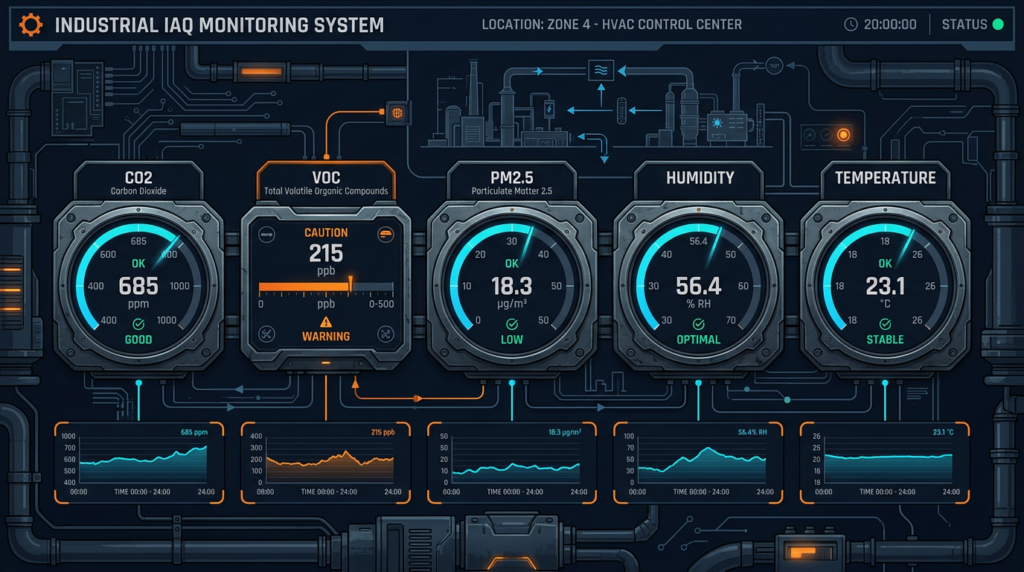
The EPA estimates that people spend approximately 90% of their time indoors, yet indoor air can be two to five times more polluted than outdoor air. Since the COVID-19 pandemic, awareness of what we breathe inside our homes, offices, and schools has grown significantly, but most people still have no idea what contaminants lurk in the air around them. Indoor air quality (IAQ) refers to the condition of the air within and around buildings and structures, particularly as it relates to the health, comfort, and productivity of occupants. Testing IAQ is the essential first step toward understanding and controlling indoor pollutants. This guide covers the key parameters you should measure, the instruments and methods available for each, and how to interpret the results to take meaningful action.
Why Test Indoor Air Quality?
Health Effects of Poor IAQ
Poor indoor air quality produces both immediate and long-term health consequences. Short-term exposure to indoor pollutants can trigger irritation of the eyes, nose, and throat, headaches, dizziness, fatigue, and worsening of asthma and allergy symptoms. Long-term exposure carries far more serious risks, including chronic respiratory disease, cardiovascular problems, and cancer. Radon exposure is the leading cause of lung cancer among non-smokers, and prolonged contact with volatile organic compounds like benzene and formaldehyde has been linked to liver, kidney, and central nervous system damage.
Comfort, Productivity, and Property Value
Beyond health, poor IAQ reduces comfort through stuffiness, persistent odors, and temperature inconsistencies. Research consistently shows that elevated CO2 levels and high VOC concentrations reduce cognitive performance in offices and classrooms. For building owners, good IAQ translates directly into property value. Tenants and buyers increasingly consider air quality certifications such as LEED and WELL Building Standard when making decisions. Regulatory frameworks from OSHA and local building codes may also require periodic IAQ assessments in commercial and institutional buildings.
Proactive vs. Reactive Testing
Many building occupants only consider IAQ testing after symptoms appear or complaints mount. This reactive approach means people may have been breathing contaminated air for weeks, months, or years. Routine proactive testing catches problems early, reduces liability, and provides baseline data that makes future troubleshooting faster and more effective.
Key Parameters to Measure in IAQ Testing
Particulate Matter (PM)
Particulate matter consists of solid and liquid particles suspended in the air, classified primarily by size. PM10 particles (10 micrometers or smaller) include dust, pollen, and mold spores. PM2.5 particles (2.5 micrometers or smaller) are far more dangerous because they penetrate deep into the lungs and can enter the bloodstream, causing respiratory and cardiovascular damage. Indoor sources include cooking, smoking, burning candles, cleaning activities, pets, and fireplaces. Outdoor pollution and construction dust also infiltrate buildings through open windows and gaps in the building envelope.
Measurement methods include:
- Optical Particle Counters (OPCs): These provide real-time readings and are relatively affordable for home use. They typically measure particles in the 0.3 to 10 micrometer range with accuracy of plus or minus 10 to 15%. Consumer-grade monitors are useful for screening but less reliable for very fine particles.
- Gravimetric Analysis: Particles are collected on a filter over a set period at a controlled flow rate, then weighed in a laboratory. This method offers higher accuracy but requires professional equipment and lab processing.
- Laser Diffraction Instruments: Used in advanced settings for detailed particle size distribution analysis.
The WHO updated its air quality guidelines in 2021, recommending annual average PM2.5 levels below 5 micrograms per cubic meter, significantly tighter than the previous 10 microgram threshold. The EPA’s National Ambient Air Quality Standards (NAAQS) set the annual PM2.5 standard at 9 micrograms per cubic meter as of 2024. Research published in 2023 and 2024 continues to demonstrate health impacts from long-term exposure even at levels previously considered safe.
Volatile Organic Compounds (VOCs)
Volatile organic compounds are organic chemicals that vaporize readily at room temperature. They originate from paints, adhesives, flooring, furniture, cleaning products, personal care products, and pesticides. New buildings and recently renovated spaces often have elevated VOC levels due to off-gassing from fresh materials. Health effects range from eye, nose, and throat irritation to headaches, nausea, and dizziness at lower concentrations, and liver, kidney, and central nervous system damage at higher or prolonged exposures. Benzene and formaldehyde are classified as known human carcinogens.
Measurement methods include:
- Photoionization Detectors (PIDs): These instruments provide real-time total VOC (TVOC) readings, typically measuring from 0 to 2,000 ppm. They require calibration gas and detect a broad range of compounds but cannot identify individual VOCs.
- Gas Chromatography-Mass Spectrometry (GC-MS): The gold standard for identifying and quantifying specific VOC compounds. Air samples are collected using specialized sorbent tubes and analyzed in a laboratory. This method provides precise identification of individual chemicals.
- Formaldehyde-Specific Meters: Electrochemical sensors designed to detect formaldehyde in the 0 to 5 ppm range, useful because formaldehyde is one of the most common and hazardous indoor VOCs.
Setting a single acceptable TVOC threshold is difficult because hundreds of different compounds with varying toxicity contribute to the total reading. The German Federal Environment Agency recommends keeping TVOC levels below 300 micrograms per cubic meter. The best strategy is to minimize all VOC sources through low-emission materials and adequate ventilation.
Carbon Dioxide (CO2)
Carbon dioxide is a colorless, odorless gas produced primarily by human respiration and combustion appliances indoors. While CO2 itself becomes a direct health concern only at very high concentrations, it serves as an excellent proxy for ventilation effectiveness. Elevated CO2 levels indicate that stale air is not being replaced with fresh outdoor air, which means other pollutants are also accumulating.
The standard measurement method uses Non-Dispersive Infrared (NDIR) sensors, which measure CO2 absorption of infrared light. These sensors typically cover a range of 0 to 5,000 ppm with accuracy of plus or minus 50 ppm. Many consumer-grade IAQ monitors include NDIR-based CO2 sensors.
ASHRAE Standard 62.1 recommends maintaining indoor CO2 concentrations no more than 700 ppm above outdoor ambient levels, which typically translates to keeping indoor readings below 1,100 ppm. Research indicates that cognitive function begins to decline measurably when CO2 levels exceed 1,000 ppm.
Carbon Monoxide (CO)
Carbon monoxide is a colorless, odorless, and highly poisonous gas generated by incomplete combustion. Sources include malfunctioning furnaces, water heaters, gas stoves, fireplaces, and vehicles running in attached garages. Low-level exposure mimics flu symptoms with headaches, dizziness, and nausea. High-level exposure causes confusion, loss of consciousness, and death.
Electrochemical sensors are the standard detection method, with measurement ranges of 0 to 1,000 ppm and accuracy of plus or minus 5 ppm. The EPA recommends that indoor CO levels not exceed 9 ppm over an 8-hour average. Every home with combustion appliances should have functional CO detectors on each level.
Relative Humidity
Relative humidity (RH) measures the percentage of moisture in the air compared to the maximum it can hold at a given temperature. High humidity above 60% promotes mold growth and dust mite proliferation. Low humidity below 30% causes dry skin, respiratory irritation, and increased susceptibility to respiratory infections. Indoor activities such as cooking, showering, and even breathing add moisture to indoor air.
Hygrometers measure relative humidity and are available in electronic and mechanical versions, covering 0 to 100% RH with accuracy of plus or minus 2 to 5%. The recommended indoor range is 30 to 60% RH, with 40 to 50% considered optimal for health and comfort.
Temperature
While not a pollutant, temperature directly affects occupant comfort and influences the behavior of other contaminants. VOC off-gassing increases with temperature, and humidity perception changes with temperature. Standard thermometers or electronic temperature sensors suffice. ASHRAE recommends maintaining occupied spaces between 68 and 75 degrees Fahrenheit (20 to 24 degrees Celsius) for general comfort.
Biological Contaminants
Biological contaminants include mold, bacteria, viruses, pollen, and dust mites. They originate from damp areas, poorly maintained HVAC systems, pets, and outdoor air infiltration. Measurement methods include:
- Air Sampling: Air is drawn through a collection device, and captured organisms are cultured in a laboratory. This requires specialized equipment and trained professionals.
- Surface Sampling: Tape lifts or swabs from visible growth help identify mold or bacterial species.
- ERMI (Environmental Relative Moldiness Index) Testing: A DNA-based method that identifies and quantifies 36 mold species from dust samples, providing a moldiness score for the building.
No universal numerical standards exist for all biological contaminants. Emerging research on microbial VOCs (mVOCs), the volatile byproducts of fungal metabolism, suggests these compounds may contribute to indoor air pollution in ways not fully understood. Detection and risk assessment of mVOCs remain active areas of study.
Radon
Radon is a naturally occurring radioactive gas that seeps into buildings from underlying soil and rock. It is the second leading cause of lung cancer overall and the leading cause among non-smokers. Testing options include:
- Short-term tests: Conducted over 2 to 7 days, useful for initial screening.
- Long-term tests: Conducted over 90 days or more, providing more representative results that account for seasonal variation.
- Alpha track detectors: Passive devices that record alpha particle emissions from radon decay products.
The EPA recommends mitigation when radon levels exceed 4 picocuries per liter (pCi/L) and suggests considering action at levels between 2 and 4 pCi/L.
IAQ Testing Methods: DIY vs. Professional
DIY Testing
Consumer-grade testing is affordable, convenient, and suitable for initial screening. CO detectors, radon test kits, basic PM monitors, and TVOC sensors are widely available for under $200 each. These tools work well for quick assessments and verifying whether mitigation efforts are working. However, they offer limited accuracy, measure only a few parameters, and require careful adherence to instructions for reliable results.
Professional Testing
Professional IAQ assessments provide greater accuracy, broader parameter coverage, and expert interpretation. Hire a professional when DIY testing flags a concern, when symptoms are severe or persistent, during pre-purchase building inspections, or when regulatory compliance is required. Expect to pay between $300 and $2,000 depending on the scope of testing.
Selecting a Testing Company
- Look for credentials such as Certified Industrial Hygienist (CIH) or equivalent certifications.
- Verify experience specifically in IAQ testing rather than general environmental consulting.
- Check reviews and request references from past clients.
- Confirm the company tests for the specific contaminants relevant to your concerns.
Proper Sampling Techniques
Regardless of who conducts the test, proper technique matters. Samples should be collected in representative areas of the building at breathing height. Timing should account for typical occupancy patterns, seasonal variations, and activities that influence IAQ. All instruments must be properly calibrated, and thorough documentation of date, time, location, and conditions is essential for meaningful results.
Interpreting IAQ Test Results
A proper IAQ report lists measured contaminant concentrations, compares them against established standards, and provides actionable recommendations. Context matters enormously when reading results. A CO2 reading of 1,200 ppm during peak occupancy in a conference room tells a different story than the same reading in a sparsely occupied home. The building’s age, HVAC configuration, recent renovations, and occupant activities all influence interpretation.
Recommendations typically fall into a few categories: improving ventilation rates, controlling or removing contamination sources, adding air purification, and repairing or upgrading HVAC equipment. Follow-up testing after implementing changes is critical to verify that mitigation strategies actually worked.
Common Misconceptions about IAQ
- “If I can’t smell anything, the air is clean.” Many of the most dangerous pollutants, including radon and carbon monoxide, are completely odorless.
- “Air purifiers solve all IAQ problems.” Purifiers can reduce airborne contaminants, but source control and proper ventilation are far more effective long-term strategies.
- “Opening windows always improves IAQ.” In areas affected by wildfire smoke, heavy traffic pollution, or high pollen counts, outdoor air may be worse than indoor air.
- “All mold is toxic.” While all mold can trigger allergies, only certain species produce mycotoxins. Proper identification determines the appropriate response.
- “My home is new, so the air must be clean.” New construction often has the highest VOC levels due to off-gassing from fresh building materials, paints, and adhesives.
Practical Applications Across Settings
Homeowners use IAQ testing to identify allergens, reduce asthma triggers, and verify that combustion appliances operate safely. Schools test to improve student concentration and reduce absenteeism linked to poor air quality. Offices use IAQ data to enhance employee productivity and address sick building syndrome. Healthcare facilities rely on rigorous air quality monitoring to prevent infections and protect immunocompromised patients. Manufacturing facilities test to ensure worker safety and maintain compliance with OSHA exposure limits. In real estate, pre-purchase IAQ inspections and documented air quality improvements attract health-conscious tenants and buyers.
Related Topics Worth Exploring
IAQ testing does not exist in isolation. It connects directly to HVAC system maintenance (regular filter changes, duct cleaning, coil cleaning), air purification technologies (HEPA filtration, activated carbon, UV-C germicidal light), ventilation strategies (natural, mechanical, and balanced systems), and building material selection (low-VOC products). Smart home IAQ monitors that integrate with automated ventilation systems represent a growing trend. Emerging research areas include the impact of wildfire smoke on indoor environments, the effectiveness of various purification technologies against airborne viruses, and the complex relationship between the built environment and the human microbiome.
Key Takeaways
- Indoor air quality testing should measure at minimum PM2.5, VOCs, CO2, CO, humidity, and temperature. Radon and biological contaminants warrant testing based on building characteristics and occupant symptoms.
- Consumer-grade monitors work for initial screening, but professional testing with laboratory analysis provides the accuracy needed for serious concerns or regulatory compliance.
- Test results must be interpreted in context, considering building age, occupancy, ventilation, and activities.
- Source control and improved ventilation are almost always more effective than relying solely on air purification.
- Follow-up testing after mitigation confirms that interventions actually improved air quality.
- Proactive, routine testing catches problems before they affect occupant health and prevents costly remediation down the line.
Healthy indoor air is not a luxury. It is a fundamental requirement for well-being, productivity, and long-term health. Whether you start with a $50 CO2 monitor or commission a full professional assessment, the act of measuring is the first step toward breathing cleaner air in the spaces where you spend the vast majority of your life.