Variable Air Volume (VAV) Systems Explained
What Is a Variable Air Volume (VAV) System?
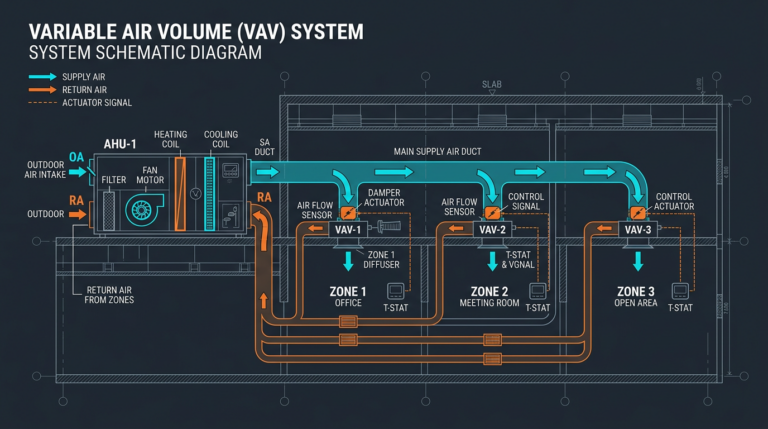
A Variable Air Volume (VAV) system is a type of HVAC system that controls zone temperatures by varying the quantity of conditioned air delivered to each…
In-depth articles on every HVAC system, component, and concept.
What Is a Variable Air Volume (VAV) System?
A Variable Air Volume (VAV) system is a type of HVAC system that controls zone temperatures by varying the quantity of conditioned air delivered to each…
What Is a Chilled Water System?
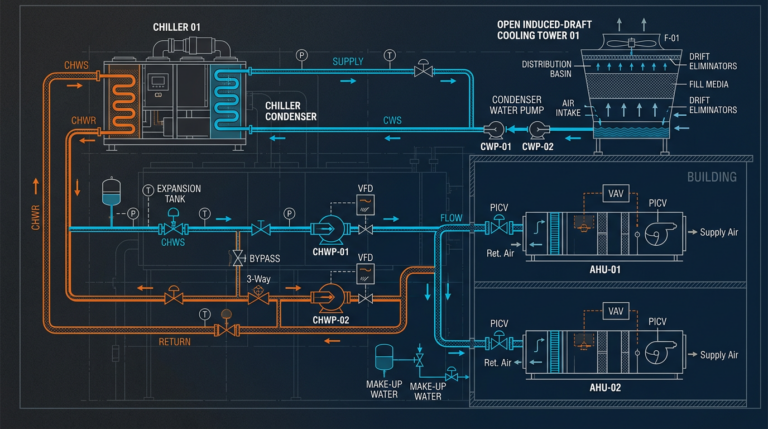
A chilled water system is a centralized cooling arrangement that produces cold water at a central plant and distributes it through an insulated piping network to coo…
What Is HVAC Commissioning?
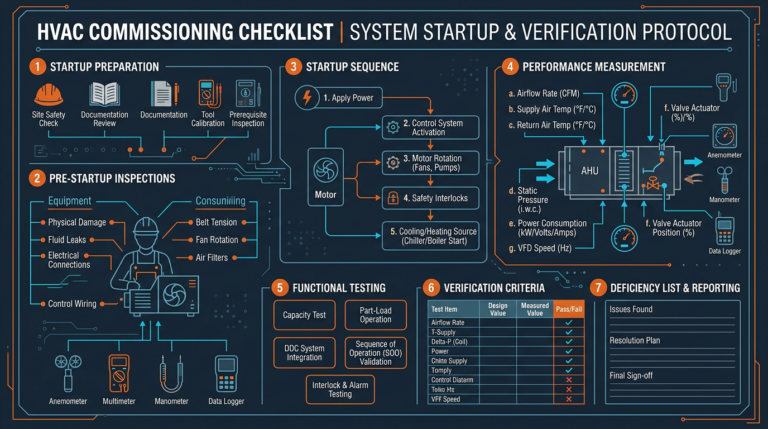
HVAC commissioning is a systematic, quality-driven process that verifies and documents whether a building’s heating, ventilation, air conditioning, and refrigeration sys…
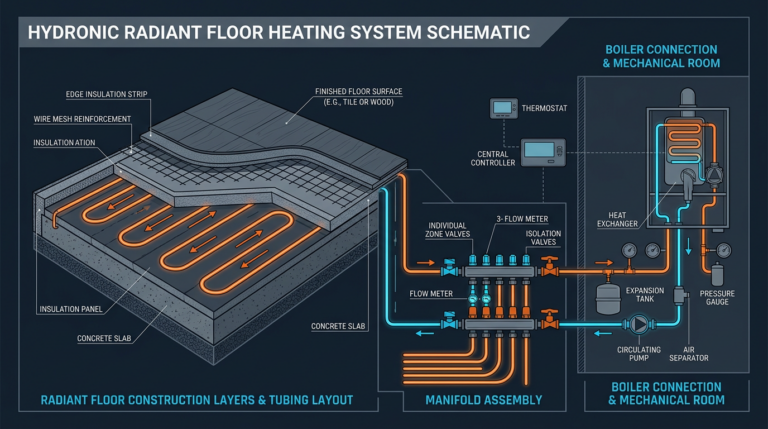
What Radiant Floor Heating Is and Why It Matters
Radiant floor heating delivers warmth by turning the entire floor surface into a low-temperature radiator. Instead of blowing heated air through duc…
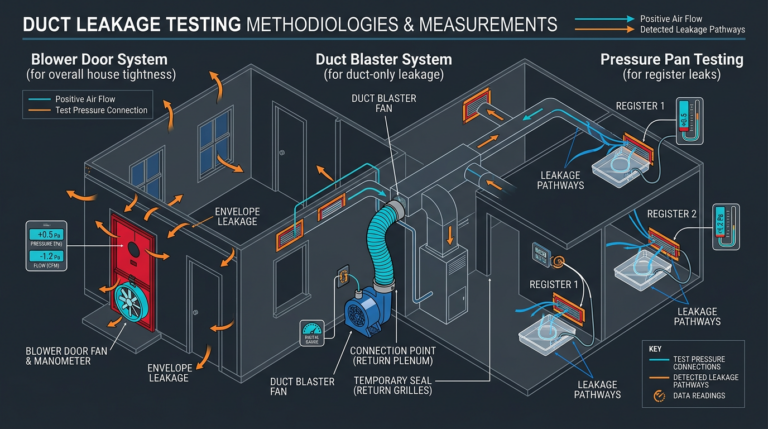
What Is Duct Leakage Testing?
Duct leakage testing is a diagnostic procedure that measures how much conditioned air escapes from an HVAC duct system before reaching its intended destination. Leaky…
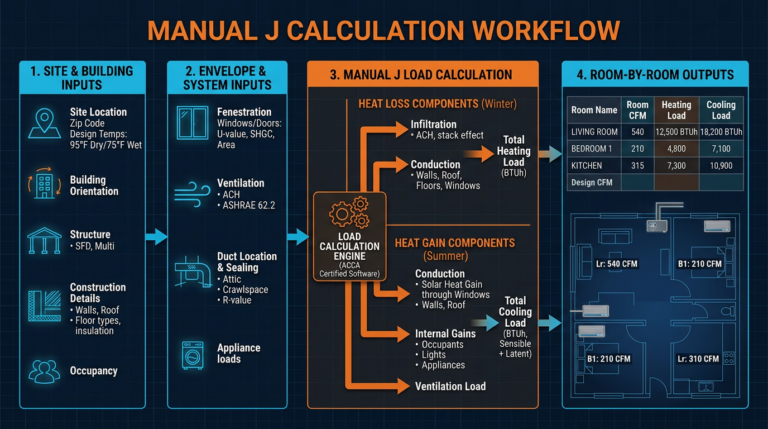
Manual J is the industry-standard method for calculating how much heating and cooling a residential building actually needs. Developed and maintained by the Air Conditioning Contractors of America (…
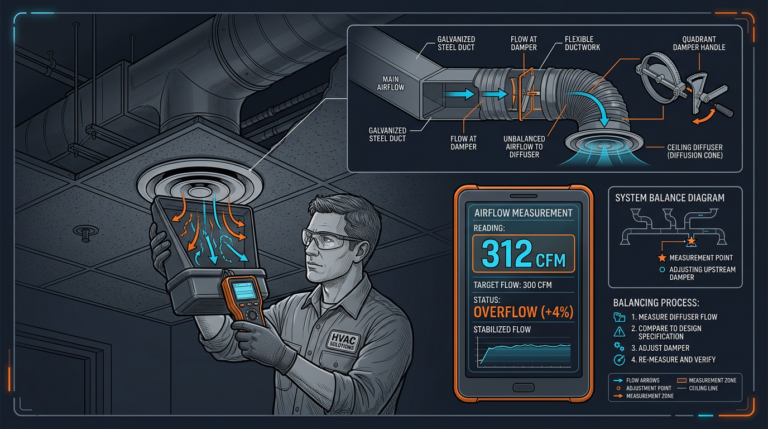
What Is Air Balancing?
Air balancing is the process of measuring, adjusting, and optimizing airflow within an HVAC system so that each supply and return register delivers the airflow rate specified i…
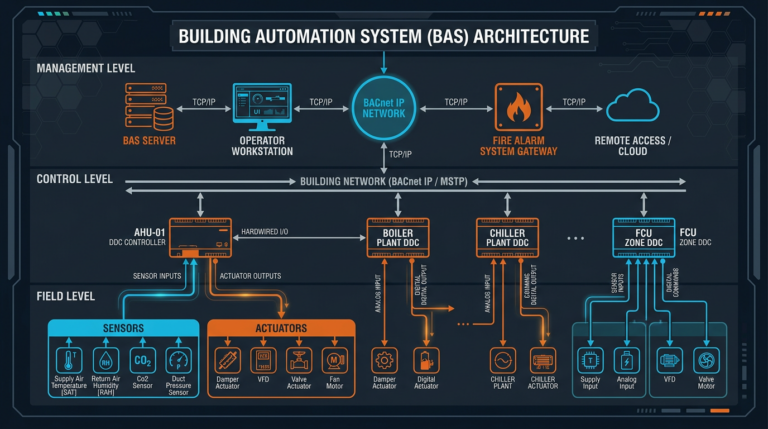
HVAC controls and Building Automation Systems (BAS) form the intelligence layer of modern heating, ventilation, and air conditioning infrastructure. They determine when equipment runs, how much ener…
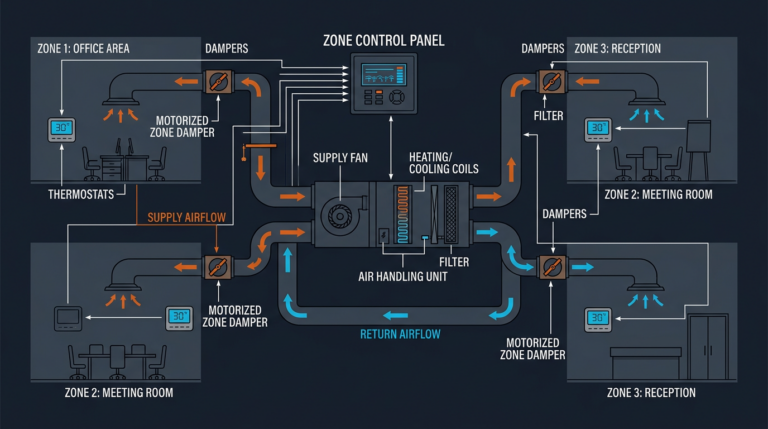
A zoning system divides a building into independently controlled areas, each with its own thermostat, allowing different rooms or sections to maintain different temperatures simultaneously. Rather t…
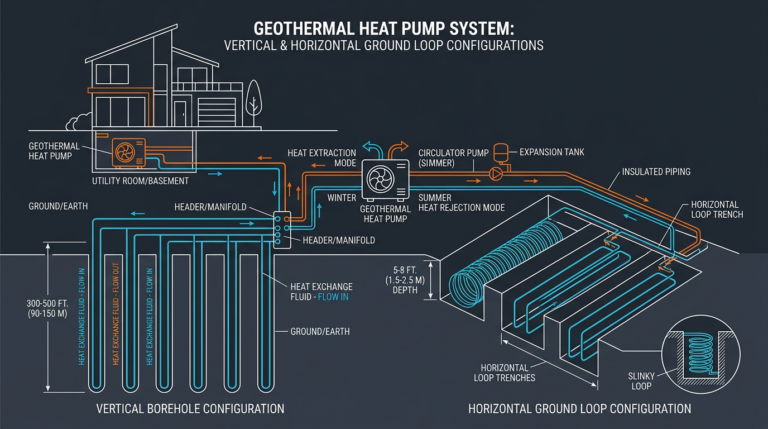
A geothermal heat pump (GHP), also called a ground-source heat pump, exploits the near-constant temperature of the earth below the frost line to heat and cool buildings with remarkable efficiency. W…
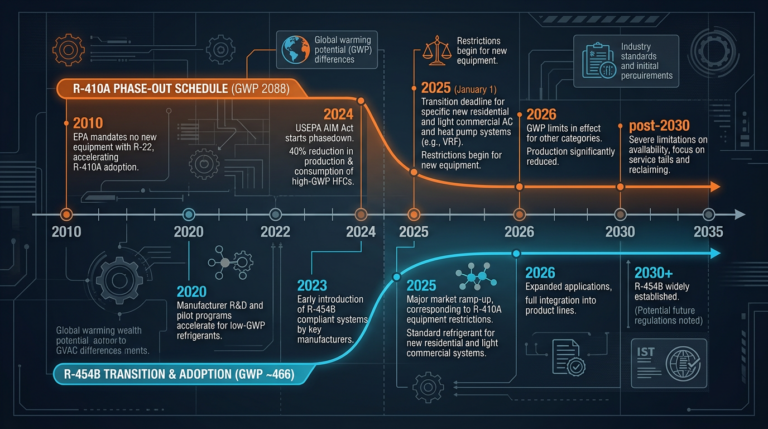
R-410A has served as the dominant refrigerant in residential and light commercial HVAC systems since the early 2000s, replacing R-22 due to its zero ozone depletion potential. Now R-410A itself face…
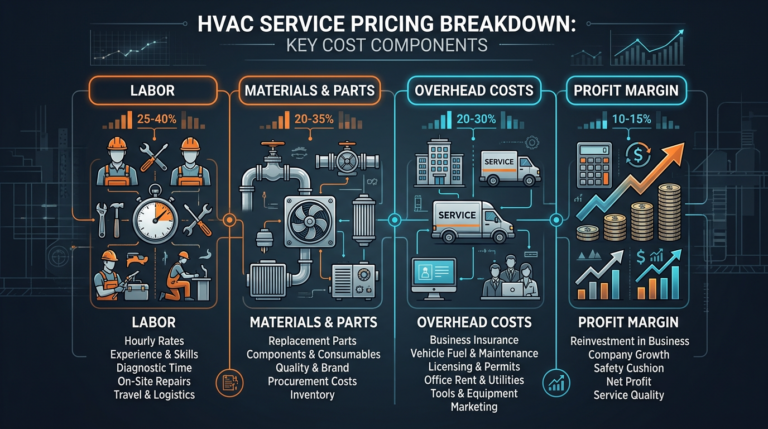
HVAC pricing is one of the least transparent areas of home improvement spending. A single system replacement can range from $5,000 to $25,000 or more, and two contractors bidding the same job may qu…