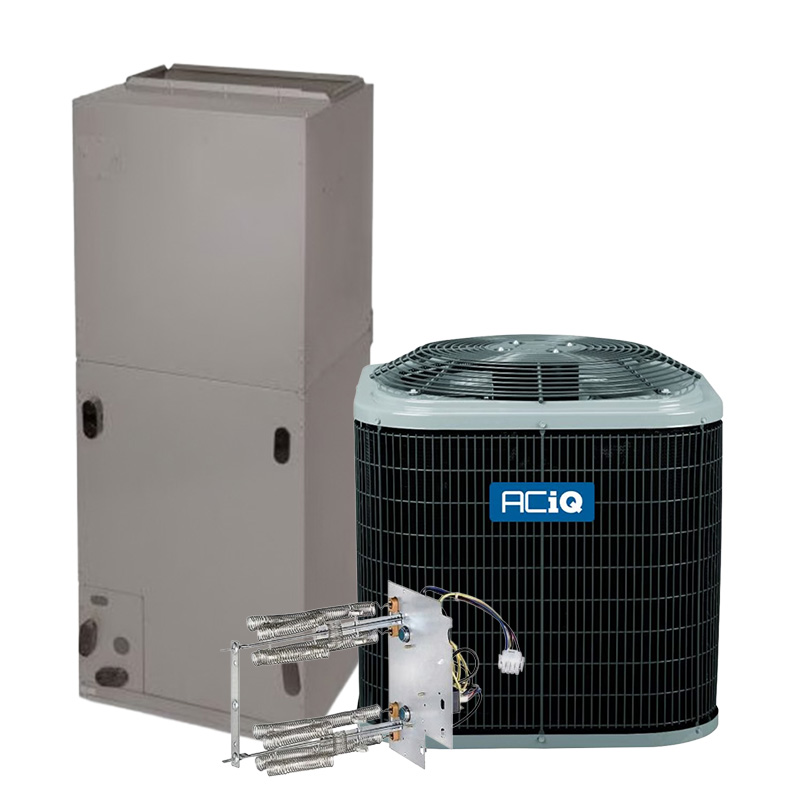
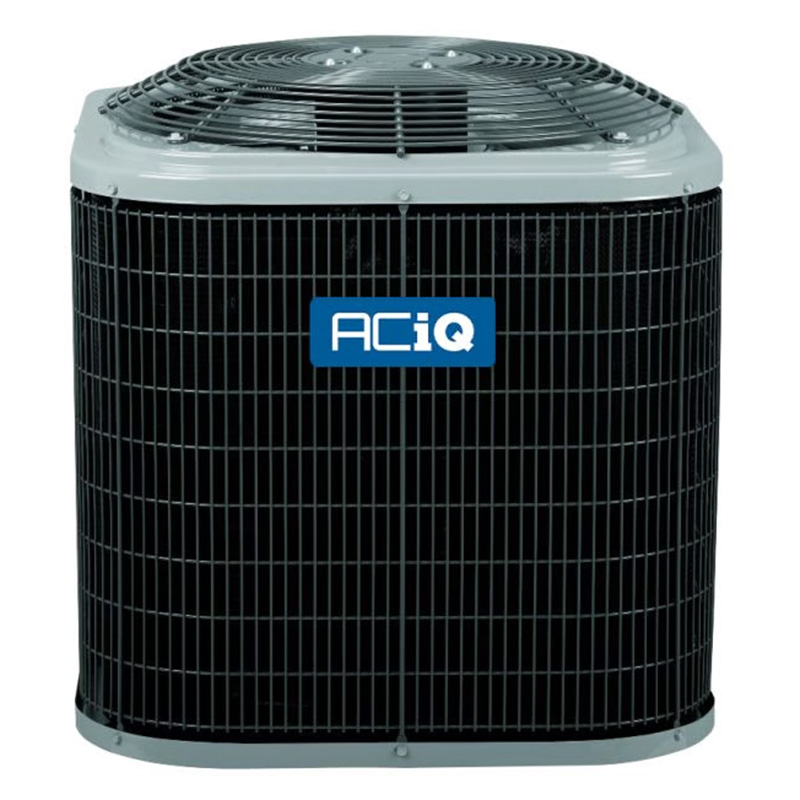
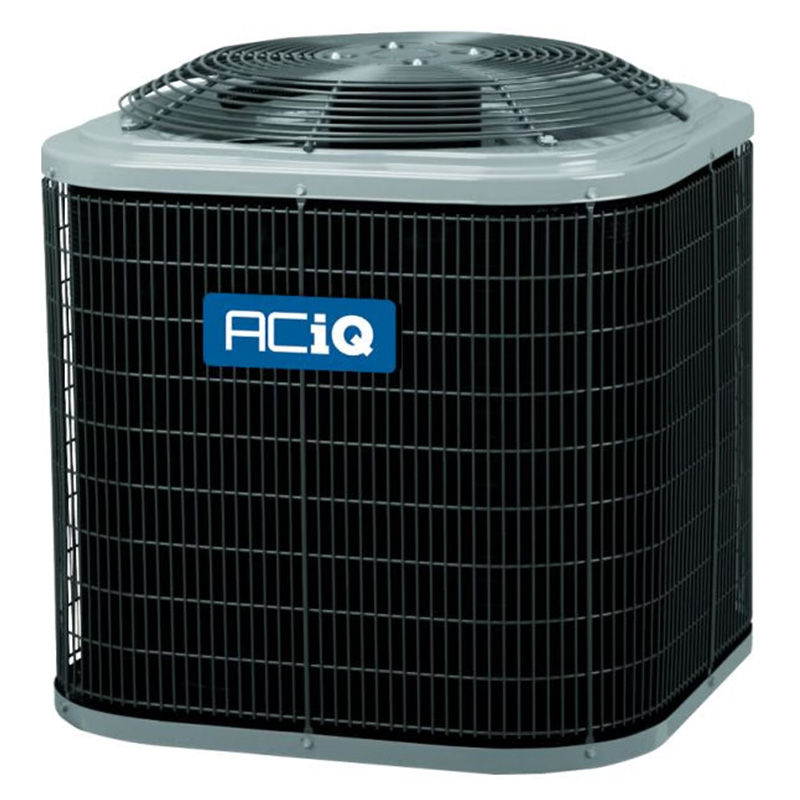
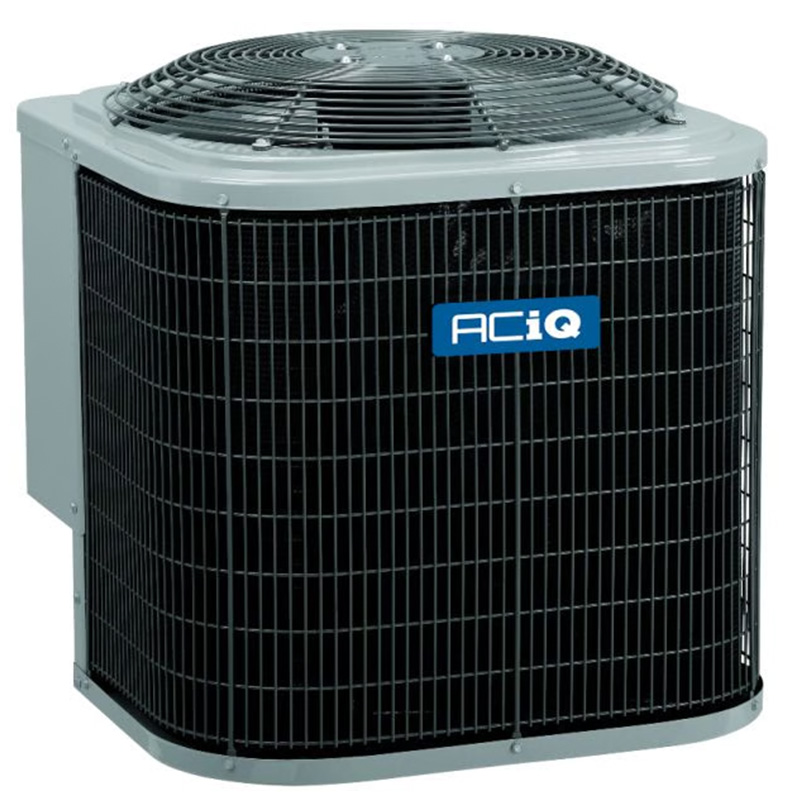
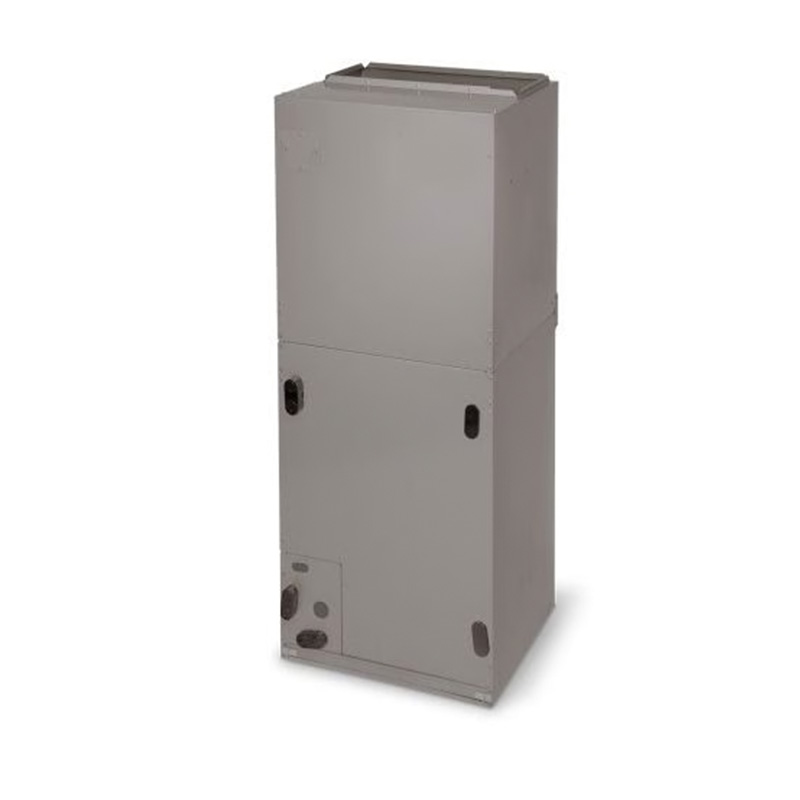
ACiQ 1.5 Ton AC With Electric Heat System | 15.2 SEER2 AC | 17.5" Wide Variable Speed Multi-Positional Air Handler | R454B
View on AC Direct see your lowest price →Check current price on AC Direct →
Key features
- 15.2 SEER2 efficiency rating, above federal minimums but mid-tier rather than high-efficiency
- Variable-speed ECM air handler motor for quieter part-load operation and better humidity control
- 17.5-inch-wide cabinet fits narrow closets and utility spaces where standard air handlers will not
- Multi-positional design installs in upflow, downflow, or horizontal orientations
- R-454B refrigerant, the current low-GWP replacement for phased-out R-410A
- 12-year parts warranty included without dealer-markup pricing
About this system
The ACiQ 1.5-ton split system pairs a 15.2 SEER2 condensing unit with a 17.5-inch-wide variable-speed multi-positional air handler and uses R-454B refrigerant, the lower-GWP replacement that most new equipment has shifted to as R-410A is phased out. At 1.5 tons the system is sized for smaller conditioned spaces, typically 450 to 700 square feet depending on local climate, insulation, and ceiling height, and the narrow 17.5-inch cabinet makes it a reasonable fit for tight closet or utility-room installations where a standard 21-inch air handler simply will not go. The electric heat strips (sold as part of the package) handle backup and emergency heat without requiring a gas line, which suits all-electric homes, condos, and additions where running new gas piping is impractical or prohibited.
The variable-speed blower is the most meaningful spec on this air handler. Rather than switching between high and low, it modulates motor speed continuously to match the actual load, which keeps humidity lower and temperature steadier than single-stage equipment while also running more quietly at part-load conditions. At 15.2 SEER2 the system clears the current federal minimum for most of the country and lands in the mid-tier efficiency range. It will not produce the utility-bill savings of an 18-plus SEER2 inverter-driven system, but it does better than the entry-level 14.3 SEER2 floor. Buyers who want a modest efficiency gain over a builder-grade replacement without paying premium-brand prices are the intended audience.
The ACiQ 1.5-ton system offers a genuine efficiency step up from bare-minimum equipment and a real variable-speed air handler at a price that undercuts name brands by a meaningful margin, making it a solid value pick for budget-conscious buyers who are comfortable sourcing their own contractor. The trade-off is that the brand is newer, long-term reliability data is thin, and the undisclosed manufacturer makes parts research harder if something goes wrong outside the warranty window.
Overall score is the average of the five ratings above.
What we like
- Variable-speed ECM blower provides noticeably quieter operation and better humidity management than single-speed alternatives
- 17.5-inch cabinet width opens up installation locations that a standard air handler cannot fit
- 12-year parts warranty ships with the unit at no dealer markup, which is generous for this price tier
- R-454B refrigerant positions the system for long-term serviceability as R-410A availability declines
- Early owner feedback consistently highlights quiet operation and responsive customer support from AC Direct
Trade-offs
- Consumer Reports has not yet ranked ACiQ, so long-term reliability is unverified by independent data
- The manufacturer is not publicly disclosed, complicating parts cross-referencing and service history lookups
- Sold direct rather than through a dealer network, so finding a contractor willing to install and service it may require extra legwork
- 15.2 SEER2 is mid-tier, not high-efficiency, so energy-savings payback over a lower-cost 14.3 SEER2 unit is modest
What homeowners and pros say about ACiQ
Homeowners who have installed ACiQ systems tend to lead with the same observation: the equipment runs quieter than what it replaced, and the few who have needed help report that AC Direct’s support team picks up the phone. Early Google and site reviews skew positive on those two points. What is notably absent is the kind of multi-year reliability data that Consumer Reports uses to assign scores, and ACiQ has not been on the market long enough to earn one. That is not a condemnation, but it is an honest gap. Forum discussion about the likely ICP or Carrier family connection is speculative and unconfirmed, so buyers should not bank on it when making parts or service decisions.
HVAC contractors have a more mixed read on direct-to-consumer brands as a category. The concerns they raise most consistently are not about the equipment itself but about the support structure: because ACiQ is sold direct rather than through a distributor-dealer chain, a contractor who installs it has no factory rep to call when something unusual comes up, and the undisclosed-manufacturer situation means cross-referencing a failed component to a known parts catalog is harder than with a Carrier or Trane unit. Documented failure modes specific to this brand are not yet well-established given its relative newness, which cuts both ways: there is no pattern of compressor failures or coil leaks on record, but there is also not enough field history to say those risks are off the table. For a buyer who is price-sensitive, comfortable doing their own contractor vetting, and willing to rely on ACiQ’s direct support channel, the value proposition is real.
Sources: Consumer Reports heat pump ratings, HVACDirect on the ACiQ brand, AHRI Directory of Certified Product Performance, U.S. DOE appliance and equipment efficiency standards.
What it costs to run
At 15.2 SEER2, cooling this 1.5-ton system for a typical 1200-hour cooling season at the U.S. average electricity rate of $0.17/kWh works out to roughly $242 per year in cooling, about $32 less per year than a minimum-efficiency 13.4 SEER2 unit of the same size. Your real cost depends on your climate and local rate.
Method: (18,000 BTU/hr ÷ 15.2 SEER2) × 1200 hours ÷ 1000 × $0.17/kWh. Rate source: U.S. EIA average; cooling hours: moderate-climate estimate.
How it compares
| Brand | Comparable model | SEER2 | Stage | Price position |
|---|---|---|---|---|
| ACiQ | 1.5-Ton 15.2 SEER2 Variable-Speed System with Electric Heat | 15.2 | Variable-speed air handler, standard condensing unit | Value pick |
| Carrier | Comfort 24ACC636 with FB4C Air Handler | 15.2 | Single-stage | Moderately higher than ACiQ, with dealer installation typically bundled |
| Trane | XR15 with TAM7 Air Handler | 15.0–16.0 | Single-stage | Moderately to significantly higher than ACiQ depending on region and dealer |
| Lennox | Merit ML14XC1 with CBX25UH Air Handler | 15.1 | Single-stage | Comparable to or moderately higher than ACiQ through dealer channels |
Competitor rows are comparable single-stage units at similar efficiency; price is relative position, not a quote.
Questions about this system
Can any licensed HVAC contractor install this system, or does it require an ACiQ-certified technician?
Any licensed HVAC contractor can install it since ACiQ does not run a proprietary dealer network. The practical challenge is that some contractors are reluctant to install equipment they did not source themselves, so you may need to call a few before finding one willing to do a customer-supplied unit. Confirming refrigerant handling capability for R-454B is also worth asking about, since not every shop has updated their equipment yet.
What size electric heat strip do I need for this air handler?
Strip sizing depends on your climate zone and the heating load calculation for your space, not just the tonnage of the cooling equipment. In mild climates a 5 kW strip is often adequate as a backup for a heat pump, while colder regions may need 10 kW or more. An accurate Manual J load calculation from your contractor is the right way to spec this rather than guessing by tonnage alone.
Is R-454B refrigerant harder to find or more expensive to service than R-410A?
R-454B availability is expanding as the industry transitions away from R-410A, and most HVAC supply houses now stock it. Handling requires the same EPA Section 608 certification as other refrigerants, but technicians will need equipment rated for A2L mildly flammable refrigerants. Costs are currently comparable to R-410A, though pricing will settle as adoption widens.
Since the manufacturer is undisclosed, how do I source replacement parts after the warranty period?
AC Direct and ACiQ's support team are the primary parts source during and after the warranty window, and early owner reports describe their support as responsive. The undisclosed-manufacturer situation does mean you cannot easily cross-reference parts to a Carrier or ICP catalog on your own, which is a real limitation if support availability changes years down the road. Keeping model and serial number records and downloading any available technical documentation at installation is practical preparation.
How much quieter is the variable-speed air handler compared to a standard single-speed unit?
At typical part-load conditions, which is most of a cooling season, a variable-speed ECM blower runs at 40 to 60 percent of full speed, which meaningfully reduces airflow noise compared to a single-speed motor running flat out. The difference is audible in rooms near the air handler, and it is one of the most consistently mentioned positives in early ACiQ owner reviews. Full-speed operation, such as during initial pulldown on a hot day, is louder, as it would be with any equipment.
Specifications
| Cooling capacity | 1.5 Ton |
| Efficiency | 15.2 SEER2 |
| Refrigerant | R-454B |