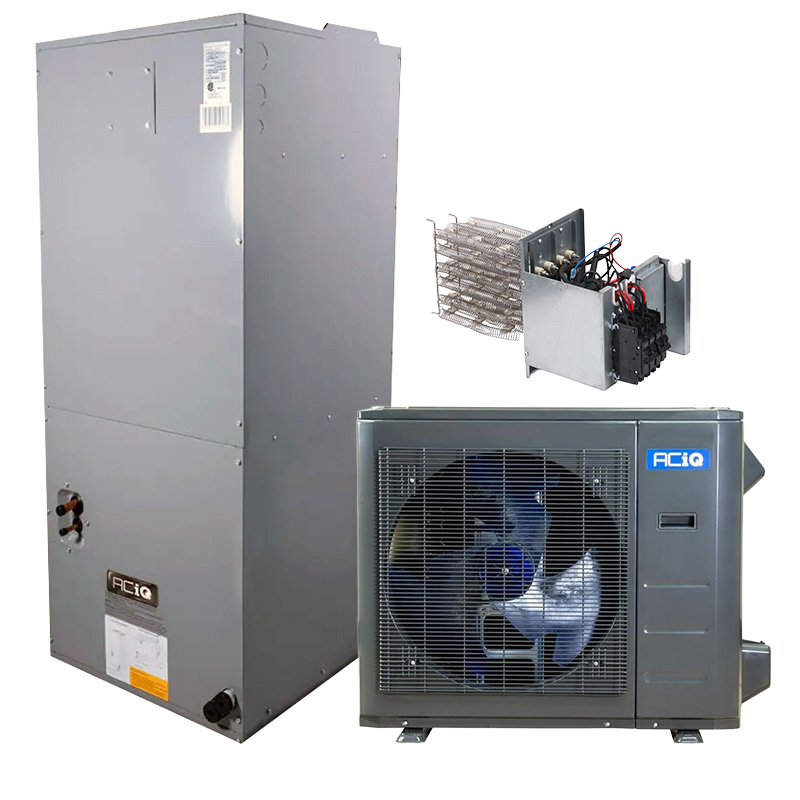
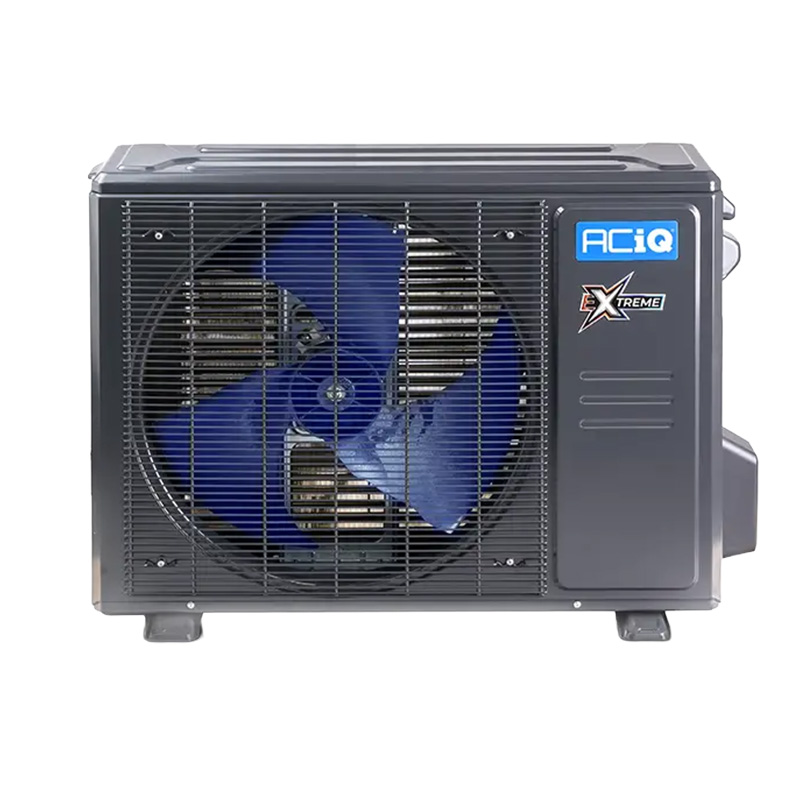
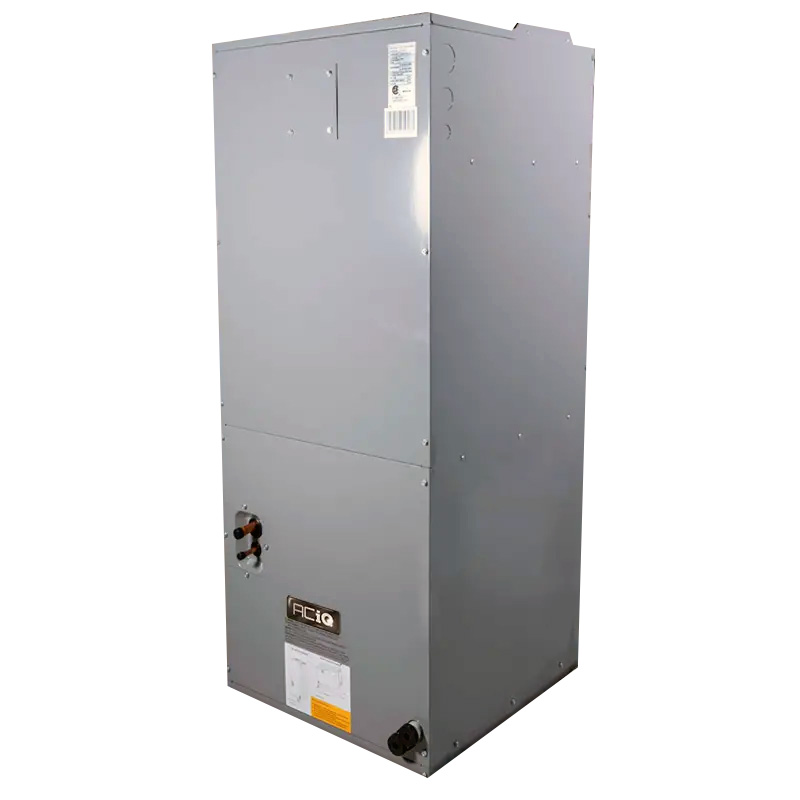
ACiQ 1.5 Ton Split Heat Pump AC System | 19 SEER2 High Efficiency Inverter Heats Down To -22° F and Beyond | R454B
View on AC Direct see your lowest price →Check current price on AC Direct →
Key features
- 19 SEER2 inverter-driven compressor for variable-capacity heating and cooling
- Rated heating operation down to -22 degrees F without auxiliary electric strip backup
- R-454B refrigerant for low global-warming-potential compliance ahead of regulatory deadlines
- 1.5-ton capacity suited to smaller conditioned spaces and additions
- 12-year parts warranty included without dealer markup or registration hassle
- Sold factory-direct, cutting out distributor and dealer cost layers
About this system
The ACiQ 1.5-ton 19 SEER2 inverter heat pump is aimed at smaller homes, conditioned additions, and energy-conscious buyers who want genuine high-efficiency performance without paying a premium brand’s dealer markup. At 1.5 tons, it is sized for spaces roughly in the 450-to-700 square foot range depending on climate and insulation, so it is a strong candidate for a master bedroom addition, a small ranch home, or a tight townhouse where oversizing would hurt humidity control. The R-454B refrigerant is the industry’s current low-GWP replacement for R-410A, which means this unit is positioned well ahead of pending regulatory phase-downs and will not face the refrigerant availability headaches older R-22 systems ran into.
The 19 SEER2 rating puts this squarely in the high-efficiency tier, not simply code-minimum, and the inverter-driven compressor means output ramps up and down to match the actual load rather than cycling on and off at full blast. That variable operation is what gives the system its headline cold-climate claim: rated heating performance extending to -22 degrees F, which makes it a genuine year-round solution in northern markets rather than a heat pump that needs a gas backup at the first hard freeze. Buyers should still confirm their local utility rebate requirements, since some programs require brand or model registration that a newer house brand may not yet fully support.
The ACiQ 1.5-ton 19 SEER2 heat pump delivers legitimate high-efficiency inverter performance and a strong cold-climate rating at a price point that undercuts established brands by a meaningful margin. The trade-off is a shorter real-world track record, an undisclosed manufacturer that complicates parts sourcing, and a service model that depends entirely on your ability to find a willing independent contractor. For a budget-forward buyer in a mild-to-cold climate who has already secured a qualified installer, it is a compelling option; for someone who wants a decades-long brand reputation to back the hardware, the uncertainty is real.
Overall score is the average of the five ratings above.
What we like
- 19 SEER2 efficiency is genuinely high-tier and will deliver measurable energy savings over code-minimum systems
- Cold-climate rating to -22 degrees F allows true single-system heating in most of the continental US
- R-454B refrigerant is forward-compatible with tightening EPA regulations
- 12-year parts warranty is competitive with or better than most name brands at this price level
- Factory-direct pricing removes dealer markup, often undercutting comparable-efficiency name-brand systems by a significant margin
Trade-offs
- Consumer Reports has not yet assigned a reliability score due to insufficient long-term data, so buyers are working without an independent long-term benchmark
- The actual manufacturer is not publicly disclosed, which makes cross-referencing parts availability and service bulletins harder than with a named brand
- No dealer network means installation and warranty service depend entirely on finding an independent contractor willing to work on the brand
- Some utility rebate programs and equipment financing plans require established brand registrations that ACiQ may not yet fully satisfy
What homeowners and pros say about ACiQ
Early owner feedback collected on Google and contractor forums clusters around three consistent themes: quieter operation than the older single-stage systems these units replace, steady comfort without the temperature swings that come with on-off cycling, and responsive customer support from ACiQ when questions arise. That picture is genuinely encouraging, but it comes with an important caveat: the brand is relatively new to the market, and Consumer Reports has not yet gathered enough long-term field data to assign a reliability score. The absence of that rating is not a red flag on its own, but it does mean buyers are relying on early owner impressions rather than a statistically robust failure-rate comparison against Carrier, Trane, or Lennox.
On the contractor side, the most commonly cited friction points line up directly with the brand’s structure rather than with the hardware itself. Because the actual manufacturer behind ACiQ is not publicly disclosed, technicians who encounter a warranty or repair situation cannot easily cross-reference parts through the usual distributor channels, and some service calls have required going back to ACiQ support for part numbers. The direct-sale model also means there is no local dealer with a relationship stake in getting a warranty claim resolved quickly. Specific documented failure modes to watch for in this class of inverter equipment generally include capacitor degradation, refrigerant coil integrity over time, and long-term compressor reliability, and because ACiQ lacks the multi-decade field history of name brands, how this hardware holds up past the five-year mark is still an open question rather than a settled one.
Sources: Consumer Reports heat pump ratings, HVACDirect on the ACiQ brand, AHRI Directory of Certified Product Performance, U.S. DOE appliance and equipment efficiency standards.
What it costs to run
At 19 SEER2, cooling this 1.5-ton system for a typical 1200-hour cooling season at the U.S. average electricity rate of $0.17/kWh works out to roughly $193 per year in cooling, about $81 less per year than a minimum-efficiency 13.4 SEER2 unit of the same size. Your real cost depends on your climate and local rate.
Method: (18,000 BTU/hr ÷ 19 SEER2) × 1200 hours ÷ 1000 × $0.17/kWh. Rate source: U.S. EIA average; cooling hours: moderate-climate estimate.
How it compares
| Brand | Comparable model | SEER2 | Stage | Price position |
|---|---|---|---|---|
| ACiQ | 1.5-Ton 19 SEER2 Inverter Heat Pump (R-454B) | 19 | Variable | Value pick |
| Carrier | Performance 18 Heat Pump (25VNA8) | 18 | Variable | Significantly higher, with dealer installation markup |
| Trane | XV19 Heat Pump | 19 | Variable | Premium priced, typically among the higher-cost options in this efficiency tier |
| Lennox | XP21 Heat Pump | 19-20 | Variable | Premium priced, with additional dealer network cost built in |
Competitor rows are comparable single-stage units at similar efficiency; price is relative position, not a quote.
Questions about this system
Who actually makes the ACiQ heat pump, and does it matter for parts?
ACiQ is AC Direct's house brand, and the actual manufacturer is not publicly disclosed. Forum speculation points toward the ICP and Carrier family of manufacturers, but this is unconfirmed. It matters practically because if a part fails outside warranty, cross-referencing compatible components is harder than with a brand whose factory origin is on the label, and your contractor may need to order directly through ACiQ rather than a local distributor.
Is -22 degrees F the actual operating limit, or is that a marketing number?
The -22 degrees F figure refers to the rated low-ambient heating limit, meaning the unit is designed and tested to produce heat at that outdoor temperature. Actual capacity output will be reduced at extreme low temperatures compared to a milder day, so in a very cold climate you should still size carefully and verify that the rated heating capacity at your design temperature meets your home's heat load calculation.
Will R-454B refrigerant be easy to find for service and top-offs?
R-454B is one of the leading low-GWP replacements being adopted industry-wide, so supply is growing as manufacturers transition away from R-410A. It is not yet as universally stocked as R-410A was at its peak, so confirm that local service contractors carry it or can readily order it before buying.
Does the 12-year warranty require professional installation, and how are claims handled?
Like virtually all residential HVAC warranties, the ACiQ warranty requires installation by a licensed HVAC technician and proper refrigerant handling certification. Because ACiQ sells direct without a dealer network, warranty service is coordinated through ACiQ's own support team and fulfilled by independent contractors, so keep all installation documentation and your purchase records organized.
Is 1.5 tons enough for my home, or should I size up?
A 1.5-ton unit produces roughly 18,000 BTU per hour of cooling capacity. A proper Manual J load calculation is the only reliable way to confirm sizing, but as a rough guide, 1.5 tons typically covers 450 to 700 square feet in average construction depending on ceiling height, insulation, window area, and climate zone. Oversizing a heat pump is a common and costly mistake that causes short-cycling, poor humidity control, and excess wear, so resist the temptation to round up without a real calculation.
Specifications
| Cooling capacity | 1.5 Ton |
| Efficiency | 19 SEER2 |
| Refrigerant | R-454B |