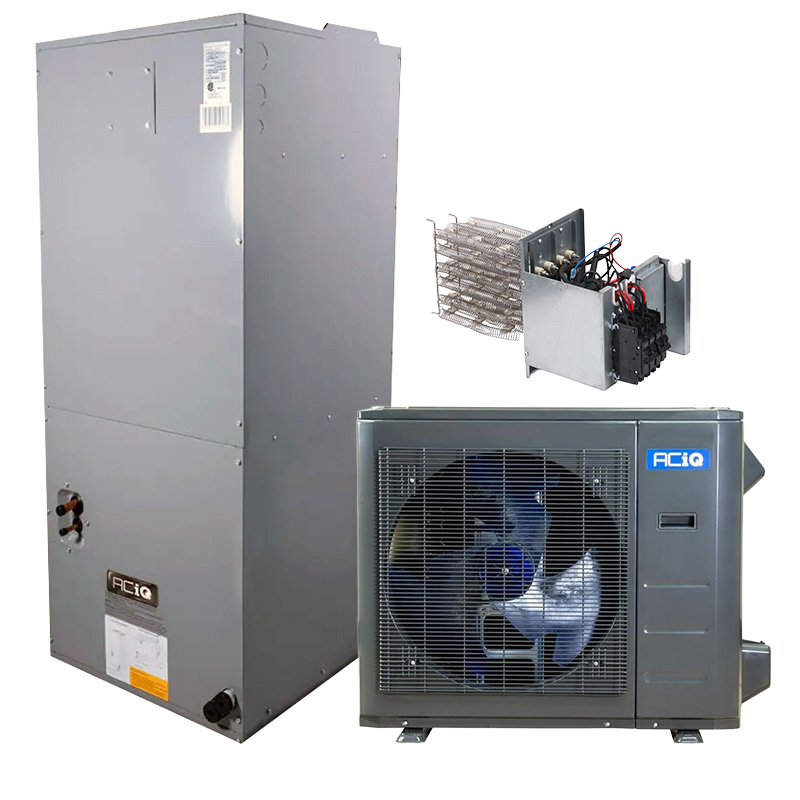
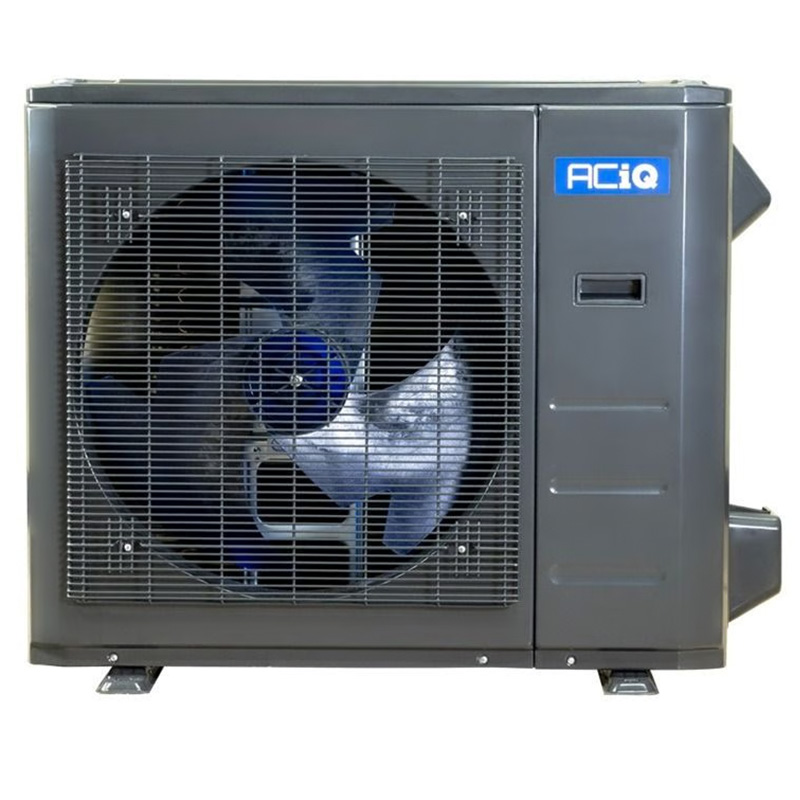
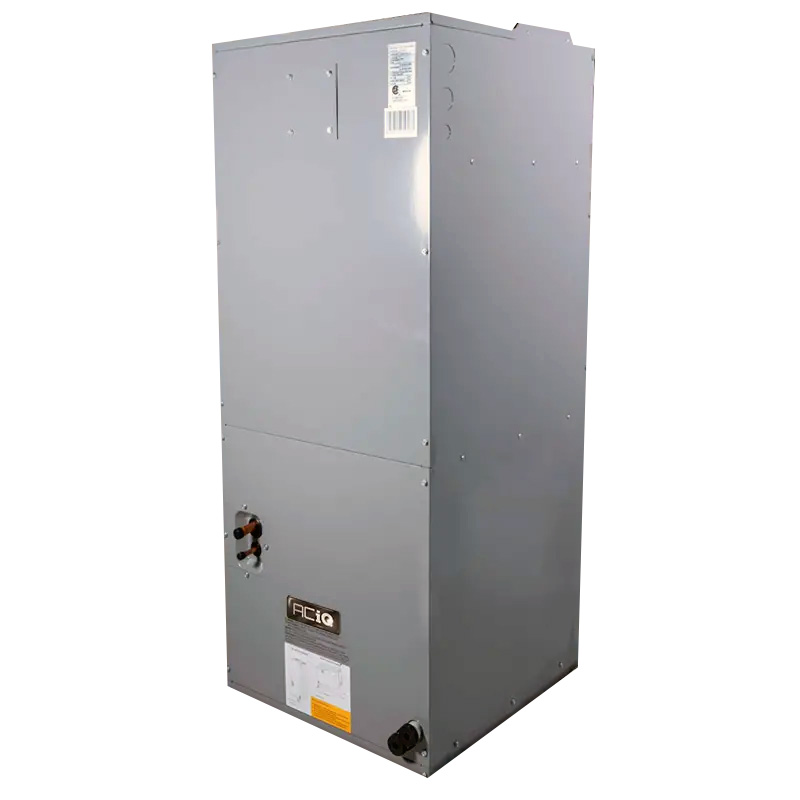
ACiQ 1 Ton Split Heat Pump AC System | 21 SEER2 High Efficiency Inverter Heats Down To 5° F and Beyond | R454B
View on AC Direct see your lowest price →Check current price on AC Direct →
Key features
- 21 SEER2 inverter-driven compressor for variable-capacity operation
- Rated heating operation down to 5°F outdoor ambient temperature
- R-454B refrigerant, a lower-GWP next-generation refrigerant
- 1-ton (approximately 12,000 BTU) capacity for small single-zone applications
- 12-year parts warranty included, sold direct with no dealer markup
- Variable-speed technology for quieter operation and reduced temperature swings
About this system
The ACiQ 1-Ton 21 SEER2 Split Heat Pump is a compact, high-efficiency system aimed at small spaces: a single zone, a garage conversion, a tight addition, or a very small home where a 12,000 BTU output is actually the right fit. At 21 SEER2, it sits at the upper tier of efficiency for residential split heat pumps, which means lower monthly operating costs compared to equipment rated in the 15-17 SEER2 range. The inverter-driven compressor modulates output rather than cycling on and off, which contributes to steadier temperatures, quieter operation, and the efficiency numbers the rating reflects.
The system runs on R-454B refrigerant, a lower-global-warming-potential replacement for R-410A that is becoming the new standard ahead of regulatory deadlines. That matters for long-term serviceability: equipment built around R-454B will be easier to service as R-410A is phased out, though technicians will need certification and equipment compatible with the newer refrigerant. The headline cold-weather spec, rated heating down to 5 degrees Fahrenheit and beyond, makes this a functional year-round heating solution in most of the continental United States, though output capacity drops in extreme cold and a supplemental heat source should be considered in very cold climates.
The ACiQ 1-Ton 21 SEER2 heat pump delivers genuinely premium efficiency numbers at a price well below name-brand equivalents, and the 12-year warranty provides meaningful coverage for the long run. The trade-offs are real: the brand is new enough that long-term reliability data is thin, the manufacturer is undisclosed, and service depends entirely on finding an independent contractor comfortable with a brand they may not recognize.
Overall score is the average of the five ratings above.
What we like
- 21 SEER2 efficiency rating is genuinely high-tier, not a marketing rounding exercise
- Inverter compressor provides quieter, steadier performance than single-stage alternatives
- R-454B refrigerant positions the system well for future serviceability as R-410A phases out
- 12-year parts warranty sold at no dealer markup is a strong coverage offer for this price tier
- Cold-weather heating rated to 5°F makes it a viable year-round heat pump across most of the U.S.
Trade-offs
- Brand is new enough that Consumer Reports has not yet assigned a reliability score, and long-term independent data is still limited
- Undisclosed manufacturer makes it harder for technicians to cross-reference parts, service bulletins, or failure history
- No dealer network means finding a qualified local installer requires extra vetting on the buyer's part
- 1-ton capacity is correct only for small spaces; oversizing or undersizing relative to a proper Manual J load calculation will hurt both comfort and efficiency
What homeowners and pros say about ACiQ
Early owner feedback on ACiQ equipment, gathered from independent HVAC forums and direct-sale review platforms, is largely positive on the fundamentals: units run quietly, cooling and heating performance has matched expectations, and the direct-sale support team has drawn favorable comments for responsiveness. That said, the brand is new enough that Consumer Reports has not yet accumulated sufficient long-term data to assign a reliability score, which is a real gap compared to a Carrier or Trane where years of failure-rate data exist. Experienced HVAC technicians on trade forums note a specific concern: because ACiQ does not disclose its manufacturing parent, a technician encountering an unfamiliar failure cannot quickly cross-reference service bulletins, known failure modes, or OEM parts sources against a named brand. That friction is minor when the system is running, but it can add time and cost when it is not.
The documented failure-mode picture for ACiQ specifically is thin, because the field history simply is not long enough yet. Broader industry context is worth noting: in budget and mid-tier inverter heat pumps generally, common problem areas include capacitor degradation in high-cycling applications, refrigerant coil leaks at brazed joints, and questions about long-term compressor lifespan under variable-load conditions. Whether ACiQ units will prove more or less susceptible to these issues than competitors is genuinely unknown at this stage. The 12-year parts warranty is a meaningful backstop if problems do emerge, but labor costs on a warranty repair still fall to the homeowner, and the absence of a dealer network means the homeowner is responsible for finding and vetting the contractor who does that work.
Sources: Consumer Reports heat pump ratings, HVACDirect on the ACiQ brand, AHRI Directory of Certified Product Performance, U.S. DOE appliance and equipment efficiency standards.
What it costs to run
At 21 SEER2, cooling this 1-ton system for a typical 1200-hour cooling season at the U.S. average electricity rate of $0.17/kWh works out to roughly $117 per year in cooling, about $66 less per year than a minimum-efficiency 13.4 SEER2 unit of the same size. Your real cost depends on your climate and local rate.
Method: (12,000 BTU/hr ÷ 21 SEER2) × 1200 hours ÷ 1000 × $0.17/kWh. Rate source: U.S. EIA average; cooling hours: moderate-climate estimate.
How it compares
| Brand | Comparable model | SEER2 | Stage | Price position |
|---|---|---|---|---|
| ACiQ | 1-Ton 21 SEER2 Split Heat Pump (R-454B) | 21 | Variable (inverter) | Value pick |
| Carrier | Infinity 20 Heat Pump (25VNA0) | 20+ | Variable (inverter) | Significantly higher than ACiQ |
| Trane | XV20i Heat Pump (4TWV0) | 20 | Variable (inverter) | Significantly higher than ACiQ |
| Lennox | XP21 Heat Pump | 21.1 | Variable (inverter) | Significantly higher than ACiQ |
Competitor rows are comparable single-stage units at similar efficiency; price is relative position, not a quote.
Questions about this system
Will this system actually heat my space when it gets below freezing outside?
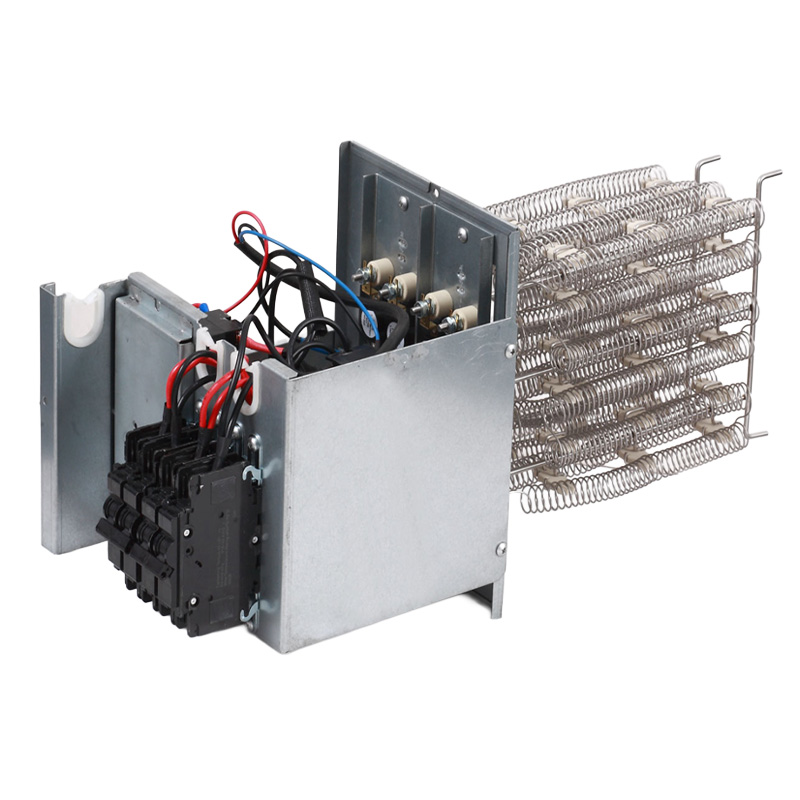
ACiQ rates this unit for heating operation down to 5°F, which covers most U.S. climates. However, heat pump output capacity decreases as outdoor temperatures fall, so a 1-ton unit that handles a space comfortably at 30°F will deliver less heat at 5°F. In climates that regularly see temperatures below zero, a supplemental electric strip or backup heat source is worth planning for.
How hard is it to find a technician who will service an ACiQ system?
ACiQ is sold direct, so there is no branded dealer network. Any licensed HVAC contractor can work on the equipment, but some technicians may be unfamiliar with the brand. Because the actual manufacturer is not publicly disclosed, cross-referencing parts or service procedures against a known parent brand is not straightforward, which can slow down diagnosis or parts sourcing.
Is R-454B refrigerant a problem for my installer or future service calls?
R-454B is mildly flammable (A2L classification), which means technicians need specific training and compatible recovery equipment. It is not unusual or exotic, and it is where the industry is heading, but you should confirm your installer has the correct equipment and certification before scheduling the job.
The 12-year warranty sounds great, but what does it actually cover?
ACiQ's 12-year warranty covers parts, which is competitive with name brands that often require product registration to reach that term. Labor is not included, which is standard across the industry. Read the warranty document carefully for registration requirements and exclusions before installation, since failure to register within the required window can reduce the coverage period.
Is a 1-ton unit enough for my space, or should I size up?
One ton of cooling or heating capacity is appropriate for roughly 400 to 600 square feet in a reasonably insulated space, though the real answer depends on your climate, insulation, window area, and ceiling height. A proper Manual J load calculation by your HVAC contractor is the only reliable way to confirm sizing. Oversizing an inverter system wastes money upfront and can reduce efficiency and dehumidification performance.
Specifications
| Cooling capacity | 1 Ton |
| Efficiency | 21 SEER2 |
| Refrigerant | R-454B |