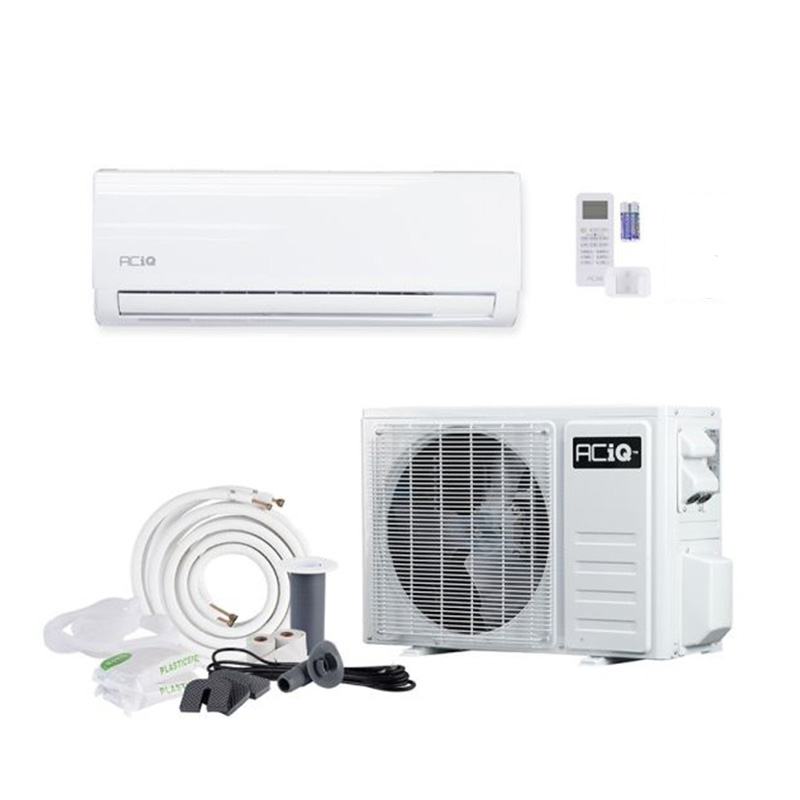
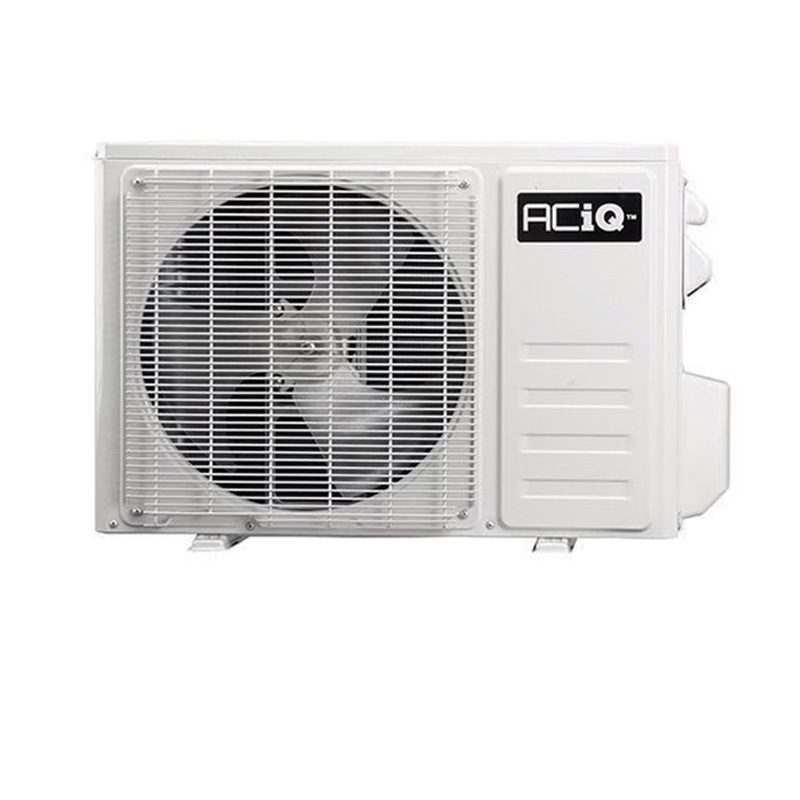
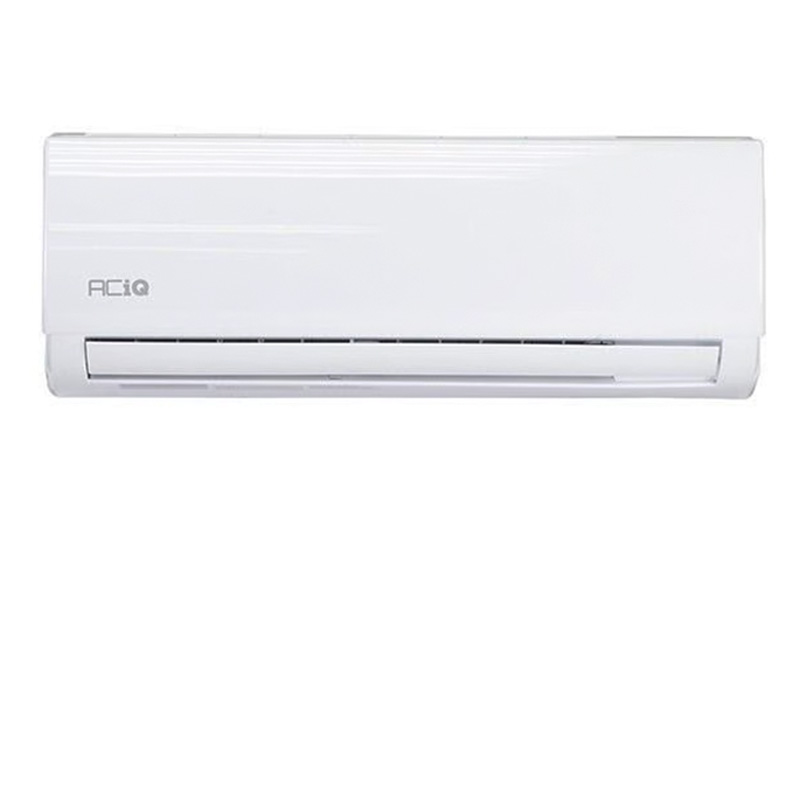
ACiQ 12000 BTU Single Zone Mini Split Heat Pump AC Wall Mounted System | 20.5 SEER2 | 115V | Essential Series | White | R454B
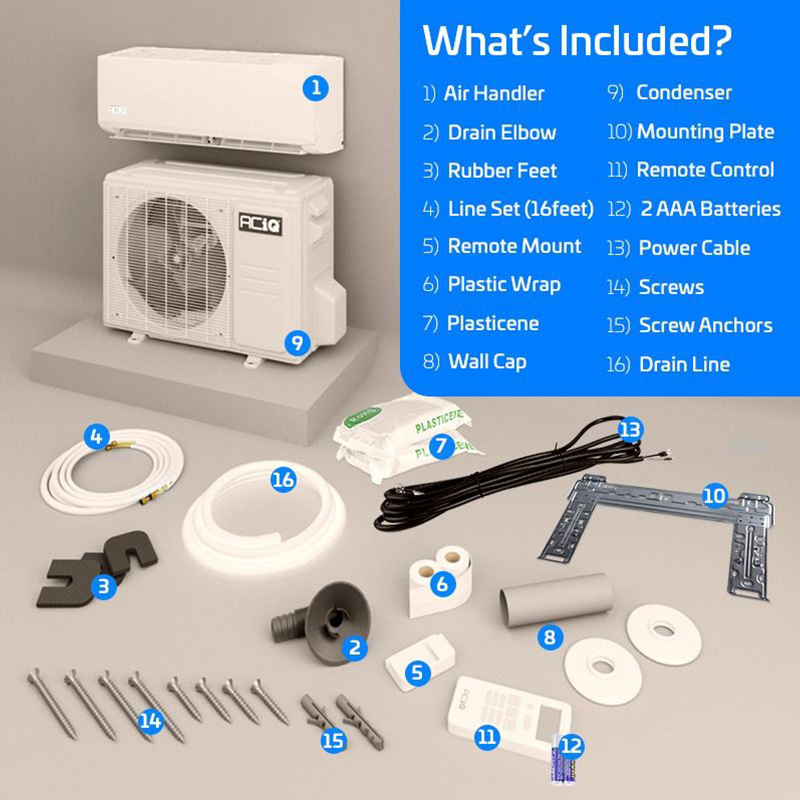
View on AC Direct see your lowest price →Check current price on AC Direct →
Key features
- 20.5 SEER2 inverter-driven heat pump for both cooling and heating
- 115V operation reduces electrical upgrade costs versus most mini-splits
- R-454B refrigerant with lower global warming potential than R-410A
- Wall-mounted single-zone design suited to rooms up to roughly 550 sq ft
- 12-year parts and compressor warranty shipped direct with no dealer markup
- Variable-speed compressor for continuous capacity modulation and quieter operation
About this system
The ACiQ 12000 BTU Single Zone Mini Split is a wall-mounted ductless heat pump designed for rooms roughly 400 to 550 square feet, such as a bedroom addition, garage workshop, sunroom, or a ground-floor living space that the main system never quite reaches. Running on standard 115V power rather than the 240V circuit most mini-splits require, it sidesteps a dedicated electrical upgrade in many homes, which is a genuinely useful feature for renters, condo owners, or anyone working with an older panel. The R-454B refrigerant is a lower-GWP alternative to R-410A, aligning the unit with where the industry is heading as 410A is phased down under current EPA rules.
At 20.5 SEER2, this system sits in the upper tier of efficiency for its price class. SEER2 is the updated federal testing standard that reflects real-world duct and external static pressure losses more accurately than the older SEER rating, so a 20.5 SEER2 number is a meaningful benchmark rather than a lab-optimized figure. The inverter-driven compressor modulates output continuously rather than cycling on and off, which contributes both to the efficiency rating and to the quiet, stable room temperatures owners commonly note. The Essential Series label signals this is ACiQ’s entry-level line, so expect the core refrigeration and inverter hardware without premium add-ons like Wi-Fi control or advanced air filtration found on higher ACiQ tiers.
The ACiQ 12000 BTU 115V mini split offers a genuinely competitive efficiency rating and an unusually long warranty at a price that undercuts established brands by a meaningful margin. The 115V input is a real differentiator for spaces without a dedicated 240V circuit, and early owner feedback skews positive. The honest caveat is that long-term reliability data is still thin and the undisclosed manufacturer makes parts sourcing and service history harder to verify than with a name brand.
Overall score is the average of the five ratings above.
What we like
- 20.5 SEER2 efficiency is strong for this price tier
- 115V operation avoids a costly panel or circuit upgrade in many installs
- 12-year warranty ships with the unit and carries no dealer-added fees
- Inverter compressor delivers quiet, steady temperatures rather than on-off cycling
- R-454B refrigerant positions the unit ahead of the R-410A phasedown curve
Trade-offs
- Brand is relatively new, so Consumer Reports has not yet assigned a reliability score and independent long-term data is limited
- The actual manufacturer is not publicly disclosed, complicating parts cross-referencing and service history research
- No dealer network means service depends on finding an independent contractor willing to work on an unfamiliar brand
- Essential Series omits Wi-Fi connectivity and advanced filtration available on higher ACiQ tiers and many competing brands
What homeowners and pros say about ACiQ
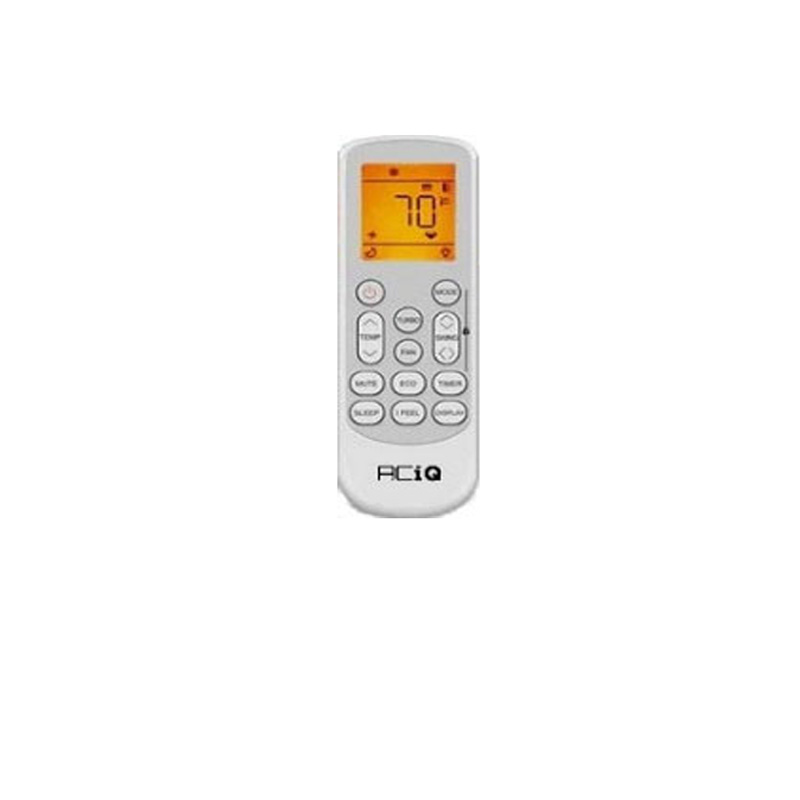
Early owners of ACiQ mini-splits tend to highlight the same handful of positives: the units run quietly once installed, the remote and basic controls are straightforward, and when questions arise the direct-sale support line has generally been responsive. Consumer Reports has not yet ranked ACiQ because the brand is too new to have generated the volume of long-term owner data that organization requires for a reliability score, so the positive early signals are real but not yet backed by the kind of multi-year field evidence that would settle the question. The 115V input on this specific unit draws particular interest from buyers who discovered mid-project that running a new 240V circuit was going to cost as much as the unit itself.
HVAC professionals who have worked on ACiQ equipment note a practical complication that matters after the sale: because the parent manufacturer is not disclosed, a technician encountering an unfamiliar failure cannot easily pull up a cross-referenced parts diagram from a known brand family. The specific failure modes worth watching in any inverter mini-split of this generation include refrigerant coil integrity over time, compressor longevity beyond the five-year mark where inverter-driven units face their highest failure risk, and control board reliability in humid or dusty environments. None of these have emerged as documented patterns unique to ACiQ yet, but the absence of long-term data means they cannot be ruled out either. Contractors who prefer stocking parts for brands with established supply chains may push back on ACiQ installs, which is worth factoring in when evaluating the total cost of ownership.
Sources: Consumer Reports heat pump ratings, HVACDirect on the ACiQ brand, AHRI Directory of Certified Product Performance, U.S. DOE appliance and equipment efficiency standards.
What it costs to run
At 20.5 SEER2, cooling this 12000 BTU system for a typical 1200-hour cooling season at the U.S. average electricity rate of $0.17/kWh works out to roughly $119 per year in cooling, about $64 less per year than a minimum-efficiency 13.4 SEER2 unit of the same size. Your real cost depends on your climate and local rate.
Method: (12,000 BTU/hr ÷ 20.5 SEER2) × 1200 hours ÷ 1000 × $0.17/kWh. Rate source: U.S. EIA average; cooling hours: moderate-climate estimate.
How it compares
| Brand | Comparable model | SEER2 | Stage | Price position |
|---|---|---|---|---|
| ACiQ | Essential Series 12000 BTU 115V Single Zone | 20.5 | Variable | Value pick |
| Mitsubishi | M-Series MSZ-GL12NA | 19.0 | Variable | Significantly higher than ACiQ |
| Daikin | Aurora Series FTXB12AXVJU | 18.0 | Variable | Moderately higher than ACiQ |
| Fujitsu | Halcyon ASHG12KMTB | 20.0 | Variable | Higher than ACiQ |
Competitor rows are comparable single-stage units at similar efficiency; price is relative position, not a quote.
Questions about this system
Does 115V really mean I can plug this into a standard household outlet?
Not exactly. The unit runs on 115V but still requires a dedicated 15- or 20-amp circuit with a proper disconnect, not a standard wall outlet. What it avoids is the 240V circuit upgrade that most mini-splits require, which can save several hundred dollars in electrical work depending on your panel.
What size room is 12000 BTU actually right for?
A rough industry rule of thumb puts 12000 BTU at approximately 400 to 550 square feet under average ceiling height and insulation conditions. Heavily shaded rooms, well-insulated spaces, or cooler climates may allow the upper end of that range, while sunny south-facing rooms or high-humidity regions may perform better with a 15000 BTU unit.
Since ACiQ is a newer brand, what happens if I need a replacement part in five or six years?
This is a legitimate concern. Because the actual manufacturer is not publicly disclosed, you cannot easily cross-reference parts to a parent brand catalog the way you can with, say, a Carrier or Daikin unit. Sourcing parts may require going through ACiQ or AC Direct directly, and availability years down the road is not guaranteed in the same way it would be for a long-established brand.
Is the 12-year warranty comparable to what I would get from Mitsubishi or Daikin?
Twelve years is longer than the five-year parts and seven-year compressor coverage that most mini-split brands offer at standard registration, and ACiQ ships it without requiring purchase through a registered dealer. Mitsubishi and Daikin can match or approach that coverage but typically only through their authorized installer programs, which carry a higher upfront price. Read the ACiQ warranty terms carefully for labor exclusions and refrigerant handling requirements.
Can I install this myself to save money?
Line-set connection and refrigerant handling legally require an EPA 608-certified technician, so a full DIY install is not permitted under federal law. The 115V electrical connection is simpler than a 240V circuit but still needs a dedicated breaker and disconnect. Some buyers use a certified HVAC tech only for the refrigerant work and handle the mounting and line-set run themselves, which can reduce labor costs, but verify with your local code authority before proceeding.
Specifications
| Efficiency | 20.5 SEER2 |
| Furnace output | 12000 BTU |
| Refrigerant | R-454B |