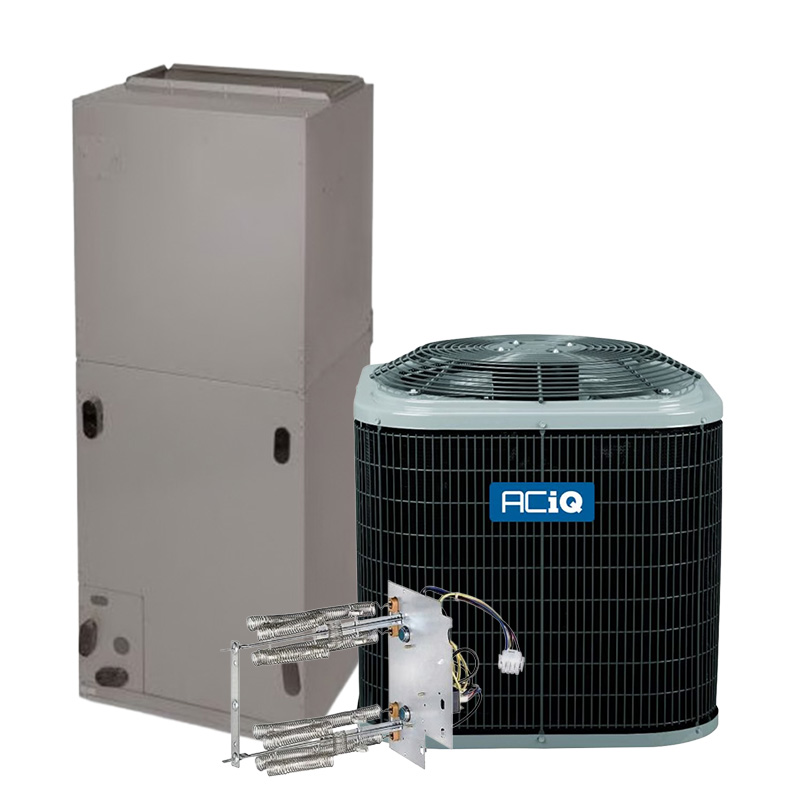
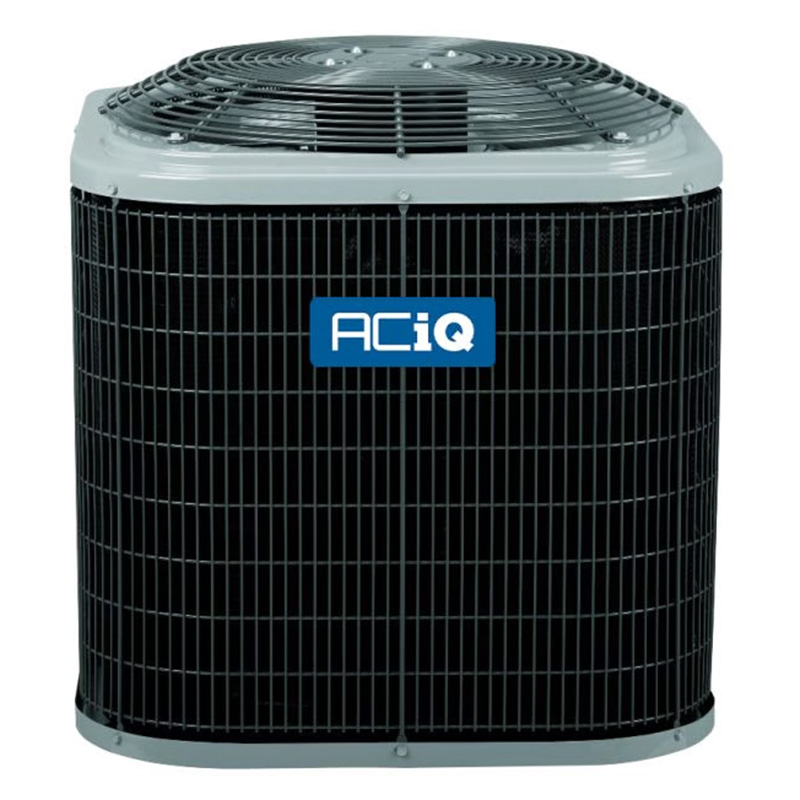
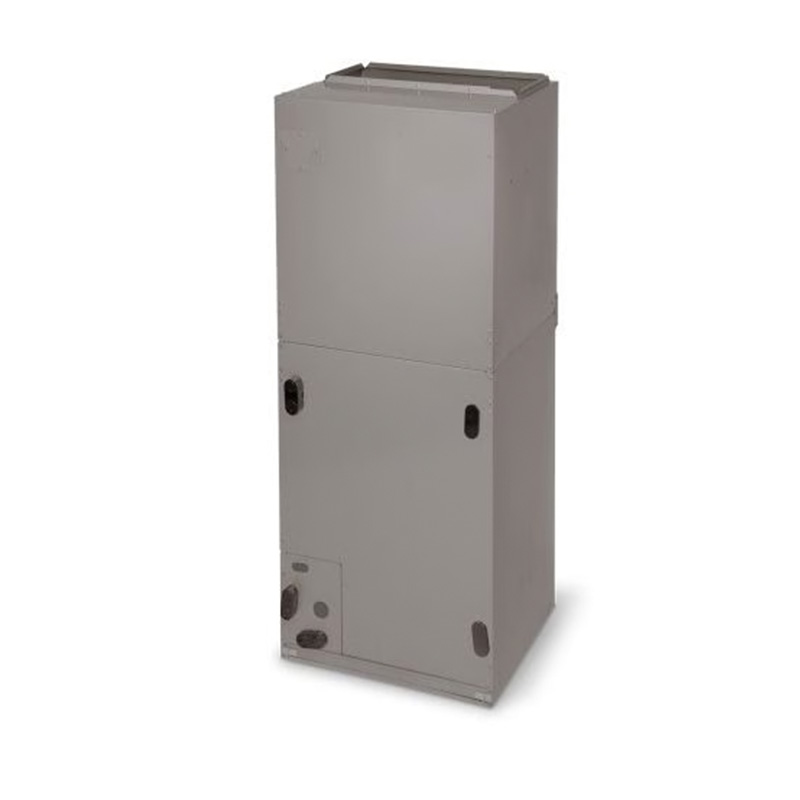
ACiQ 2.5 Ton AC With Electric Heat System | 15.2 SEER2 AC | 21" Wide Variable Speed Multi-Positional Modular Air Handler | R454B
View on AC Direct see your lowest price →Check current price on AC Direct →
Key features
- 15.2 SEER2 variable-speed compressor and air handler for consistent temperature and humidity control
- 21-inch-wide modular air handler fits utility closets and alcoves where standard cabinets will not
- Multi-positional cabinet installs in upflow, downflow, or horizontal configurations
- R-454B refrigerant (A2L, lower global-warming potential than R-410A) meets current and near-future regulatory standards
- Integrated electric heat strips available for all-electric or backup heating without a separate furnace
- Ships direct with a 12-year parts warranty, no dealer markup on coverage
About this system
The ACiQ 2.5-ton split system pairs a 15.2 SEER2 condensing unit with a 21-inch-wide variable-speed, multi-positional modular air handler and runs on R-454B, the lower-GWP refrigerant that is rapidly replacing R-410A across the industry. At 2.5 tons the system targets homes in the 1,200-to-1,600-square-foot range, though actual sizing depends on your local climate, insulation quality, and Manual J load calculation. The narrow 21-inch air handler cabinet is a genuine advantage in tighter utility closets, alcoves, and platform installations where a standard 24-inch unit simply will not fit.
Variable-speed operation means the compressor and air handler blower modulate output rather than cycling hard on and off, which translates to more consistent indoor temperatures, quieter operation at partial load, and better humidity control compared to single-stage equipment at a similar efficiency tier. The 15.2 SEER2 rating clears the current federal minimums for most U.S. climate regions with some margin, though it sits in the entry-level efficiency band rather than the premium tier. The electric heat option in the air handler covers heating duty where a gas furnace is not practical, making this a reasonable all-electric solution for mild-to-moderate heating climates or as backup heat in a heat-pump setup.
The ACiQ 2.5-ton variable-speed system offers genuinely competitive technology at a price that undercuts name brands by a meaningful margin, and the 12-year warranty backs it without the dealer-network markup that inflates coverage costs elsewhere. The trade-off is real: the brand is new enough that long-term independent reliability data does not yet exist, and the undisclosed manufacturer makes contractor familiarity and parts sourcing harder than with a Carrier or Trane label on the cabinet.
Overall score is the average of the five ratings above.
What we like
- Variable-speed operation delivers quiet, consistent comfort and better humidity control than single-stage alternatives at this price point
- 21-inch-wide air handler opens up installation locations that standard 24-inch cabinets cannot fit
- R-454B refrigerant is already compliant with tightening EPA regulations, reducing future retrofit risk
- 12-year parts warranty ships with the unit at no added dealer cost
- Early owner feedback consistently highlights quiet operation and responsive customer support
Trade-offs
- Consumer Reports has not yet rated ACiQ due to insufficient long-term field data, so reliability is unproven beyond early reviews
- Undisclosed manufacturing origin complicates parts cross-referencing and makes some independent contractors hesitant to service it
- No proprietary dealer network means warranty service depends entirely on finding a willing independent contractor in your area
- 15.2 SEER2 is a modest efficiency gain over minimum-compliance equipment; buyers in hot climates who run AC heavily may want a higher SEER2 tier
What homeowners and pros say about ACiQ
Early owner commentary on ACiQ systems clusters around a few consistent themes: the equipment runs noticeably quieter than the single-stage units it typically replaces, installation went smoothly for contractors willing to work with the brand, and the direct-sale support line has been responsive when questions came up. Consumer Reports has not yet assigned ACiQ a reliability score because the brand is too new to have accumulated the years of field data their methodology requires, so those positive early impressions should be weighed accordingly. On contractor forums, the undisclosed manufacturing origin is the most frequently raised concern, since technicians cannot easily cross-reference parts histories or draw on brand-specific service experience the way they can with a Carrier or Trane cabinet.
The documented structural trade-offs for this product are worth naming plainly. The absence of a factory-authorized dealer network means warranty service coordination falls entirely on the homeowner, and a contractor unfamiliar with ACiQ equipment may decline the call or charge a premium for the uncertainty. The A2L classification of R-454B requires technicians to use updated tooling and follow revised handling procedures, which is an industry-wide shift but still adds a variable for shops that have not yet retooled. None of these are disqualifying issues for a buyer who plans carefully and finds an experienced installer in advance, but they are real considerations that separate this purchase from buying a name-brand system through a local dealer who owns the relationship end to end.
Sources: Consumer Reports heat pump ratings, HVACDirect on the ACiQ brand, AHRI Directory of Certified Product Performance, U.S. DOE appliance and equipment efficiency standards.
What it costs to run
At 15.2 SEER2, cooling this 2.5-ton system for a typical 1200-hour cooling season at the U.S. average electricity rate of $0.17/kWh works out to roughly $403 per year in cooling, about $54 less per year than a minimum-efficiency 13.4 SEER2 unit of the same size. Your real cost depends on your climate and local rate.
Method: (30,000 BTU/hr ÷ 15.2 SEER2) × 1200 hours ÷ 1000 × $0.17/kWh. Rate source: U.S. EIA average; cooling hours: moderate-climate estimate.
How it compares
| Brand | Comparable model | SEER2 | Stage | Price position |
|---|---|---|---|---|
| ACiQ | 2.5-Ton 15.2 SEER2 Variable-Speed with 21" Air Handler | 15.2 | Variable | Value pick |
| Carrier | Comfort 24ACC6 with FV4C Air Handler | 15.2 | Single-stage | Noticeably higher than ACiQ for comparable or lower efficiency tier |
| Trane | XR15 with Air Handler TAM7 | 15.0-15.5 | Single-stage | Moderately higher than ACiQ with established dealer service network included |
| Lennox | Merit ML14XC1 with CBX25UHV Air Handler | 15.0-16.0 | Single-stage to two-stage depending on config | Higher than ACiQ; premium rises further for variable-speed Lennox tiers |
Competitor rows are comparable single-stage units at similar efficiency; price is relative position, not a quote.
Questions about this system
Will any licensed HVAC contractor be able to install and service this system, or do I need an ACiQ-authorized technician?
Any EPA 608-certified HVAC technician can install and service the unit; there is no proprietary dealer network. The catch is that contractors unfamiliar with ACiQ may be cautious about warranty labor, and because the underlying manufacturer is not disclosed, some techs find cross-referencing parts less straightforward than with a name-brand system. It is worth confirming your installer is comfortable with the brand before you purchase.
What does the 21-inch-wide air handler actually buy me compared to a standard cabinet?
Most residential air handlers are 21 to 24 inches wide, and the difference matters in tight utility closets, narrow alcoves, or platform installations with limited clearance. The 21-inch cabinet can fit spaces where a 24-inch unit physically will not, reducing the need for framing modifications or alternative equipment locations.
Is R-454B harder to find or more expensive to recharge than R-410A if there is a refrigerant leak?
R-454B availability is growing quickly as manufacturers transition away from R-410A, and most wholesale HVAC suppliers now stock it. Pricing is currently somewhat higher than legacy R-410A, but regulatory phase-downs on R-410A are pushing those costs upward anyway. The more important note is that R-454B is classified A2L (mildly flammable), so technicians must use compatible tools and follow updated handling procedures.
Does the electric heat in the air handler replace a furnace entirely, or is it only supplemental?
The electric heat strips in the air handler can serve as the primary heat source, making this a complete all-electric heating and cooling system without a separate furnace. That works well in mild-to-moderate heating climates or where gas is not available. In colder climates, electric-only heat can result in high operating costs, so pairing with a heat pump or evaluating utility rates carefully before committing to electric heat is worthwhile.
How does the 12-year warranty actually work if ACiQ sells direct and has no dealer network?
ACiQ's 12-year parts warranty requires product registration after installation and covers the major components for that period. Labor is not included, which is standard across the industry. Because there is no factory dealer network, you will need to arrange and pay an independent contractor for warranty service calls; ACiQ's direct-sale support team handles parts claims. This structure is fine if responsive contractors are available in your area, but it adds a coordination step compared to brands with local authorized service centers.
Specifications
| Cooling capacity | 2.5 Ton |
| Efficiency | 15.2 SEER2 |
| Refrigerant | R-454B |