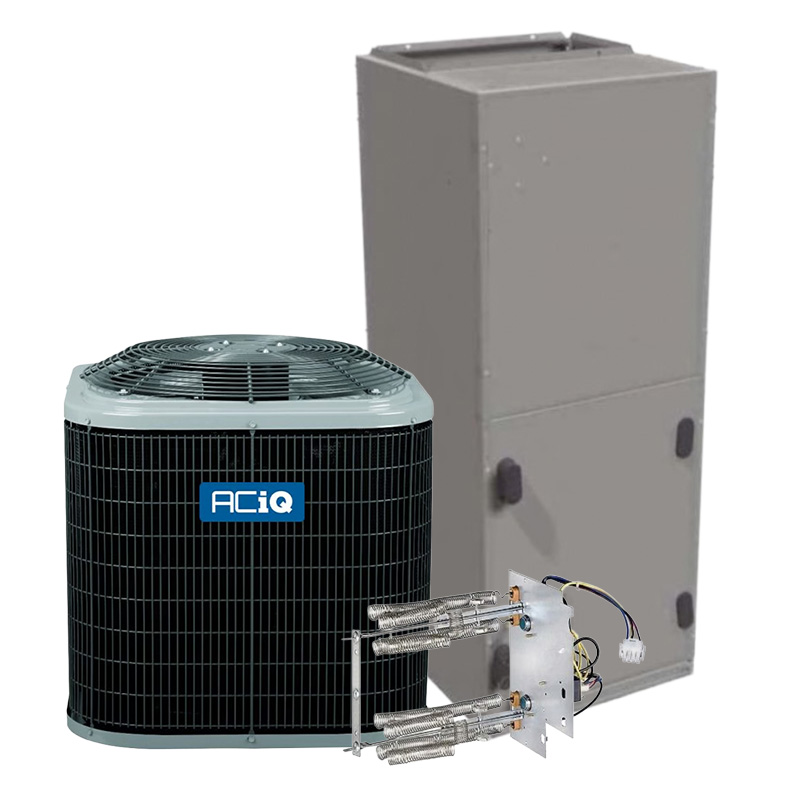
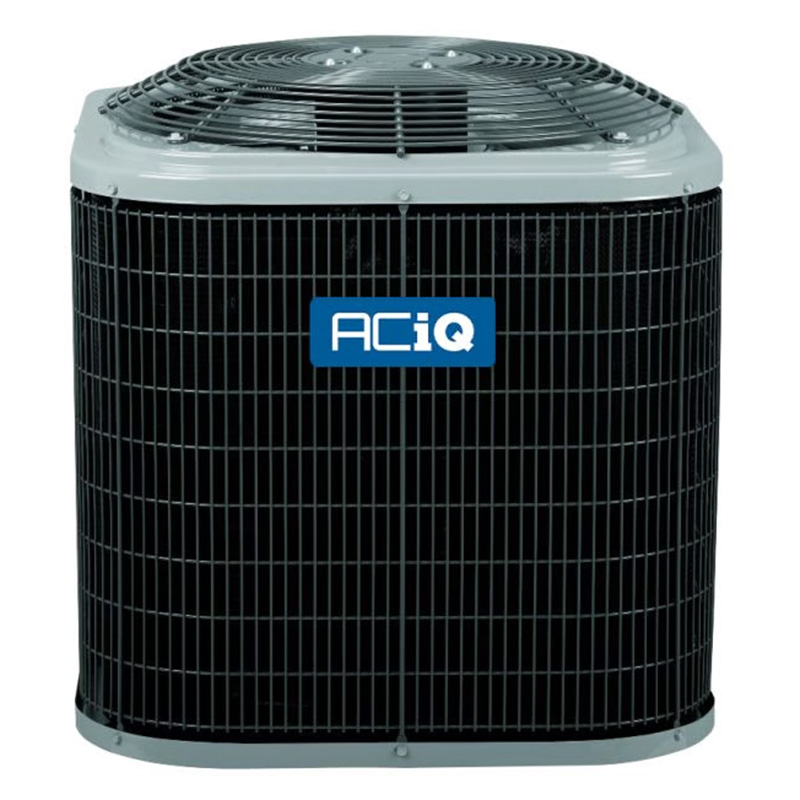
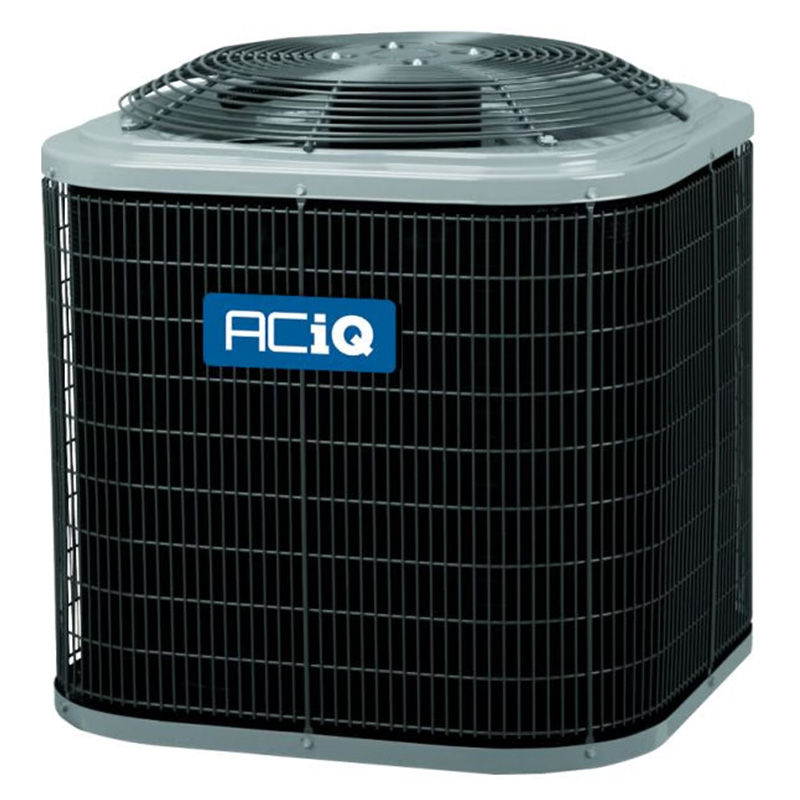
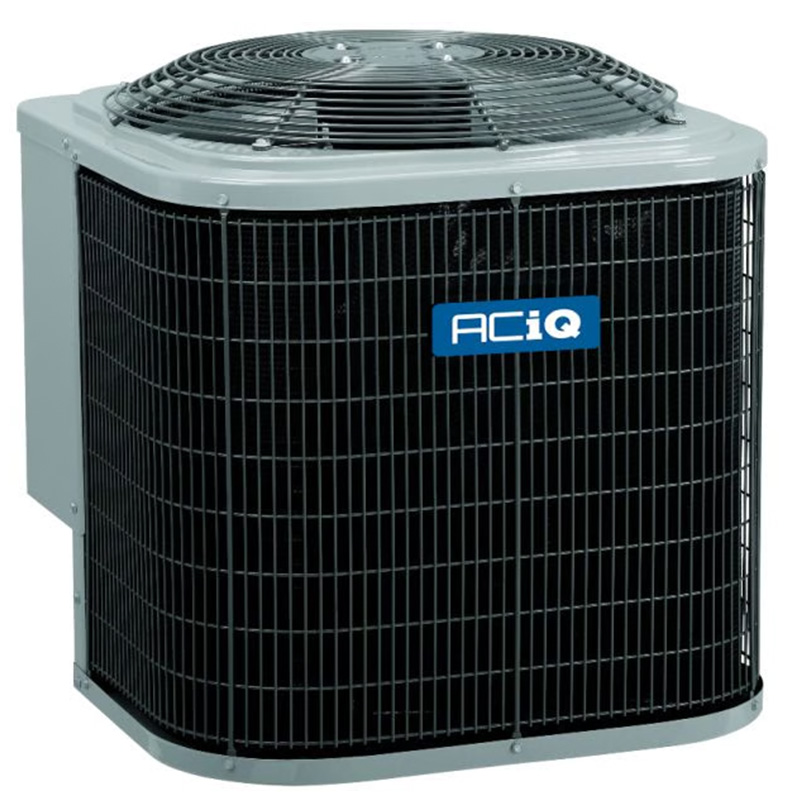
ACiQ 2.5 Ton Air Conditioning With Electric Heat System | 15 SEER2 AC | 17.5" Wide Multi-Positional Air Handler | R454B
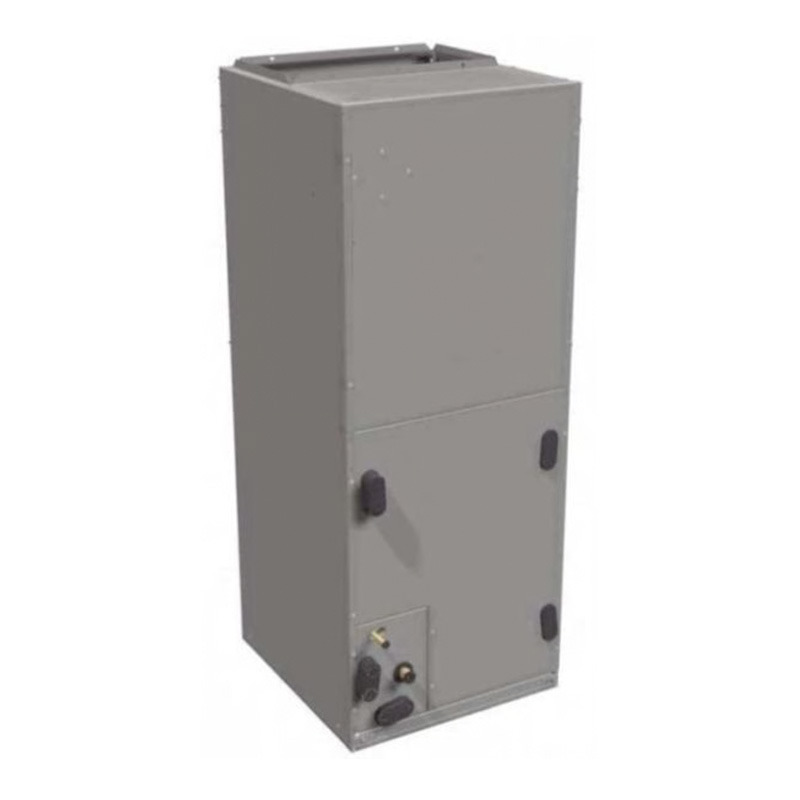
View on AC Direct see your lowest price →Check current price on AC Direct →
Key features
- 15 SEER2 efficiency rating meets 2023 federal minimums for most U.S. regions
- R-454B refrigerant replaces R-410A with a significantly lower global warming potential
- 17.5-inch-wide multi-positional air handler installs in upflow, downflow, or horizontal orientation
- Integrated electric heat strips eliminate the need for a separate furnace in mild climates
- 12-year parts warranty included at purchase with no dealer markup required
- Sold factory-direct, removing dealer margin from the purchase price
About this system
The ACiQ 2.5-ton 15 SEER2 air conditioning system with electric heat is a split-system package aimed at homeowners who want a factory-fresh, modern refrigerant platform without paying name-brand premiums. The 17.5-inch-wide multi-positional air handler is a genuine practical feature: it can be installed in upflow, downflow, or horizontal orientations, which makes it workable in attic platforms, closet installations, and basement utility rooms alike. The system runs on R-454B, a low-global-warming-potential refrigerant that replaces R-410A and is now the direction the industry is moving under updated EPA rules, so you are not buying into a refrigerant that will be phased out shortly.
At 15 SEER2, this unit sits at the federal minimum efficiency threshold for most of the country, meaning it exceeds the baseline but does not reach the mid-efficiency or high-efficiency tiers where variable-speed compressors appear. The electric heat strips built into the air handler eliminate the need for a separate furnace, which reduces installation complexity and cost in climates where winters are mild enough that electric resistance heat is not prohibitively expensive to run. This configuration is most practical in the South and Southwest, where heating loads are low and a heat pump or gas furnace would be overkill or unavailable. Buyers in cold-winter climates should model their annual electric heating costs carefully before committing.
The ACiQ 2.5-ton 15 SEER2 system with electric heat is a straightforward, competitively priced entry into a transitional refrigerant era, and it makes the most sense for mild-climate homeowners replacing an aging R-22 or R-410A system on a budget. The 12-year warranty is a genuine differentiator at this price point, but the brand's limited independent reliability history and the undisclosed manufacturer identity are real factors to weigh against the savings. Buyers who want documented long-term reliability data or a local dealer service network will find more comfort with an established brand, even at a higher upfront cost.
Overall score is the average of the five ratings above.
What we like
- Factory-direct pricing consistently undercuts comparable Carrier, Trane, and Lennox systems at similar efficiency
- 12-year parts warranty requires no dealer registration fee or markup to activate
- R-454B refrigerant future-proofs the system against refrigerant phase-out regulations
- Multi-positional air handler simplifies installation in non-standard equipment locations
- Early owner feedback points to quiet operation and responsive customer support from ACiQ
Trade-offs
- Consumer Reports has not yet assigned a reliability score due to insufficient long-term field data
- The actual manufacturer is undisclosed, which complicates parts sourcing and cross-referencing service history
- No factory dealer network means service depends entirely on finding a willing independent contractor
- Single-stage cooling at 15 SEER2 offers no humidity or comfort advantages over the minimum-efficiency baseline that a variable-speed system would provide
What homeowners and pros say about ACiQ
Homeowners who have purchased ACiQ systems and shared their experiences online most commonly describe quiet operation and equipment that performs as advertised out of the box. Early owner reviews lean positive on cooling performance and on ACiQ’s customer support responsiveness when questions arise after installation. What is notably absent from early feedback is the kind of long-term data that would reveal whether common HVAC failure points, such as capacitor degradation, refrigerant coil integrity over years of cycling, or compressor longevity under sustained load, hold up as well as they appear to in the first seasons of use. Consumer Reports has not yet assigned ACiQ a reliability score precisely because the brand is new enough that the sample size of multi-year owners is still too small to be statistically meaningful. That is not a condemnation, but it is a real gap compared to brands with decades of field data.
HVAC contractors who have installed ACiQ units tend to note that the equipment itself arrives well-packaged and within spec, but some express frustration with the undisclosed manufacturer identity when they need to cross-reference technical documentation or source parts outside of ACiQ’s own supply chain. The direct-sale model, which cuts out the dealer markup and accounts for much of the price advantage, also means there is no factory-authorized service network to call when something goes wrong under warranty, leaving independent contractors to coordinate repairs with ACiQ’s support team directly. For a homeowner with an established relationship with a reliable independent HVAC contractor, this is a manageable arrangement. For someone relying on whoever is available in an emergency, it introduces a layer of coordination that name-brand dealer networks handle more automatically.
Sources: Consumer Reports heat pump ratings, HVACDirect on the ACiQ brand, AHRI Directory of Certified Product Performance, U.S. DOE appliance and equipment efficiency standards.
What it costs to run
At 15 SEER2, cooling this 2.5-ton system for a typical 1200-hour cooling season at the U.S. average electricity rate of $0.17/kWh works out to roughly $408 per year in cooling, about $49 less per year than a minimum-efficiency 13.4 SEER2 unit of the same size. Your real cost depends on your climate and local rate.
Method: (30,000 BTU/hr ÷ 15 SEER2) × 1200 hours ÷ 1000 × $0.17/kWh. Rate source: U.S. EIA average; cooling hours: moderate-climate estimate.
How it compares
| Brand | Comparable model | SEER2 | Stage | Price position |
|---|---|---|---|---|
| ACiQ | 2.5-Ton 15 SEER2 with Electric Heat Air Handler | 15 | Single-stage | Value pick |
| Carrier | Comfort 24ACC6 with FB4C Air Handler | 15-16 | Single-stage | Moderately higher through dealer network |
| Trane | XR15 with Trane Air Handler | 15 | Single-stage | Moderately higher with dealer and labor markup |
| Lennox | Merit ML15XC1 with CBX25UH Air Handler | 15 | Single-stage | Moderately to considerably higher depending on dealer market |
Competitor rows are comparable single-stage units at similar efficiency; price is relative position, not a quote.
Questions about this system
Who actually manufactures this ACiQ system, and does it matter for parts availability?
ACiQ is AC Direct's house brand, and the actual manufacturer has not been publicly disclosed. Forum speculation points toward the ICP and Carrier family of companies, but this is unconfirmed. It matters practically because if you need an uncommon replacement part outside the 12-year warranty window, cross-referencing compatible parts from a known manufacturer is harder than it would be with a Carrier, Trane, or Lennox unit.
Is R-454B refrigerant harder to find or more expensive to service than R-410A?
R-454B is newer than R-410A and not yet as universally stocked by every HVAC supply house, so availability can vary by region right now. That said, because R-410A is being phased out under updated EPA rules, R-454B and similar A2L refrigerants are where the industry is heading, and supply availability is expected to improve steadily over the coming years.
Can any licensed HVAC contractor install and service this system, or does it require an ACiQ-authorized technician?
Any EPA 608-certified HVAC technician can legally install and service this system, but there is one additional qualification to note: R-454B is classified as a mildly flammable A2L refrigerant, and some jurisdictions and contractors require specific training or tools to handle A2L refrigerants safely. Confirm that your chosen contractor is equipped for A2L work before scheduling installation.
How does the 12-year warranty actually work if ACiQ does not have a dealer network?
The 12-year parts warranty is registered directly with ACiQ at purchase, and warranty claims are handled through ACiQ's customer support rather than through a local dealer. Labor costs for warranty repairs are your responsibility to arrange with an independent contractor, since there is no factory service network to dispatch a technician, so factoring in potential out-of-pocket labor costs on a warranty repair is realistic planning.
Is electric heat from this air handler efficient enough for a home in a mild-winter climate like the Southeast?
Electric resistance heat operates at 100 percent efficiency in the sense that all electricity consumed becomes heat, but it is still more expensive to run per BTU than a heat pump or gas furnace in most utility markets. In climates like the Southeast where the heating season is short and temperatures rarely drop below freezing for extended periods, the total-season heating cost is low enough that electric strips are a common and practical choice. In climates with longer or colder winters, a heat pump or gas furnace will typically produce a lower annual operating cost.
Specifications
| Cooling capacity | 2.5 Ton |
| Efficiency | 15 SEER2 |
| Refrigerant | R-454B |