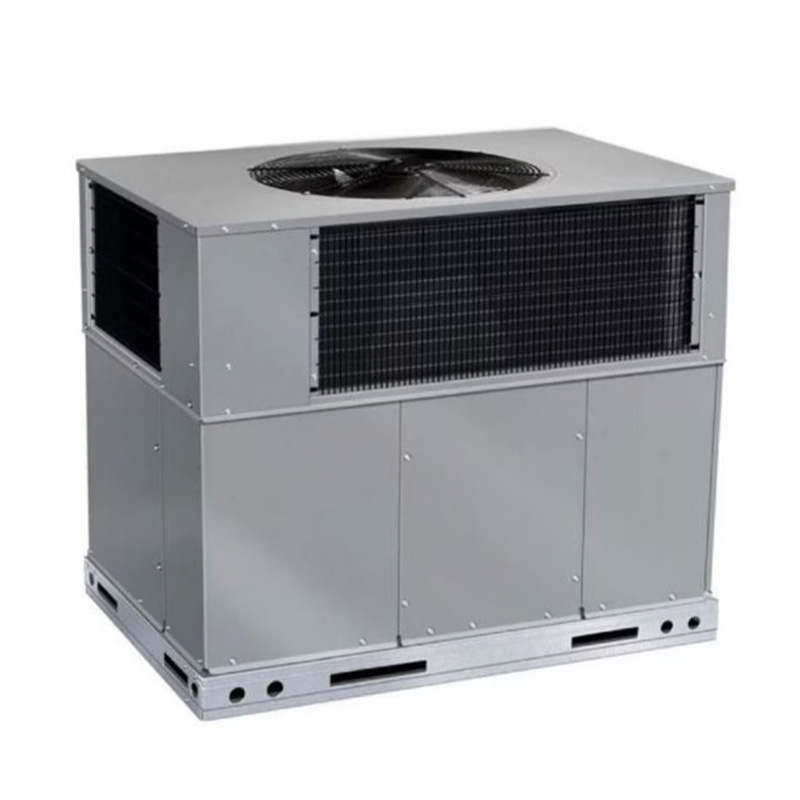
ACiQ 2.5 Ton Package Unit AC With 60000 BTU 81% AFUE Gas Furnace | 13.4 SEER2 Downflow / Horizontal Airflow | R454B
View on AC Direct see your lowest price →Check current price on AC Direct →
Key features
- 2.5-ton cooling output rated at 13.4 SEER2, meeting current federal efficiency minimums
- 60,000 BTU gas furnace section at 81% AFUE in a single packaged cabinet
- Downflow and horizontal airflow configurations for slab, crawlspace, or rooftop installs
- R-454B refrigerant charge factory-installed, compliant with post-R-410A regulations
- 12-year parts warranty included, no dealer markup applied at point of sale
- Sold factory-direct through ACiQ, undercutting comparable name-brand packaged units on price
About this system
The ACiQ 2.5-ton packaged gas/electric unit combines a 30,000 BTU cooling capacity (at 13.4 SEER2) with a 60,000 BTU natural gas furnace rated at 81% AFUE into a single outdoor cabinet. That self-contained design suits homes where there is no interior mechanical room for a split system, including manufactured homes, slab-on-grade houses with a utility closet chase, and light commercial spaces that rely on rooftop or side-yard installations. The downflow and horizontal airflow configurations give installers flexibility to connect to an underfloor duct system or route supply air laterally, which is why these units are a staple in the Sun Belt and Southeast.
At 13.4 SEER2 this unit meets but does not exceed the current federal minimum efficiency standards for most U.S. regions, so it is an honest baseline performer rather than an efficiency leader. The 81% AFUE furnace section falls into the standard-efficiency tier; roughly 19 cents of every gas dollar escapes through the flue, which is a real operating cost to weigh if you heat heavily. On the refrigerant side, R-454B is the low-global-warming-potential replacement that has been phased in across the industry following the R-410A transition, so parts and recharge service should remain available for the foreseeable future. The 2.5-ton capacity is well matched to roughly 1,200 to 1,600 square feet of well-insulated living space in a moderate climate, though a proper Manual J load calculation should always confirm sizing before purchase.
This unit is a straightforward, code-compliant packaged gas/electric system that delivers reliable baseline performance at a price well below comparable name-brand models. The 13.4 SEER2 and 81% AFUE specs are honest entry-level numbers, not efficiency highlights, and buyers should factor higher seasonal gas costs into the long-term math. The 12-year warranty and direct pricing are the strongest arguments for choosing it over a Carrier or Trane equivalent at this tonnage.
Overall score is the average of the five ratings above.
What we like
- Factory-direct pricing undercuts name-brand packaged units at similar specs by a meaningful margin
- 12-year parts warranty ships standard with no dealer or distribution markup
- R-454B refrigerant is future-compliant and widely available for service
- Downflow and horizontal configurations cover the most common packaged-unit installation scenarios
- Early owner feedback consistently notes quiet operation and responsive ACiQ customer support
Trade-offs
- 81% AFUE is standard efficiency; high-heating-demand climates will pay noticeably more in gas bills versus a 92%+ unit
- 13.4 SEER2 is the regulatory floor, not a selling point for buyers focused on long-term energy savings
- Undisclosed manufacturer makes cross-referencing parts, service bulletins, and long-term reliability data harder than with a named brand
- No factory dealer network means finding a qualified service tech familiar with ACiQ equipment is the homeowner's responsibility
What homeowners and pros say about ACiQ
Homeowners who have installed ACiQ packaged units report that the equipment runs noticeably quieter than older single-stage units they replaced, and that ACiQ’s customer support line has been quicker to respond than many dealer-backed brands. Because Consumer Reports has not yet accumulated enough long-term field data to assign ACiQ a formal reliability score, those impressions come from early adopters rather than a statistically robust sample, and that distinction matters when you are making a decade-long equipment decision. The brand’s relative newness means the specific long-term failure patterns that show up in aged equipment, things like capacitor degradation, evaporator coil micro-leaks, and compressor lifespan under sustained high-load conditions, have not yet been documented in the same depth as they have for Carrier or Trane equipment with decades of field history.
HVAC contractors who have worked on ACiQ units note that the undisclosed manufacturer relationship creates a practical challenge at the service bench. Without a confirmed OEM identity, cross-referencing part numbers against a broader family of equipment requires extra legwork, and locating a tech who already has hands-on familiarity with the specific internal layout is less straightforward than calling a Carrier or Lennox dealer. That said, contractors also acknowledge that the factory-direct pricing and the 12-year parts warranty shift meaningful value to the homeowner compared with buying a near-identical unit under a name-brand badge through a distribution channel. For the right buyer, particularly one in a mild heating climate who can budget for potential service friction, that trade-off is defensible.
Sources: Consumer Reports heat pump ratings, HVACDirect on the ACiQ brand, AHRI Directory of Certified Product Performance, U.S. DOE appliance and equipment efficiency standards.
What it costs to run
At 13.4 SEER2, cooling this 2.5-ton system for a typical 1200-hour cooling season at the U.S. average electricity rate of $0.17/kWh works out to roughly $457 per year in cooling, about $0 less per year than a minimum-efficiency 13.4 SEER2 unit of the same size. Your real cost depends on your climate and local rate.
Method: (30,000 BTU/hr ÷ 13.4 SEER2) × 1200 hours ÷ 1000 × $0.17/kWh. Rate source: U.S. EIA average; cooling hours: moderate-climate estimate.
How it compares
| Brand | Comparable model | SEER2 | Stage | Price position |
|---|---|---|---|---|
| ACiQ | 2.5T 13.4 SEER2 Gas/Electric Package Unit | 13.4 | Single-stage | Value pick |
| Carrier | WeatherMaker 48XC (13.4 SEER2 package) | 13.4 | Single-stage | Noticeably higher through dealer network |
| Trane | XB14c Packaged Gas/Electric | 13.4 | Single-stage | Higher, with dealer installation markup |
| Lennox | LRP14GE Packaged Gas/Electric | 13.4 | Single-stage | Comparable to Carrier; above ACiQ direct pricing |
Competitor rows are comparable single-stage units at similar efficiency; price is relative position, not a quote.
Questions about this system
Can this unit be installed on a rooftop as well as at ground level?
Yes. The downflow and horizontal airflow configurations are standard for both rooftop curb mounts and ground-level side-discharge installations. Confirm the specific curb adapter dimensions with ACiQ before ordering if you are replacing an existing rooftop unit, since curb sizes vary by manufacturer.
Is 81% AFUE good enough, or should I pay more for a higher-efficiency furnace section?
At 81% AFUE, roughly one-fifth of the heat energy in the gas you burn exits through the flue. For homes in USDA Climate Zones 5 and above, or anywhere with long, cold winters, upgrading to a 92% or higher AFUE unit typically pays back the cost difference within three to five heating seasons. In the Deep South or Southwest where heating is light, 81% AFUE is a reasonable trade-off for lower upfront cost.
Who actually manufactures ACiQ equipment, and does it matter for parts availability?
ACiQ is AC Direct's house brand and the actual OEM is not publicly disclosed, though forum speculation points to the ICP and Carrier family. This matters because if you need a specific OEM part outside of what ACiQ stocks directly, your technician cannot easily cross-reference service bulletins or substitute parts from a named-brand catalogue without some guesswork.
How does the 12-year warranty work when the unit is sold direct and not through a dealer?
ACiQ ships the 12-year parts warranty standard without requiring dealer registration or a markup. You or your installing contractor registers the unit after installation. Labor is not covered, so you will pay your chosen HVAC contractor for any service calls and labor costs even on a covered parts claim.
Is R-454B refrigerant easy to find if this unit ever needs a recharge?
R-454B has been adopted broadly across the HVAC industry as the primary replacement for R-410A, so supply is growing and availability should not be a problem for a licensed technician. The transition is still rolling out, so confirm your local service contractor is already stocking and certified for R-454B before you need emergency service.
Specifications
| Cooling capacity | 2.5 Ton |
| Efficiency | 13.4 SEER2 |
| Furnace output | 60000 BTU |
| Furnace efficiency | 81% AFUE |
| Configuration | Downflow |
| Refrigerant | R-454B |