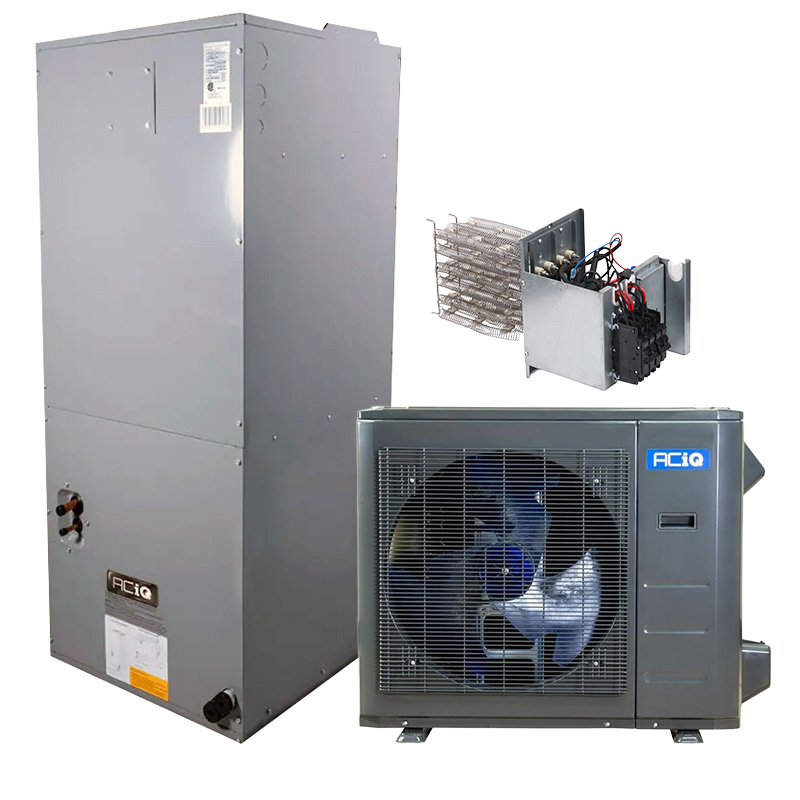
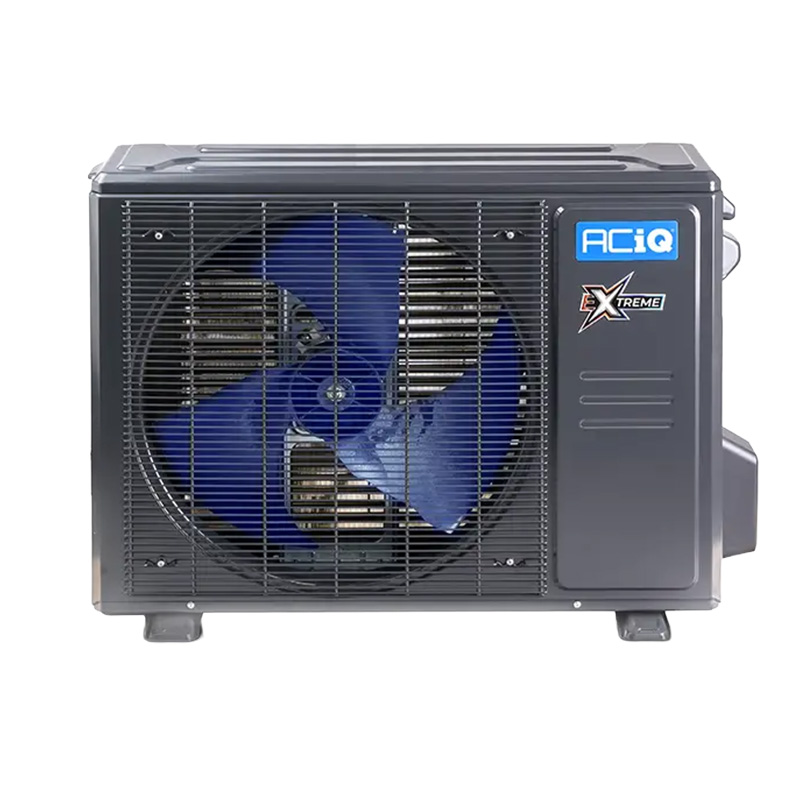
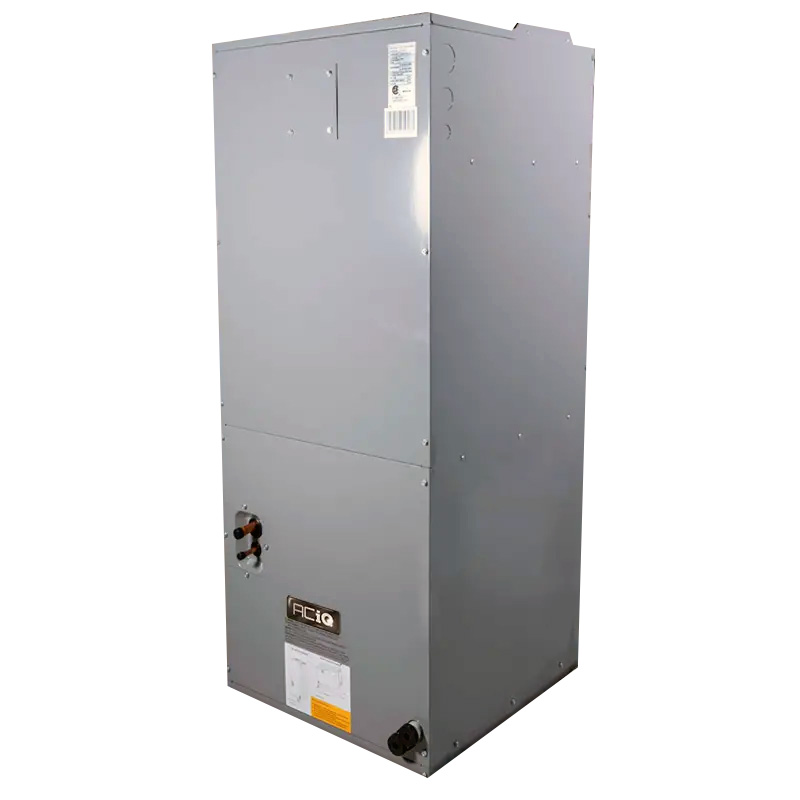
ACiQ 2.5 Ton Split Heat Pump AC System | 16.8 SEER2 High Efficiency Inverter Heats Down To -22° F and Beyond | R454B
View on AC Direct see your lowest price →Check current price on AC Direct →
Key features
- 16.8 SEER2 variable-speed inverter compressor for continuous capacity modulation
- Rated heating operation to -22°F, suitable for cold-climate applications
- R-454B refrigerant, compliant with current and near-future regulatory standards
- 2.5-ton capacity sized for roughly 1,200 to 1,600 sq ft depending on load
- 12-year parts warranty included, no dealer markup required to activate
- Sold direct from manufacturer, bypassing traditional dealer distribution
About this system
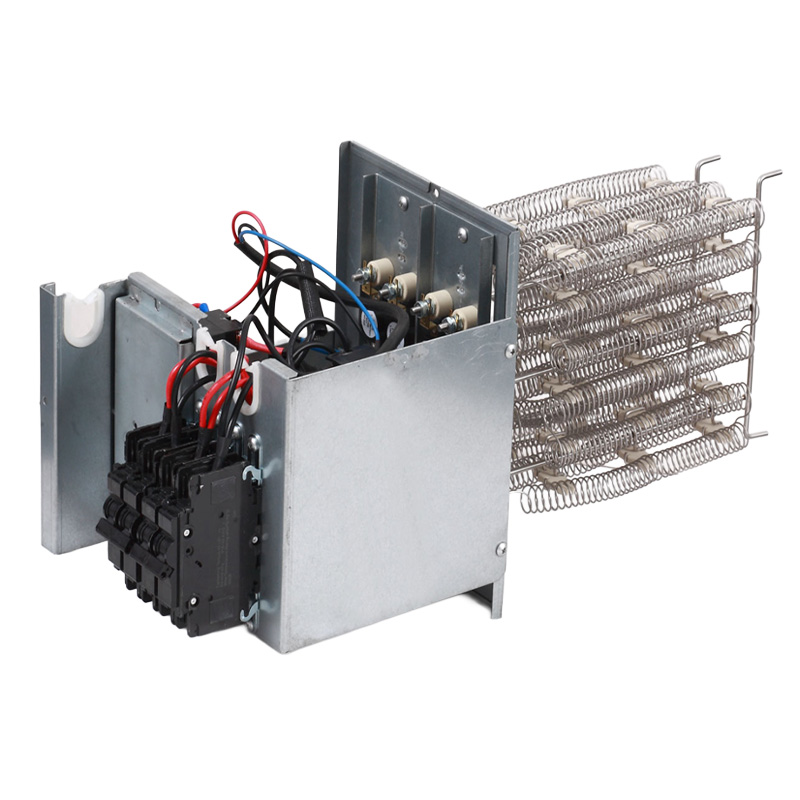
The ACiQ 2.5-ton split heat pump system is built around a variable-speed inverter compressor and runs on R-454B, the lower-global-warming-potential refrigerant that is becoming the new standard as R-410A is phased out. At 16.8 SEER2, it sits meaningfully above the federal minimum and qualifies as high-efficiency equipment, which matters both for monthly operating costs and for potential Inflation Reduction Act tax credit eligibility. The cold-climate rating down to -22°F is a headline spec that sets this system apart from conventional heat pumps, which typically lose heating capacity around 0°F to 5°F and require backup resistance heat much sooner.
A 2.5-ton capacity fits conditioned spaces roughly in the 1,200 to 1,600 square foot range, though your actual load depends on climate zone, insulation, ceiling height, and window area, so a Manual J calculation is still necessary before purchase. The inverter-driven compressor modulates output continuously rather than cycling on and off, which is the primary reason inverter systems run quieter, hold temperature more steadily, and typically produce better real-world efficiency than their rated SEER2 suggests in mild conditions. ACiQ sells direct, skipping dealer markup, which is how the price undercuts comparably specified equipment from established brands. That same direct model means buyers need to arrange independent installation and service rather than relying on a factory-authorized dealer network.
The ACiQ 2.5-ton heat pump offers a genuine combination of cold-climate capability and above-average efficiency at a price that is hard to match from name-brand competitors. The trade-off is a newer brand with limited long-term reliability data and a service model that puts more responsibility on the buyer to find qualified local installers. For buyers who are comfortable with that uncertainty and want the specs without paying a brand premium, it is a serious option worth considering.
Overall score is the average of the five ratings above.
What we like
- 16.8 SEER2 is well above federal minimums and supports meaningful operating cost savings
- -22°F low-ambient heating rating reduces or eliminates need for supplemental electric resistance heat in most U.S. climates
- Inverter compressor runs quieter and holds setpoint more evenly than single-stage equipment
- 12-year warranty is stronger than many name-brand competitors at this price level
- R-454B refrigerant is forward-compatible with evolving EPA regulations, protecting long-term serviceability
Trade-offs
- Brand is relatively new and Consumer Reports has not yet assigned a reliability score due to insufficient long-term data
- The actual manufacturer is undisclosed, making it harder to cross-reference parts availability or technician service history
- No factory-authorized dealer network means finding a qualified installer who will work on a direct-sale unit requires extra effort
- Early owner feedback is largely positive but thin in volume, so failure rates over a 10-to-15-year lifespan remain genuinely unknown
What homeowners and pros say about ACiQ
Among homeowners who have installed ACiQ equipment, early feedback points to quieter-than-expected operation and stable temperature control, both consistent with what variable-speed inverter technology delivers. Responsive customer support from AC Direct is mentioned repeatedly in early reviews, which is relevant because buyers are dealing directly with the company rather than through a local dealer. That said, the honest caveat is that most of this feedback comes from the first year or two of ownership, and the failure modes that define long-term reliability, including compressor longevity under sustained cold-climate cycling, coil integrity over time, and capacitor durability in variable-speed applications, simply have not had enough years to surface in meaningful numbers. Consumer Reports has not yet assigned a reliability score to ACiQ for exactly this reason.
HVAC professionals who encounter ACiQ equipment in the field generally note that the hardware appears well-built and that inverter-driven heat pump diagnostics follow familiar patterns for any experienced tech. The friction points tend to be on the service side: the undisclosed manufacturer relationship means technicians cannot easily pull OEM service bulletins or cross-reference parts to a known parent brand, and some contractors are reluctant to warranty their labor on equipment they did not source themselves. Buyers who line up a willing, R-454B-certified contractor before purchasing and confirm parts availability in their region are in a much stronger position than those who assume any local shop will take the job without hesitation.
Sources: Consumer Reports heat pump ratings, HVACDirect on the ACiQ brand, AHRI Directory of Certified Product Performance, U.S. DOE appliance and equipment efficiency standards.
What it costs to run
At 16.8 SEER2, cooling this 2.5-ton system for a typical 1200-hour cooling season at the U.S. average electricity rate of $0.17/kWh works out to roughly $364 per year in cooling, about $93 less per year than a minimum-efficiency 13.4 SEER2 unit of the same size. Your real cost depends on your climate and local rate.
Method: (30,000 BTU/hr ÷ 16.8 SEER2) × 1200 hours ÷ 1000 × $0.17/kWh. Rate source: U.S. EIA average; cooling hours: moderate-climate estimate.
How it compares
| Brand | Comparable model | SEER2 | Stage | Price position |
|---|---|---|---|---|
| ACiQ | 2.5-Ton 16.8 SEER2 Inverter Heat Pump (R-454B) | 16.8 | Variable | Value pick |
| Carrier | Performance 17 Heat Pump (25VNA0 series) | 17 | Variable | Moderately higher than ACiQ due to dealer network and brand premium |
| Trane | XV17 Heat Pump | 17 | Variable | Higher than ACiQ, reflecting Trane dealer markup and brand positioning |
| Lennox | XP17 Heat Pump | 17.5 | Variable | Premium-priced relative to ACiQ, with higher install costs typical of Lennox dealer channel |
Competitor rows are comparable single-stage units at similar efficiency; price is relative position, not a quote.
Questions about this system
Will this heat pump actually heat my home at -22°F, or is that just a minimum operating temperature?
Rated low-ambient operation to -22°F means the compressor can run and produce heat at that outdoor temperature, but output capacity drops as temperatures fall. You should review the manufacturer's published capacity tables at various outdoor temperatures to confirm the system can meet your heating load in your specific climate without relying entirely on supplemental heat.
Does the 12-year warranty require professional installation or registration to activate?
ACiQ advertises the 12-year warranty without dealer markup, but you should confirm registration requirements directly with ACiQ at purchase, since most manufacturers do require the unit to be installed by a licensed HVAC contractor and may require warranty registration within a set window after installation.
Can any licensed HVAC technician service this system, or does it need a factory-trained tech?
Because ACiQ sells direct rather than through a dealer network, there are no factory-authorized service centers. Any licensed HVAC technician certified to handle R-454B refrigerant can service the equipment, but the undisclosed manufacturer relationship means your technician may not have brand-specific training or easy access to OEM parts history, which is worth discussing with your contractor before purchase.
Is R-454B refrigerant widely available, and will it cost more to service than R-410A?
R-454B is the refrigerant many major manufacturers are moving to as R-410A is phased out under EPA regulations, so availability is growing. In the near term, some contractors may charge more for R-454B service due to lower stock on hand, but this is a transitional issue rather than a permanent one.
How does this compare to a cold-climate heat pump from a brand like Carrier or Trane at a similar SEER2 rating?
At comparable efficiency ratings, name-brand equivalents typically cost more because of dealer network overhead and brand premium. The ACiQ offers similar rated specs at a lower purchase price, but Carrier and Trane have decades of documented reliability data, Consumer Reports rankings, and established dealer service networks that ACiQ does not yet have. Whether that difference matters depends on how much weight you put on long-term service certainty versus upfront savings.
Specifications
| Cooling capacity | 2.5 Ton |
| Efficiency | 16.8 SEER2 |
| Refrigerant | R-454B |