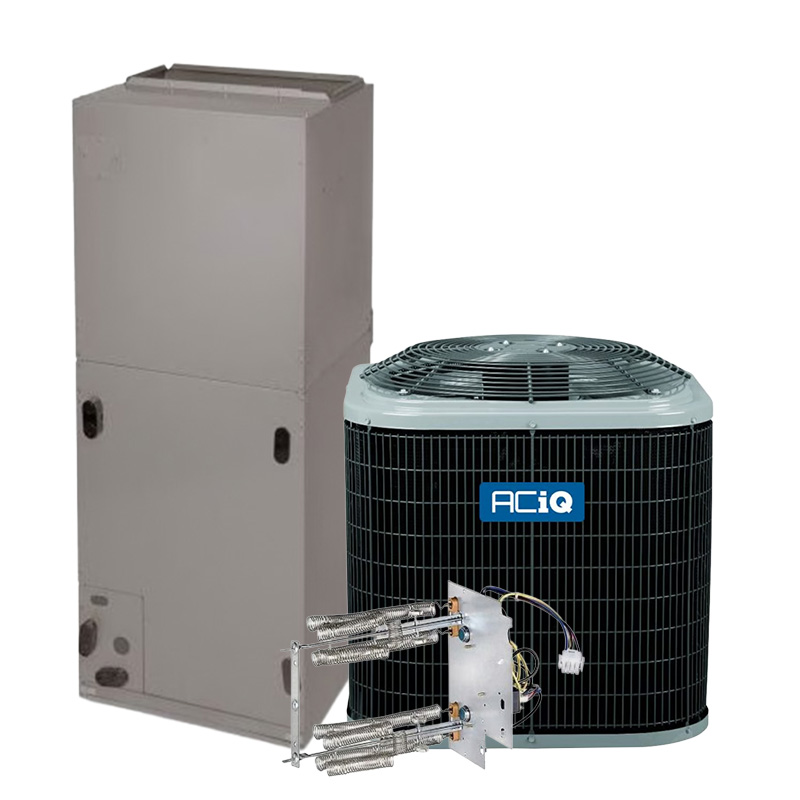
ACiQ 2 Ton AC With Electric Heat System | 16.5 SEER2 AC | 21" Wide Variable Speed Multi-Positional Modular Air Handler | R454B
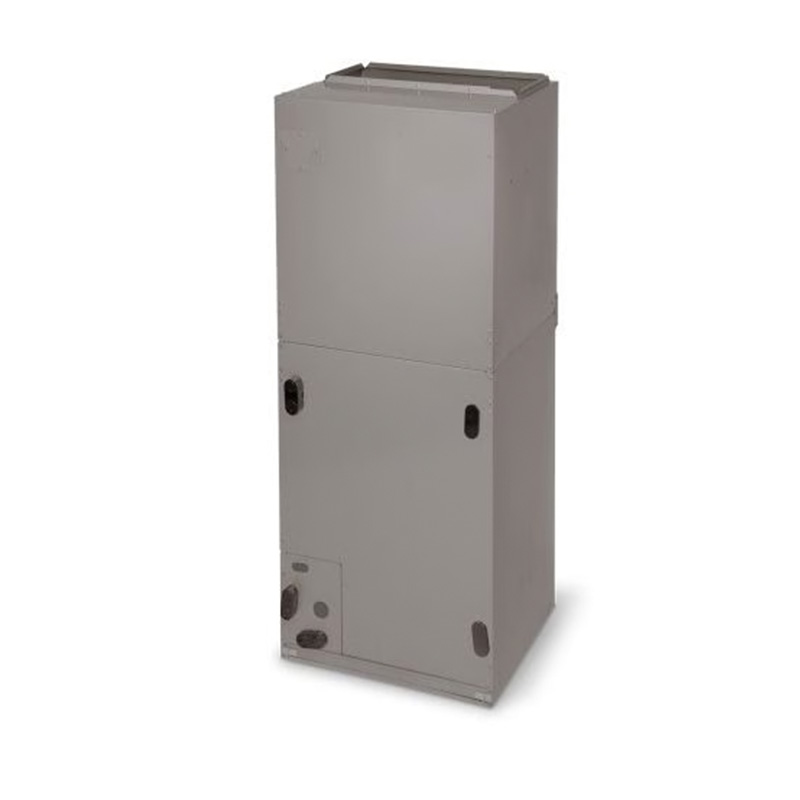
View on AC Direct see your lowest price →Check current price on AC Direct →
Key features
- 16.5 SEER2 efficiency rating, qualifying for federal energy efficiency tax credits under current IRA rules
- Variable-speed inverter-driven air handler for quieter, more consistent operation and improved humidity control
- 21-inch-wide multi-positional air handler fits upflow, downflow, and horizontal installations in tighter spaces
- R-454B refrigerant, a lower-GWP, EPA-compliant alternative to R-410A
- Electric heat integrated into the modular air handler, eliminating the need for a gas furnace
- 12-year parts warranty included at purchase, with no dealer markup added to the coverage
About this system
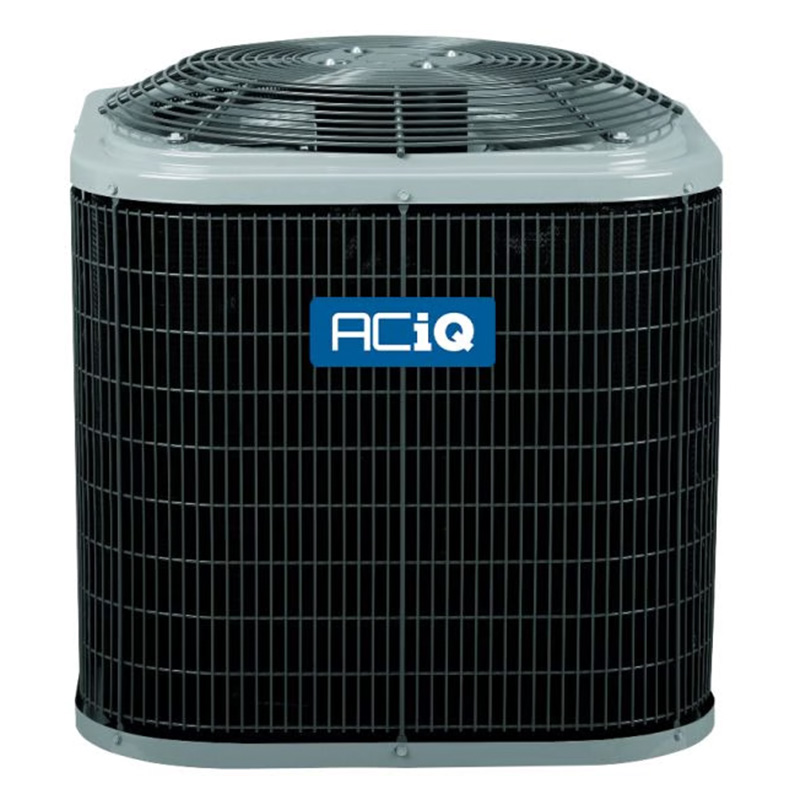
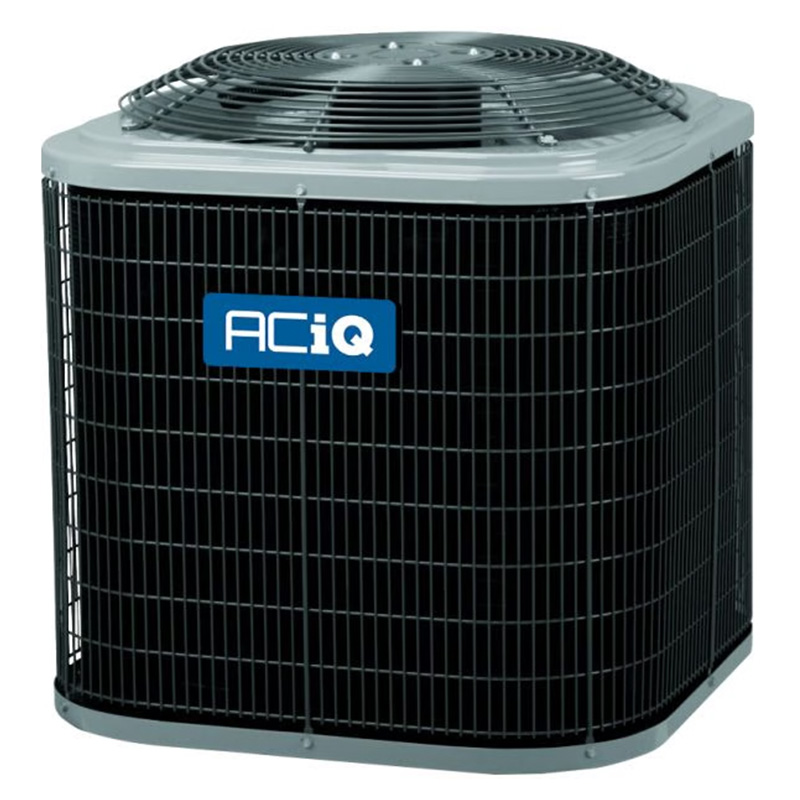
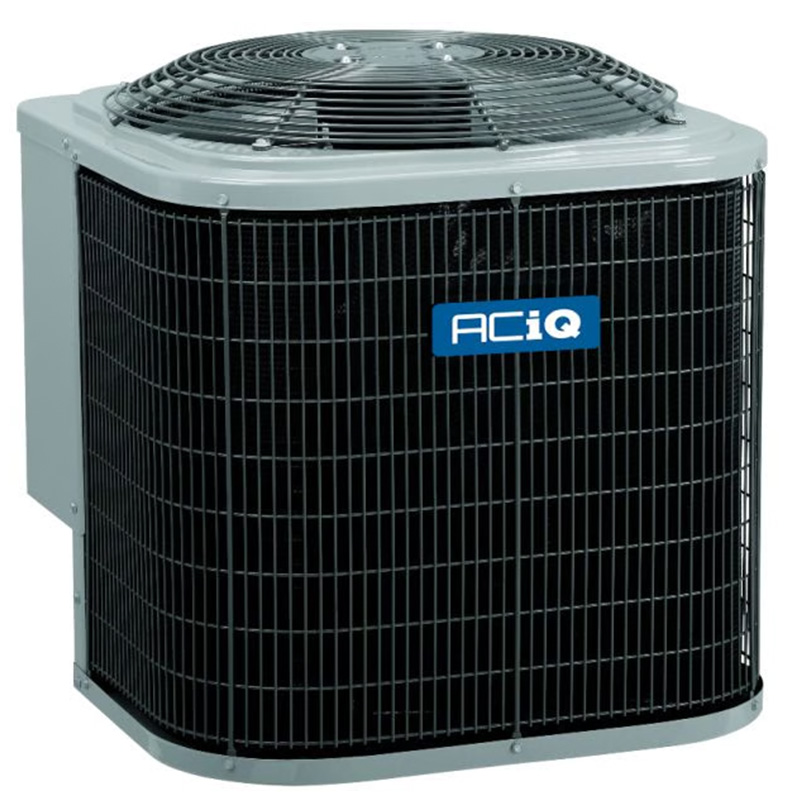
The ACiQ 2-Ton 16.5 SEER2 AC with Electric Heat is a complete split system built around a variable-speed, multi-positional air handler that measures just 21 inches wide, making it a practical fit for closets, utility rooms, and tighter mechanical spaces where a standard air handler would not clear. The outdoor condensing unit pairs with R-454B refrigerant, a lower-global-warming-potential replacement for R-410A that is now required under current EPA regulations, so this system is compliant with rules that will increasingly restrict R-410A equipment over the coming years. The electric heat strips handle supplemental or primary heating without the complexity of a gas furnace, which suits all-electric homes, mild-climate installations, and situations where running a gas line is not practical or cost-effective.
At 16.5 SEER2, this system sits comfortably in the upper-mid efficiency tier. It clears the federal minimums by a meaningful margin and will qualify for the federal energy efficiency tax credit under current IRA guidelines, though buyers should verify eligibility with a tax professional. Variable-speed inverter operation on the air handler allows the system to modulate output rather than cycling on and off at full capacity, which generally translates to quieter operation, more consistent indoor temperatures, and better humidity control compared to single-stage equipment. This is not entry-level technology, and finding it at ACiQ’s price point is one of the system’s clearest selling points. The 2-ton sizing is appropriate for roughly 900 to 1,300 square feet depending on climate zone, insulation quality, and window area; a proper Manual J load calculation is still the right way to confirm sizing before purchasing.
The ACiQ 2-Ton 16.5 SEER2 system delivers genuine variable-speed performance and solid efficiency at a price that undercuts most name-brand equivalents by a noticeable margin. The trade-off is a newer brand with limited long-term reliability data, an undisclosed manufacturer that complicates parts sourcing, and a service model that depends entirely on independent contractors rather than a factory dealer network. For budget-conscious buyers who can vet a local installer and accept some uncertainty around long-term support, it is a competitive option; buyers who prioritize brand track record and nationwide dealer service should look at established names first.
Overall score is the average of the five ratings above.
What we like
- Variable-speed inverter technology at a price point that typically only buys single-stage or two-stage equipment from name brands
- 16.5 SEER2 efficiency clears federal minimums by a meaningful margin and supports tax credit eligibility
- 21-inch-wide multi-positional air handler opens up installation locations that standard units cannot fit
- R-454B refrigerant compliance means the system is ready for tightening EPA refrigerant regulations
- 12-year parts warranty with no dealer markup is longer and more straightforward than many competitors offer at this price
Trade-offs
- The actual manufacturer is not publicly disclosed, which makes cross-referencing parts availability and independent service history harder than with a named brand
- Consumer Reports does not yet rank ACiQ due to insufficient long-term data, so reliability confidence rests mostly on early owner reports rather than independent longitudinal testing
- Sold direct without a dealer network, so warranty service and repair depend entirely on finding a willing independent HVAC contractor in your area
- Long-term compressor and coil durability under sustained real-world conditions is still an open question given the brand's relatively short market history
What homeowners and pros say about ACiQ
Early owners of ACiQ equipment consistently highlight quiet operation and responsive customer support as standout experiences, and those themes hold for variable-speed models like this one. The inverter-driven blower runs at reduced speeds most of the time, which is the mechanical reason the noise complaints common with single-stage cycling equipment largely disappear. Independent long-term data is still thin, since the brand has not been on the market long enough for Consumer Reports to assign a reliability score, and that absence of a formal track record is a legitimate concern rather than a minor footnote. The specific failure modes that have surfaced in early owner accounts and HVAC forum discussions center on the same components that cause problems across the industry: capacitors, refrigerant coil integrity over time, and compressor longevity under sustained load. None of these have emerged as a pattern unique to ACiQ, but the limited data set means that absence of evidence is not strong evidence of absence.
HVAC contractors who have installed ACiQ equipment tend to have nuanced opinions. Those who work with it regularly report that the equipment goes in without unusual difficulty and that the variable-speed controls behave predictably during commissioning. The sticking point for independent techs is the undisclosed manufacturer: without knowing the OEM behind the equipment, cross-referencing proprietary components against a known parts ecosystem is harder than it would be with a Carrier, Trane, or Lennox system where parts sourcing is well documented. Contractors who are cautious about warranty callbacks on unfamiliar brands may be reluctant to take on ACiQ jobs, which is a practical reality buyers in some markets will encounter. In areas with a dense population of independent HVAC contractors, this is a manageable issue; in rural markets with fewer service options, it carries more weight.
Sources: Consumer Reports heat pump ratings, HVACDirect on the ACiQ brand, AHRI Directory of Certified Product Performance, U.S. DOE appliance and equipment efficiency standards.
What it costs to run
At 16.5 SEER2, cooling this 2-ton system for a typical 1200-hour cooling season at the U.S. average electricity rate of $0.17/kWh works out to roughly $297 per year in cooling, about $68 less per year than a minimum-efficiency 13.4 SEER2 unit of the same size. Your real cost depends on your climate and local rate.
Method: (24,000 BTU/hr ÷ 16.5 SEER2) × 1200 hours ÷ 1000 × $0.17/kWh. Rate source: U.S. EIA average; cooling hours: moderate-climate estimate.
How it compares
| Brand | Comparable model | SEER2 | Stage | Price position |
|---|---|---|---|---|
| ACiQ | 2-Ton 16.5 SEER2 AC with Electric Heat, Variable-Speed Multi-Positional Air Handler | 16.5 | Variable | Value pick |
| Carrier | Comfort 16 CA16NA / FV4C Air Handler | 16 | Single-stage | Moderately higher, with factory dealer network and established reliability record |
| Trane | XR16 4TTR6 / TEM6 Air Handler | 16 | Single-stage | Moderately to significantly higher, backed by broad dealer coverage and long reliability history |
| Lennox | Merit 16ACX / CBX25UH Air Handler | 16 | Single-stage | Moderately higher, with dealer-installed warranty and wide parts availability |
Competitor rows are comparable single-stage units at similar efficiency; price is relative position, not a quote.
Questions about this system
Can any licensed HVAC technician install and service this system, or does it require a factory-authorized dealer?
Any licensed HVAC contractor who is EPA 608 certified and comfortable with variable-speed inverter equipment and R-454B refrigerant can install and service it. ACiQ sells direct rather than through a dealer network, so there are no factory-authorized service requirements, but that also means you are responsible for finding a contractor willing to work on it, and not every local tech will be familiar with the brand or eager to take on warranty repairs.
What happens if I need a warranty repair and cannot find a contractor willing to work on an ACiQ system?
This is the core service risk with a direct-sold brand. ACiQ's customer support can help identify service options, but the company does not have a dedicated dealer network to dispatch technicians. It is worth confirming with a local contractor that they will service ACiQ equipment before you purchase, not after.
Is R-454B refrigerant significantly different to handle than R-410A for my installer?
R-454B is mildly flammable (A2L classification), which requires technicians to follow updated handling and recovery procedures compared to R-410A. Most contractors working on new equipment are aware of A2L protocols, but it is worth confirming your installer has the appropriate equipment and training before scheduling the job.
Does the 16.5 SEER2 rating qualify this system for the federal energy efficiency tax credit?
As of current IRA guidelines, split system air conditioners generally need to meet a SEER2 threshold of 16 or higher in most regions to qualify for the 25C tax credit of up to $600. This system's 16.5 SEER2 rating puts it above that threshold, but tax rules can change and individual eligibility depends on your specific situation, so verifying with a tax professional before purchasing is the right move.
How does the 21-inch-wide air handler compare to a standard unit, and does the narrow width affect performance?
A typical residential air handler runs 17 to 21 inches wide depending on tonnage, so the 21-inch dimension is not unusually narrow for a 2-ton unit, but it is worth measuring your mechanical space carefully before ordering. The width affects cabinet fit, not airflow or efficiency performance, which are governed by coil size and blower design rather than the overall cabinet footprint.
Specifications
| Cooling capacity | 2 Ton |
| Efficiency | 16.5 SEER2 |
| Refrigerant | R-454B |