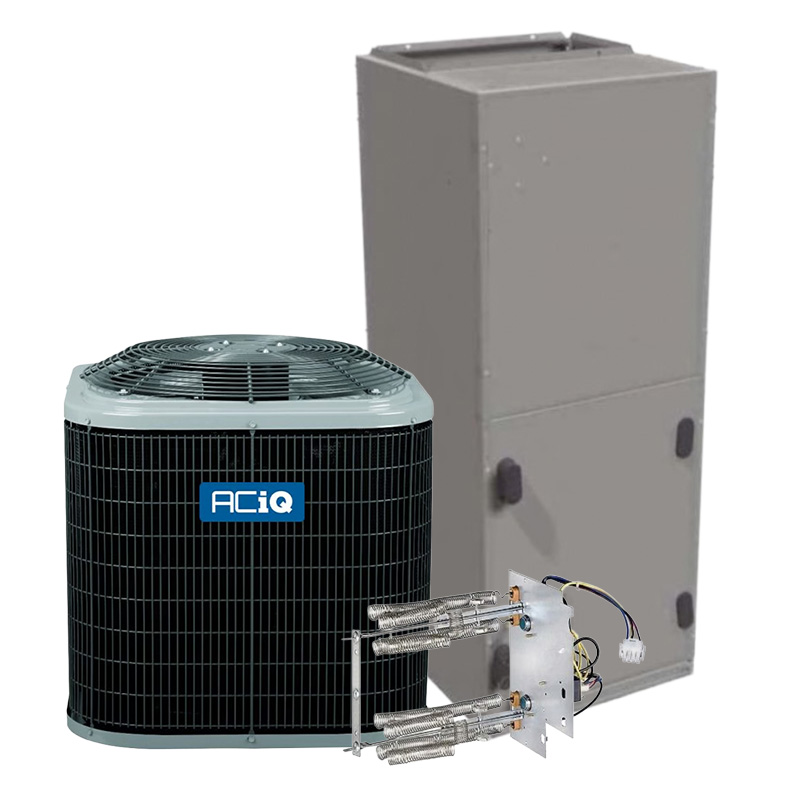
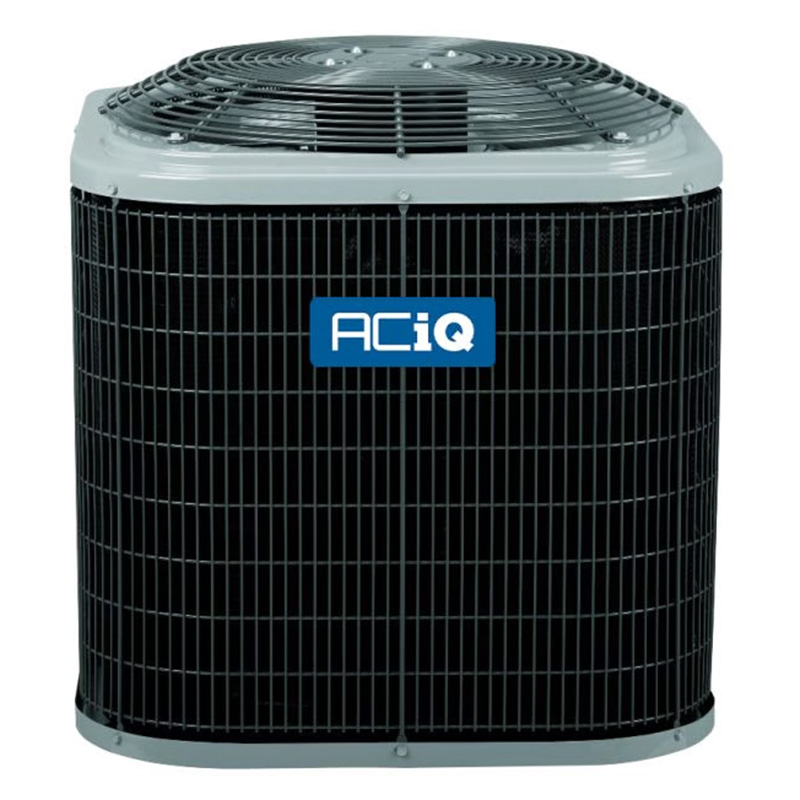
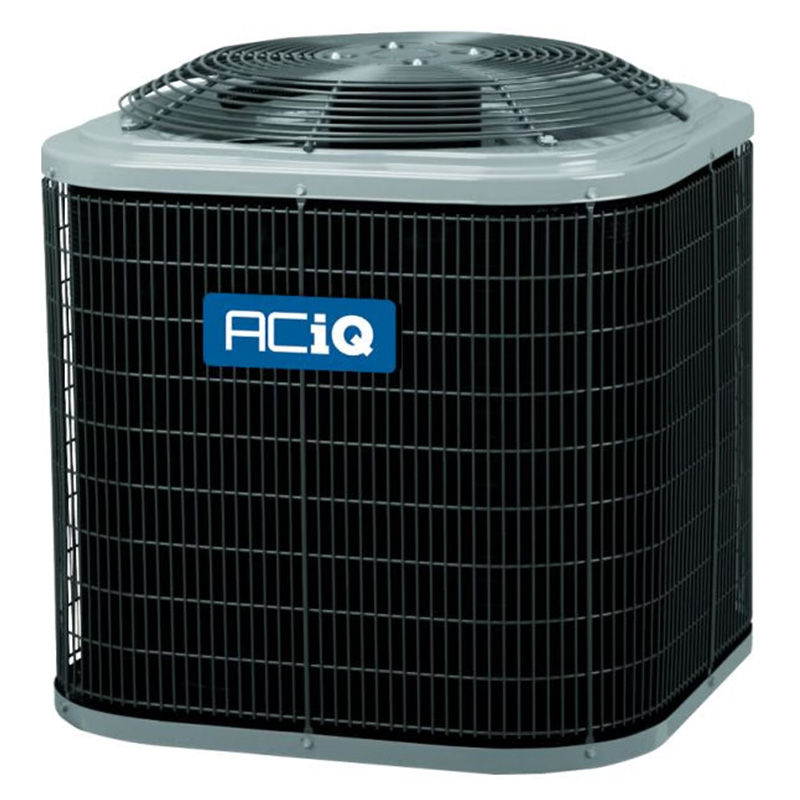
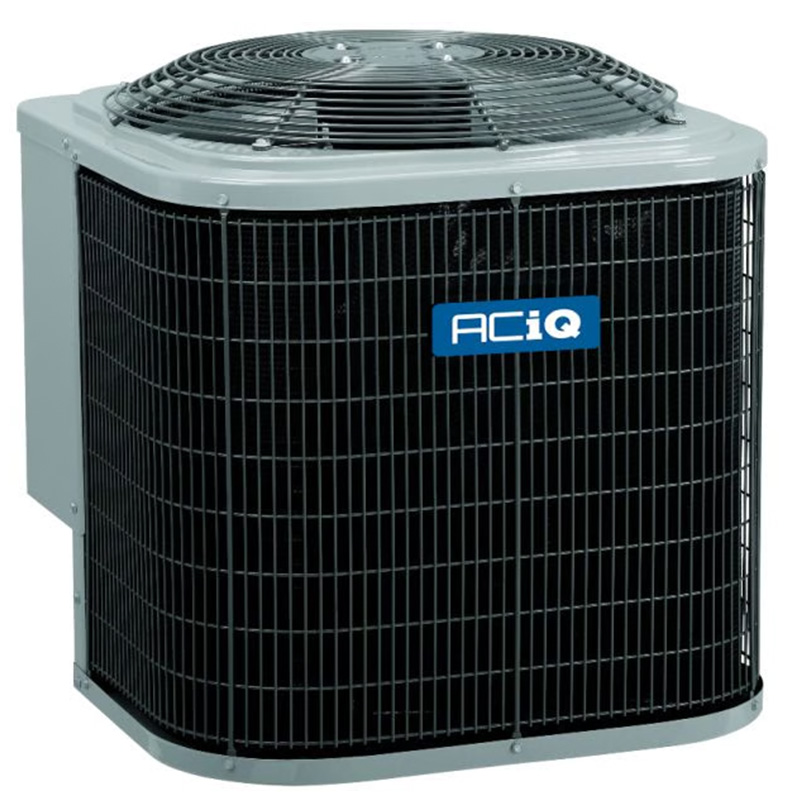
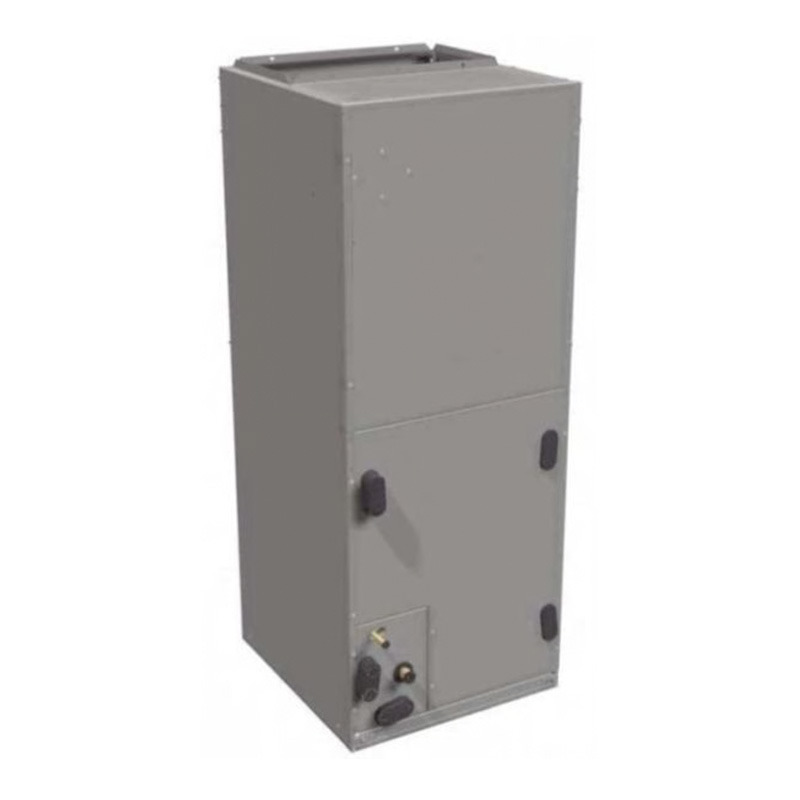
ACiQ 2 Ton Air Conditioning With Electric Heat System | 15.2 SEER2 AC | 17.5" Wide Multi-Positional Air Handler | R454B
View on AC Direct see your lowest price →Check current price on AC Direct →
Key features
- 15.2 SEER2 efficiency rating, meeting 2023 federal minimums with moderate headroom
- 17.5-inch-wide multi-positional air handler fits upflow, downflow, and horizontal applications
- R-454B refrigerant with lower global-warming potential, replacing R-410A
- Electric heat strips integrated into the air handler, no gas connection required
- 2-ton capacity suited to smaller homes and conditioned spaces up to roughly 1,200 sq ft
- 12-year parts warranty included, no dealer markup added to the purchase price
About this system
The ACiQ 2-Ton 15.2 SEER2 system pairs a single-speed central air conditioner with an electric-strip air handler in a 17.5-inch-wide multi-positional cabinet. That narrow profile matters in tight mechanical closets, mobile homes, or retrofit installations where a standard 21-inch cabinet simply will not fit. At 2 tons, the system is sized for conditioned spaces roughly in the 900-to-1,200 square foot range, depending on climate zone, insulation quality, and ceiling height, though a proper Manual J load calculation should always drive that decision.
The system runs on R-454B refrigerant, a lower global-warming-potential replacement for R-410A that aligns with current EPA regulations and positions the equipment for longevity as the industry moves away from older refrigerants. The 15.2 SEER2 rating clears the 2023 federal minimum efficiency threshold for most U.S. regions with room to spare, though it sits in the entry-to-mid tier rather than the premium efficiency range. Buyers who want meaningful utility savings over an older system will get them here; buyers chasing the absolute lowest operating costs may want to consider a higher-SEER2 or inverter-driven option. The electric heat configuration means no gas line is required, making this a practical choice for all-electric homes, apartments with electric-only service, or regions where heating loads are modest.
The ACiQ 2-ton electric heat system delivers solid entry-to-mid-tier efficiency, a compact air handler footprint, and a strong warranty at a price that undercuts most name brands by a meaningful margin. The trade-off is a newer brand with limited long-term reliability data, no dealer network for service, and an undisclosed manufacturer that can complicate parts sourcing. For budget-conscious buyers with a trusted independent HVAC contractor, it is a reasonable bet; for buyers who prioritize a proven service network or iron-clad resale value, established brands carry less uncertainty.
Overall score is the average of the five ratings above.
What we like
- Price undercuts comparable Carrier, Trane, and Lennox systems by a significant margin
- 17.5-inch cabinet width opens up installation options unavailable to standard-width units
- R-454B refrigerant is forward-compatible with evolving EPA regulations
- 12-year parts warranty is longer than the typical 10-year coverage on name-brand equipment
- Early owner feedback consistently highlights quiet operation and responsive customer support
Trade-offs
- No long-term reliability data and no Consumer Reports ranking yet, so failure rates are genuinely unknown
- Undisclosed manufacturer makes cross-referencing parts, service bulletins, and OEM components harder for technicians
- Sold direct without a dealer network, meaning warranty service depends entirely on finding a willing independent contractor
- Single-stage cooling offers no capacity modulation, which can mean short cycling in mild weather and less precise humidity control than a two-stage or variable-speed system
What homeowners and pros say about ACiQ
Early owners of ACiQ equipment report quiet operation and generally smooth installs, and the brand’s customer support response time draws positive mentions in online forums and early reviews. Because ACiQ is relatively new to the market, Consumer Reports has not yet accumulated enough long-term field data to assign it a reliability score, which means buyers are working with a shorter track record than they would have with a Carrier or Trane system purchased through an established dealer. The actual manufacturer behind the equipment is not publicly disclosed, and while forum discussion points toward the ICP and Carrier family, that connection is unconfirmed. For a technician diagnosing a problem or ordering a replacement part, that ambiguity is a real friction point compared to a brand with a transparent OEM parts chain.
HVAC contractors who have installed ACiQ equipment tend to note that the units go in without unusual complications and that factory support is reachable when questions arise. The documented concerns in the industry center less on the hardware itself and more on the service model: because the brand is sold direct with no dealer network, the burden of finding a qualified and willing technician for warranty or repair work falls entirely on the homeowner. The specific failure modes that define long-term risk for any central system, including capacitor degradation, refrigerant coil integrity, and compressor longevity, remain difficult to assess for ACiQ because the installed base is not yet large enough or old enough to generate statistically meaningful failure rate data. That is an honest unknown, not a red flag, but buyers should weigh it against the price advantage.
Sources: Consumer Reports heat pump ratings, HVACDirect on the ACiQ brand, AHRI Directory of Certified Product Performance, U.S. DOE appliance and equipment efficiency standards.
What it costs to run
At 15.2 SEER2, cooling this 2-ton system for a typical 1200-hour cooling season at the U.S. average electricity rate of $0.17/kWh works out to roughly $322 per year in cooling, about $43 less per year than a minimum-efficiency 13.4 SEER2 unit of the same size. Your real cost depends on your climate and local rate.
Method: (24,000 BTU/hr ÷ 15.2 SEER2) × 1200 hours ÷ 1000 × $0.17/kWh. Rate source: U.S. EIA average; cooling hours: moderate-climate estimate.
How it compares
| Brand | Comparable model | SEER2 | Stage | Price position |
|---|---|---|---|---|
| ACiQ | 2-Ton 15.2 SEER2 Electric Heat System | 15.2 | Single-stage | Value pick |
| Carrier | Comfort 24ACC6 Series | 15.2 | Single-stage | Moderately higher than ACiQ with dealer markup |
| Trane | XR15 Series | 15.0-16.0 | Single-stage | Moderately to noticeably higher than ACiQ through dealer channels |
| Lennox | Merit ML14XC1 Series | 15.0-16.0 | Single-stage | Comparable to or higher than Trane, noticeably above ACiQ |
Competitor rows are comparable single-stage units at similar efficiency; price is relative position, not a quote.
Questions about this system
Will any licensed HVAC contractor be able to install and service this system, or do I need an ACiQ-authorized dealer?
ACiQ sells direct and has no proprietary dealer network, so any licensed HVAC contractor who handles R-454B refrigerant can install it. The practical catch is that some contractors are unfamiliar with the brand and may be cautious about warranty work, so it is worth confirming your contractor is comfortable with the equipment before purchasing.
What does the 12-year warranty actually cover, and are there registration requirements?
ACiQ's 12-year warranty covers parts; you should review the warranty document for labor terms, as labor coverage typically requires a separate agreement with the installing contractor. Registration requirements and the exact claim process are outlined in the warranty paperwork included with the unit, and confirming those details at purchase is advisable since missing a registration window can affect coverage.
Is 15.2 SEER2 efficient enough to qualify for federal tax credits or utility rebates?
Federal Inflation Reduction Act tax credits for central air conditioners generally require 16 SEER2 or higher for split systems, so this unit at 15.2 SEER2 would not qualify for the federal credit as currently structured. Utility rebate thresholds vary by provider, so check your local utility's requirements directly, as some programs have lower efficiency thresholds than the federal standard.
Since the manufacturer is not disclosed, how hard is it to find replacement parts if something fails?
Forum speculation links ACiQ to the ICP and Carrier manufacturing family, but this is unconfirmed, meaning a technician cannot reliably cross-reference parts from a known parent brand. ACiQ does supply parts through its direct channel, but the lack of a transparent supply chain adds a layer of uncertainty compared to a brand whose OEM parts ecosystem is well established.
Does this system handle humidity control well in a hot, humid climate like the Gulf Coast or Southeast?
Single-stage systems run at full capacity or not at all, which means shorter run cycles in mild or moderate conditions and less time for the coil to wring moisture from the air. In persistently humid climates, a two-stage or variable-speed system that runs longer at lower capacity typically delivers meaningfully better dehumidification, and this unit's single-stage operation is a real limitation if humidity control is a priority.
Specifications
| Cooling capacity | 2 Ton |
| Efficiency | 15.2 SEER2 |
| Refrigerant | R-454B |