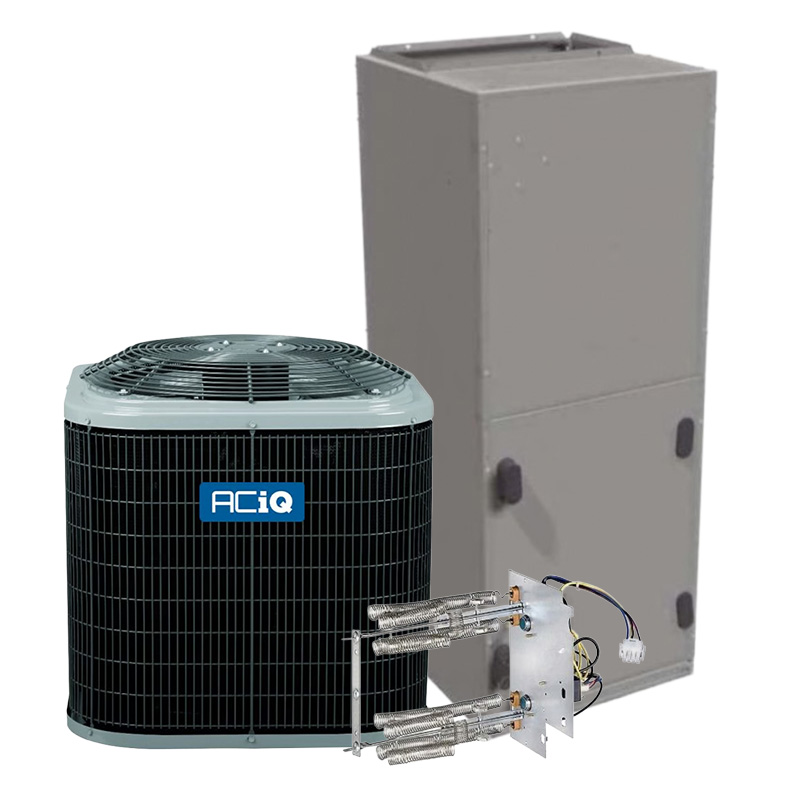
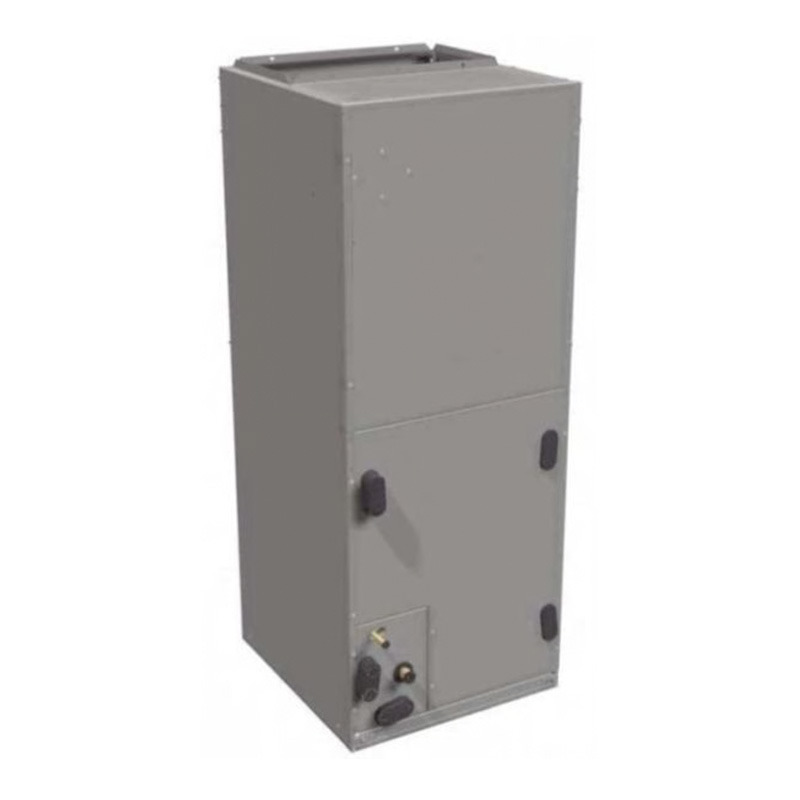
ACiQ 2 Ton Air Conditioning With Electric Heat System | 15 SEER2 AC | 17.5" Wide Multi-Positional Air Handler | R454B
View on AC Direct see your lowest price →Check current price on AC Direct →
Key features
- 15 SEER2 efficiency rating, meeting current federal minimum standards
- 17.5-inch wide multi-positional air handler fits tight mechanical spaces
- R-454B refrigerant, compliant with current EPA phase-down regulations
- Electric heat strips integrated into the air handler, no gas line required
- Ships direct with a 12-year parts warranty, no dealer markup on coverage
- 2-ton capacity suited to roughly 900-1,200 sq ft depending on load calculation
About this system
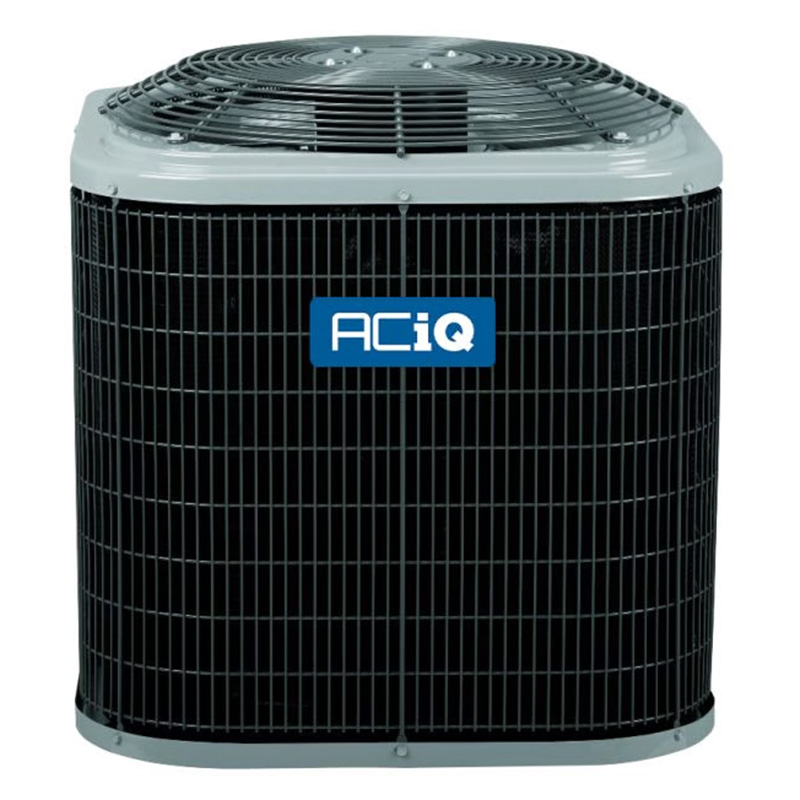
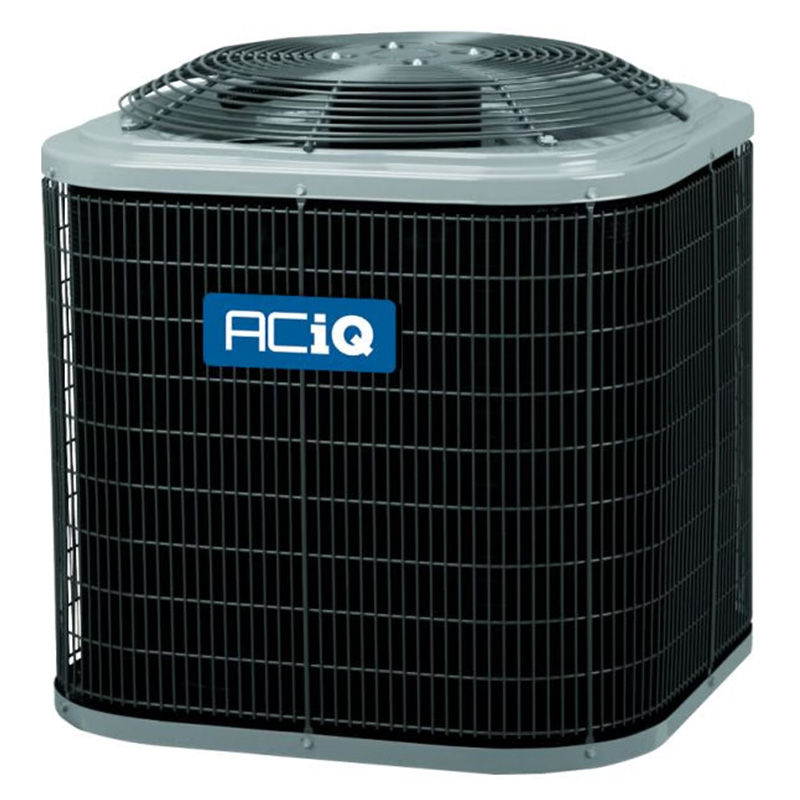
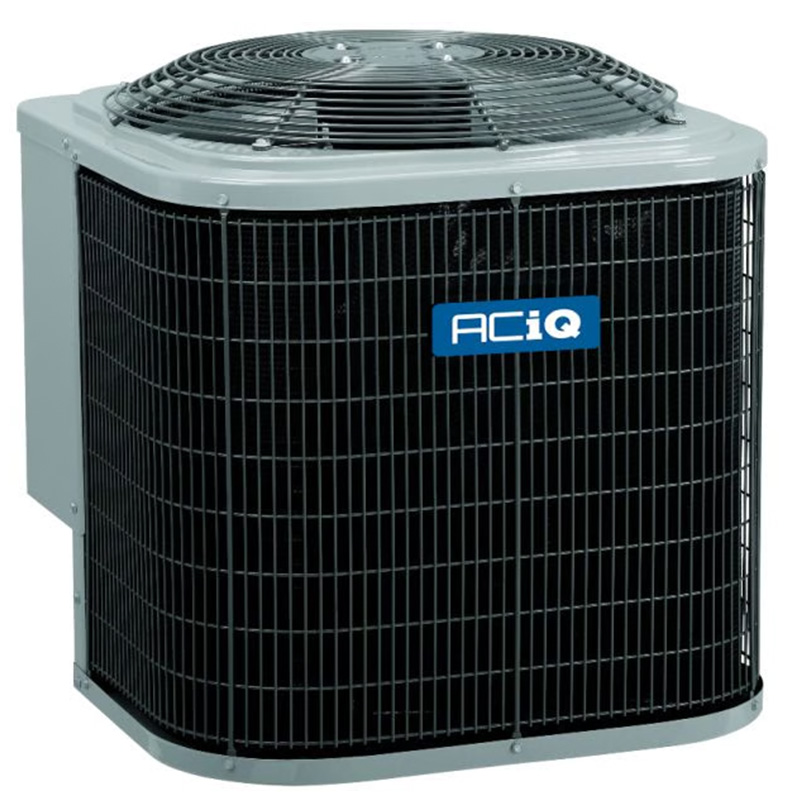
The ACiQ 2-Ton 15 SEER2 Air Conditioning with Electric Heat System pairs a 15 SEER2 condensing unit with a 17.5-inch wide multi-positional air handler to cover homes roughly in the 900-to-1,200 square foot range, depending on local climate and insulation quality. The narrow 17.5-inch cabinet width is a practical advantage in tighter mechanical rooms, closets, or utility spaces where a standard 21-inch air handler simply will not fit without major carpentry work. The system runs on R-454B refrigerant, a lower-global-warming-potential replacement for R-410A that meets current EPA regulations and positions the equipment for longer serviceability as R-410A is phased out of new production.
Electric heat strips built into the air handler eliminate the need for a separate furnace or gas line, making this a logical choice for mild-climate regions where heating loads are modest and the cost of running electric resistance heat for a few months per year is acceptable. At 15 SEER2, the system sits at the current federal minimum efficiency floor for most of the country, which is honest entry-level territory rather than a premium efficiency claim. Buyers who prioritize upfront cost savings over the lowest possible utility bills will find the efficiency rating appropriate; those in hot climates running the system eight or more months per year should price out higher-SEER2 options before committing.
The ACiQ 2-Ton 15 SEER2 system delivers a competitive price point, a genuinely useful narrow-cabinet air handler, and a strong 12-year warranty for buyers who can accept entry-level efficiency and the service uncertainties that come with a newer direct-to-consumer brand. It is a reasonable choice for budget-conscious homeowners in mild-to-moderate climates, but it asks you to take on more uncertainty than an established brand name would, and that trade-off is real. Long-term reliability data simply does not exist yet to say with confidence how it holds up past five years.
Overall score is the average of the five ratings above.
What we like
- Price undercuts major name brands at the same efficiency tier
- 17.5-inch cabinet width solves installation problems standard units cannot
- 12-year parts warranty ships with the unit without dealer negotiation required
- R-454B refrigerant is forward-compatible with regulatory direction through the 2030s
- Early owner feedback consistently notes quiet operation and responsive customer support
Trade-offs
- 15 SEER2 is minimum-efficiency; energy costs will be higher than a 17 or 18 SEER2 system over time
- No independent long-term reliability data exists; Consumer Reports has not yet ranked the brand
- Undisclosed manufacturer makes parts cross-referencing and service history harder for technicians
- Sold direct with no dealer network, so finding a contractor familiar with the brand takes extra effort
What homeowners and pros say about ACiQ
Homeowners who have installed ACiQ systems tend to lead with the same observations: the units run quieter than expected, the direct-purchase price is noticeably lower than dealer-installed name brands at equivalent efficiency, and the few who have needed support describe ACiQ’s customer service as accessible and responsive. That positive early pattern is worth acknowledging, though it comes with an important qualifier: the brand is relatively new to the market and Consumer Reports has not yet accumulated enough long-term data to assign it a reliability score. What early owners report after one or two seasons and what independent data shows after ten years are genuinely different things, and buyers should hold that gap in mind.
From the contractor side, the undisclosed manufacturer is the most commonly cited friction point. Technicians who work on Carrier, Trane, or Lennox equipment can pull up decades of service records, cross-reference OEM parts quickly, and often diagnose common failure patterns before they open the cabinet. With ACiQ, that institutional knowledge does not yet exist in the field, and the forum speculation linking the brand to the ICP and Carrier family remains unconfirmed. The documented service challenges specific to direct-sale brands generally involve locating refrigerant-side components and confirming correct replacement part numbers, and those friction points are real even if the underlying hardware proves durable. The 12-year parts warranty is a genuine strength that name brands rarely match without dealer negotiation, but labor on any warranty repair is still the homeowner’s cost, so building a relationship with a local contractor before you need one is practical advice for any ACiQ buyer.
Sources: Consumer Reports heat pump ratings, HVACDirect on the ACiQ brand, AHRI Directory of Certified Product Performance, U.S. DOE appliance and equipment efficiency standards.
What it costs to run
At 15 SEER2, cooling this 2-ton system for a typical 1200-hour cooling season at the U.S. average electricity rate of $0.17/kWh works out to roughly $326 per year in cooling, about $39 less per year than a minimum-efficiency 13.4 SEER2 unit of the same size. Your real cost depends on your climate and local rate.
Method: (24,000 BTU/hr ÷ 15 SEER2) × 1200 hours ÷ 1000 × $0.17/kWh. Rate source: U.S. EIA average; cooling hours: moderate-climate estimate.
How it compares
| Brand | Comparable model | SEER2 | Stage | Price position |
|---|---|---|---|---|
| ACiQ | 2-Ton 15 SEER2 AC with Electric Heat, 17.5" Air Handler | 15 | Single-stage | Value pick |
| Carrier | Comfort 24ACC6 with FB4C Air Handler | 15-16 | Single-stage | Moderately higher than ACiQ due to dealer network and brand premium |
| Trane | XR15 with TEM6 Air Handler | 15-16 | Single-stage | Higher than ACiQ; Trane dealer markup and installation support built into cost |
| Lennox | Merit ML14XC1 with CBX25UH Air Handler | 15 | Single-stage | Similar to Carrier pricing; higher than ACiQ with established dealer service included |
Competitor rows are comparable single-stage units at similar efficiency; price is relative position, not a quote.
Questions about this system
Will any licensed HVAC contractor be able to service this system, or do I need a specialist?
Any licensed HVAC technician can work on the system mechanically, but because ACiQ does not disclose its manufacturer, some contractors find it harder to cross-reference parts or pull up service history compared to a Carrier or Trane unit. It is worth calling your preferred contractor before purchasing to confirm they are comfortable working on the brand.
Is 15 SEER2 going to cost me significantly more to run than a higher-efficiency option?
At 2 tons and 15 SEER2 versus, say, 18 SEER2, the annual difference in electricity cost depends heavily on how many hours the system runs and your local utility rate, but the gap is real and compounds over a 15-year equipment life. In mild climates with short cooling seasons the difference is modest; in climates where the AC runs most of the year, moving up one efficiency tier typically pays back within several years.
What does the electric heat strip actually cover, and is it enough for a cold winter?
The electric heat strips provide resistance heat directly inside the air handler, which is straightforward and reliable but not efficient for sustained cold-weather heating. This configuration works well in the Southeast and similar mild-winter regions where heating demand is low; it is not a practical primary heat source in climates that regularly see extended below-freezing temperatures.
How does R-454B affect future maintenance and refrigerant costs compared to R-410A?
R-454B is a mildly flammable (A2L-classified) refrigerant, which means technicians handling it need training and tools appropriate for that classification, something most current HVAC pros are actively getting certified for. Because R-410A is being phased out of new equipment, choosing R-454B now means you are on the regulatory-compliant side of that transition, which should support parts and refrigerant availability longer term.
The 12-year warranty sounds good, but what does it actually cover and are there registration requirements?
The 12-year coverage applies to parts; labor is not included, which is standard across almost all residential HVAC warranties regardless of brand. You should confirm registration requirements at the time of purchase, as many manufacturers require product registration within a set window to activate the full warranty term rather than a shorter default period.
Specifications
| Cooling capacity | 2 Ton |
| Efficiency | 15 SEER2 |
| Refrigerant | R-454B |