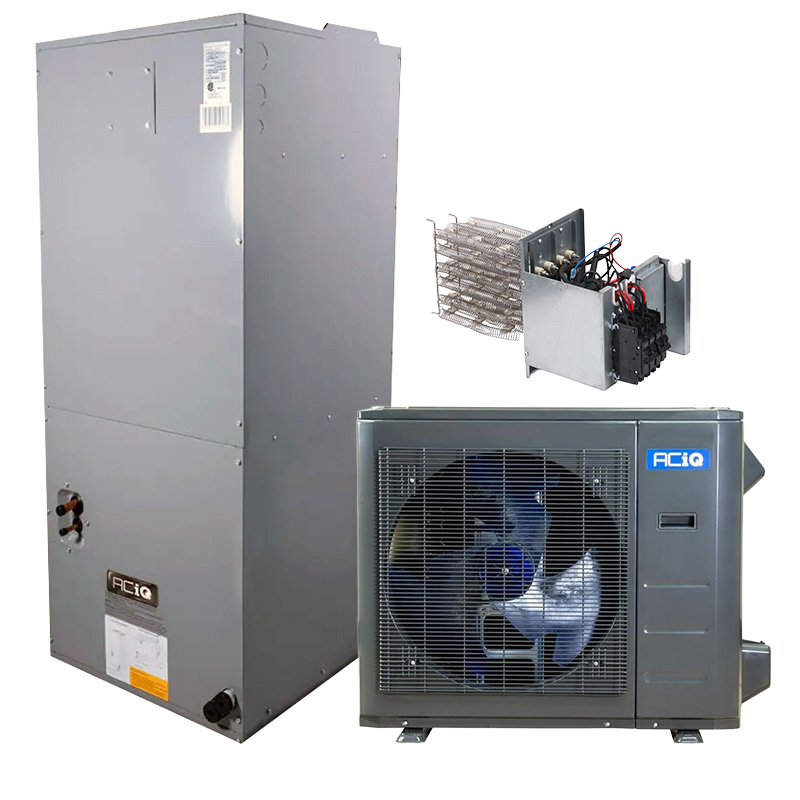
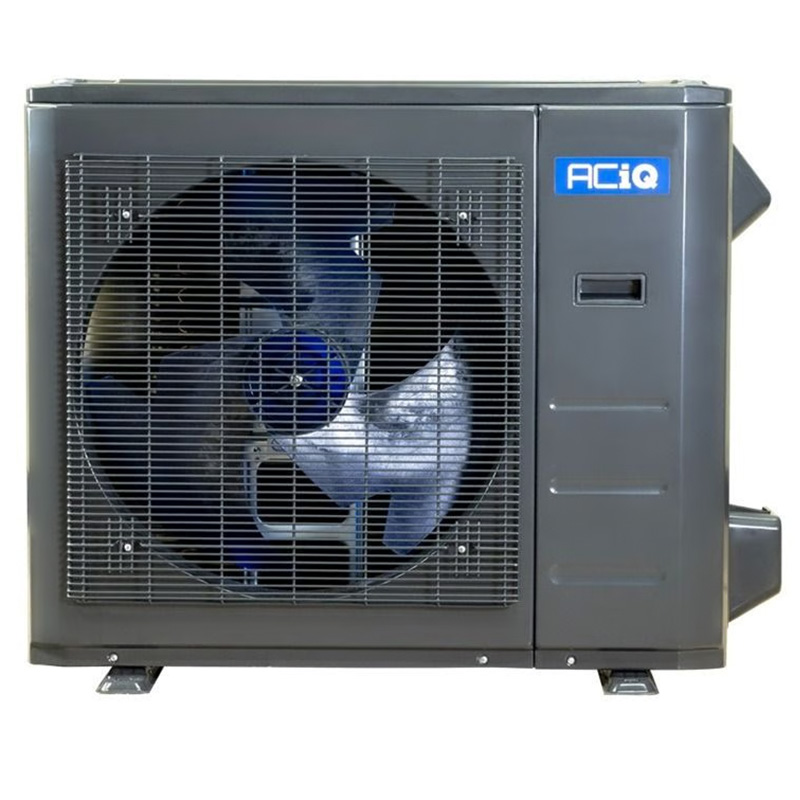
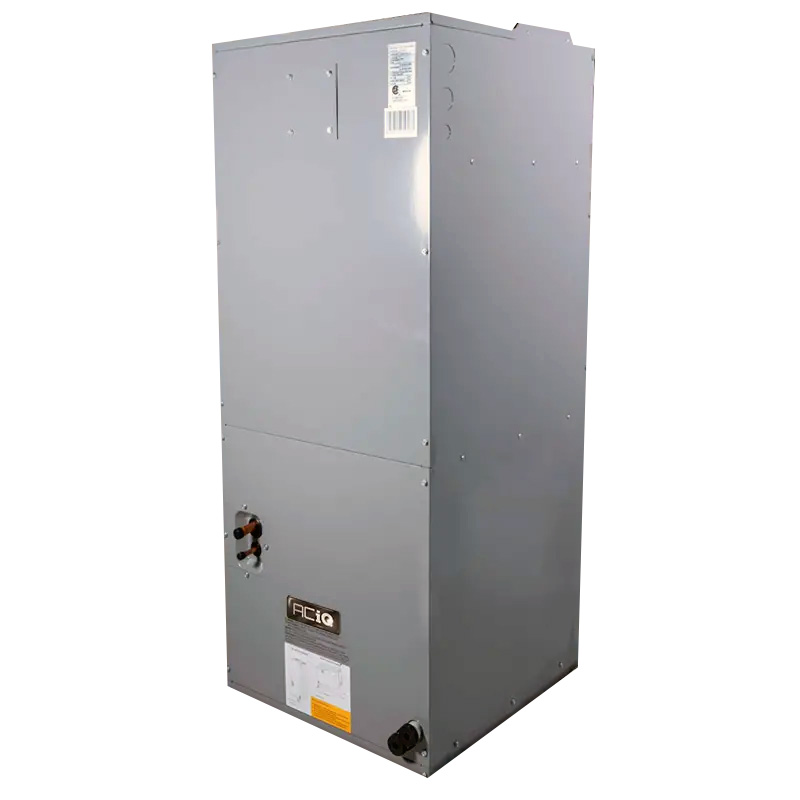
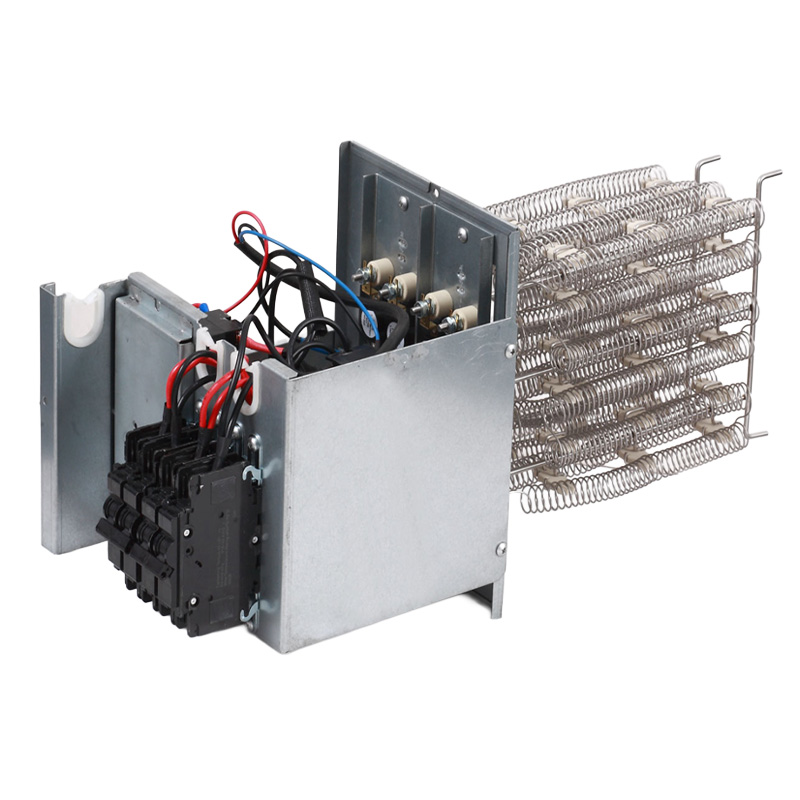
ACiQ 2 Ton Split Heat Pump AC System | 18.1 SEER2 High Efficiency Inverter Heats Down To 5° F and Beyond | R454B
View on AC Direct see your lowest price →Check current price on AC Direct →
Key features
- 18.1 SEER2 inverter-driven variable-speed operation for continuous efficiency modulation
- Rated to heat in outdoor temperatures down to 5°F and below, supporting cold-climate use
- R-454B refrigerant with lower global-warming potential than legacy R-410A
- 2-ton capacity (approximately 24,000 BTU/h) for smaller to mid-size homes
- 12-year parts warranty included, no dealer markup or registration hurdle
- Sold factory-direct, bypassing distribution markup typical of name-brand channels
About this system
The ACiQ 2-Ton 18.1 SEER2 Split Heat Pump is a variable-speed, inverter-driven system aimed at homeowners who want genuine high-efficiency performance without paying the premium that name-brand distributors build into their pricing. At 18.1 SEER2, this unit sits comfortably in the high-efficiency tier, well above the federal minimums and competitive with systems that cost significantly more at retail. It uses R-454B refrigerant, a lower global-warming-potential alternative to R-410A that is increasingly standard in new residential equipment, which means the system is ready for the regulatory direction the industry is heading.
The cold-climate heating capability is a meaningful differentiator here. Rated to operate down to 5 degrees Fahrenheit and beyond, this system is a viable primary heat source in moderate cold-climate regions and a strong supplemental option in harsher ones, reducing dependence on a gas furnace or electric resistance backup. The inverter compressor modulates output continuously rather than cycling on and off, which keeps indoor temperatures more stable, reduces energy consumption during partial-load hours (which is most of the year), and runs quieter than single-stage equipment. A 2-ton capacity is best suited to homes in the roughly 900 to 1,400 square foot range, though a proper Manual J load calculation should always drive the final sizing decision regardless of those rules of thumb.
The ACiQ 2-Ton 18.1 SEER2 heat pump delivers a genuinely competitive efficiency rating and a strong warranty at a price point that undercuts comparable variable-speed systems from Carrier, Trane, and Lennox by a meaningful margin. The trade-off is real: the brand is newer, the manufacturer is undisclosed, long-term reliability data is thin, and finding a knowledgeable service technician for a direct-sale brand can take more effort than it would for a dealer-supported line. For a cost-conscious buyer who has a trusted independent contractor and can tolerate some uncertainty around long-term parts availability, the value case is solid.
Overall score is the average of the five ratings above.
What we like
- 18.1 SEER2 is a legitimate high-efficiency rating, not entry-level greenwashing
- Inverter compressor provides quieter operation and more consistent indoor comfort than single-stage alternatives
- Cold-climate heating down to 5°F expands the system's usefulness in northern climates
- 12-year parts warranty is longer than many competitors offer at this price level
- Factory-direct pricing removes distributor and dealer markup, lowering upfront cost
Trade-offs
- Consumer Reports has not yet ranked ACiQ due to insufficient long-term data, so independent reliability benchmarking is not available
- The actual manufacturer is not disclosed, making parts cross-referencing and service history research harder than with a transparent name brand
- No factory dealer network means locating a contractor already familiar with ACiQ equipment requires extra vetting on the buyer's part
- R-454B is still newer in the field, and some independent technicians may have less hands-on experience with it compared to R-410A systems
What homeowners and pros say about ACiQ
Early owner feedback on ACiQ equipment, aggregated from Google reviews of AC Direct and independent HVAC forums, trends positive on the things most homeowners notice first: quieter operation compared to older single-stage equipment, stable indoor temperatures, and a support team that responds when issues come up. Consumer Reports has not yet assigned ACiQ a reliability score, which is simply a function of the brand being too new to have accumulated the years of field data that Consumer Reports requires before ranking. That absence is not a red flag, but it does mean buyers cannot lean on that benchmark the way they can with Carrier or Trane.
Among HVAC contractors and forum participants, the recurring concerns about ACiQ and direct-sale brands in general tend to cluster around a few specific areas. Because the original equipment manufacturer is not disclosed, technicians who encounter an unfamiliar failure cannot as easily cross-reference parts or service bulletins from a known parent brand. Documented failure modes that come up in discussion include questions about long-term compressor lifespan under variable-speed cycling, the durability of coil construction over a decade of seasonal use, and capacitor reliability on units that have been in service for several years. None of these are unique to ACiQ, and the early reviews do not show unusual rates of these failures, but the lack of a long service history means the data to rule them out simply does not exist yet. For a technician already comfortable with inverter systems and willing to work with a direct-sale brand, ACiQ is generally viewed as a reasonable install. For one who prefers the parts and support infrastructure of a national distributor network, the hesitation is understandable.
Sources: Consumer Reports heat pump ratings, HVACDirect on the ACiQ brand, AHRI Directory of Certified Product Performance, U.S. DOE appliance and equipment efficiency standards.
What it costs to run
At 18.1 SEER2, cooling this 2-ton system for a typical 1200-hour cooling season at the U.S. average electricity rate of $0.17/kWh works out to roughly $270 per year in cooling, about $95 less per year than a minimum-efficiency 13.4 SEER2 unit of the same size. Your real cost depends on your climate and local rate.
Method: (24,000 BTU/hr ÷ 18.1 SEER2) × 1200 hours ÷ 1000 × $0.17/kWh. Rate source: U.S. EIA average; cooling hours: moderate-climate estimate.
How it compares
| Brand | Comparable model | SEER2 | Stage | Price position |
|---|---|---|---|---|
| ACiQ | 2-Ton 18.1 SEER2 Inverter Split Heat Pump (R-454B) | 18.1 | variable | Value pick |
| Carrier | Infinity 18 Heat Pump (25HCE6) | 18 | variable | Significantly higher, sold through dealer network with markup |
| Trane | XR18 Heat Pump | 18 | two-stage | Moderately to significantly higher, includes dealer and distributor margin |
| Lennox | XP18 Heat Pump | 18.0 | two-stage | Higher, includes dealer network and distribution cost |
Competitor rows are comparable single-stage units at similar efficiency; price is relative position, not a quote.
Questions about this system
Will any licensed HVAC contractor be able to install and service this system, or do I need a specialist?
Any EPA 608-certified HVAC technician can install this system, and most will be familiar with inverter-driven split heat pumps in general. The practical challenge is that ACiQ is sold direct rather than through a distributor network, so some contractors may be less familiar with this specific brand's documentation or parts sourcing. It is worth confirming your contractor has reviewed ACiQ's installation materials before the job begins.
Is 18.1 SEER2 actually high efficiency, or is that just marketing?
18.1 SEER2 is a genuine high-efficiency rating. Federal minimum standards for split heat pumps in most U.S. regions fall in the 14 to 15 SEER2 range depending on climate zone, so 18.1 SEER2 is meaningfully above the baseline and competitive with premium-brand variable-speed systems in the same efficiency tier.
The specs say it heats down to 5°F and beyond. Does that mean I do not need a backup heat source?
It means the system maintains heating capacity at 5°F, which is better than many standard heat pumps that lose significant output around 20 to 30°F. Whether you need backup heat depends on your local design temperature, home insulation, and how you define acceptable comfort. In climates where temperatures regularly drop well below 5°F for extended periods, a backup heat source is still a reasonable safety net.
What refrigerant does this use, and will it be a problem to find a technician who knows it?
This system uses R-454B, a newer lower-GWP refrigerant that is increasingly common in residential equipment produced after 2023. Most technicians in newer markets are gaining familiarity with it, but in some regions you may encounter contractors who have more hands-on experience with R-410A. It is a reasonable question to ask your contractor directly before booking the install.
How does the 12-year warranty work, and do I have to register the unit?
ACiQ advertises the 12-year parts warranty as included without dealer markup, which is one of the selling points of the direct-sale model. You should confirm current registration requirements directly with ACiQ at the time of purchase, since warranty terms can change and the specifics of what labor coverage, if any, is included will matter if you ever need a service call.
Specifications
| Cooling capacity | 2 Ton |
| Efficiency | 18.1 SEER2 |
| Refrigerant | R-454B |