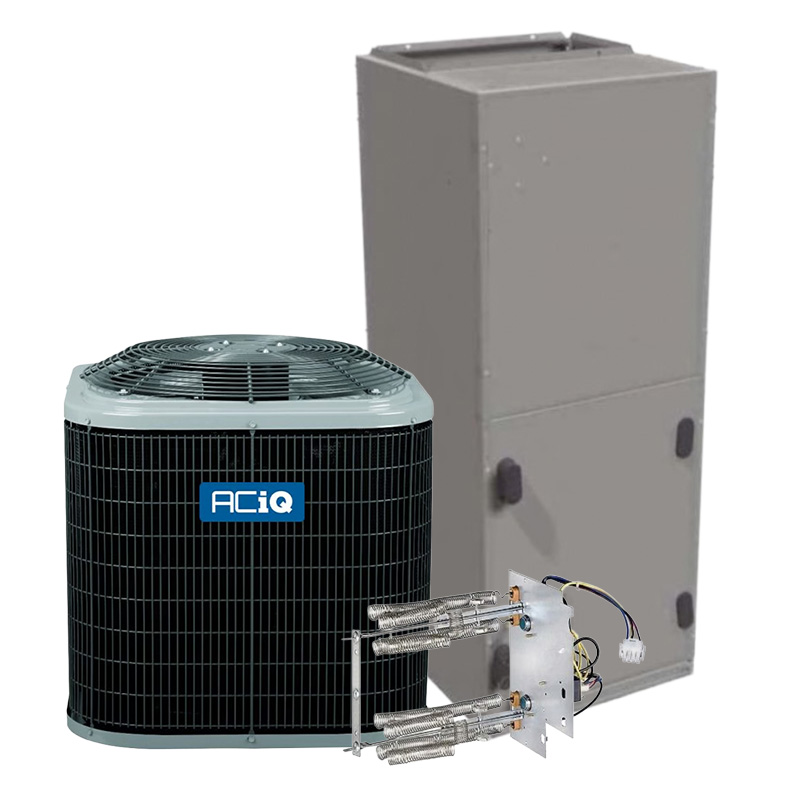
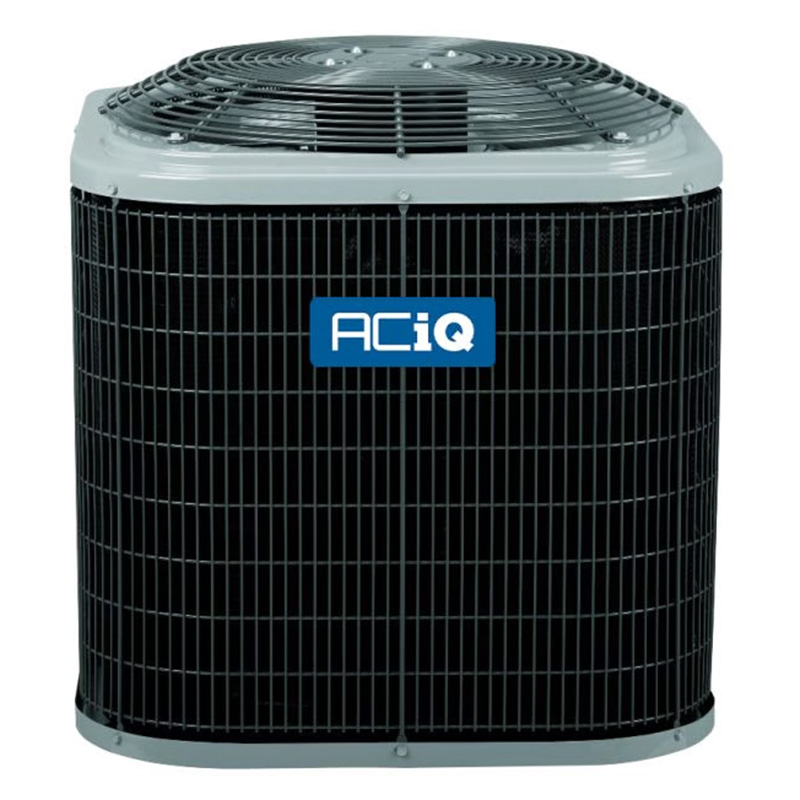
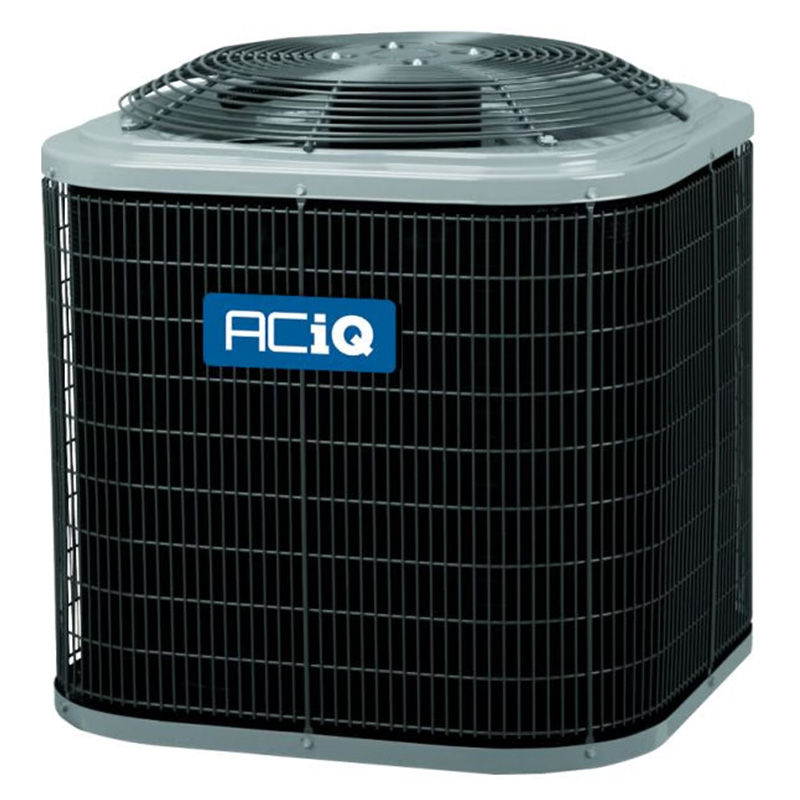
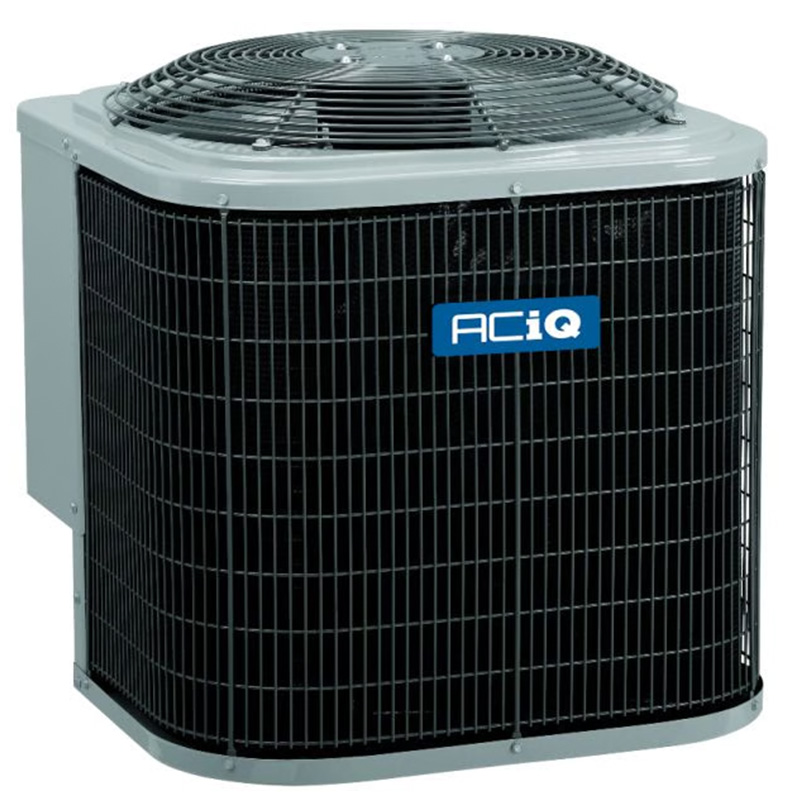
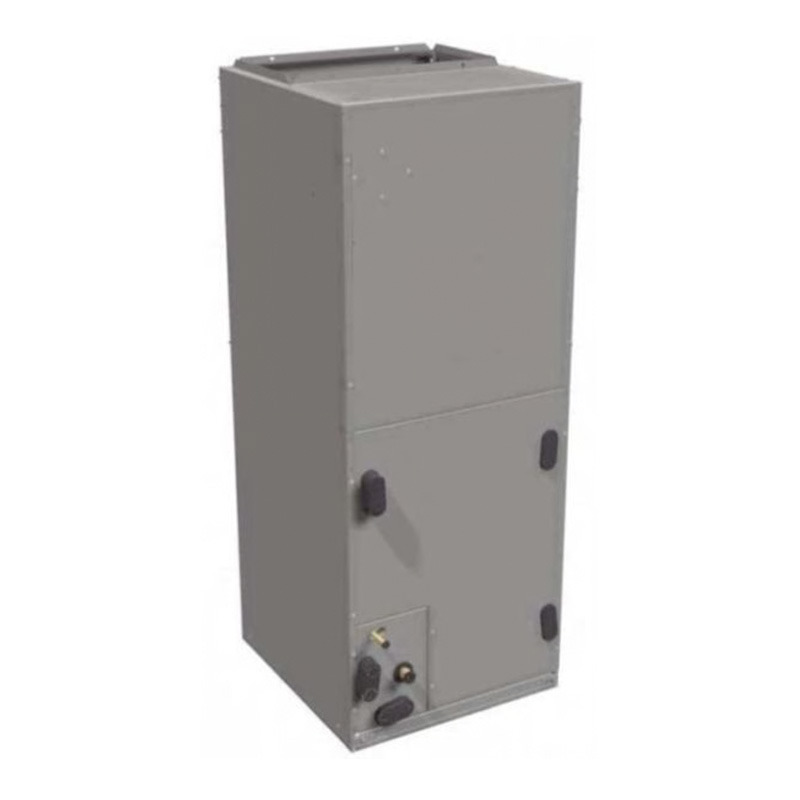
ACiQ 3.5 Ton Air Conditioning With Electric Heat System | 14.5 SEER2 AC | 21" Wide Multi-Positional Air Handler | R454B
View on AC Direct see your lowest price →Check current price on AC Direct →
Key features
- 3.5-ton cooling capacity suited to mid-size ducted applications
- 14.5 SEER2 efficiency rating meets current federal minimum standards
- 21-inch wide air handler supports upflow, downflow, and horizontal installation
- R-454B refrigerant compliant with current EPA low-GWP requirements
- Integrated electric heat strips eliminate the need for a separate furnace
- 12-year parts warranty included without dealer markup
About this system
The ACiQ 3.5-ton, 14.5 SEER2 air conditioning system with electric heat is a straightforward ducted split designed for mid-size homes typically in the 1,800 to 2,200 square foot range, depending on climate and insulation. The 21-inch wide multi-positional air handler gives installers flexibility to set the unit in upflow, downflow, or horizontal configurations, which is a genuine advantage in attics, closets, and utility rooms where space is constrained. Refrigerant is R-454B, the lower-GWP replacement for R-410A that is now required under EPA regulations, so this system is compliant with current rules and won’t face refrigerant sourcing headaches in the near future.
The electric heat strips built into the air handler mean no separate furnace is required, making this a reasonable choice for mild-winter climates where heating loads are modest and the cost of a gas line or dual-fuel setup isn’t justified. At 14.5 SEER2, this system sits at the federally mandated minimum efficiency floor for most U.S. regions, so it will keep utility bills reasonable without reaching the higher efficiency tiers that carry a significant price premium. Buyers who prioritize upfront cost over long-term energy savings will find the efficiency tier fits that logic; buyers in hot climates running the system eight or more months a year may want to weigh whether a higher SEER2 option pays back over time.
The ACiQ 3.5-ton electric heat system offers a competitive entry price and a genuine 12-year warranty in a market where most brands charge a premium for the same coverage, making it a reasonable choice for budget-conscious buyers in mild climates. The 14.5 SEER2 rating is the minimum allowed, not a performance standout, and the undisclosed manufacturer and direct-only service model introduce real uncertainties that buyers should weigh before committing. For homeowners comfortable coordinating their own service contractor and willing to accept thinner long-term reliability data, the value proposition is solid.
Overall score is the average of the five ratings above.
What we like
- Lower upfront cost than comparable Carrier, Trane, or Lennox systems at this tonnage
- 12-year parts warranty ships with the unit, no registration hurdles or dealer markup required
- Multi-positional air handler simplifies installation in tight or awkward mechanical spaces
- R-454B refrigerant is forward-compliant and avoids the phase-out issues affecting R-410A equipment
- Early owner feedback consistently notes quiet operation and responsive customer support from AC Direct
Trade-offs
- 14.5 SEER2 is the regulatory floor, not an efficiency leader, and will cost more to operate than 16+ SEER2 alternatives in high-use climates
- Manufacturer identity is not disclosed, making it harder to cross-reference parts, service bulletins, or long-term failure data
- No dealer network means finding a qualified service contractor is the homeowner's responsibility, which can complicate warranty repairs
- Consumer Reports has not yet ranked ACiQ due to limited long-term data, so reliability confidence depends on thin early-owner samples
What homeowners and pros say about ACiQ
Homeowners who have installed ACiQ equipment through AC Direct generally report satisfaction in the early years, pointing specifically to quieter-than-expected operation and a support team that answers the phone. Those positives carry real weight in the value-brand segment. At the same time, the lack of a disclosed manufacturer creates a practical problem that HVAC technicians on trade forums have flagged: when a technician encounters an unfamiliar control board or a coil configuration they can’t cross-reference against a known brand’s service bulletin, diagnostic time goes up and parts sourcing can get complicated. The documented friction points worth knowing about are the ones common to any direct-to-consumer brand without a dealer network, specifically that warranty labor coordination falls entirely on the homeowner, and that finding a contractor willing to work on a brand they didn’t sell can occasionally require some searching.
Consumer Reports has not yet assigned ACiQ a reliability score because the brand is too new to have generated the long-term owner data their methodology requires, and that absence of data cuts both ways. It is not a red flag, but it is a real gap compared to buying a Trane or Carrier with thirty years of published failure-rate data behind it. The failure modes most worth monitoring with any newer value brand in this category are capacitor longevity, evaporator coil leak rates over years five through ten, and compressor lifespan past the ten-year mark. These are the same categories where long-term data eventually separates reliable platforms from ones that looked fine in years one through three. Early ACiQ owners haven’t yet reported elevated rates in those areas, but the sample size and observation window are both still limited.
Sources: Consumer Reports heat pump ratings, HVACDirect on the ACiQ brand, AHRI Directory of Certified Product Performance, U.S. DOE appliance and equipment efficiency standards.
What it costs to run
At 14.5 SEER2, cooling this 3.5-ton system for a typical 1200-hour cooling season at the U.S. average electricity rate of $0.17/kWh works out to roughly $591 per year in cooling, about $48 less per year than a minimum-efficiency 13.4 SEER2 unit of the same size. Your real cost depends on your climate and local rate.
Method: (42,000 BTU/hr ÷ 14.5 SEER2) × 1200 hours ÷ 1000 × $0.17/kWh. Rate source: U.S. EIA average; cooling hours: moderate-climate estimate.
How it compares
| Brand | Comparable model | SEER2 | Stage | Price position |
|---|---|---|---|---|
| ACiQ | 3.5-Ton 14.5 SEER2 AC with Electric Heat, 21" Multi-Positional Air Handler | 14.5 | Single-stage | Value pick |
| Carrier | Comfort 24ACC636A003 (3-ton step, comparable 3.5 available) | 14.3-15.2 | Single-stage | Moderately higher with dealer markup |
| Trane | XR14c Series | 14.3-15.0 | Single-stage | Moderately higher with dealer markup |
| Lennox | Merit ML14XC1 Series | 14.3-15.5 | Single-stage | Moderately to significantly higher with dealer markup |
Competitor rows are comparable single-stage units at similar efficiency; price is relative position, not a quote.
Questions about this system
Will any licensed HVAC contractor be able to service this system, or do I need a specialist?
Any licensed HVAC technician can service it, since the components are standard industry parts. The catch is that because the manufacturer is not publicly disclosed, a technician cannot easily pull up brand-specific service histories or cross-reference known failure patterns the way they can with Carrier or Trane equipment. You'll want to confirm your contractor is comfortable working with an unfamiliar brand before scheduling service.
Is 14.5 SEER2 good enough, or should I spend more on a higher efficiency model?
14.5 SEER2 meets the current federal minimum and will cool your home adequately, but it is the least efficient option legally available. If your home is in a hot climate and the system runs heavily from May through September, a 16 or 17 SEER2 unit can meaningfully reduce monthly electricity costs and may pay back the price difference within five to eight years. In mild climates with short cooling seasons, the payback period stretches out and the minimum-efficiency unit often makes more financial sense.
How does the 12-year warranty actually work if there's no dealer network?
ACiQ's 12-year parts warranty is honored through AC Direct directly, and the company has been responsive to warranty claims based on early owner reports. You hire an independent contractor to perform the repair, and parts are sourced through AC Direct's support channel. Labor costs are not covered, which is standard across the industry, but the parts coverage period is longer than many name brands offer without paid registration.
Does this system work as a heat pump, or is the electric heat strictly resistance strips?
This is a straight cooling condensing unit paired with an air handler that uses electric resistance heat strips, not a heat pump. It will not extract heat from outdoor air the way a heat pump does, so heating efficiency is much lower than a heat pump system. This configuration is most cost-effective in climates where heating is a secondary concern and the cost of a heat pump premium isn't justified.
Is R-454B refrigerant harder to source or more expensive to recharge than R-410A?
R-454B availability is improving as manufacturers have shifted to it under EPA requirements, but it is currently less universally stocked than R-410A was at its peak. Pricing can be higher than mature-market R-410A was, though this will normalize over time as supply chains adjust. The important upside is that choosing R-454B now means your system won't face the regulatory and supply disruptions that are affecting R-410A equipment going forward.
Specifications
| Cooling capacity | 3.5 Ton |
| Efficiency | 14.5 SEER2 |
| Refrigerant | R-454B |