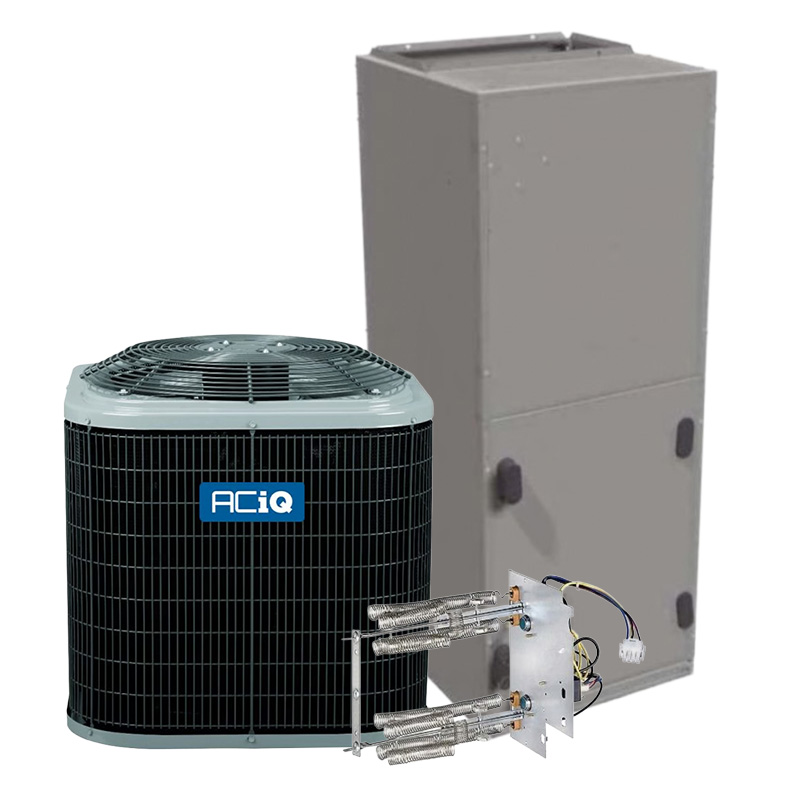
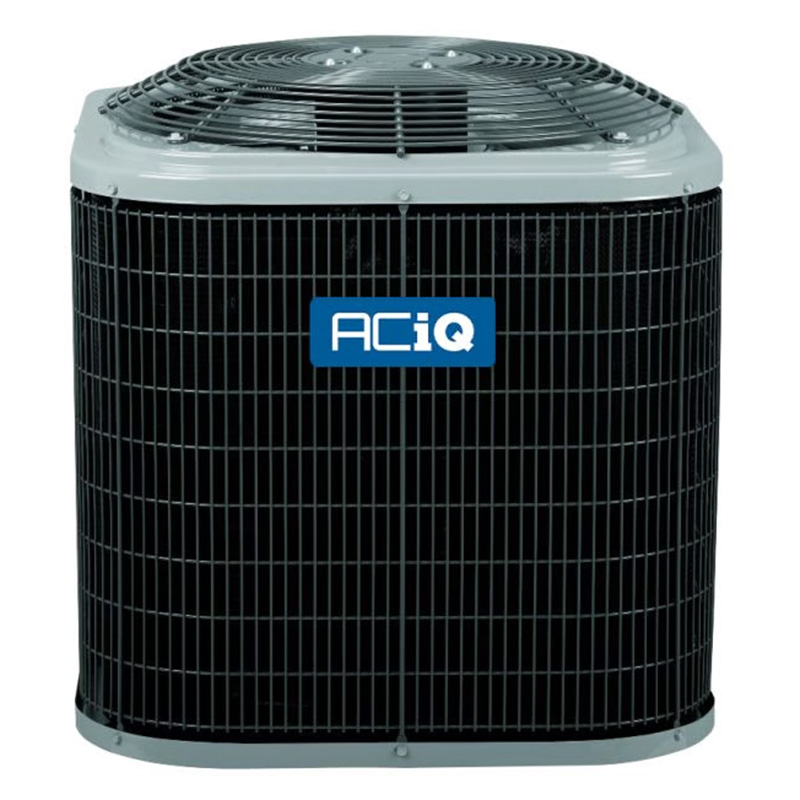
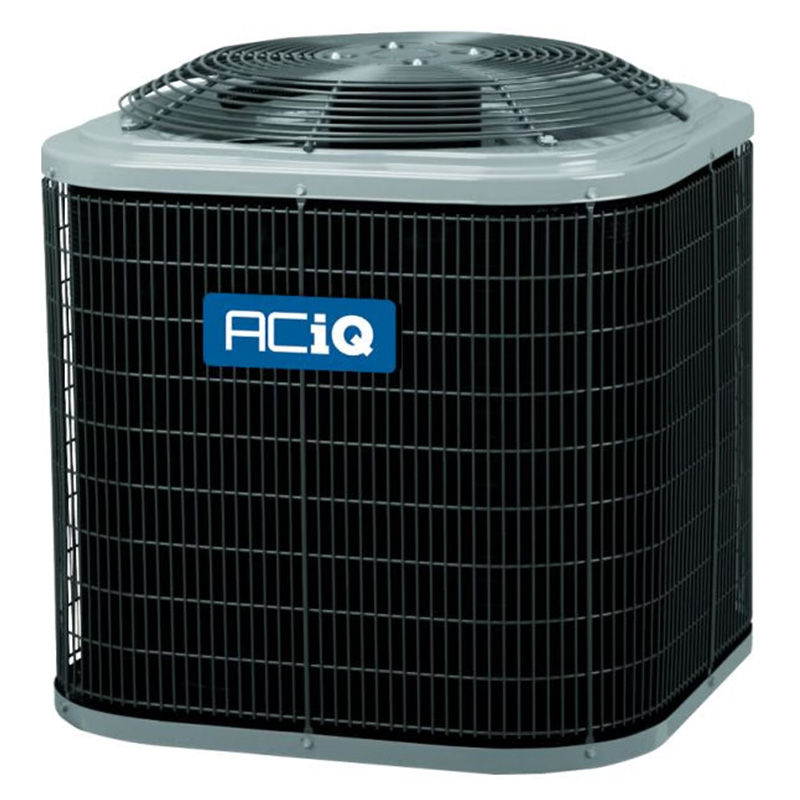
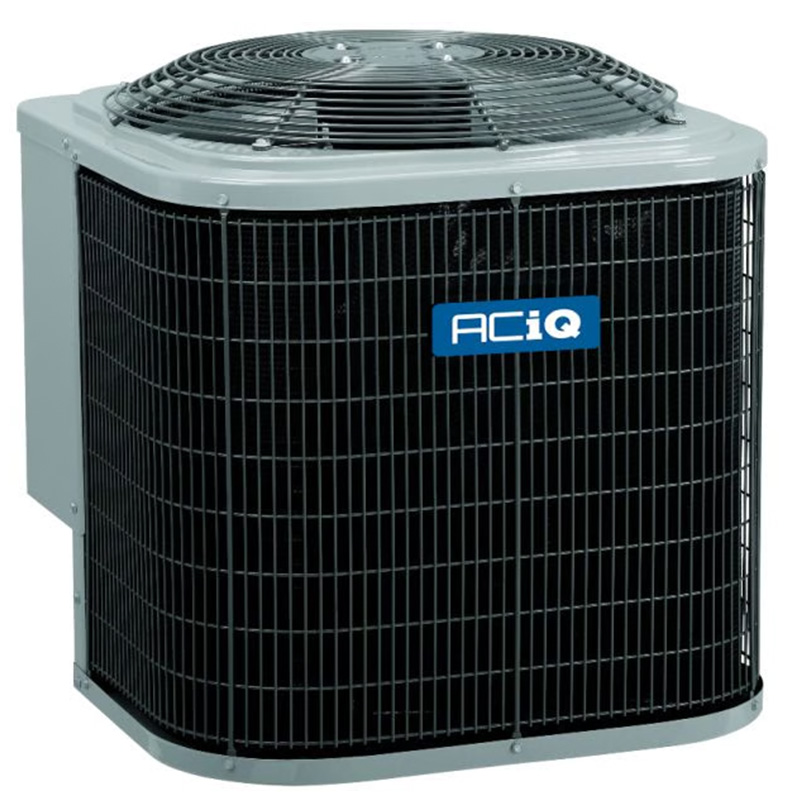
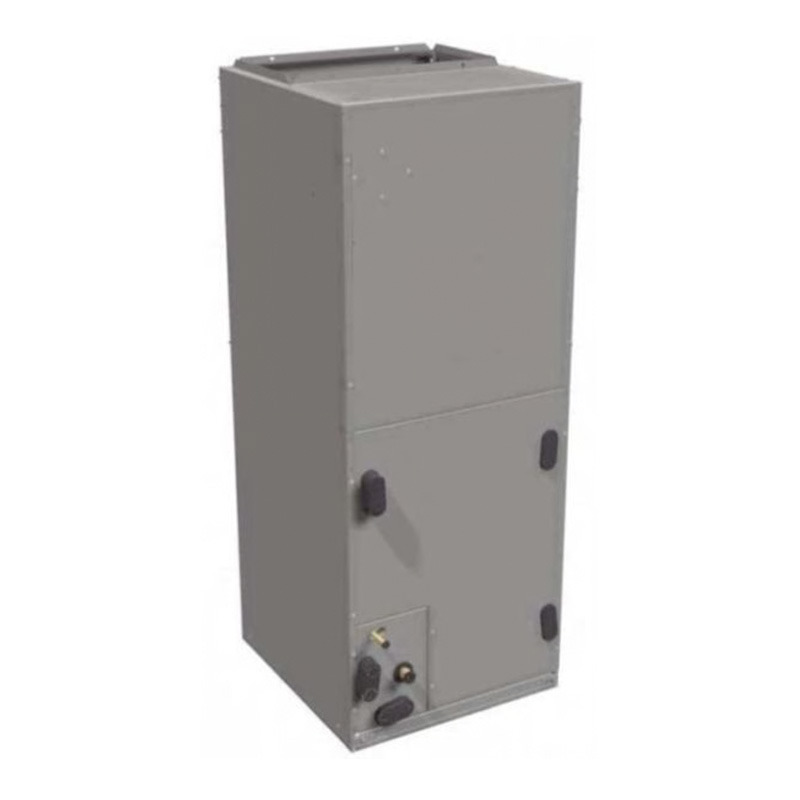
ACiQ 3.5 Ton Air Conditioning With Electric Heat System | 15.2 SEER2 AC | 21" Wide Multi-Positional Air Handler | R454B
View on AC Direct see your lowest price →Check current price on AC Direct →
Key features
- 15.2 SEER2 efficiency rating, meeting current federal minimum standards with modest headroom
- 21-inch-wide multi-positional air handler fits upflow, downflow, and horizontal installations
- R-454B refrigerant, compliant with current EPA low-GWP regulations
- 3.5-ton capacity suited to approximately 1,600 to 2,200 square feet depending on load
- 12-year parts warranty included, no dealer required to register
- Sold factory-direct, eliminating dealer markup from the purchase price
About this system
The ACiQ 3.5-ton split system pairs a 15.2 SEER2-rated air conditioner with an electric-heat air handler in a 21-inch-wide multi-positional cabinet, making it one of the more compact handlers available for a unit this size. That narrow footprint matters in tight utility closets, crawlspace installations, or any space where a standard 24-inch cabinet simply will not fit. The R-454B refrigerant charge keeps the system compliant with current EPA regulations, and it positions the equipment well ahead of any future refrigerant transition requirements that could affect older R-410A inventory.
At 3.5 tons, this system is sized for roughly 1,600 to 2,200 square feet of conditioned space, depending on local climate, insulation quality, and window load. The electric heat strip in the air handler handles supplemental or primary heating in mild-winter climates, though operating costs will be higher than a heat pump or gas furnace in regions with cold winters or expensive electricity rates. Buyers in the Southeast, Southwest, or other cooling-dominant climates are the natural fit. The system ships direct from ACiQ without dealer markup, which is a meaningful portion of why it undercuts name-brand alternatives at similar efficiency tiers.
The ACiQ 3.5-ton system is a straightforward, code-compliant split system that competes on price rather than on efficiency headroom or verified long-term reliability. It is a reasonable choice for budget-conscious buyers in cooling-dominant climates who can accept thinner independent reliability data in exchange for a lower upfront cost and a solid warranty on paper.
Overall score is the average of the five ratings above.
What we like
- Factory-direct pricing undercuts Carrier, Trane, and Lennox equivalents by a meaningful margin
- 12-year parts warranty ships with the unit, with no dealer registration required
- 21-inch-wide cabinet opens installation options in tight mechanical spaces that wider handlers cannot fit
- R-454B refrigerant compliance avoids near-term regulatory headaches as R-410A equipment phases out
- Early owner reports consistently highlight quiet outdoor unit operation and responsive customer support
Trade-offs
- 15.2 SEER2 is only modestly above the federal minimum, so long-term energy savings over a 16 or 18 SEER2 unit are limited
- The undisclosed manufacturer makes it harder for technicians to cross-reference parts, service bulletins, and failure history
- Consumer Reports has not yet ranked ACiQ due to insufficient long-term field data, so reliability is not independently verified
- Electric heat strips carry significantly higher operating costs than gas or heat-pump alternatives in cold climates
What homeowners and pros say about ACiQ
Early owner feedback collected across contractor forums and direct-purchase review channels points in a consistent direction for ACiQ systems: the outdoor units run quietly, startup and shutdown cycles are smooth, and when buyers have needed support, the company has been reachable. Those are meaningful positives for a brand that entered the market relatively recently. However, Consumer Reports does not yet rank ACiQ because there is simply not enough long-term field data to assign a reliability score, and that gap is real. Buyers used to checking a CR reliability chart before a major purchase will find no equivalent benchmark here.
Among the documented concerns that come up in honest assessments of the ACiQ product line, the undisclosed manufacturer is the most practical issue in the field. Independent technicians cannot easily pull service history or cross-reference a compressor or coil specification against a known OEM’s parts catalog the way they can with a Carrier or Trane unit. The direct-sales model also means there is no local dealer who knows the equipment and stocks parts on the shelf. Whether those trade-offs matter depends on how comfortable you are with a newer brand’s support infrastructure and how confident you are that your local contractor will work directly with ACiQ if a warranty claim arises in year eight.
Sources: Consumer Reports heat pump ratings, HVACDirect on the ACiQ brand, AHRI Directory of Certified Product Performance, U.S. DOE appliance and equipment efficiency standards.
What it costs to run
At 15.2 SEER2, cooling this 3.5-ton system for a typical 1200-hour cooling season at the U.S. average electricity rate of $0.17/kWh works out to roughly $564 per year in cooling, about $75 less per year than a minimum-efficiency 13.4 SEER2 unit of the same size. Your real cost depends on your climate and local rate.
Method: (42,000 BTU/hr ÷ 15.2 SEER2) × 1200 hours ÷ 1000 × $0.17/kWh. Rate source: U.S. EIA average; cooling hours: moderate-climate estimate.
How it compares
| Brand | Comparable model | SEER2 | Stage | Price position |
|---|---|---|---|---|
| ACiQ | 3.5-Ton 15.2 SEER2 AC with Electric Heat Air Handler | 15.2 | Single-stage | Value pick |
| Carrier | Comfort 24ACC636 with FV4C Air Handler | 15.2 | Single-stage | Moderately higher due to dealer network and brand premium |
| Trane | XR15 with XB Air Handler | 15.0–15.5 | Single-stage | Moderately to significantly higher with dealer installation |
| Lennox | Merit ML14XC1 with CBX Air Handler | 15.1 | Single-stage | Moderately higher with dealer markup |
Competitor rows are comparable single-stage units at similar efficiency; price is relative position, not a quote.
Questions about this system
Can any licensed HVAC contractor install this system, or does it need an ACiQ-authorized technician?
Any licensed HVAC contractor can install it. ACiQ sells direct and does not operate a dealer network, so there is no authorized-installer requirement. That said, you should confirm your installer is familiar with R-454B refrigerant handling, since it is newer than R-410A and requires slightly different tools and certifications.
How do I register the 12-year warranty, and does it require professional installation proof?
ACiQ's warranty registration is handled directly through their website. The 12-year term is a stated selling point of the brand, but you should review the current warranty document before purchase to confirm any registration deadlines, installation documentation requirements, and what parts are covered versus excluded.
Is 15.2 SEER2 good enough, or should I pay more for a higher-efficiency model?
15.2 SEER2 meets federal minimums for most U.S. climate zones with modest headroom. The payback period on upgrading to 17 or 18 SEER2 depends on local electricity rates and annual cooling hours. In a hot climate running the system 2,000 or more hours per year, a higher-efficiency unit can close the price gap over five to eight years; in a mild climate, the savings are smaller.
The manufacturer is not publicly named. How do I find replacement parts if I need them in ten years?
This is a genuine concern. Forum speculation links ACiQ to the ICP and Carrier manufacturing family, but that is unconfirmed. ACiQ sells parts directly, which helps, but an undisclosed OEM means your technician cannot easily cross-reference service bulletins or substitute parts from a sister brand the way they could with a Carrier or Lennox unit.
Will the electric heat strips handle cold winters, or do I need a separate heating system?
Electric heat strips will keep the house warm but at a high operating cost when temperatures drop. In climates that regularly see lows below 35 degrees Fahrenheit, monthly heating bills on a straight electric system can be substantially higher than gas or heat-pump alternatives. This configuration is best suited to mild-winter regions where heating loads are light.
Specifications
| Cooling capacity | 3.5 Ton |
| Efficiency | 15.2 SEER2 |
| Refrigerant | R-454B |