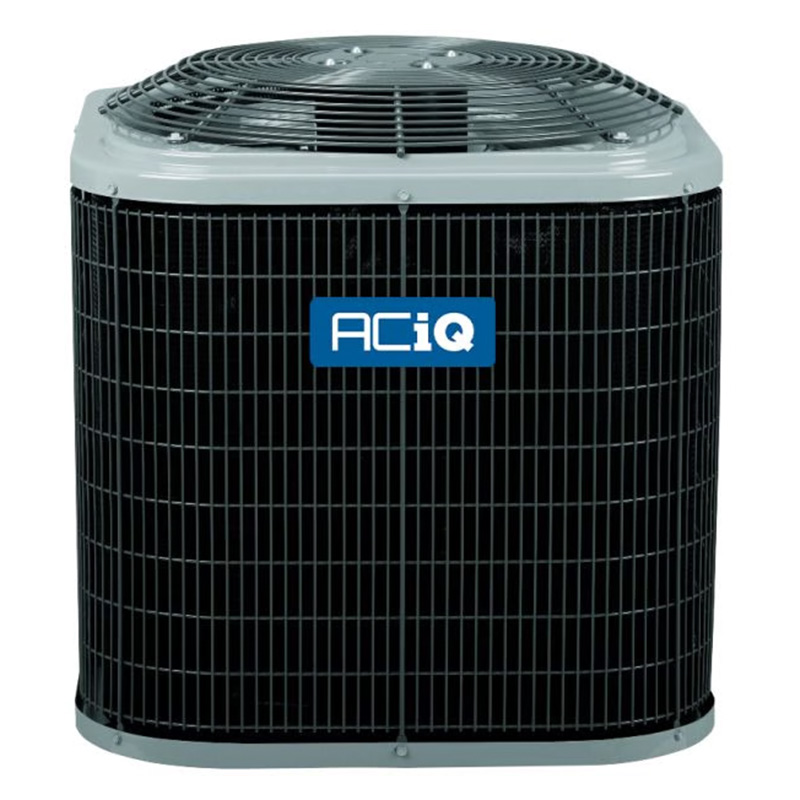
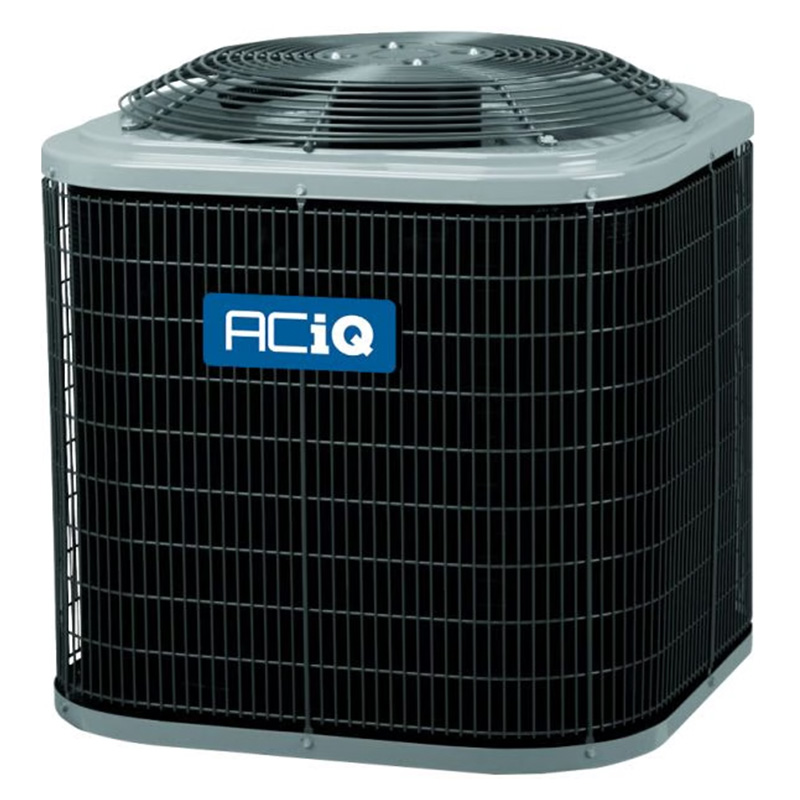
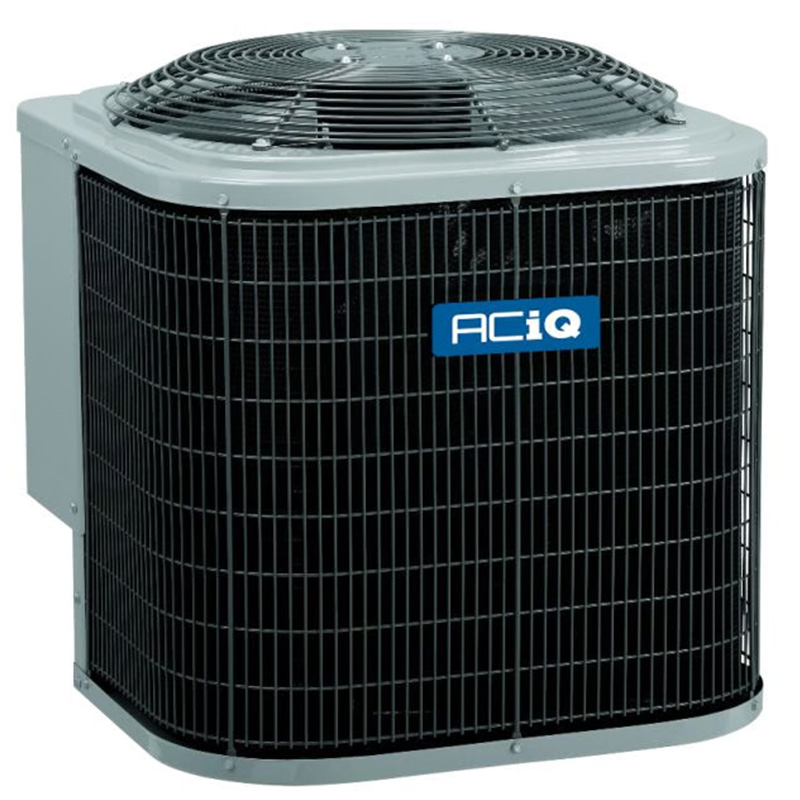
ACiQ 3.5 Ton Cooling Only Air Conditioning System | 15.2 SEER2 AC | 21" Wide Multi-Positional Modular Air Handler | R454B

View on AC Direct see your lowest price →Check current price on AC Direct →
Key features
- 15.2 SEER2 efficiency rating meets and slightly exceeds current federal minimum standards for most U.S. climate regions
- R-454B refrigerant is a low-GWP next-generation alternative to R-410A, compliant with current EPA regulations
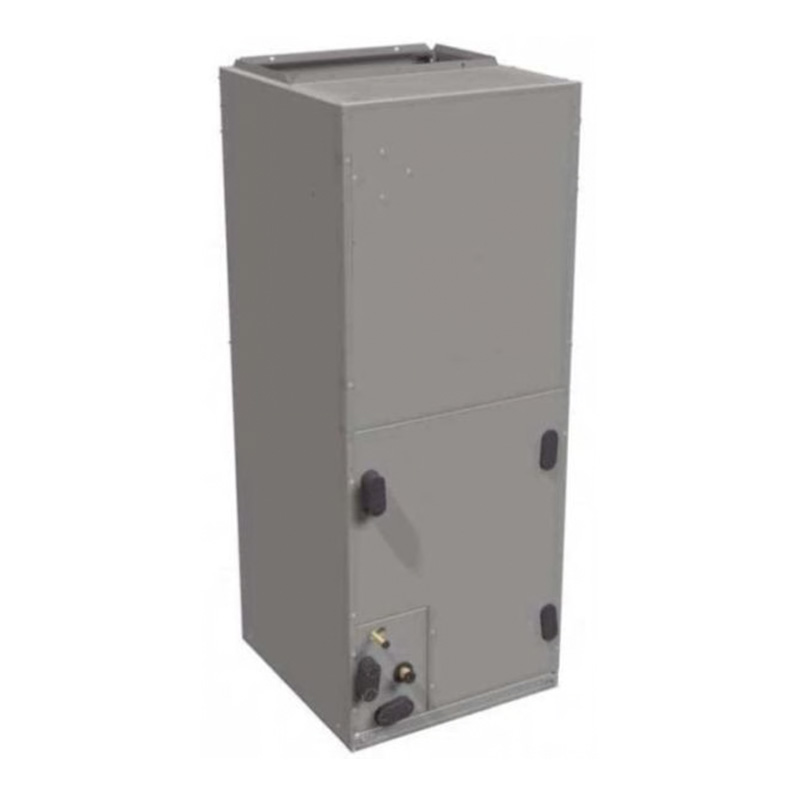
- 21-inch-wide multi-positional air handler fits horizontal, upflow, and downflow configurations in space-limited installs
- Cooling-only split system design allows pairing with a separate gas furnace or electric heat source of the installer's choice
- Sold factory-direct with a 12-year parts warranty included, no dealer registration required
- Built by an undisclosed major OEM manufacturer, believed by industry forums to share lineage with established ICP/Carrier-family production lines
About this system
The ACiQ 3.5-ton cooling-only split system pairs a 15.2 SEER2-rated condenser with a 21-inch-wide multi-positional modular air handler designed to fit attic, closet, or utility-room installations where cabinet width is a real constraint. It uses R-454B refrigerant, a lower-GWP alternative that is now the industry standard for new residential equipment, so the system is ready for current EPA regulations without any near-term retrofit concerns. At 3.5 tons, it is sized for roughly 1,600 to 2,100 square feet depending on climate zone, insulation quality, and solar load, though a proper Manual J load calculation should always drive the final tonnage decision.
This is a cooling-only configuration, meaning there is no heat pump functionality and no gas furnace included. The air handler provides the indoor coil and blower; homeowners in climates that need heat will add a separate gas furnace or electric air handler with strip heat. That modular approach gives installers flexibility, but it also means this is not a single-box solution. The system is sold direct by AC Direct under the ACiQ house brand, skipping the dealer-markup layer that inflates the price of equivalent Carrier, Trane, or Lennox equipment, which is where most of the value proposition sits.
The ACiQ 3.5-ton 15.2 <a href="https://hvac.best/glossary/seer2/">SEER2</a> cooling-only system delivers solid entry-level efficiency and a genuinely competitive price point, making it worth serious consideration for budget-conscious homeowners who have a qualified independent contractor lined up. The trade-off is the typical uncertainty that comes with a newer house brand: long-term reliability data is still thin, the OEM is undisclosed, and you are outside the traditional dealer-service network from day one.
Overall score is the average of the five ratings above.
What we like
- Price undercuts name-brand equivalents at the same efficiency tier without requiring a dealer network markup
- 12-year parts warranty ships with the unit and does not depend on dealer registration or an inflated install price
- R-454B refrigerant is future-compliant, removing any near-term regulatory risk around refrigerant availability
- 21-inch cabinet width opens installation options in tight mechanical rooms, closets, and attic platforms where standard-width air handlers do not fit
- Early owner feedback consistently highlights quiet operation and responsive direct-sales support from AC Direct
Trade-offs
- Consumer Reports has not yet ranked ACiQ due to insufficient long-term field data, so independent reliability benchmarking is not available
- The undisclosed OEM makes cross-referencing parts, service bulletins, and failure history harder for technicians than with a named brand
- Cooling-only configuration requires a separate heating source, adding cost and complexity for full-system replacements in colder climates
- No factory-authorized dealer network means finding a contractor comfortable servicing a direct-sold brand can take extra vetting
What homeowners and pros say about ACiQ
Homeowners who have already installed ACiQ equipment tend to surface in online HVAC forums and direct-seller review threads rather than in Consumer Reports, which has not yet accumulated enough long-term data to assign ACiQ a reliability score. The consistent themes in early owner feedback are quieter-than-expected operation, equipment that runs as specified, and an AC Direct support team that answers questions directly without routing callers through a dealer. That said, the documented structural concerns are real: the OEM is not publicly disclosed, which means a technician looking for service bulletins or cross-referenced parts has fewer tools than with a Carrier or Trane unit, and the lack of a dealer network means the homeowner carries more of the coordination burden when something needs attention.
On the contractor side, independent HVAC technicians who work on direct-sold equipment report no unusual issues with the hardware itself, but some note hesitation around stocking unfamiliar parts or honoring warranty labor when there is no distributor relationship in place. The specific failure modes worth watching in any residential split system at this price tier include capacitor degradation, refrigerant coil leaks at brazed joints, and long-term compressor durability, none of which ACiQ has a documented pattern for yet simply because the brand is too new to have accumulated that history. That absence of data is neither a red flag nor a clean bill of health; it is the honest cost of buying a newer brand at a lower price.
Sources: Consumer Reports heat pump ratings, HVACDirect on the ACiQ brand, AHRI Directory of Certified Product Performance, U.S. DOE appliance and equipment efficiency standards.
What it costs to run
At 15.2 SEER2, cooling this 3.5-ton system for a typical 1200-hour cooling season at the U.S. average electricity rate of $0.17/kWh works out to roughly $564 per year in cooling, about $75 less per year than a minimum-efficiency 13.4 SEER2 unit of the same size. Your real cost depends on your climate and local rate.
Method: (42,000 BTU/hr ÷ 15.2 SEER2) × 1200 hours ÷ 1000 × $0.17/kWh. Rate source: U.S. EIA average; cooling hours: moderate-climate estimate.
How it compares
| Brand | Comparable model | SEER2 | Stage | Price position |
|---|---|---|---|---|
| ACiQ | 3.5 Ton 15.2 SEER2 Cooling Only with 21" Multi-Positional Air Handler | 15.2 | Single-stage | Value pick |
| Carrier | Comfort 24ACC636A003 (3 ton shown; 3.5 ton equivalent in Comfort series) | 15.2 | Single-stage | Moderately higher through dealer network |
| Trane | XR15 (4TTR5042 series, 3.5 ton) | 15.0-15.5 | Single-stage | Higher, dealer-installed with markup |
| Lennox | Merit ML14XC1 (3.5 ton) | 15.1 | Single-stage | Comparable to Carrier; higher than ACiQ through dealer channel |
Competitor rows are comparable single-stage units at similar efficiency; price is relative position, not a quote.
Questions about this system
Does the 12-year warranty require registration, and what does it actually cover?
ACiQ includes the 12-year parts warranty with the unit and does not require dealer registration, which is a meaningful advantage over brands that condition coverage on a contractor-completed install or paid registration. Coverage applies to parts; labor costs for warranty repairs are the homeowner's responsibility, so a service contract with your installer is worth discussing separately.
Can I match this air handler with my existing gas furnace, or do I need a specific brand?
The multi-positional air handler is designed as a modular unit and can be paired with most standard residential gas furnaces in an upflow, downflow, or horizontal configuration. You should verify coil cabinet compatibility and confirm refrigerant line sizing with your installer before purchase, as fitting dimensions and static pressure ratings vary.
Will technicians in my area be able to service R-454B equipment?
R-454B is now the standard refrigerant for new residential split systems across major manufacturers, so the refrigerant itself is widely available and most licensed HVAC technicians are being trained on it. The ACiQ-specific concern is not the refrigerant but rather finding a technician willing to work on a direct-sold brand without a local dealer support structure, so confirming that upfront with your contractor is advisable.
Is 15.2 SEER2 enough efficiency, or should I consider a higher-SEER2 unit to save on energy bills?
15.2 SEER2 meets or exceeds the current federal minimum for most U.S. climate regions and will produce meaningfully lower operating costs than any pre-2023 equipment you are replacing. The payback math on stepping up to 17 or 18 SEER2 depends heavily on your local electricity rate and annual cooling hours; in moderate climates the premium rarely pays back in under eight to ten years, but in high-usage Sun Belt markets the calculus can shift.
Since the manufacturer is undisclosed, how do I find replacement parts if something fails out of warranty?
This is one of the genuine trade-offs of the ACiQ model. Forum speculation points to ICP or Carrier-family production, but that is unconfirmed, so you cannot reliably cross-reference parts to a named OEM catalog. AC Direct's direct support line and the unit's model number are your primary path to sourcing parts, which works fine while the brand is active but introduces more uncertainty than buying from a brand with a fully public parts ecosystem.
Specifications
| Cooling capacity | 3.5 Ton |
| Efficiency | 15.2 SEER2 |
| Refrigerant | R-454B |